Rejoignez-nous pour un voyage dans le monde des livres!
Ajouter ce livre à l'électronique
Grey
Ecrivez un nouveau commentaire Default profile 50px
Grey
Abonnez-vous pour lire le livre complet ou lisez les premières pages gratuitement!
All characters reduced
Ming Dynasty - cover

Ming Dynasty

Linda Hill

Traducteur A AI

Maison d'édition: Publifye

  • 0
  • 0
  • 0

Synopsis

"Ming Dynasty" explores the rise and fall of one of China's most influential periods, from 1368 to 1644. Emerging from peasant rebellion against Mongol rule, the Ming emperors oversaw an era of unprecedented economic growth and cultural flourishing.Intriguingly, the book examines how the voyages of Zheng He, which demonstrated China's maritime capabilities, were abruptly halted, altering China's global trajectory. This comprehensive history also details the dynasty's lasting influence on Chinese identity.The book's approach is multifaceted, combining political, economic, and cultural analysis. It begins by detailing the collapse of the Yuan Dynasty and the ascent of the Hongwu Emperor. Chapters then systematically explore economic policies, maritime expeditions, and artistic achievements, including developments in Neo-Confucianism.The narrative culminates by examining the internal and external factors that led to the dynasty's decline, setting the stage for subsequent eras.
Disponible depuis: 20/03/2025.
Longueur d'impression: 61 pages.


D'autres livres qui pourraient vous intéresser

  • The Elements of Style - cover

    The Elements of Style

    E. B. White, William Strunk Jr.

    • 0
    • 0
    • 0
    Make every word count. Say what you mean. Say it clearly.
    For generations, writers have turned to The Elements of Style for its simple, no-nonsense rules of good writing. With concise guidance on grammar, usage, composition, and style, Strunk and White show how clarity, brevity, and precision transform ordinary prose into confident communication.
    
    Regarded as "the most influential writing guide ever published," this timeless handbook is trusted by students, professionals, journalists, and authors alike. Its advice is direct, practical, and instantly applicable—whether you're crafting essays, emails, or stories.
    
    If you want to write with confidence, elegance, and impact, this essential classic belongs on your desk.
    
    Open the book—and start writing better today.
    Voir livre
  • Why It's OK to Eat Meat - cover

    Why It's OK to Eat Meat

    Dan C. Shahar

    • 0
    • 0
    • 0
    In Why It's OK to Eat Meat, Dan C. Shahar argues the answer is no: it's entirely possible to be an ethical person while continuing to eat meat—and not just the "fancy" offerings from the farmers' market but also the regular meat we find at most supermarkets and restaurants. Shahar's examination forcefully echoes vegetarians' concerns about the meat industry's impacts on animals, workers, the environment, and public health. However, he shows that the most influential ethical arguments for avoiding meat on the basis of these considerations are ultimately unpersuasive. Instead of insisting we all become vegetarians, Shahar argues each of us has broad latitude to choose which of the world's problems to tackle. 


    Key Features include: 


    ● First book-length defense of meat-eating written for a popular audience 


    ● Punchy, accessible introduction to the multifaceted debate over the ethics of eating meat 


    ● Includes pioneering new examinations of humane labeling practices 


    ● Shows why appeals to universalized patterns of behavior can't vindicate vegetarians' claims that there's a duty to avoid meat 


    ● Develops a novel theory of ethical activism with potential applications to a wide range of other issues
    Voir livre
  • The Space Race - The History of the Technological Rivalry Between the Soviets and Americans during the Cold War - cover

    The Space Race - The History of...

    Charles River Editors

    • 0
    • 0
    • 0
    Today the Space Race is widely viewed poignantly and fondly as a race to the Moon that culminated with Apollo 11 “winning” the Race for the United States. In fact, it encompassed a much broader range of competition between the Soviet Union and the United States that affected everything from military technology to successfully launching satellites that could land on Mars or orbit other planets in the Solar System. Moreover, the notion that America “won” the Space Race at the end of the 1960s overlooks just how competitive the Space Race actually was in launching people into orbit, as well as the major contributions the Space Race influenced in leading to today’s International Space Station and continued space exploration.  
    	Of all the goals the Bolshevik Revolution aimed to bring about, perhaps nowhere were Russian promises delivered on more than in the success of the Soviet Space program of the 1950s and 1960s. As a result of Russian innovation and technology, but also due to incredible drive to modernize and compete with the United States for world power, Russia was finally and triumphantly modernized in the eyes of her own people and the world. Neil deGrasse Tyson recognized the Soviet legacy in space in his Space Chronicles, citing the Soviets’ “important measure[s] of space achievement: first spacewalk, longest spacewalk, first woman in space, first docking in space, first space station, longest time logged in space.”[1] 
    	In fact, the Soviet Union spent much of the 1950s leaving the United States in its dust (and rocket fuel). President Eisenhower and other Americans who could view Soviet rockets in the sky were justifiably worried that Soviet satellites in orbit could soon be spying on them, or, even worse, dropping nuclear bombs on them. Dovetailing off their success developing intercontinental ballistic missiles, the Soviets were the first to make enormous advances in actual space exploration.
    Voir livre
  • Moors The: The History of the Muslims Who Lived in North Africa and Europe during the Middle Ages - cover

    Moors The: The History of the...

    Editors Charles River

    • 0
    • 0
    • 0
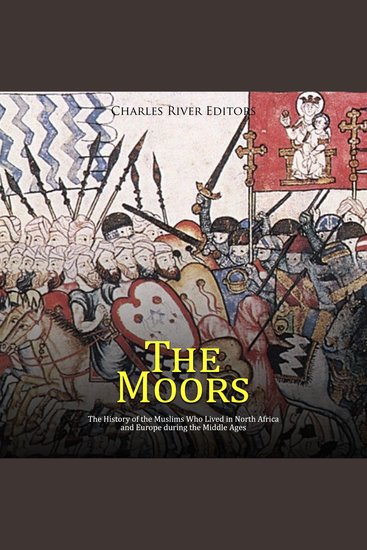
    The term Moor is a historical rather than an ethnic name. It is an invention of European Christians for the Islamic inhabitants of Maghreb (North Africa), Andalusia (Spain), Sicily and Malta, and was sometimes use to designate all Muslims. It is derived from Mauri, the Latin name for the Berbers who lived in the Roman province of Mauretania, which ranged across modern Algeria and Morocco. Saracen was another European term used to designate Muslims, though it usually referred to the Arabic peoples of the Middle East and derives from an ancient name for the Arabs, Sarakenoi. The Muslims of those regions no more refer to themselves by that term than those of North Africa call themselves Moors. Maghreb, or al-Maghreb, is a historical term used by Arabic Muslims for the territory of coastal North Africa from Alexandria to the Atlantic Coast. It means “The West” and is used in opposition to Mashrek, “The East,” used to refer to the lands of Islam in the Middle East and north-eastern Africa. The Berbers refer to the region in their own language as Tamazgha. In a limited, precise sense it can also refer to the Kingdom of Morocco, the proper name of which is al-Mamlakah al-Maghribiyyah, “Kingdom of the West.” 
    The history of the Spanish Peninsula is closely bound to that of the Moors. The term “Spain” was not in wide use until the region was united by the monarchs of Aragon and Castile, and the Moors called the lands they ruled in the Iberian Peninsula Al-Andalus, traditionally thought to be an Arabic transliteration of Vandal, the Germanic tribe which briefly ruled the region in the early fifth century. The English name Andalusia derives from the Spanish Andalucia, which is still used by Spain to name its southern region. Not surprisingly, three religions attempting to coexist during medieval times resulted in nearly incessant conflicts.
    Voir livre
  • The Second History of Man - cover

    The Second History of Man

    MD John Bershof

    • 0
    • 0
    • 0
    In the spirit of medieval writer Chaucer, all human activity lies within the artist’s scope, the History of Man Series uses medicine as a jumping off point to explore precisely that, all history, all science, all human activity since the beginning of time. The jumping off style of writing takes the reader, the listener into worlds unknown, always returning to base, only to jump off again. History of Man are stories and tales of nearly everything. 
    The Second History of Man focuses mostly on bacteria and bacterial infections as the foundation, jumping off into Darwin and evolution, gin & tonics and the discovery of the first antibiotic to treat infection (and it wasn’t penicillin), visiting with those clever chaps who cook up drugs in the lab. We’ll call upon poets & poetry, celebrities like Frank Sinatra, the Rat Pack, and Bobby Darin, the classical music of Haydn, Mozart and Beethoven, the tragic story of World War II, Anne Frank and the Holocaust, tuberculosis, and a few of the rich & famous who suffered from TB, travelling back in time to the Black Death which wiped out 25 percent of humans on Earth, exploring the origins of a salon and a saloon, Columbus and the Age of Discovery, the lost generations of childhood, ending with the invention of the Internet.
    Voir livre
  • Egypt - Ancient civilization of Egypt with Egyptian mythology including the book of the dead - cover

    Egypt - Ancient civilization of...

    Will Forrest

    • 0
    • 0
    • 0
    Discover the mysteries of Egypt and its ancient civilization with this book on the history of Egypt and Egyptian mythology. 
      
    Uncover the secrets of one of the world's most ancient civilizations, as you explore the rich culture, religion and mythology of the Egyptians. This incredible book contains a wealth of information about the powerful pharaohs and their gods, their religious beliefs, and the incredible monuments that still stand today. 
      
    From the Great Pyramids of Giza to the grand monuments of Karnak, discover the incredible engineering feats and artistic beauty of the ancient Egyptians. Learn about the powerful gods and goddesses of Egyptian mythology and explore the complex beliefs and rituals that were practiced in the temples of Egypt. 
      
    This book is a must-have for anyone interested in learning about the history and mythology of Egypt. With detailed descriptions you'll be transported to the golden age of the Pharaohs. 
      
    Get your copy Today! And Start your journey into the mysterious and powerful world of Egyptian gods and goddesses.
    Voir livre