Rejoignez-nous pour un voyage dans le monde des livres!
Ajouter ce livre à l'électronique
Grey
Ecrivez un nouveau commentaire Default profile 50px
Grey
Abonnez-vous pour lire le livre complet ou lisez les premières pages gratuitement!
All characters reduced
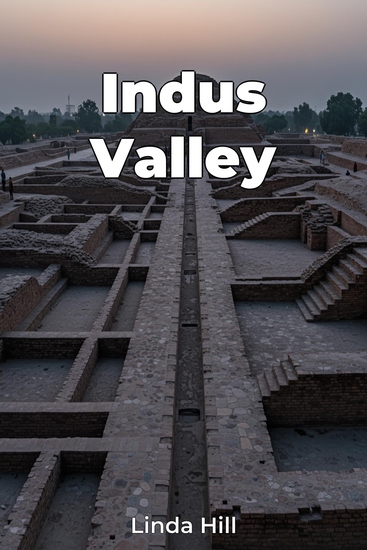
Indus Valley - cover

Indus Valley

Linda Hill

Traducteur A AI

Maison d'édition: Publifye

  • 0
  • 0
  • 0

Synopsis

Indus Valley explores the fascinating story of the Indus Valley Civilization (IVC), one of history’s earliest urban societies. This book sheds light on the IVC's remarkable achievements in urban planning, evident in cities like Mohenjo-daro and Harappa, which featured grid-pattern layouts and advanced sanitation systems. It also investigates the civilization's extensive trade networks, revealing connections with Mesopotamia and Central Asia, highlighting the exchange of goods and cultural influences. A key focus is understanding the factors that led to the IVC's societal collapse, including environmental challenges and potential internal pressures. 

 
The book approaches the IVC by examining its geographical setting, urban innovations, and trade relations before delving into the theories surrounding its decline. It draws upon archaeological evidence, artifact analysis, and paleoclimatological data to provide a comprehensive picture. One intriguing aspect is how the IVC's sophisticated systems, initially strengths, may have contributed to its downfall, challenging simplistic views of progress.

 
The book highlights the importance of considering the long-term consequences of societal choices, offering valuable lessons for contemporary urban planning and resource management. The narrative progresses systematically, beginning with an introduction to the civilization's timeline and geography, then exploring its urban planning and trade networks, and finally synthesizing theories about its decline. By focusing on evidence-based analysis and acknowledging ongoing scholarly debates, Indus Valley provides a balanced and nuanced perspective on this ancient civilization.
Disponible depuis: 29/03/2025.
Longueur d'impression: 67 pages.

D'autres livres qui pourraient vous intéresser

  • Waswanipi - cover

    Waswanipi

    Soucy Jean-Yves

    • 0
    • 0
    • 0
    It is 1963, Jean-Yves Soucy is 18 and looking for a summer job. He dreams of being a fire warden scanning the boreal forest from a fire tower. But to his dismay he is sent to an equipment depot somewhere between Val-d’Or and Chibougamau in Northern Quebec. His disappointment vanishes when he learns that the depot is located near a Cree community and that he will have two Cree guides, including a man named William Saganash, and his work will involve canoeing through the lakes and rivers of the region. 
    On each encounter with the Crees, on each of the long trips across water or through the bush, Jean-Yves expects to see a new world but realizes he’s meeting a different civilization, as different from his own as Chinese civilization. Yet he knows nothing about it. Nor does he understand the nature surrounding them as do his Cree guides, and friends. 
    Jean-Yves Soucy wrote this story because Romeo Saganash, son of William, insisted: “You have to write that, Jean-Yves. About your relationship with my father and the others, how you saw the village. You got to see the end of an era.” 
    He unfortunately passed away before completing it. However, in his poignant Afterword, Romeo Saganash provides a finishing touch to this story of an unlikely meeting of two worlds.
    Voir livre
  • Memoirs of Extraordinary Popular Delusions and the Madness of Crowds Volume 1 - cover

    Memoirs of Extraordinary Popular...

    Charles Mackay

    • 0
    • 0
    • 0
    The book chronicles and vilifies its targets in three parts: "National Delusions", "Peculiar Follies", and "Philosophical Delusions".  
    The subjects of Mackay's debunking include alchemy, beards (influence of politics and religion on), witch-hunts, crusades and duels. Present day writers on economics, such as Andrew Tobias, laud the three chapters on economic bubbles. (summary from wikipedia)
    Voir livre
  • Aastha - Hindu Dharm mein 40 Prabodhan - cover

    Aastha - Hindu Dharm mein 40...

    Devdutt Pattanaik, Darain Shahidi

    • 0
    • 0
    • 0
    Why are Hindus so ritualistic? Why do they worship idols? Are Hindus supposed to be vegetarian? Why is a Hindu prayer different from a Muslim or Christian prayer? Did the arrival of Muslim invaders a thousand years ago destroy Hindu culture? Answering key questions on Hindu philosophy and associated Indian history in simple, lucid, engaging ways, and exploring the often curious customs and beliefs that are an intrinsic part of the Hindu faith, this Hindi translation of Devdutt Pattanaik's bestseller is a treasure house of information on the complex tenets of Hinduism. For many a curious reader, Aastha: Hindu Dharm mein 40 Prabodhan will prove to be a delightful and eye-opening introduction to the intricacies of one of the world's most practiced religions.
    Voir livre
  • Epic Fails in American History: 27 Historical Failures That Shaped Our Future and the Valuable Lessons Gained - cover

    Epic Fails in American History:...

    Ahoy Publications

    • 0
    • 0
    • 0
    Discover the surprising side of American history—stories of mistakes that helped shape our country and teach us important lessons. 
    This audiobook takes you through some of the biggest blunders in American history, from the early days of our nation to more recent challenges. These aren’t just small slip-ups; they are events that led to social unrest, economic problems, close calls during the Cold War, and more. 
    Here’s what you’ll find inside:The government’s early struggles to bring the nation together, dealing with challenges like armed uprisings and weak leadership.Racial tensions that sparked events like the Tulsa massacre and the Watts Riots, showing the ongoing fight for equality.Cold War mistakes that almost led to disaster, with secrets and bad decisions coming to light.America’s journey toward fairness for everyone, as the nation deals with social and racial issues.Military setbacks that had lasting impacts on the country’s history.Economic downturns that shook American capitalism and affected the lives of many people.Business failures involving famous American brands that led to big losses and public embarrassment.Air and space incidents that changed the future of flying and space travel. 
    Whether you’re just curious or a big history fan, this audiobook gives you an easy-to-understand look at America’s biggest mistakes. Each chapter shows how these events shaped the country we know today, offering lessons that still matter. 
    Ready to learn from America’s past? Click “Add to Cart” now and dive into these interesting stories!
    Voir livre
  • Fake News - Falsehood Fabrication and Fantasy in Journalism - cover

    Fake News - Falsehood...

    Brian McNair

    • 0
    • 0
    • 0
    Fake News: Falsehood, fabrication and fantasy in journalism examines the causes and consequences of the ‘fake news’ phenomenon now sweeping the world’s media and political debates. Drawing on three decades of research and writing on journalism and news media, the author engages with the fake news phenomenon in accessible, insightful language designed to bring clarity and context to a complex and fast-moving debate. 
     
    The author presents fake news not as a cultural issue in isolation but rather as arising from, and contributing to, significant political and social trends in twenty-first century societies. Chapters identify the factors which have laid the groundwork for fake news’ explosive appearance at this moment in our globalised public sphere. These include the rise of relativism and the crisis of objectivity, the role of digital media platforms in the production and consumption of news, and the growing drive to produce online content which attracts users and generates revenue.
    Voir livre
  • The Tempest - cover

    The Tempest

    William Shakespeare

    • 0
    • 0
    • 0
    "THE TEMPEST" is Shakespeare's last book. The story Prospero relates is that he is the rightful Duke of Milan and that his younger brother, Antonio, betrayed him, seizing his title and property. Twelve years earlier, Prospero and Miranda were put out to sea in little more than a raft. Miraculously, they both survived and arrived safely on this island, where Prospero learned to control the magic that he now uses to manipulate everyone on the island. Upon his arrival, Prospero rescued a sprite, Ariel, who had been imprisoned by the witch Sycorax. Ariel wishes to be free and his freedom has been promised within two days.    The last inhabitant of the island is the child of Sycorax and the devil: Caliban, whom Prospero has enslaved. Caliban is a natural man, uncivilized and wishing only to have his island returned to him to that he can live alone in peace.    Soon the royal party from the ship is cast ashore and separated into three groups. The king's son, Ferdinand, is brought to Prospero, where he sees Miranda, and the two fall instantly in love. Meanwhile, Alonso, the king of Naples, and the rest of his party have come ashore on another part of the island. Alonso fears that Ferdinand is dead and grieves for the loss of his son. Antonio, Prospero's younger brother, has also been washed ashore with the king's younger brother, Sebastian.    Antonio easily convinces Sebastian that Sebastian should murder his brother and seize the throne for himself. This plot to murder Alonso is similar to Antonio's plot against his own brother, Prospero, 12 years earlier.    Another part of the royal party — the court jester and the butler — has also come ashore. Trinculo and Stefano each stumble upon Caliban, and each immediately sees a way to make money by exhibiting Caliban as a monster recovered from this uninhabited island. Stefano has come ashore in a wine cask, and soon Caliban, Trinculo, and Stefano are drunk. While drinking, Caliban hatches a plot to murder Prospero and enrolls his two new acquaintances as accomplices. Ariel is listening, however, and reports the plot to Prospero.    Next, Prospero stages a masque to celebrate the young couple's betrothal, with goddesses and nymphs entertaining the couple with singing and dancing. While Ferdinand and Miranda have been celebrating their love, Alonso and the rest of the royal party have been searching for the king's son. Exhausted from the search and with the king despairing of ever seeing his son alive, Prospero has ghosts and an imaginary banquet brought before the king's party. A god-like voice accuses Antonio, Alonso, and Sebastian of their sins, and the banquet vanishes. The men are all frightened, and Alonso, Antonio, and Sebastian run away.    Prospero punishes Caliban, Trinculo, and Stefano with a run through a briar patch and swim in a scummy pond. Having accomplished what he set out to do, Prospero has the king's party brought in. Prospero is clothed as the rightful Duke of Milan, and when the spell has been removed, Alonso rejects all claims to Prospero's dukedom and apologizes for his mistakes. Within moments, Prospero reunites the king with his son, Ferdinand. Alonso is especially pleased to learn of Miranda's existence and that Ferdinand will marry her.    Prospero then turns to his brother, Antonio, who offers no regrets or apology for his perfidy. Nevertheless, Prospero promises not to punish Antonio as a traitor. When Caliban is brought in, Caliban tells Prospero that he has learned his lesson. His two co-conspirators, Trinculo and Stefano, will be punished by the king. Soon, the entire party retires to Prospero's cell to celebrate and await their departure home. Only Prospero is left on stage.    In a final speech, Prospero tells the audience that only with their applause will he be able to leave the island with the rest of the party. Prospero leaves the stage to the audience's applause.
    Voir livre