Rejoignez-nous pour un voyage dans le monde des livres!
Ajouter ce livre à l'électronique
Grey
Ecrivez un nouveau commentaire Default profile 50px
Grey
Abonnez-vous pour lire le livre complet ou lisez les premières pages gratuitement!
All characters reduced
Artifact Documentation - cover

Artifact Documentation

Linda Hill

Traducteur A AI

Maison d'édition: Publifye

  • 0
  • 0
  • 0

Synopsis

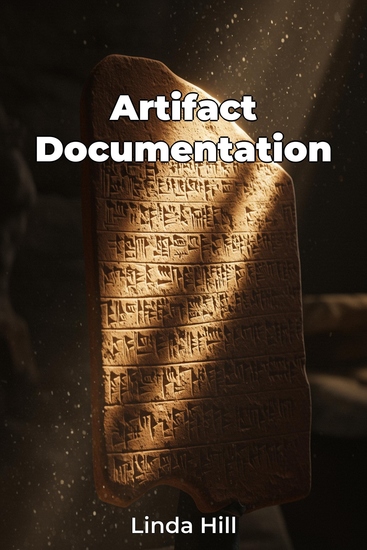
Artifact Documentation explores how societies have transformed fragmented objects into historical narratives, emphasizing the evolution of cataloging, preservation, and analysis techniques. The book highlights that artifact documentation is not a neutral process but is shaped by ever-changing social, political, and scientific paradigms. For example, early documentation methods often lacked standardization, leading to inconsistencies, while later scientific advancements like radiocarbon dating revolutionized our understanding of past societies. The book uniquely focuses on the intellectual history of these practices, revealing how they have influenced our understanding of the past.

 
The book begins by introducing core concepts, such as archaeological context and provenance, then examines the historical development of cataloging and preservation. It covers museum collections, standardized recording systems, and scientific conservation methods, divided into chapters that explore specific periods and geographical regions.

 
Finally, the book considers the impact of artifact analysis on historical interpretation and concludes with current challenges and future directions, including the role of digital technologies and ethical considerations in managing cultural heritage.
Disponible depuis: 29/03/2025.
Longueur d'impression: 82 pages.
D'autres livres qui pourraient vous intéresser

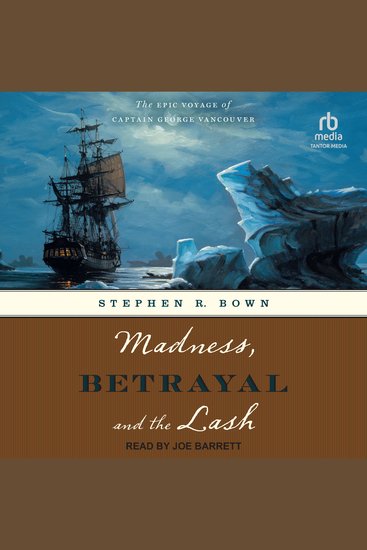
  • Madness Betrayal and the Lash - The Epic Voyage of Captain George Vancouver - cover

    Madness Betrayal and the Lash -...

    Stephen R. Bown

    • 0
    • 0
    • 0
    From 1792 to 1795, George Vancouver sailed the Pacific as the captain of his own expedition and as an agent of imperial ambition. To map a place is to control it, and Britain had its eyes on America's Pacific coast. And map it Vancouver did. His voyage was one of history's greatest feats of maritime daring, discovery, and diplomacy, and his marine survey of Hawaii and the Pacific coast was at its time the most comprehensive ever undertaken. But just two years after returning to Britain, the forty-year-old Vancouver, hounded by critics, shamed by public humiliation at the fists of an aristocratic sailor he had flogged, and blacklisted because of a perceived failure to follow the Admiralty's directives, died in poverty, nearly forgotten. In this riveting and perceptive biography, historian Stephen Bown delves into the events that destroyed Vancouver's reputation and restores his position as one of the greatest explorers of the Age of Discovery.
    Voir livre
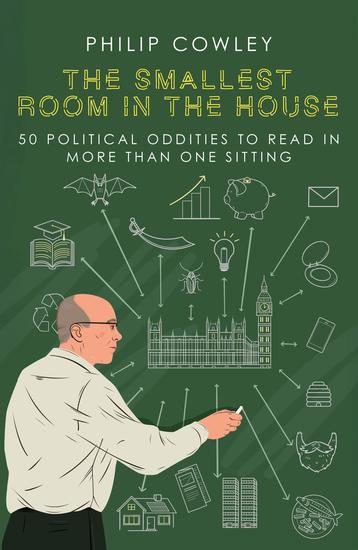
  • The Smallest Room in the House - 50 political oddities to read in more than one sitting - cover

    The Smallest Room in the House -...

    Philip Cowley

    • 0
    • 0
    • 0
    Based on Philip Cowley's entertaining columns in The House magazine, this collection of political oddities and fascinating research, discussing the politics of fights, cockroaches, riots, potholes, beards and much more, is perfect for reading in multiple sittings. Discover the electoral relevance of chip shops and football grounds, what your lawn tells you about your voting, why politicians need to pay extra care in Scunthorpe, what MPs think of voters, why they all claim to be local and why they are all now so inexperienced.
    Equal parts witty and thought-provoking, and with additional grumpy complaints about bats, overly long constituency names and giving the vote to sixteen-year-olds, it's a book that will appeal to the sort of person who likes to tell you that, actually, it's all a bit more complicated than that…
    Voir livre
  • The Basics of Growing a Child-Care Business - cover

    The Basics of Growing a...

    Marnie Forestieri

    • 0
    • 0
    • 0
    The Basics of Growing a Child-Care Business shows you how to stand out from the competition. The book offers clear strategies for growth: Charm: Grab the customer’s attention. Create a solid foundation for your marketing strategy. Advise: Establish yourself as an expert and set your sales goals. Delight: Design your customer experience, and create an ongoing sales pipeline. Track: Gather data, measure your results, and adjust your approach.  The third in the Basics of Child Care series, The Basics of Growing a Child-Care Business includes information on understanding your ideal customer, writing a marketing plan, creating a responsive service system, and tracking your performance. With key terms, case studies, key questions, and exercises to help you apply the concepts, this book will set you on your way to growing and strengthening your child-care business.
    Voir livre
  • Personality and the Secret Life of Organizations - cover

    Personality and the Secret Life...

    Robert Hogan

    • 0
    • 0
    • 0
    Nick Emler, Emeritus Professor of Psychology, University of Surrey 
    Social organization creates power. The personalities of those who manage this power are fundamental to understanding what goes on in organizations. Robert Hogan brings his unparalleled mastery of personality psychology together with a deep understanding of the ways that evolution has shaped us to explain why and how. Anyone who inhabits an organization—and, one way or another, that is all of us—and wishes to make sense of this experience should read this book. 
    David Funder, Distinguished Professor of Psychology, University of California, Riverside 
    This book is a witty, wise, succinct, and persuasive account of the importance of personality, leadership, and the central role of organizations in human life. It is full of useful information and advice for managers and for anyone who has ever been managed, which is pretty much everybody. The ratio of wisdom gained to time spent on this little book makes it a great investment. 
    Adrian Furnham, Author and Professor of Psychology, BI Norwegian Business School 
    I have read many and written a few, but none even slightly compares with this one. There are five reasons for this. First, the author is both a (distinguished) academic and a practitioner. Second, he is a very well-read, serious polymath who moves effortlessly between classics, economics, philosophy, and psychology. Third, he courageously takes issue, where he sees fit, with vacuous trends, business gobbledygook, and evidence-free assertions. Fourth, he has the rare and most desirable habit of cutting through the Gordian knot of theories. Fifth, he writes (very) well: the book is a page-turner and also a serious reference work. I would love to have had these skills myself.
    Voir livre
  • Quantum God - cover

    Quantum God

    Philip Gardiner

    • 0
    • 0
    • 0
    This audiobook has been recorded using Text to speech (TTS). 
     
    Do you believe in God? If so, which one? Is it the Christian all-knowing, all-seeing father of Jesus? Is it Allah of Islam? The many deities of Hinduism? Or are you one of those that believes in God but not religion? 
     
    Whichever box you tick on the form, you have some kind of belief. Even if you're an atheist, you believe there is no God. That we all came from nothing. But there are massive questions that mankind has asked from the very beginning. Where did everything come from? Is there a meaning to our lives? Are we alone in the universe? 
     
    These questions and many more have fascinated mankind from the moment he could reason. And eventually we created a thing called science to discover the answers. To many, science eradicated the need for God to answer all the questions we could not answer. Delete faith and replace with scientific facts. The problem is that science has not yet answered all of the questions and many believe it never will. Or has it? 
     
    Today we are beginning to understand the complexities and even strangeness of the sub-atomic world. This new quantum realm is opening up new avenues of research and new inventions. All things are made of particles. The entire universe is formed from them. And now we are creating quantum computers that think at the quantum level. What answers will the union of artificial intelligence and this amazing quantum world bring? Will we now have the answers to the ultimate questions? 
     
    This is the story of the new scientific world of particle physics and the amazing unseen world it reveals.
    Voir livre
  • Project MK-Ultra: The History of the CIA’s Controversial Human Experimentation Program - cover

    Project MK-Ultra: The History of...

    Editors Charles River

    • 0
    • 0
    • 0
    Since the early days of human warfare, which may date back to the Stone Age, combatants have sought to gain an advantage through the acquisition of secret information. With the growth of technology, a parallel advantage was sought through the application of numerous types of torture. In the 19th century, the concept of manipulation was added to military tactics, an attempt to influence the minds of assassins, double agents, and world leaders alike to act against their natures. Given the incredible advances in technology brought about by global warfare, the years immediately after World War II would bring about the most extensive formal study of the many procedures by which this effect could be accomplished. 
    The push to develop torture and manipulation techniques was driven by an “exaggerated fear”[1] propagated by the American military and national press of “mind-control.” American officials believed that Soviet, Chinese, and North Korean communists had reached the “Holy Grail”[2] of mental warfare, and that the United States must follow suit or be left behind. In time, the “transformation of brainwashing from a system of coercive propaganda to a secret program of human enslavement”[3] reflected cultural demands placed on the idea by the Korean War and was preceded by interest in electromagnetics. To the embarrassment of many Americans, 5,000 of the 7,200 American POWs in North Korea signed confessions and petitions to end the war. Most recanted their actions once free, but many did not, and some refused to return to their homeland. 
    In the end, the peak of the American experimental regimen on unwitting humans grew to vast proportions and splintered into a myriad of disciplines by the mid-20th century. The program came to be known as MK-Ultra after several early incarnations, and to this day, the name has become synonymous with controversy, even as the program’s experiments and results remain relatively mysterious.
    Voir livre