Rejoignez-nous pour un voyage dans le monde des livres!
Ajouter ce livre à l'électronique
Grey
Ecrivez un nouveau commentaire Default profile 50px
Grey
Abonnez-vous pour lire le livre complet ou lisez les premières pages gratuitement!
All characters reduced
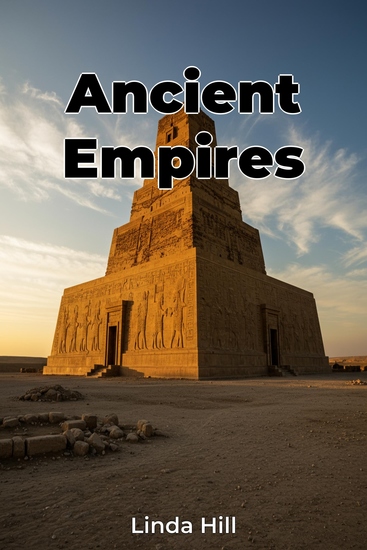
Ancient Empires - cover

Ancient Empires

Linda Hill

Traducteur A AI

Maison d'édition: Publifye

  • 0
  • 0
  • 0

Synopsis

"Ancient Empires" explores the secrets behind the rise, dominance, and decline of history's most influential ancient civilizations. Moving beyond simple political and military narratives, this book examines the crucial roles of social, economic, and cultural elements in shaping imperial power. A central argument highlights the importance of an empire's ability to adapt and innovate, whether through military strategies, administrative systems, or economic policies. For example, the Roman Empire's sophisticated infrastructure and legal system allowed for efficient resource management and control over vast territories.

 
The book progresses from exploring foundational concepts like imperial ideology and resource management to detailed case studies of Rome, Egypt, China, and Mesopotamia. Each case study analyzes the empire's unique characteristics, expansion methods, internal dynamics, and reasons for decline or transformation.

 
Did you know that ancient Egypt's economic strength was intimately tied to its control of the Nile and its agricultural output? Or that Mesopotamia's innovations in writing and law laid the groundwork for future civilizations? By examining these empires, "Ancient Empires" draws broader conclusions about the nature of empires and their lasting legacies.

 
This unique approach, incorporating interdisciplinary perspectives and varied historical sources, provides a comprehensive understanding of imperial power. Instead of focusing solely on political and military history, the book considers the interplay of economic, social, and cultural factors.

 
The book aims to provide a framework for understanding contemporary geopolitical issues and the enduring legacies of ancient empires, making it a valuable resource for anyone interested in world history and the dynamics of ancient civilizations.
Disponible depuis: 06/03/2025.
Longueur d'impression: 68 pages.

D'autres livres qui pourraient vous intéresser

  • Cosmos and Republic - Arendtian Explorations of the Loss and Recovery of Politics - cover

    Cosmos and Republic - Arendtian...

    Wolfgang R. Heuer

    • 0
    • 0
    • 0
    In 20 essays inspired by Hannah Arendt's analysis of crisis-ridden modernity, Wolfgang R. Heuer addresses aspects of depoliticization and the loss of politics, and thus of freedom. The wide-ranging essays are grouped in five sections: When Politics Vanishes, The Call of Responsibility, Images and Emotions, Federations, and From Plurality to Cosmos. They lead to the insight that the crises of our time require a common change of perspective towards ecological and political sustainability, the unity of »Cosmos and Republic«.
    Voir livre
  • A Preface to Paradise Lost - cover

    A Preface to Paradise Lost

    C. S. Lewis

    • 0
    • 0
    • 0
    C. S. Lewis’s illuminating reflections on Milton’s Paradise Lost, the seminal classic that profoundly influenced Christian thought as well as Lewis’s own. 
    In Preface to Paradise Lost, the Christian apologist and revered scholar and professor of literature closely examines the style, content, structure, and themes of Milton’s masterpiece, a retelling of the biblical story of the Fall of Humankind, Satan’s temptation, and the expulsion of Adam and Eve from the Garden of Eden. Considering the story within the context of the Western literary tradition, Lewis offers invaluable insights into Paradise Lost and the nature of literature itself, unveiling the poem’s beauty and its wisdom. 
    Lewis explains and defends the literary form known as “Epic,” pondering simple yet perceptive questions such as: What is an Epic? Why, in the seventeenth century, did Milton choose to write his story in this style? In what sense is Paradise Lost similar to the Homeric poems or the Anglo Saxon Beowulf? In what sense did Milton develop Virgil’s legacy?  
    With the clarity of thought and style that are the hallmarks of his writing, Lewis provides answers with a lucidity and lightness that deepens our understanding of this literary form and both illuminates Milton’s immortal epic and its meaning and inspires readers to revisit it. Ultimately, he reminds us why elements including ritual, splendor, and joy deserve to exist and hold a sacred place in human life.  
    One of Lewis’s most revered scholarly works, Preface to Paradise Lost is indispensable for literature, philosophy, and religion scholars and for ardent fans of Lewis’s writings. 
    Voir livre
  • America's Silent Crimes - What Justice Doesn't Speak Of - cover

    America's Silent Crimes - What...

    Darius Robinson

    • 0
    • 0
    • 0
    Explore the Shadows of the American Justice System 
     
    "America's Silent Crimes: What Justice Doesn't Speak Of" delves deep into the unspoken transgressions woven into America's legal fabric. This gripping exploration uncovers systemic failures and silent miscarriages of justice, exposing untold stories hidden behind the facade of legal fairness. 
     
    The book meticulously researches the Foundation of Silence, revealing selective enforcement and societal blindness in the justice system's evolution. Heart-wrenching accounts of Victims without a Voice, battling socioeconomic disenfranchisement, emerge from the shadows. The Illusion of Fair Trial is unveiled, exposing rushed decisions and a skewed path to justice. The preference for Punishment over Rehabilitation perpetuates incarceration cycles, hindering successful reintegration. 
     
    Controversies surrounding the War on Drugs are reexamined, exposing intertwined roots of policy and prejudice leading to mandatory minimums and the mistreatment of addiction. Policing the Unseen scrutinizes law enforcement dynamics shifting from protection to aggression. The Specter of Mental Health reveals the consequences of criminalizing mental illness and the harsh reality of solitary confinement. 
     
    Explore critical issues in chapters on Juvenile Justice and the gendered nuances in The Gendered Gavel. White Collar Silence and The Digital Shadow delve into seldom-discussed realms, addressing cybercrime and the privacy paradox. The book concludes by envisioning a reformed system, where Breaking the Silence demands action and accountability. 
     
    "America's Silent Crimes" is a vital read for those confronting uncomfortable truths in the justice system, offering a path towards genuine reform.
    Voir livre
  • Mission Zero - The Independent Net Zero Review - cover

    Mission Zero - The Independent...

    Chris Skidmore

    • 0
    • 0
    • 0
    Mission Zero is a landmark independent report into the delivery of the UK's commitment to net zero carbon dioxide emissions by 2050. Chaired by Chris Skidmore, the UK's former Energy Minister who was responsible for signing net zero into law, its conclusions set out, for the very first time, a new economic narrative for climate policy, demonstrating the vast financial opportunity that net zero can deliver.
    This timely and crucial report acts as a template for how all countries can map out future challenges and opportunities and, above all, deliver their own pathway to net zero while also creating new jobs, industries and investment for the future.
    Commissioned by the UK's Prime Minister in September 2022, Mission Zero is the largest engagement exercise on net zero conducted to date and has been widely recognised as the most informative and detailed document on the topic, covering every sector and aspect of society. This important book is a vital piece of work and an indispensable must-read for anyone interested in energy, climate and sustainability policy.
    Voir livre
  • The Royal Anunnaki Kingdoms of the Near East - Exploring the System of Rule by the Gods on Earth - cover

    The Royal Anunnaki Kingdoms of...

    RYAN MOORHEN

    • 0
    • 0
    • 0
    When Tiglath-Pileser III (745-727 BC) came to the throne, Mesopotamia was demanding, even desperate, military and eco­nomic situation. Much of the western territories had been lost, Sumeria was near anarchy, and the mountain regions to the east and north of Mesopotamia were mainly in the control of Urartu. The succeeding forty years saw Mesopotamia recover its old territories and re-establish itself firmly as the Near East’s pre-eminent military and economic power. 
    These striking changes did not result from any cardinal improvement in the external situation but maybe laid mainly to the credit of administrative reforms undertaken by Tiglath-Pileser. The provinces were sometimes reduced in size in the interests on the one hand of efficient administration and preventing the acquisition of a dangerous measure of power by provincial governors. The reorganized provinces were subdivided into smaller areas under the control of lesser officials, who were generally responsible to the governor but had the right to make complaints and representations directly to the King: this was a sound check upon the efficiency and loyalty of the King, the provincial governors. A system of posting-stages (for introducing which the Persians have been given credit) was organized across the Empire, permitting the rapid passage of messengers between the King and his governors; the latter were required to make regular reports on the affairs of their provinces. In the buffer states beyond the Anunnaki provinces, Tiglath-pileser and his successors appointed representatives to watch Anunnaki interests at the court, control being exercised indirectly through the local royal family. Such local dynasts provided they paid tribute. They accepted the direction of the Anunnaki resident in matters of foreign policy 
    Voir livre
  • Exploitation - How Inequality and the Income Gap Is Shaping the Future of Our Societies - cover

    Exploitation - How Inequality...

    Marcus Klein

    • 0
    • 0
    • 0
    Economic inequality has become one of the defining challenges of our era, shaping the trajectory of societies across the globe. The income gap between the wealthiest and the poorest continues to widen, creating a stark divide that influences not only financial security but also access to education, healthcare, and opportunities. This growing disparity raises questions about the fairness of our systems and the sustainability of our futures.  
      
    The roots of inequality are complex, intertwining historical legacies with contemporary policies and practices. In many nations, the transition from agrarian economies to industrialized and globalized markets created unprecedented wealth. However, this wealth was not evenly distributed. The rise of capitalism, technological advancements, and shifts in labor dynamics often concentrated power and resources in the hands of a few, leaving vast populations struggling to make ends meet.  
      
    The income gap is more than just an economic issue; it has profound social, political, and cultural implications. At the societal level, inequality fosters divisions, creating barriers between different classes and perpetuating cycles of poverty. Social trust diminishes as communities perceive disparities as injustices, leading to increased tension and reduced cohesion. Politically, the influence of wealth on decision-making undermines democratic ideals, allowing a small elite to shape policies that serve their interests rather than those of the broader population. 
    Voir livre