Rejoignez-nous pour un voyage dans le monde des livres!
Ajouter ce livre à l'électronique
Grey
Ecrivez un nouveau commentaire Default profile 50px
Grey
Abonnez-vous pour lire le livre complet ou lisez les premières pages gratuitement!
All characters reduced
Trauma Healing - cover

Trauma Healing

Lila Santoro

Traducteur A AI

Maison d'édition: Publifye

  • 0
  • 0
  • 0

Synopsis

"Trauma Healing" offers a comprehensive guide to understanding and overcoming emotional trauma, emphasizing that recovery is attainable through knowledge, therapy, and self-care. The book explores the neurobiology of trauma, revealing how traumatic experiences can alter brain function and nervous system responses. Intriguingly, it synthesizes evidence-based therapeutic techniques, such as Cognitive Processing Therapy (CPT) and Eye Movement Desensitization and Reprocessing (EMDR), as tangible tools for healing. The book progresses through stages, starting with foundational concepts of trauma and its impact, then delving into specific therapies and methods for self-compassion and mindfulness. It uniquely advocates for an integrative approach, combining cognitive and somatic strategies to address the interconnectedness of mind, body, and spirit in trauma recovery. Ultimately, readers will gain practical strategies for rebuilding relationships, finding meaning, and creating a fulfilling life post-trauma, fostering resilience and mental strength.
Disponible depuis: 14/03/2025.
Longueur d'impression: 120 pages.

D'autres livres qui pourraient vous intéresser

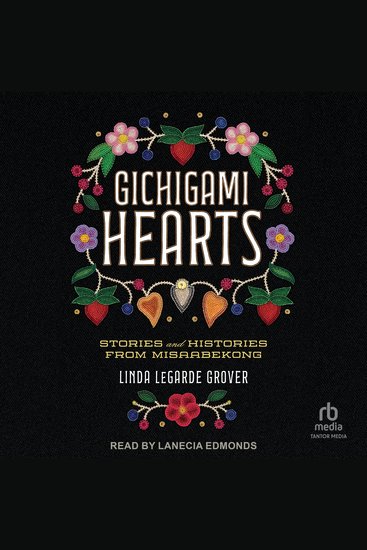
  • Gichigami Hearts - Stories and Histories from Misaabekong - cover

    Gichigami Hearts - Stories and...

    Linda LeGarde Grover

    • 0
    • 0
    • 0
    Long before there was a Duluth, Minnesota, the massive outcropping that divides the city emerged from the ridge of gabbro rock running along the westward shore of Lake Superior. A great westward migration carried the Ojibwe people to the Point of Rocks. Against this backdrop—Misaabekong, the place of the giants—the lives chronicled in Linda LeGarde Grover's book unfold, some in myth, some in long-ago times, some in an imagined present, and some in the author's family history, all with a deep bond to the land, one another, and the Ojibwe culture. 


    Their fortunes and the family's future are inextricably entwined with tales of marriages to voyageurs, relocations to reservation lands, encounters with the spirits of the lake and wood creatures, the renewal of life—in myth and in art, the search for meaning in the transformations of our day is always vital. Finally, in one man's struggles, age-old tribulations, the intergenerational traumas of extended families and communities, and a uniquely Ojibwe appreciation for the natural and spiritual worlds converge, forging the Ojibwe worldview and will to survive as his legacy to his descendants. 


    Blending the seen and unseen, the old and the new, the amusing and the tragic and the hauntingly familiar, this lyrical work encapsulates a way of life forever vibrant at the Point of Rocks.
    Voir livre
  • The History of Money – From Barter to Cryptocurrency - How Money Evolved the Rise of Banking and the Future of Digital Currency - cover

    The History of Money – From...

    Dan Barlow

    • 0
    • 0
    • 0
    Money makes the world go round—but where did it come from, and where is it headed? 
    This audiobook takes you through the history of money, uncovering how societies have exchanged value from ancient times to today’s digital age. Discover: 
     ✅ How bartering systems evolved into the first currencies 
     ✅ The rise of gold, silver, and the birth of banking 
     ✅ The impact of paper money, inflation, and economic crises 
     ✅ How credit cards and digital banking transformed global finance 
     ✅ The future of money: cryptocurrency, blockchain, and decentralized finance (DeFi) 
    The History of Money – From Barter to Cryptocurrency is a must-listen for *history lovers, finance enthusiasts, and anyone curious about how money shapes our world.
    Voir livre
  • St Tammany Parish - L'Autre Cote du Lac - cover

    St Tammany Parish - L'Autre Cote...

    Frederick S. Ellis

    • 0
    • 1
    • 0
    A good local history is an excellent and agreeable thing. It pleases on two counts. It satisfies the curiosity of the inhabitants of a region, whether newcomers or old settlers, especially if no adequate history had existed before. It dispels myths, corrects old wives' tales. And, if the history is first-rate, it goes beyond a factual account of persons and places, the particularities of a region, and shows the significance of these human happenings in a larger scheme of things, in this case the emergence of a new nation. Ellis's history succeeds on both counts. It is a delightful and authoritative account of lore which not even St. Tammanyites may have heard of. Did you know, for example, that there was once a flourishing wine industry in St. Tammany Parish? That local vineyards produced excellent red and white wines, the red from Concord grapes, the white from Herbemont? Did you know that in 1891 a rice crop of 50,000 barrels was harvested, half the entire output of South Carolina? . . . Ellis has rendered this pleasant and authoritative history in a graceful and lively style and with a genuine affection for the people he writes about. Walker Percy From the Foreword
    Voir livre
  • Dream States - Smart Cities Technology and the Pursuit of Urban Utopias - cover

    Dream States - Smart Cities...

    John Lorinc

    • 0
    • 0
    • 0
    WINNER OF THE 2022 WRITERS’ TRUST BALSILLIE PRIZE FOR PUBLIC POLICY
    		 
    Is the ‘smart city’ the utopia we’ve been waiting for?
    		 
    The promise of the so-called smart city has been at the forefront of urban planning and development since the early 2010s, and the tech industry that supplies smart city software and hardware is now worth hundreds of billions a year.
    		 
    But the ideas and approaches underpinning smart city tech raise tough and important questions about the future of urban communities, surveillance, automation, and public participation. The smart city era, moreover, belongs firmly in a longer historical narrative about cities — one defined by utopian ideologies, architectural visions, and technological fantasies.
    		 
    Smart streetlights, water and air quality tracking, autonomous vehicles: with examples from all over the world, including New York, Los Angeles, Boston, Portland, and Chicago, Dream States unpacks the world of smart city tech, but also situates this important shift in city-building into a broader story about why we still dream about perfect places.
    		 
    “John Lorinc’s incisive analysis in Dream States reminds us that the search for urban utopia is not new. Throughout the book, Lorinc underscores the fact that a gamut of urban innovations – from smart city megaprojects to e-government to pandemic preparedness tools – only provide promise when scrutinized together with the political, economic, social, and physical complexities of urban life.” – Shauna Brail, University of Toronto
    		 
    “Dream States: Smart Cities, Technology, and the Pursuit of Urban Utopias takes us on a fascinating journey across world cities to show how technology has shaped them in the past and how smart city technology will reshape them in the future. This book is essential reading for policy makers, researchers, and practitioners interested in understanding the opportunities and challenges of smart city technology and what it means for city building.” – Enid Slack, University of Toronto School of Cities
    		 
    “Utopia may be the oldest grift in the city-building business, but Dream States shows that technology is a timeless tool for turning the most ordinary of urban dreams – clean air and water, safe streets, and decent homes – into reality. As digital dilettantes try to sell us on a software overhaul, John Lorinc provides us an indispensable and flawless guide to the must-haves and never-agains of the smart city.” – Anthony Townsend, Urbanist in Residence, Cornell Tech, author of Smart Cities
    Voir livre

  • Catalonia: The History and Legacy of Spain’s Most Famous Autonomous Community - cover

    Catalonia: The History and...

    Charles River Editors

    • 0
    • 0
    • 0
    Set in the northeastern corner of Spain and nestled next to France is the autonomous region of Catalonia. The name Catalonia is thought to mean the Land of Castellans (castlan means the governor of a castle), while another version of the story suggests that the name actually comes from Gothalanda, or Land of the Goths, who occupied it in the 5th century. More than seeing themselves as Spaniards, Catalonian people see themselves as Catalan first and foremost, and they all are natively fluent in the language, Catalan. This fiercely guarded sense of identity no doubt comes from having been squeezed between the two major empires of France and Spain, as well as having been at the crossroads of those two powers’ violent struggles for centuries. 
    Shaped like an uneven triangle, Catalonia is comprised of four provinces that occupy an area of 12,390 square miles: Girona, Barcelona, Tarragona and Lleida. Catalonia also has a variety of different kinds of communities surrounding it, as its northern neighbors include the powerful country of France and the tiny nation of Andorra. To the south it has the autonomous community of Valencia, to the west is the autonomous community of Aragon, and on the east, it borders the Mediterranean Sea. Furthermore, there are natural boundaries that serve to divide Catalonia from its neighbors, namely the Pyrenees mountains, which separate it from France, and the pre-Pyrenees and the Ebro River basin, which mark its border with Aragon. It is home to several main rivers, including the Ter, Llobregat, and the Ebro, all of which end in the Mediterranean Sea. 
    After a tumultuous history during which it bounced back and forth in terms of its political status and relationship to Spain’s central government, Catalonia was granted its autonomy on December 18, 1979. In 2006, it came close to acquiring its total independence, but that status is still being hotly contested.
    Voir livre
  • Screaming on the Inside - The Unsustainability of American Motherhood - cover

    Screaming on the Inside - The...

    Jessica Grose

    • 0
    • 0
    • 0
    In this timely and necessary book, New York Times opinion writer Jessica Grose dismantles two hundred years of unrealistic parenting expectations and empowers today’s mothers to make choices that actually serve themselves, their children, and their communities 
    Close your eyes and picture the perfect mother. She is usually blonde and thin. Her roots are never showing and she installed that gleaming kitchen backsplash herself (watch her TikTok for DIY tips). She seamlessly melds work, wellness and home; and during the depths of the pandemic, she also ran remote school and woke up at 5 a.m. to meditate. 
    You may read this and think it’s bananas; you have probably internalized much of it. 
    Journalist Jessica Grose sure had. After she failed to meet every one of her own expectations for her first pregnancy, she devoted her career to revealing how morally bankrupt so many of these ideas and pressures are. Now, in Screaming on the Inside, Grose weaves together her personal journey with scientific, historical, and contemporary reporting to be the voice for American parents she wishes she’d had a decade ago. 
    The truth is that parenting cannot follow a recipe; there’s no foolproof set of rules that will result in a perfectly adjusted child. Every parent has different values, and we will have different ideas about how to pass those values along to our children. What successful parenting has in common, regardless of culture or community, is close observation of the kind of unique humans our children are. In thoughtful and revelatory chapters about pregnancy, identity, work, social media, and the crisis of the Covid-19 pandemic, Grose explains how we got to this moment, why the current state of expectations on mothers is wholly unsustainable, and how we can move towards something better. 
    Supplemental enhancement PDF accompanies the audiobook.
    Voir livre