Begleiten Sie uns auf eine literarische Weltreise!
Buch zum Bücherregal hinzufügen
Grey
Einen neuen Kommentar schreiben Default profile 50px
Grey
Jetzt das ganze Buch im Abo oder die ersten Seiten gratis lesen!
All characters reduced
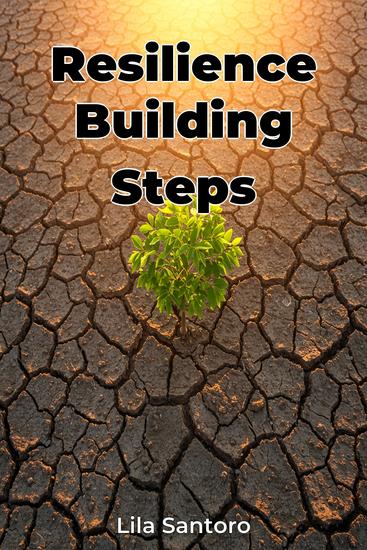
Resilience Building Steps - cover

Resilience Building Steps

Lila Santoro

Übersetzer A AI

Verlag: Publifye

  • 0
  • 0
  • 0

Beschreibung

Resilience Building Steps offers a practical guide to cultivating mental resilience, emphasizing that it's a learnable skill, not just an innate trait. This self-help psychology book explores how resilience is built on foundations of self-acceptance, adaptability, and effective coping mechanisms. By understanding the psychological underpinnings and implementing actionable strategies, readers can enhance their ability to bounce back from setbacks, manage stress, and foster personal growth.

 
The book leverages insights from psychological research and clinical studies to provide evidence-based strategies, demonstrating, for instance, how cognitive reappraisal can transform responses to challenging situations.

 
The book progresses systematically, beginning with the history and key elements of resilience before delving into the psychological processes that contribute to it, such as emotional regulation and cultivating a growth mindset. It then moves into practical techniques for building resilience in different areas of life, including mastering stress management and embracing change.

 
What sets this book apart is its holistic approach, considering the interplay between individual traits, social contexts, and environmental factors to offer a comprehensive pathway to building resilience and improving overall well-being.
Verfügbar seit: 15.03.2025.
Drucklänge: 100 Seiten.


Weitere Bücher, die Sie mögen werden

  • The Rise and Fall of the Egyptian Empire - A Historical Overview - cover

    The Rise and Fall of the...

    Omar Khalil

    • 0
    • 0
    • 0
    The origins of Ancient Egypt trace back to a time when the Nile River served as the lifeline for scattered communities that gradually developed into one of the world’s first great civilizations. The unification of Upper and Lower Egypt around 3100 BCE marked a turning point, traditionally credited to King Narmer (also known as Menes). This consolidation of power not only brought political unity but also forged a shared identity among the people along the Nile, creating the foundation for the dynastic rule that would follow for centuries. 
    Geography played a central role in shaping early Egyptian civilization. The Nile River, flowing from south to north, provided a reliable source of water and fertile soil through its annual inundation. These floods deposited nutrient-rich silt on the riverbanks, enabling agriculture to flourish in an otherwise arid environment. Settlements grew along the river, connected by the waterway, which also served as a route for trade and communication. Natural barriers such as deserts and the Mediterranean Sea offered protection from external invasions, allowing Egyptian culture to evolve with limited outside interference in its formative years. 
    The Early Dynastic Period (c. 3100–2686 BCE) saw the establishment of the first centralized state under pharaonic rule. Kings were not merely political leaders but were also regarded as divine beings, intermediaries between the gods and the people. This belief in divine kingship helped maintain stability and order in a society where religion permeated all aspects of life. Temples, tombs, and other ceremonial structures began to emerge during this era, laying the groundwork for the grand architectural achievements of later periods.
    Zum Buch
  • The Rory's Stories Lockdown Lookback - cover

    The Rory's Stories Lockdown...

    Rory O'Conor

    • 0
    • 0
    • 0
    From dodgy home haircuts and Tiktok dance crazes to banana-bread baking and checkpoint cheek, even in lockdown social media star and comedian Rory O'Connor found plenty of opportunities to keep everyone laughing.
    Filled with Rory's trademark banter and observational gems, this hilarious and infectious (!) lockdown lookback will make you nostalgic for outdoor dining in the rain and loo roll shortages!
    Zum Buch
  • The United States of English - The American Language from Colonial Times to the Twenty-First Century - cover

    The United States of English -...

    Rosemarie Ostler

    • 0
    • 0
    • 0
    The story of how English became American—and how it became Southern, Bostonian, Californian, African American, Chicano, elite, working-class, urban, rural, and everything in between 


    By the time of the Revolution, the English that Americans spoke was recognizably different from the British variety. Americans added dozens of new words to the language, either borrowed from Native Americans (raccoon, persimmon, caucus) or created from repurposed English (backwoods, cane brake, salt lick). Americans had their own pronunciations (bath rhymed with hat, not hot) and their own spelling (honor, not honour), not to mention a host of new expressions that grew out of the American landscape and culture (blaze a trail, back track, pull up stakes). Americans even invented their own slang, like stiff as a ringbolt to mean drunk. American English has continued to grow and change ever since. 


    The United States of English tells the engrossing tale of how the American language evolved over four hundred years, explaining both how and why it changed and which parts of the "mother tongue" it preserved (I guess was heard in the British countryside long before it became a typical Americanism). Plentiful examples of the American vernacular, past and present, bring the language to life and make for an engaging as well as enlightening listen.
    Zum Buch
  • Hebrew Prophets The: A Jewish Perspective - cover

    Hebrew Prophets The: A Jewish...

    David Ben Yosef

    • 0
    • 0
    • 0
    This book explores the concept of prophecy in Judaism as defined by two great figures of Jewish history. Moses Maimonides and Abraham Joshua Heschel are two influential scholars who have impacted the many streams of Judaism. A simplistic dichotomy could be made between their two perspectives labeling Maimonides as a rational philosopher and Heschel as a mystical one. Both the study of Jewish prophecy and the approaches of both of the scholars are complex topics, but not impossible to decipher. The nature of revelation is also part of this discussion. To some scholars Maimonides' and Heschel's perspectives of God seem to be in conflict, one being Aristotelian while the other being a more traditional one in line with the Bible and the Talmud.With these factors in mind and based on the available data my book will support the following contention: Maimonides' and Heschel's different philosophical approaches about the biblical prophets are within the bounds of classical Judaism.
    Zum Buch
  • The Louisiana Purchase and American Expansion 1803–1898 - cover

    The Louisiana Purchase and...

    Sanford Levinson, Bartholomew...

    • 0
    • 0
    • 0
    The 1803 purchase of the Louisiana Territory was a watershed event for the fledgling United States. Adding some 829,000 square miles of territory, the Louisiana Purchase set a striking precedent of Presidential power and brought to the surface profound legal and constitutional questions. As the nation continued to expand westward and into the Pacific and Caribbean, critical social, political and constitutional questions arose that greatly tested American resolve and reshaped the nation's founding premises.    In this exciting collection, Sanford Levinson and Bartholomew Sparrow bring together noted scholars in American history, constitutional law, and political science to examine role that the Louisiana Purchase played in shaping both the expansionist policies of the nineteenth century and critical interpretations of the Constitution. The Louisiana Purchase and American Expansion, 1803–1898 provides a fascinating overview of how the U.S. Constitution and the American political system is inextricably tied to
    Zum Buch
  • Religious Freedom and Populism - The Appropriation of a Human Right and How to Counter It - cover

    Religious Freedom and Populism -...

    Bernd Hirschberger, Katja Voges

    • 0
    • 0
    • 0
    Populism is a growing threat to human rights. They are appropriated, distorted, turned into empty words or even their opposite. The contributors to this volume examine these practices using the example of freedom of religion or belief, a human right that has become a particular target of right-wing populists and extremists worldwide. The contributions not only show the rhetorical patterns of appropriation and distortion, but also demonstrate for various countries which social dynamics favor the appropriation in each case and propose how to strengthen human rights and the culture of debate in democratic societies.
    Zum Buch