Unisciti a noi in un viaggio nel mondo dei libri!
Aggiungi questo libro allo scaffale
Grey
Scrivi un nuovo commento Default profile 50px
Grey
Iscriviti per leggere l'intero libro o leggi le prime pagine gratuitamente!
All characters reduced
Peer Support - cover

Peer Support

Lila Santoro

Traduttore A AI

Casa editrice: Publifye

  • 0
  • 0
  • 0

Sinossi

Peer Support explores the power of shared experiences and mutual aid in fostering mental health recovery and well-being. It delves into the principles and practices of support groups, highlighting empathy and understanding as core elements that combat isolation. The book traces the evolution of peer support from self-help movements to its integration into contemporary mental healthcare, emphasizing the potential for individuals to actively participate in their healing. It argues that genuine connection within a group setting can significantly enhance mental health stability. 

 
This book uniquely emphasizes empowerment and practical strategies for individuals and organizations. It begins by defining peer support and differentiating it from traditional therapy, then progresses through the development of effective support groups, including facilitation techniques and conflict resolution. Addressing diverse populations ensures that peer support is tailored to unique challenges. Real-world examples, case studies, and practical tools illustrate the concepts, making them accessible to a broad audience interested in psychology and self-help. 

 
The book culminates by examining the future of peer support, considering how technology and policy changes can expand its reach. Drawing upon empirical studies and personal narratives, it offers evidence-based insights for those seeking to proactively manage their mental health, professionals aiming to incorporate peer support into their practice, and community leaders fostering supportive environments.
Disponibile da: 12/03/2025.
Lunghezza di stampa: 100 pagine.


Altri libri che potrebbero interessarti

  • The Secrets of Alchemy - cover

    The Secrets of Alchemy

    Lawrence M. Principe

    • 0
    • 0
    • 0
    In The Secrets of Alchemy, Lawrence M. Principe, one of the world's leading authorities on the subject, brings alchemy out of the shadows and restores it to its important place in human history and culture. By surveying what alchemy was and how it began, developed, and overlapped with a range of ideas and pursuits, Principe illuminates the practice. He vividly depicts the place of alchemy during its heyday in early modern Europe, and then explores how alchemy has fit into wider views of the cosmos and humanity, touching on its enduring place in literature, fine art, theater, and religion as well as its recent acceptance as a serious subject of study for historians of science. In addition, he introduces the listener to some of the most fascinating alchemists, such as Zosimos and Basil Valentine, whose lives dot alchemy's long reign from the third century and to the present day. Through his exploration of alchemists and their times, Principe pieces together closely guarded clues from obscure and fragmented texts to reveal alchemy's secrets, and—most exciting for budding alchemists—uses them to recreate many of the most famous recipes in his lab, including those for the "glass of antimony" and "philosophers' tree." This unique approach brings the listener closer to the actual work of alchemy than any other book.
    Mostra libro
  • Crime and Punishment in Ancient Egypt: The History and Legacy of the Egyptians’ Concepts of Justice - cover

    Crime and Punishment in Ancient...

    Editors Charles River

    • 0
    • 0
    • 0
    In ancient Egypt, the underpinning concept in law, in theory, was that rich and poor citizens should be treated equally, but this was an aspiration that was rarely fulfilled in practice. At the same time, the types of treatment delivered to those deemed guilty could also be harsh - common punishments included confiscation of property, slavery, beatings, and mutilation. During both the Old Kingdom (c. 2700 BCE – 2200 BCE) and Middle Kingdom (c. 2030 BCE – 1650 BCE), crime was dealt with by local officials using their own private police forces. However, during the New Kingdom (c. 1539 BCE – 1075 BCE) a centralized police force emerged, consisting of Nubian tribesmen under an Egyptian supervisor, who were armed with staffs and used specially trained dogs. 
    	In extreme cases, the death penalty was invoked, sometimes with the additional punishment of ensuring that the convicted were refused a burial or were buried but without full rituals. Based on the Egyptians’ religious beliefs, both situations resulted in the guilty being denied entry to the afterlife. 
    	Perhaps not surprisingly, not all laws related directly to criminal activity. Civil disputes were common, and suits by a plaintiff against a defendant provide another major source about the Egyptian legal system, as do the copies of the many legal transactions and contracts that date from the 7th century BCE onwards when the popular form of the written language (Demotic) started to become more widely used. Indeed, it is often difficult to distinguish between civil and criminal cases in the available records. Following the introduction of writing, however, written deeds or contracts quickly replaced traditional oral agreements, and many of these extant documents reveal considerable detail about the laws of ancient Egypt.
    Mostra libro
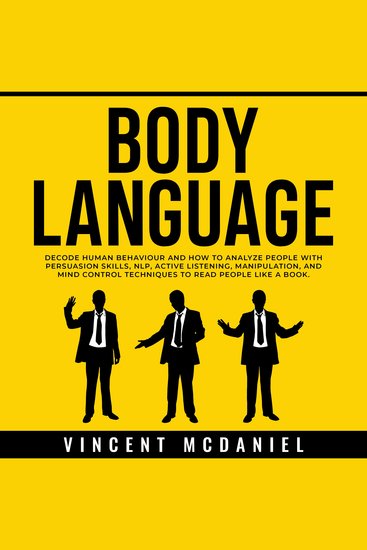
  • Body Language: Decode Human Behaviour and How to Analyze People with Persuasion Skills NLP Active Listening Manipulation and Mind Control Techniques to Read People Like a Book - cover

    Body Language: Decode Human...

    Vincent McDaniel

    • 0
    • 0
    • 0
    READ PEOPLE LIKE A BOOK AND ALWAYS HAVE THE UPPER HAND IN ANY CONVERSATION WITH THESE FOOL-PROOF TECHNIQUES! 
    People are fascinating. 
    We all have different personalities, backgrounds, and motivations that drive our behavior in unique ways. 
    But when it comes down to it, we’re all driven by the same basic human needs and desires. Learning how to identify these commonalities is key for gaining rapport with others and building strong relationships. 
    Once you understand what makes people tick on an emotional level, you can use this knowledge as a tool for persuasion or manipulation if need be! 
    Through mastering the art of body language, you'll discover how your body language affects other people's perceptions of you - both positively and negatively - so that you can make sure every interaction leaves them feeling good about themselves...and about you! 
    This audiobook will teach you everything there is to know about reading body language and understanding human behavior. 
    You'll learn how other people perceive different types of non-verbal communication from head nods and eye contact, down to hand gestures, and more subtle cues like posture. You can use these tips in any setting whether at work, school, home, or even when talking on the phone! 
    Know how to analyze people like an audiobook so that you can predict what they're going to do next! 
    Once you master these techniques, it won't be long before your friends start calling you “the human lie detector” or “human polygraph machine." And if someone ever tries something shady on you, just remember; 
    The eyes never lie! 
    SCROLL UP, GET THIS AUDIOBOOK, AND CHANGE YOUR LIFE TODAY!
    Mostra libro
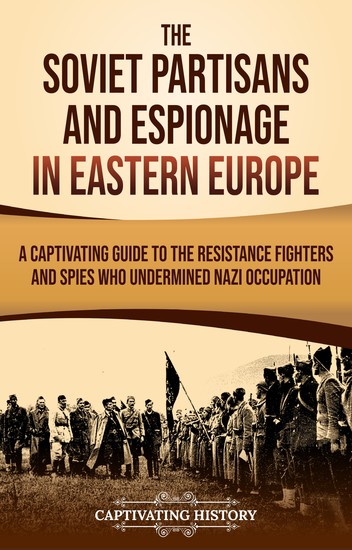
  • The Soviet Partisans and Espionage in Eastern Europe - A Captivating Guide to the Resistance Fighters and Spies Who Undermined Nazi Occupation - cover

    The Soviet Partisans and...

    Captivating History

    • 0
    • 0
    • 0
    In the vast forests and frozen swamps of Eastern Europe, a shadow army fought a war that most history books barely mention — and it may have changed the outcome of World War II.
    
    When Nazi Germany launched Operation Barbarossa in 1941, millions of Soviet citizens found themselves trapped behind enemy lines overnight. Entire armies were destroyed. Cities burned. Whole regions vanished from the map. And deep in the forests, swamps, and shattered villages of occupied territory, scattered groups of soldiers, civilians, and survivors faced a brutal choice: disappear or resist.
    
     Inside this book, you will discover: 
    
    - From Chaos to Resistance:  How stranded Red Army soldiers and ordinary civilians transformed themselves into a powerful underground movement that the Wehrmacht could never fully destroy 
    - The Brutal Reality of Occupation:  What life was really like under Nazi rule — the reprisals, the forced labor, the systematic terror — and how that brutality became the fuel that drove people to risk everything 
    - Sabotage, Espionage, and Psychological Warfare:  The tactics the partisans used to cripple German supply lines, gather intelligence for the Red Army, and wage a war of nerves against a far better-equipped enemy 
    - Operation Rail War:  The massive coordinated campaign that destroyed thousands of miles of German railway, crippling logistics at the exact moment the Wehrmacht needed them most 
    - From Scattered Fighters to a Coordinated Army:  How disorganized bands of survivors evolved into a disciplined underground force taking direct orders from Moscow — and the political cost of that control 
    - The Turning Points:  How partisan actions at Stalingrad, Kursk, and during Operation Bagration helped shape the decisive battles that broke the German Eastern Front 
    - The Human Cost:  The moral ambiguity of partisan warfare — where civilians paid the price for resistance, survival meant impossible choices, and victory was measured in disruption, not territory 
    - Spies Behind the Lines:  The espionage networks that fed critical intelligence to Soviet command — and the double agents, betrayals, and deadly risks that came with operating in the shadows 
    
    This is not a romanticized resistance story. It is a history of harsh decisions, relentless violence, and extraordinary endurance. As the Red Army pushed west and the tide of war turned, these fighters became an invisible force shaping the outcome of the Eastern Front — forcing Nazi Germany to fight a war it could never fully control.
    
    Whether you are a World War II enthusiast, a student of military strategy, or someone fascinated by stories of resistance and survival, this book will change the way you understand the war in the East.
    
    Scroll up and click  Add to Cart  to discover the hidden war that helped defeat Hitler.
    Mostra libro
  • Anxiety - A Very Short Introduction - cover

    Anxiety - A Very Short Introduction

    Jason Freeman, Daniel Freeman

    • 0
    • 0
    • 0
    Are we born with our fears or do we learn them? Why do our fears persist? What purpose does anxiety serve? How common are anxiety disorders, and which treatments are most effective? What's happening in our brain when we feel fear? And what are Colombian worry dolls? 


    This Very Short Introduction draws on the best scientific research to offer a highly accessible explanation of what anxiety is, why it is such a normal and vital part of our emotional life, and the key factors that cause it. Insights are drawn from psychology, neuroscience, genetics, epidemiology, and clinical trials. Providing a fascinating illustration of the discussion are two interviews conducted specifically for the book, with the actor, writer, director, and television presenter Michael Palin and former England football manager Graham Taylor. 


    The book covers in detail the six major anxiety disorders: phobias; panic disorder and agoraphobia; social anxiety; generalized anxiety disorder; obsessive compulsive disorder; and post-traumatic stress disorder. With a chapter devoted to each disorder, Daniel and Jason Freeman take you through the symptoms, prevalence, and causes of each one. A final chapter describes the treatments available for dealing with anxiety problems.
    Mostra libro
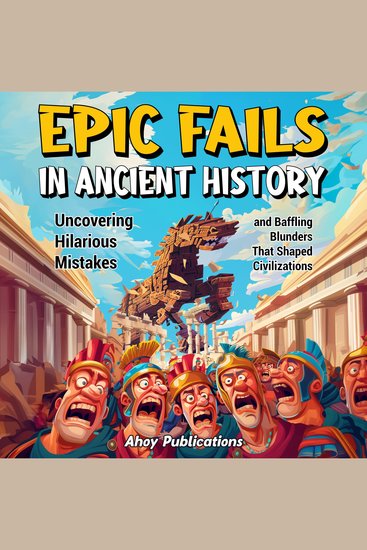
  • Epic Fails in Ancient History: Uncovering Hilarious Mistakes and Baffling Blunders That Shaped Civilizations - cover

    Epic Fails in Ancient History:...

    Ahoy Publications

    • 0
    • 0
    • 0
    Take an epic journey through the hilarious mistakes and baffling blunders that shaped civilizations. 
    Are you looking to learn unique and surprising facts about human history? 
    Do you want to listen to the quirks and fumbles that defined ancient eras? 
    Did you know that some of the biggest discoveries in history were born out of missteps? 
    More than simple errors, this audiobook about epic failures in ancient history is a testament to humanity’s resilience and people’s ability to learn, adapt, and advance despite the circumstances. 
    In this audiobook, you will:Traverse to stone-age trembles through the stories of Otzi, the Lascaux cave, and the discovery of Homo floresiensis.Delve into ancient Egyptian anomalies like Snefru’s Bent Pyramid, Tutankhamun’s tomb, and Pharaoh Akhenaten’s revolution.Explore ancient Greek mishaps, including the Sicilian Expedition, Aeschylus’s death, and the act of Herostratus.Travel to the Roman Empire through stories about the Battle of the Teutoburg Forest, Emperor Nero, and the Hypogeum.Learn about the Ziggurat of Borsippa, King Sargon of Akkad, and unique Mesopotamian practices.Embark with the Chinese Great Wall’s construction, Emperor Qin Shi Huang’s obsessions, and the Grand Canal’s initial building.Learn about Indian curiosities like the Indus Valley city of Mohenjo-Daro, the great King Harsha’s legend, and the Nalanda University.Gain an understanding of the most renowned Mesoamerican mishaps, beginning with the story of the Maya city of Tikal.Explore unusual Norse legacies, like the Vinland Sagas and the acts of Ivar the Boneless. 
    Click on the “Add to Cart” button now and take a bold detour, focusing on the missteps that ironically offer profound insights into the human condition.
    Mostra libro