Begleiten Sie uns auf eine literarische Weltreise!
Buch zum Bücherregal hinzufügen
Grey
Einen neuen Kommentar schreiben Default profile 50px
Grey
Jetzt das ganze Buch im Abo oder die ersten Seiten gratis lesen!
All characters reduced
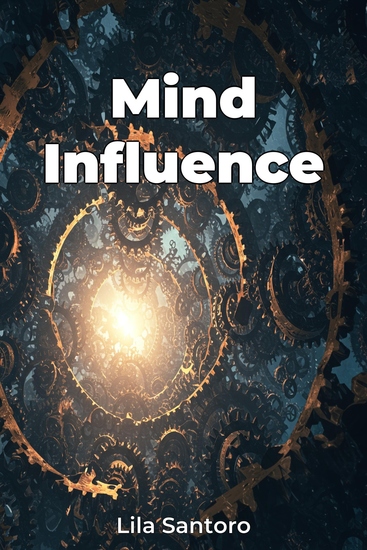
Mind Influence - cover

Mind Influence

Lila Santoro

Übersetzer A AI

Verlag: Publifye

  • 0
  • 0
  • 0

Beschreibung

Mind Influence explores the psychology of persuasion, revealing how cognitive biases and specific techniques shape our decisions. Discover how understanding biases, like systematic deviations in judgment, impacts everything from shopping choices to relationships. The book argues that mastering ethical persuasion isn't manipulation, but rather understanding the psychological drivers behind human behavior, ultimately improving communication skills and decision-making. The book offers a clear progression, starting with fundamental concepts and advancing to social influence and emotional appeals. It highlights the ethical considerations of persuasion, advocating for responsible and transparent use. Drawing from psychology, behavioral economics, and communication studies, it uses research to illustrate the effectiveness of various persuasion techniques. What sets this book apart is its focus on ethical persuasion, emphasizing mutual benefit. It’s designed for anyone seeking self-improvement by understanding human influence, offering practical strategies for enhancing communication and achieving goals. Whether you're keen on self-help or just curious about psychology, Mind Influence provides insights into navigating the social world with awareness and effectiveness.
Verfügbar seit: 15.03.2025.
Drucklänge: 94 Seiten.

Weitere Bücher, die Sie mögen werden

  • Shrink the City - The 15-Minute Urban Experiment and the Cities of the Future - cover

    Shrink the City - The 15-Minute...

    Natalie Whittle

    • 0
    • 0
    • 0
    Cities define the lives of all those who call them home: where we go, how we get there, how we spend our time. But what if we rethink the ways we plan, live in, and move around our cities? What if we didn't need a car to reach the grocery store? What if we could get back the time we would have spent commuting and put it to other uses? 


    In this fascinating, carefully researched and reported book, longtime Financial Times journalist Natalie Whittle investigates the 15-minute city idea—its pros, cons, and its potential to revolutionize modern living. 


    From Paris, Melbourne, and Rotterdam to Charlotte, North Carolina, and Tempe, Arizona, cities worldwide are being guided by the 15-minute city's ideals—with varying results. By looking at these examples, Whittle considers: 


    ● what really happens when a city expands bike lanes and pedestrian areas—and disincentivizes long commutes 


    ● which approaches to building affordable housing are actually effective 


    ● how neighborhoods of varying wealth are affected by 15-minute city policies 


    This timely book serves as a call to reflect on our cities and neighborhoods—and it outfits us with insights on how to make them more sustainable, safe, and welcoming.
    Zum Buch
  • Making of Modern India The: The History of India from the Middle Ages to Independence from Britain - cover

    Making of Modern India The: The...

    Editors Charles River

    • 0
    • 0
    • 0
    India has been the location of many different empires throughout its long history. The Indus Valley Civilization was home to one of the world’s first civilizations more than 5,000 years ago, which was followed by the Aryan-Vedic culture and then a host of other kingdoms that flourished across the Sub-Continent. India has also been the birthplace of many religions. The Vedic religion of the Aryans evolved into the Hindu religion, and Buddhism and Jainism were also born in India. By the Middle Ages, India was home to many different religions and ethnic groups, with dozens of languages being spoken, making India less of a single, unified country and more of a land of many countries. Despite India’s tradition of cultural and political pluralism, several rulers attempted to place the entire Sub-Continent under the rule of one dynasty or government with a dominant religion. Most of these would-be rulers were far from successful, although a few came close, setting the template for later conquerors. 
    The Delhi Sultanate was comprised of five dynasties that expanded their borders, and Islam, at sword point, but also through diplomacy and trade. The Delhi Sultanate became known as a state that welcomed the expertise of foreigners, no matter their religion, and promoted the welfare of its citizens through a host of social programs. Eventually, the Delhi Sultanate grafted ideas and inspiration from India’s pre-Islamic past with those of Islam to create a state that was quite unique and powerful. The Delhi sultans were themselves descended from Turks and brought with them ideas from Persia. Furthermore, as their empire grew, they invited scholars from throughout the Islamic world to their country, and as Muslim scholars, scientists, and administrators from the Near East made their way into India, the Delhi sultans also incorporated some of the cultural ideas of the native Hindu Indians to create a state that was as unique as any the world had ever seen.
    Zum Buch
  • Summary: Cynical Theories - How Activist Scholarship Made Everything about Race Gender and Identity―and Why This Harms Everybody by Helen Pluckrose & James Lindsay: Key Takeaways Summary & Analysis - cover

    Summary: Cynical Theories - How...

    Brooks Bryant

    • 0
    • 0
    • 0
    Disclaimer: This is NOT the official book. This is a Summary Book & it does NOT accompany the official book. 
    In our compelling summary, we distill the critical insights from Pluckrose and Lindsay's rigorous investigation into this often-radical activist scholarship. Highlighting the inconsistencies and illiberal ethics of these theories, we underscore the need for a thorough understanding of their origins and evolution to effectively challenge their influence in academia, culture, and beyond. 
    Our summary of "Cynical Theories" presents a complex network of ideologies in an accessible and digestible manner. This book is not just an exploration of the evolution of contemporary thought but a call to action for those who value science, reason, and consistently liberal ethics to question and challenge the spread of this potentially harmful orthodoxy. Step into our summary and arm yourself with the knowledge needed to navigate and confront the ideological challenges of the modern world.
    Zum Buch
  • Miscarriage - Finding Hope and Healing After Loss - cover

    Miscarriage - Finding Hope and...

    Stacey Wilmore

    • 0
    • 0
    • 0
    Miscarriage is a deeply personal and often painful experience that affects millions of women and families worldwide. Despite its prevalence, it remains a topic shrouded in silence, leaving many to navigate their grief alone. This book aims to provide comfort, understanding, and hope to those who have experienced miscarriage, offering guidance through the emotional and physical healing process.  
      
    For many, the loss of a pregnancy brings a complex mix of emotions—grief, guilt, anger, and even isolation. Society often struggles to acknowledge miscarriage as a significant loss, leading many women to feel as though they must grieve in silence. Friends and family may offer well-meaning but unhelpful advice, leaving those affected feeling misunderstood. It is important to recognize that miscarriage is not just a medical event but an emotional and psychological one as well. The pain of losing a child, even in the early stages of pregnancy, is real and valid.  
      
    While no two experiences are exactly alike, one common thread among those who have suffered miscarriage is the search for meaning and healing. Some find solace in talking about their experience, while others prefer quiet reflection. Many turn to faith, support groups, or counseling to help them process their grief. Regardless of the path taken, healing is possible, and hope can be found even in the darkest moments. 
    Zum Buch
  • A Tale of Two Unions - The British Union and the European Union After Brexit - cover

    A Tale of Two Unions - The...

    Mark Corner

    • 0
    • 0
    • 0
    Brexit is a tale of two unions, not one: the British and the European unions. Their origins are different, but both struggle to maintain unity in diversity and both have to face the challenge of populism and claims of democratic deficit.
    Mark Corner suggests that the »four nations« that make up the UK can only survive as part of a single nation-state, if the country looks more sympathetically at the very European structures from which it has chosen to detach itself. This study addresses both academic and lay audiences interested in the current situation of the UK, particularly the strains raised by devolution and Brexit.
    Zum Buch
  • Start of World War II The: The History of the Events that Culminated with Nazi Germany’s Invasion of Poland - cover

    Start of World War II The: The...

    Editors Charles River

    • 0
    • 0
    • 0
    "My good friends," the mustached, bony man with thick eyebrows and large, strong teeth somewhat reminiscent of those of a horse, shouted to the crowds from the second-floor window of his house at 10 Downing Street, "this is the second time in our history, that there has come back to Downing Street from Germany peace with honor. I believe it is peace for our time." The man addressing the crowd, British Prime Minister Neville Chamberlain, had just returned from the heart of Nazi Germany following negotiations with Adolf Hitler, and the crowd gathered outside the English leader's house on September 30, 1938 greeted these ringing words with grateful cheers. The piece of paper Chamberlain flourished exultantly seemed to offer permanent amity and goodwill between democratic Britain and totalitarian Germany. In it, Britain agreed to allow Hitler's Third Reich to absorb the Sudeten regions of Czechoslovakia without interference from either England or France, and since high percentages of ethnic Germans – often more than 50% locally – inhabited these regions, Hitler's demand for this territory seemed somewhat reasonable to Chamberlain and his supporters. With Germany resurgent and rearmed after the disasters inflicted on it by the Treaty of Versailles following World War I, the pact – known as the Munich Agreement – held out hope of a quick end to German ambitions and the return of stable, normal international relations across Europe. 
    Of course, the Munich agreement is now notorious because its promise proved barren within a very short period of time. Chamberlain's actions either failed to avert or actually hastened the very cataclysm he wished to avoid at all costs. The "Munich Agreement" of 1938 effectively signed away Czechoslovakia's independence to Hitler's hungry new Third Reich, and within two years, most of the world found itself plunged into a conflict which made a charnel house of Europe and left somewhere between 60-80 million people dead globally.
    Zum Buch