Rejoignez-nous pour un voyage dans le monde des livres!
Ajouter ce livre à l'électronique
Grey
Ecrivez un nouveau commentaire Default profile 50px
Grey
Abonnez-vous pour lire le livre complet ou lisez les premières pages gratuitement!
All characters reduced
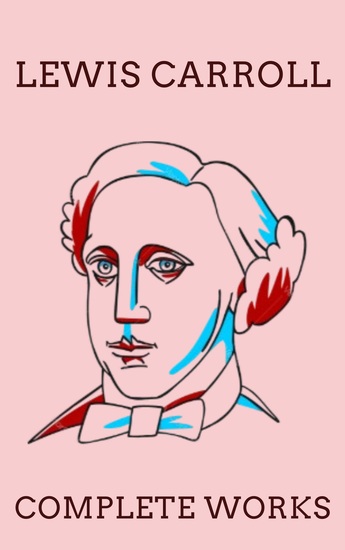
The Complete Works of Lewis Carroll - A Whimsical Journey Through Wonderland and Beyond - cover

The Complete Works of Lewis Carroll - A Whimsical Journey Through Wonderland and Beyond

Lewis Carroll, Zenith Crescent Moon Press

Maison d'édition: Zenith Crescent Moon Press

  • 0
  • 0
  • 0

Synopsis

Embark on a magical literary adventure with "The Complete Works of Lewis Carroll" 🌟📖. This enchanting collection brings together all the beloved writings of the master of whimsy, including timeless classics such as Alice's Adventures in Wonderland 🐇✨ and Through the Looking-Glass 🪞.
🌈 Explore Carroll's unique blend of fantasy, humor, and wordplay that has captivated readers of all ages for generations. From the absurdly charming characters of Wonderland—like the Mad Hatter 🎩 and the Cheshire Cat 😺—to his delightful poetry such as Jabberwocky 🐉, every work reflects his unparalleled imagination and literary brilliance.
📚 Perfect for fans of fantasy, children's literature, and Victorian-era storytelling, this comprehensive anthology is a celebration of creativity, curiosity, and the endless possibilities of the mind. Whether you're revisiting these classics or discovering them for the first time, Carroll's works promise to inspire and entertain readers of all ages.
✨ Rediscover the world of Lewis Carroll today. Download this collection and let your imagination run wild in his extraordinary universe. 🌟📖
Disponible depuis: 21/03/2025.
Longueur d'impression: 1396 pages.


D'autres livres qui pourraient vous intéresser

  • When Does the Mind-Bending Start? - The Life and Times of World of Twist - cover

    When Does the Mind-Bending...

    Gordon King

    • 0
    • 0
    • 0
    A Times Book of the Year 'Most underrated group? World of Twist.' - LIAM GALLAGHER'They're a top band. No one could do what World of Twist do, except World of Twist.' - NOEL GALLAGHER'They were such a special band, such a moment in time, and Gordon has written such a special book.' - JON RONSONWorld of Twist: the greatest lost band of all time.While fame, glory and untold riches seemed like an inevitability for World of Twist at the turn of the '90s, the universe was simply not ready for a group of retro futurists, psychedelic adventurers and cosmic tunesmiths.Too late for Madchester, too early for Britpop and too much fun to pigeonhole, the band went on to face a demoralising string of near-misses and 'what could have been's, ultimately falling apart in a medley of incompatible drugs, musical contretemps, sartorial differences and all-round shoulder-shrugging apathy.But they burned bright and left an indelible mark on everyone who looked deep into their light...Now, in When Does the Mind-Bending Start?, co-founder, guitarist and principal songwriter Gordon King tells the incredible inside story of his time with World of Twist, revealing the jealousy, anguish and personal demons experienced by the clashing personalities of King and the band's late singer, Tony Ogden.This is a memoir of tragedy and triumph, comedy and drama, demise and recovery.
    Voir livre
  • Stan Brakhage the realm buster - cover

    Stan Brakhage the realm buster

    Esther Leslie, Marco Lori

    • 0
    • 0
    • 0
    Stan Brakhage's body of work counts as one of the most important within post-war avant-garde cinema, and yet it has rarely been given the attention it deserves. Over the years, though, diverse and original reflections have developed, distancing his figure little by little from critical categories. This collection of newly commissioned essays, plus some important reprinted work, queries some of the consensus on Brakhage's films. In particular, many of these essays revolve around the controversial issues of representation and perception.This project sets out from the assumption that Brakhage's art is articulated primarily through opposing tensions, which donate his figure and films an extraordinary depth, even as they evince fleetingness, elusivity and paradoxicality. This collection aims not only to clarify aspects of Brakhage's art, but also to show how his work is involved in a constant mediation between antinomies and opposites. At the same time, his art presents a multifaceted object endlessly posing new questions to the viewer, for which no point of entry or perspective is preferred in respect to the others. Acknowledging this, this volume hopes that the experience of his films will be revitalised.Featuring topics as diverse as the technical and semantic ambiguity of blacks, the fissures in mimetic representation of the 'it' within the 'itself' of an image, the film-maker as practical psychologist through cognitive theories, the critique of ocularcentrism by mingling sight with other senses such as touch, films that can actually philosophise in a Wittgensteinian way, political guilt and collusion in aesthetic forms, a disjunctive, reflexive, and phenomenological temporality realising Deleuze's image-time, and the echoes of Ezra Pound and pneumophantasmology in the quest of art as spiritual revelation; this book addresses not only scholars, but also is a thorough and thought-provoking introduction for the uninitiated. Contributors include: Nicky Hamlyn, Peter Mudie, Paul Taberham, Gareth Evans, Rebecca A. Sheehan, Christina Chalmers, Stephen Mooney and Marco Lori.
    Voir livre
  • Folk Punk Literary Style - The Poetry of Pat ‘The Bunny’ Schneeweis AKA Johnny Hobo - cover

    Folk Punk Literary Style - The...

    Patrick Schneeweis

    • 0
    • 0
    • 0
    There are artists out there able to lift the spirits of the downtrodden, who point towards a better world with all they are. Sometimes, they do this in DIY punk style: raw, unplugged, and deeply human.Patrick Schneeweis, better known as Pat the Bunny, is an artist who chose the road less travelled, instinctively deeming it more honest and less controlling. Freer. He grew up in Vermont, where he found people liked his voice and the controversial topics he tackled, and by 16 years old, he had released his first album ‘Fire Hazard’.Pat had the courage to test his reality, and then nakedly vocalise it (in both the metaphorical and literal senses). His lyrics saw conflicting ideologies meet and fight to the death, in outlooks that were as captivating as his personal anecdotes were relatable. Pat’s journey offers direction to the lost, if only in the promise that so is he; and for all his youthful anarchism and burn-it-to-the-ground spiritedness, his commentary of the world is ironically sobering.Pat’s music career only spanned thirteen years, from 2003-2016. He reincarnated several times in different bands of his own making, and split albums with other folk-punk artists equally hungry to change the world. He fought like hell for a vision of peace, and made the battlegrounds his own state of consciousness.Like a flashfire burning everything in its wake, towards the end of his career, Pat’s had simmered down, but shoots of new life had sprung up from the ashes, a new direction for which his life could take.This book paints the picture of Pat’s fallings and risings, a final cadence before he left the punk scene behind him for good.
    Voir livre
  • Beatles The: The Interviews - cover

    Beatles The: The Interviews

    John Lennon, Paul McCartney,...

    • 0
    • 0
    • 0
    A collection of interviews from the June 1964 Beatles' tour of Australia and New Zealand.
    Voir livre
  • Easy Oil Painting - Beginner Tutorials for Small Still Life - cover

    Easy Oil Painting - Beginner...

    Estelle Day

    • 0
    • 0
    • 0
    If you've always wanted to try your hand at still life oil painting, this comprehensive guide is the book for you! A complete introduction to oil painting for beginners, award-winning and professional artist, Estelle Day, will walk you through everything you need to know to be successful in small-scale oil painting. Accessible and unintimidating, Easy Steps to Oil Painting focuses on painting small canvases that are no bigger than a 5-inch square so you can worry less about composition and focus more on the actual subject! Learn key painting techniques through 10 step-by-step project tutorials and work with several different shapes, colors, and textures to grow your painting and layering skills! Easy-to-follow instructions, as well as "Trace-This-Linework" sketches, are also included, making this must-have guide a great starting point for beginning artists!
    Voir livre
  • Sengoku - Warring States and the Path to Unification - cover

    Sengoku - Warring States and the...

    Rolf Hedger

    • 0
    • 0
    • 0
    The Sengoku period, meaning “Warring States,” was one of the most turbulent and transformative eras in Japanese history. Lasting from the mid-15th century to the early 17th century, it was marked by ceaseless conflict, shifting alliances, and the gradual disintegration of centralized authority. The roots of this period can be traced back to the decline of the Ashikaga Shogunate, the Ōnin War, and the rise of regional warlords known as daimyo, each vying for control over Japan’s fractured political landscape. 
    The Ashikaga Shogunate, which had ruled Japan since the early 14th century, gradually lost its grip on the country due to internal corruption, weak leadership, and an inability to maintain order. By the mid-15th century, the shogunate had become largely symbolic, with real power resting in the hands of feudal lords. These tensions erupted into full-scale conflict with the outbreak of the Ōnin War (1467–1477), a devastating civil war primarily fought in and around Kyoto. What began as a succession dispute within the shogunate spiraled into a nationwide conflict, leading to the destruction of Kyoto and the collapse of central authority. 
    With the Ashikaga Shogunate rendered powerless, Japan entered a chaotic era where military might determined control. Local daimyo, originally appointed as provincial governors, seized the opportunity to establish autonomous domains. These warlords fortified their territories, raised armies, and engaged in relentless battles to expand their influence. The traditional system of hereditary rule began to erode as capable military leaders, often of humble origins, overthrew established families. This period saw the rise of powerful daimyo such as the Takeda, Uesugi, and Hojo clans, each striving to dominate the fractured nation.
    Voir livre