Begleiten Sie uns auf eine literarische Weltreise!
Buch zum Bücherregal hinzufügen
Grey
Einen neuen Kommentar schreiben Default profile 50px
Grey
Jetzt das ganze Buch im Abo oder die ersten Seiten gratis lesen!
All characters reduced
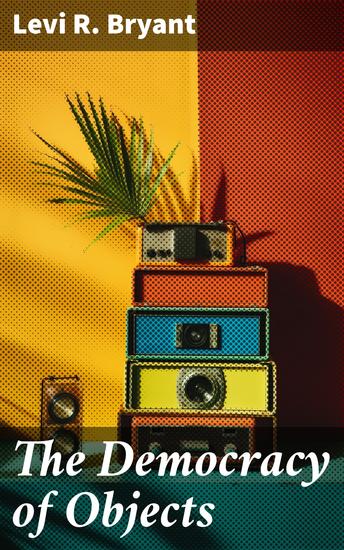
The Democracy of Objects - Redrawing Reality: A Journey into Object-Oriented Ontology - cover

The Democracy of Objects - Redrawing Reality: A Journey into Object-Oriented Ontology

Levi R. Bryant

Verlag: Good Press

  • 0
  • 0
  • 0

Beschreibung

In "The Democracy of Objects," Levi R. Bryant presents a compelling exploration of object-oriented ontology (OOO), positing that all entities, regardless of their nature or scale, possess equal agency and significance. Bryant's literary style blends philosophical rigor with accessible language, making complex ideas in metaphysics and contemporary philosophy digestible to a broader audience. Contextually situated within the larger framework of speculative realism, the book challenges anthropocentric paradigms, inviting readers to reconsider the relationships between humans and non-human entities, thus offering a radical shift in how we perceive the material world. Levi R. Bryant, a prominent philosopher and a significant proponent of OOO, draws inspiration from a diverse array of philosophical traditions, including the works of Graham Harman and Quentin Meillassoux. His academic endeavors are focused on understanding the implications of a non-anthropocentric approach to being and existence. This foundational perspective not only informs his theoretical investigations but also drives the urgency of his arguments in "The Democracy of Objects," where he attempts to dismantle traditional hierarchies of existence. This book is highly recommended for those intrigued by contemporary philosophy, environmental ethics, and the intersections of technology and society. Bryant's provocative insights serve as an essential guide for navigating the increasingly vital discourse around the agency of objects and the reconfiguration of our understanding of reality. Engage with this text to broaden your intellectual horizons and challenge conventional philosophical notions.
Verfügbar seit: 28.11.2023.
Drucklänge: 242 Seiten.
Weitere Bücher, die Sie mögen werden

  • Mysterious Egypt: A Collection of Ancient Egyptian Mysteries Strange Stories and Archaeological Oddities - cover

    Mysterious Egypt: A Collection...

    Charles River Editors

    • 0
    • 0
    • 0
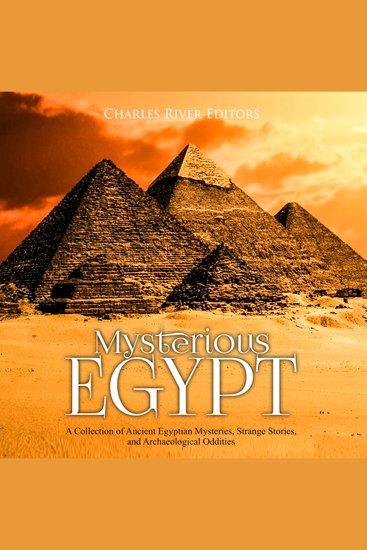
    Part of the reason Egyptian history is so intriguing is because it is so enigmatic. The imposing monuments, the strange practice of mummification, the picturesque form of writing, the colorful art, and other aspects of Egyptian life all make for an inspiring and somewhat baffling culture. To this day, despite the wealth of written materials and countless monuments, Egyptologists constantly uncover more mysteries about ancient Egypt, even if many of those mysteries are somewhat mundane and appeal more to academics. Historians still debate precise chronologies of dynasties, theological nuances, and architectural details. 
    At the same time, such a great and alien civilization has inevitably inspired many strange theories about how it was founded, and how its grand monuments were built. Some of them border on the absurd, including associations with UFOs and Atlantis that have plagued Egyptologists from the beginning. Not only does the “evidence” for these wild theories vanish under close scrutiny, but they emit a whiff of racism as well by implying the Egyptians weren’t capable of building the great monuments themselves. 
    The reality is far more interesting, and almost as weird. Despite being the most intensely studied ancient culture in the world, there is no shortage of Egyptian mysteries worth studying, and even some of Egypt’s most famous monuments, such as the Sphinx and the Great Pyramid of Giza, are the subjects of heated controversies among scholars. Serious, educated researchers have debated the eras in which they were built, and whether there could be hidden chambers with untold riches inside. Even among the experts who have dedicated their lives to studying this ancient civilization, Egypt has not given up all of its mysteries.
    Zum Buch
  • The Dhammapada Vol 7 - The Way of the Buddha - cover

    The Dhammapada Vol 7 - The Way...

    Osho

    • 0
    • 0
    • 0
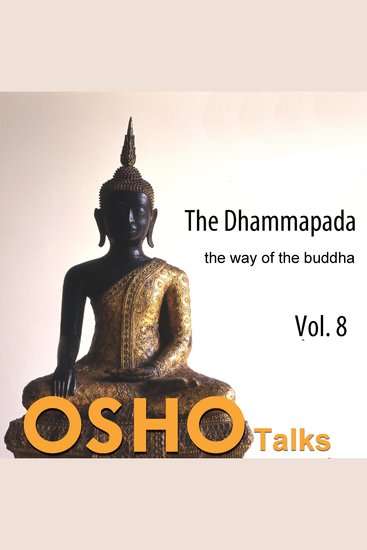
    Osho explains that these sutras are concerned with aspects of man's unawareness and that Buddha's whole message is concerned with the raising of our consciousness. These sutras were compiled by Buddha's disciples to contain the essence of all his teachings. This was the last turning of the Wheel of Dharma, 2,500 years ago. At the beginning of his commentaries on these sutras, Osho says he is setting the Wheel of Dharma in motion again.
    "Buddha transformed the word  meditation . Meditation had always been something of the mind, and Buddha brought a new quality, so totally new, diametrically opposite to the old meaning: He said, meditation means a state of no mind. It is not concentration; it is not contemplation. It is not thinking; it is not thinking about God. It is not even prayer - because thinking is of the head, intellectual; prayer is emotional. That is another side of the head, not very far away from it; a different language used by another part of the head." (Osho)
    Talks are "meditating talks", allowing the listener an experience of meditation. "These words of Buddha come from eternal silence. They can reach you only if you receive them in silence."
    Chatpers:
    
    - Man Is Only a Possibility
    - The Greatest Rebellion Ever Tried
    - Life Is Easy
    - Man Is Not Predictable
    - Truth Is That Which Is
    - Don't Take Enlightenment Seriously
    - The Silence of a Song
    - Be the Center of the Cyclone
    - The Endless Journey into Truth
    - The Art of Surrendering
    © & ℗ 1979 OSHO International Foundation
    Zum Buch
  • Stonewall Brigade and Hood’s Brigade The: The History of the Most Famous Units in Robert E Lee’s Army of Northern Virginia during the Civil War - cover

    Stonewall Brigade and Hood’s...

    Editors Charles River

    • 0
    • 0
    • 0
    The Stonewall Brigade went on to fight in every major battle in the Eastern theater of the American Civil War, to the extent that of the 6,000 men who fought with the brigade over the course of four years, less than 200 remained by the time General Robert E. Lee surrendered at Appomattox Courthouse on April 9, 1865. They were organized, trained, and mentored by one of the most revered military leaders in American history, and they made a decisive impact on battles like First Manassas, the 1862 Valley Campaign, and Chancellorsville. The brigade was virtually a spent force by the end of the Battle of Spotsylvania Courthouse in May 1864, which took place nearly a year after Stonewall Jackson himself had been mortally wounded at Chancellorsville. 
    Organized in Richmond, Virginia on October 22, 1861, Hood’s Texas Brigade was one of the most formidable fighting forces of the Confederate States during the American Civil War. At times undisciplined, the men who comprised this brigade were a group of fearless and determined volunteers-turned-soldiers. Over the course of the Civil War, the Texas Brigade engaged over 4,000 men and was comprised of the only Texans to fight with General Robert E. Lee’s Army of Northern Virginia in the Eastern Theater. With the exception of Chancellorsville, these men fought in every major battle in the East, and they also participated in significant battles in the Western Theater. Of the more than 4,000 men who fought with the brigade over the course of the war, approximately 600 remained to surrender at Appomattox. The brigade suffered a horrific casualty rate of sixty-one percent and were lauded for their courage by men such as generals Thomas “Stonewall” Jackson, James Longstreet, and Lee.
    Zum Buch
  • The Lost City Found - Uncovering the Secrets of Atlantis - cover

    The Lost City Found - Uncovering...

    THOMAS CAYCE, EDGAR LOURDS

    • 0
    • 0
    • 0
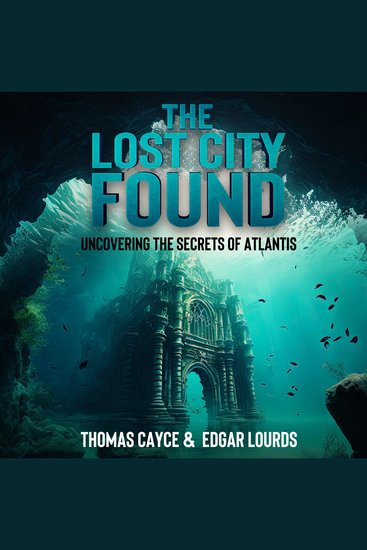
    The Lost City Found: Uncovering the Secrets of Atlantis 
    Introducing "The Lost City Found: Uncovering the Secrets of Atlantis." Dive deep into a world where myth and history intertwine, and the search for truth leads to more questions than answers. 
    🌊 Oceanic Legends: Navigate the ancient tales and historical accounts that have perpetuated the legend of Atlantis, a utopia lost beneath the waves. 
    🔍 Archaeological Quests: Join the tireless search for physical evidence of this mythical island, exploring underwater ruins and ancient texts. 
    💬 Philosophical Theories: Delve into the philosophical implications and discussions that the Atlantis myth has inspired over centuries, from Plato's dialogues to modern interpretations. 
    🌐 Cultural Impact: Examine how the story of Atlantis has influenced cultures worldwide, sparking imagination, art, and the perpetual human quest for discovery. 
    Each chapter is a voyage into the unknown, unearthing the layers of myth, history, and speculation that surround Atlantis—to inform, to fascinate, and to ignite a sense of wonder about the past and its mysteries. 
    Are you ready to delve into the depths of the unknown? To chase the shadows of a civilization lost in time? To unravel the enduring mystery that has captivated human imagination for millennia? 
    Set sail with "The Mystery of Atlantis" and let the allure of the unknown guide you through a sea of history and myth. 📚🌊🔍💬🌐
    Zum Buch
  • A Brain for Innovation - The Neuroscience of Imagination and Abstract Thinking - cover

    A Brain for Innovation - The...

    Min W. Jung

    • 0
    • 0
    • 0
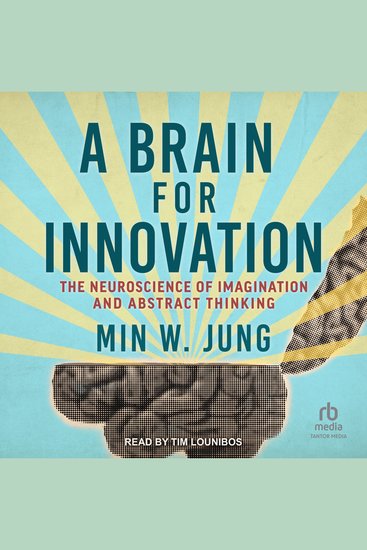
    What sets humans apart from other animals? The accumulation of discoveries throughout history, big and small, has enabled us to build global civilizations and gain power to shape our environment. But what makes humans as a species so innovative? 


    Min W. Jung offers a new understanding of the neural basis of innovation in terms of humans' exceptional capacity for imagination and high-level abstraction. He provides an engaging account of recent advances in neuroscience that have shed light on the neural underpinnings of these profoundly important abilities. Jung examines key discoveries concerning the hippocampus and neural circuits that have demystified the processes underlying imagination and abstract thinking. He also considers how these capacities might have evolved as well as possible futures for intelligence. 


    Bringing together disparate findings in neuroscience, psychology, anthropology, and artificial intelligence, A Brain for Innovation develops a unified perspective on the mechanisms of imagination, abstract thought, and creativity. Presenting cutting-edge neuroscientific research in a way that is accessible to listeners without a background in the subject, this book is essential for anyone interested in the biological basis of one of the most fundamental aspects of human nature.
    Zum Buch
  • Stories are Weapons - Psychological Warfare and the American Mind - cover

    Stories are Weapons -...

    Annalee Newitz

    • 0
    • 0
    • 0
    In Stories Are Weapons, Annalee Newitz traces the way disinformation, propaganda, and violent threats have evolved from military weapons deployed against foreign adversaries into tools in domestic culture wars. Newitz delves into America's deep-rooted history with psychological operations, beginning with Benjamin Franklin's Revolutionary War–era fake newspaper and nineteenth-century wars on Indigenous nations, and reaching its apotheosis with the Cold War and twenty-first-century influence campaigns online. America's secret weapon has long been coercive storytelling. And there's a reason for that: operatives who shaped modern psychological warfare drew on their experiences as science fiction writers and in the advertising industry. 


    Now, through a weapons-transfer program long unacknowledged, psyops have found their way into the hands of culture warriors, transforming democratic debates into toxic wars over American identity. Newitz zeroes in on conflicts over race and intelligence, school board fights over LGBT students, and campaigns against feminist viewpoints, revealing how, in each case, specific groups of Americans are singled out and treated as enemies of the state. Crucially, Newitz delivers a powerful counternarrative, speaking with the researchers and activists who are outlining a pathway to achieving psychological disarmament and cultural peace.
    Zum Buch