Rejoignez-nous pour un voyage dans le monde des livres!
Ajouter ce livre à l'électronique
Grey
Ecrivez un nouveau commentaire Default profile 50px
Grey
Abonnez-vous pour lire le livre complet ou lisez les premières pages gratuitement!
All characters reduced
Anton Tchekhov and Other Essays - cover

Anton Tchekhov and Other Essays

Lev Shestov

Traducteur John Middleton Murry, S.S. Koteliansky

Maison d'édition: DigiCat

  • 0
  • 0
  • 0

Synopsis

In "Anton Tchekhov, and Other Essays," Lev Shestov presents a profound exploration of Tchekhov's literary genius through a philosophical lens. Shestov's essays blend critical analysis with existential thought, illustrating how Tchekhov's works capture the essence of human fragility and the absurdities of life. With a stylistic clarity and depth, Shestov interweaves biographical context with textual interpretations, revealing Tchekhov's influence amidst the broader currents of Russian literary modernism. This collection invites readers to engage with Tchekhov's themes of suffering, morality, and the search for meaning within the human experience. Lev Shestov, a pivotal figure in 20th-century Russian philosophy, is known for his existentialist and sometimes mystic views, which deeply inform his writings. Torn between his Russian roots and European influences, Shestov's insights into Tchekhov reflect his own struggles with faith, doubt, and the complexities of existence. Shestov's literary career was shaped by his belief in the power of literature to confront life's existential dilemmas, making this collection a natural extension of his philosophical inquiries. Readers who seek a deeper understanding of Tchekhov's work will find Shestov's essays indispensable. By melding literary criticism with philosophical reflection, this collection not only enriches one's appreciation of Tchekhov's texts but also prompts introspection about our own existence. Shestov's unique perspective offers a compelling invitation to explore the intricate dance between tragedy and comedy that defines the human condition.
Disponible depuis: 04/09/2022.
Longueur d'impression: 129 pages.

D'autres livres qui pourraient vous intéresser

  • Ferdinand Magellan: A short biography - 5 Minutes: Short on time - long on info! - cover

    Ferdinand Magellan: A short...

    5 Minutes, 5 Minute Biographies,...

    • 0
    • 0
    • 0
    Ferdinand Magellan, adventurer and discoverer: Life and work in a short biography! Everything you need to know, brief and concise. Infotainment, education and entertainment at its best!
    Voir livre
  • The Last Plantation - Racism and Resistance in the Halls of Congress - cover

    The Last Plantation - Racism and...

    James R. Jones

    • 0
    • 0
    • 0
    Racism continues to infuse Congress's daily practice of lawmaking and shape who obtains congressional employment. In this timely and provocative book, James Jones reveals how and why many who work in Congress call it the "Last Plantation." He shows that even as the civil rights movement gained momentum and antidiscrimination laws were implemented, Congress remained exempt from federal workplace protections. These exemptions institutionalized inequality in the congressional workplace well into the twenty-first century. 


    Jones uncovers the hidden dynamics of power, privilege, and resistance in Congress. He reveals how failures of racial representation among congressional staffers reverberate throughout the American political system and demonstrates how the absence of diverse perspectives hampers the creation of just legislation. Centering the experiences of Black workers within this complex landscape, he provides insights into the problems they face, the barriers that hinder their progress, and the ways they contest entrenched inequality. 


    A must-listen for anyone concerned about social justice and the future of our democracy, The Last Plantation exposes the mechanisms that perpetuate racial inequality in the halls of Congress and challenges us to confront and transform this unequal workplace that shapes our politics and society.
    Voir livre
  • The Authoritarian Moment - How the Left Weaponized America's Institutions Against Dissent - cover

    The Authoritarian Moment - How...

    Anonyme

    • 0
    • 0
    • 0
    New York Times Bestseller 
    How far are Americans willing to go to force each other to fall in line? 
    According to the establishment media, the intelligentsia, and our political chattering class, the greatest threat to American freedom lies in right-wing authoritarianism. We’ve heard that some 75 million Americans who voted for Donald Trump represent the rise of American fascism; that conservatives have allowed authoritarianism to bloom in their midst, creating a grave danger for the republic. 
    But what if the true authoritarian threat to America doesn’t come from the political right, but from the supposedly anti-fascist left? 
    There are certainly totalitarians on the political right. But statistically, they represent a fringe movement with little institutional clout. The authoritarian left, meanwhile, is ascendant in nearly every area of American life. A small number of leftists—college-educated, coastal, and uncompromising—have not just taken over the Democratic Party but our corporations, our universities, our scientific establishment, our cultural institutions. And they have used their newfound power to silence their opposition. 
    The authoritarian Left is aggressively insistent that everyone must conform to its values, demanding submission and conformity. The dogmatic Left is obsessed with putting people in categories and changing human nature. Everyone who opposes it must be destroyed. 
    Ben Shapiro looks at everything from pop culture to the Frankfurt school, social media to the Founding Fathers, to explain the origins of our turn to tyranny, and why so many seem blind to it. 
    More than a catalog of bad actors and intemperate acts, The Authoritarian Moment lays bare the intolerance and rigidity creeping into all American ideology – and prescribes the solution to ending the authoritarianism that threatens our future.
    Voir livre
  • Taken No More - Protect Your Children Against Traffickers and Cults - cover

    Taken No More - Protect Your...

    JD Robin Boyle-Laisure

    • 0
    • 0
    • 0
    A comprehensive guide that empowers parents with the knowledge and strategies to keep their children safe from human trafficking and cults. 
      
    Our digital age is bringing unprecedented challenges to child-rearing. Predators lurk online and in the real world, exploiting children from all walks of life. Anyone can be trafficked, and anyone can be recruited into a cult. So how do we keep our children safe? 
      
    In Taken No More: Protect Your Children Against Traffickers and Cults, Robin Boyle-Laisure warns parents, caregivers, and guardians about the dangers of human trafficking and cults. She offers tips on how to talk to children of any age to make sure they are aware and on guard but not sheltered, and includes an entire chapter devoted to online predatory behavior due to its ever-rising influence. Boyle-Laisure also describes the progressive stages of targeting, grooming, recruitment, coercion, and control and provides warning signs that a child is being groomed. 
      
    Drawing on expert insight and full of strategies and resources that readers can turn to for help, Taken No More is a vital guidebook for parents, as well as for educators, law enforcement, law makers, and more. It takes a village to stop human trafficking and cult recruitment, but it starts with each individual—adults and children alike—having the knowledge and awareness to recognize the signs.
    Voir livre
  • The Little Book of Stoic Wisdom - Learn the Art of Living Well with Classical Philosophy - cover

    The Little Book of Stoic Wisdom...

    Joseph Piercy

    • 0
    • 0
    • 0
    Learn how to thrive in the modern world by unlocking the ancient art of Stoicism. 


    The Little Book of Stoic Wisdom is a classical primer for anyone wanting to understand true Stoicism—and even though we're living in drastically different times than the ancients, many of the lessons of Seneca, Epictetus, and Marcus Aurelius still stand today. 


    The millennia-old mindset will show you how to learn the Stoic art of mindful acceptance, foster calmness, and reach your full potential. Featuring a breakdown of the central pillars of Stoic philosophy alongside practical everyday examples, this essential book will help you sharpen your focus, build your self-discipline, and banish negative thinking. 


    A Stoic life well-lived has been adopted by some of the most successful business leaders, from Steve Jobs to Bill Gates and Elon Musk, as well as high-performing athletes like Rory McIlroy, and historic figures such as George Washington, Theodore Roosevelt, and Thomas Jefferson, among others. The Little Book of Stoic Wisdom will show you what it truly means to live stoically and reach your goals.
    Voir livre
  • The South African Famine of 1820 - Colonial Mismanagement and Drought - cover

    The South African Famine of 1820...

    Sarah Willards

    • 0
    • 0
    • 0
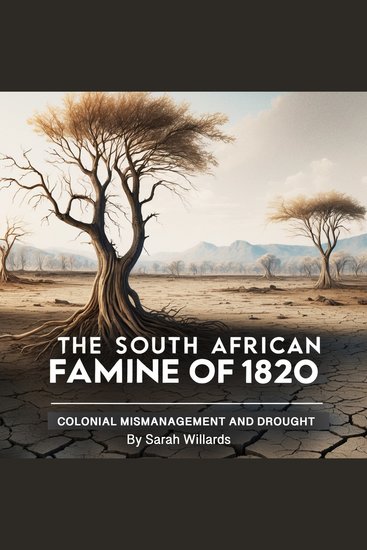
    In the early 19th century, South Africa was a land marked by contrasts—fertile valleys and arid plains, indigenous traditions and growing colonial ambition. The region most affected by the famine of 1820 was the Cape Colony, which had come under British control in 1806. This colony served as a strategic resupply point for British ships sailing to and from the East Indies, and it was gradually becoming a hub for European settlement, particularly by the Dutch-descended Boers and British immigrants arriving as part of state-sponsored schemes. These settlers introduced European agricultural practices, often ill-suited to the diverse and unpredictable South African climate. 
    The colony’s geography played a significant role in shaping life and livelihoods. Coastal areas received more rainfall and were relatively fertile, while the interior—known as the Karoo and other semi-arid zones—was prone to drought and soil erosion. Farming communities depended heavily on seasonal rainfall to sustain crops such as wheat, maize, and barley, as well as livestock including sheep and cattle. When these rains failed, communities faced immediate and severe consequences, especially in regions where irrigation infrastructure was minimal or nonexistent. 
    The social landscape of the Cape was equally complex. Indigenous groups such as the Xhosa, Khoikhoi, and San had long adapted to the challenges of the land through mixed economies of herding, gathering, and small-scale farming. Their interaction with European settlers was often strained, marked by competition over land and water sources, cultural misunderstandings, and colonial policies that marginalized local traditions and governance structures.
    Voir livre