Begleiten Sie uns auf eine literarische Weltreise!
Buch zum Bücherregal hinzufügen
Grey
Einen neuen Kommentar schreiben Default profile 50px
Grey
Jetzt das ganze Buch im Abo oder die ersten Seiten gratis lesen!
All characters reduced
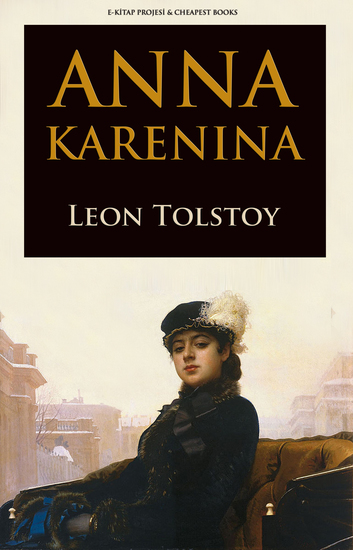
Anna Karenina - cover

Anna Karenina

Leon Tolstoy

Verlag: E-Kitap Projesi & Cheapest Books

  • 0
  • 0
  • 0

Beschreibung

Anna Karenina is a novel by the Russian writer Leon Tolstoy, published in serial installments from 1873 to 1877 in the periodical The Russian Messenger.

Tolstoy clashed with editor Mikhail Katkov over political issues that arose in the final installment (Tolstoy's unpopular views of volunteers going to Serbia); therefore, the novel's first complete appearance was in book form. Widely regarded as a pinnacle in realist fiction, Tolstoy considered Anna Karenina his first true novel, when he came to consider War and Peace to be more than a novel.

Fyodor Dostoevsky declared it to be "flawless as a work of art". His opinion was shared by Vladimir Nabokov, who especially admired "the flawless magic of Tolstoy's style", and by William Faulkner, who described the novel as "the best ever written". The novel is currently enjoying popularity, as demonstrated by a recent poll of 125 contemporary authors by J. Peder Zane, published in 2007 in "The Top Ten" in Time, which declared that Anna Karenina is the "greatest novel ever written"

"..The novel opens with a scene introducing Prince Stepan Arkadyevich Oblonsky ("Stiva"), a Moscow aristocrat and civil servant who has been unfaithful to his wife Darya Alexandrovna ("Dolly"). Dolly has discovered his affair with the family's governess, and the household and family are in turmoil. Stiva's affair and his reaction to his wife's distress show an amorous personality that he cannot seem to suppress. In the midst of the turmoil, Stiva informs the household that his married sister, Anna Arkadyevna Karenina, is coming to visit from Saint Petersburg.

Meanwhile, Stiva's childhood friend, Konstantin Dmitrievich Levin ("Kostya"), arrives in Moscow with the aim of proposing to Dolly's youngest sister, Princess Katerina Alexandrovna Shcherbatskaya ("Kitty"). Levin is a passionate, restless, but shy aristocratic landowner who, unlike his Moscow friends, chooses to live in the country on his large estate. He discovers that Kitty is also being pursued by Count Alexei Kirillovich Vronsky, an army officer.

Whilst at the railway station to meet Anna, Stiva bumps into Vronsky who is there to meet his mother, the Countess Vronskaya. Anna and Vronskaya have traveled and talked together in the same carriage. As the family members are reunited, and Vronsky sees Anna for the first time, a railway worker accidentally falls in front of a train and is killed. Anna interprets this as an "evil omen." Vronsky, however, is infatuated with her. Anna is uneasy about leaving her young son, Sergei ("Seryozha"), alone for the first time.
At the Oblonsky home, Anna talks openly and emotionally to Dolly about Stiva's affair and convinces her that Stiva still loves her despite the infidelity. Dolly is moved by Anna's speeches and decides to forgive Stiva.

Kitty, who comes to visit Dolly and Anna, is just eighteen. In her first season as a debutante, she is expected to make an excellent match with a man of her social standing. Vronsky has been paying her considerable attention, and she expects to dance with him at a ball that evening. Kitty is very struck by Anna's beauty and personality and becomes infatuated with her just as Vronsky is. When Levin proposes to Kitty at her home, she clumsily turns him down, believing she is in love with Vronsky and that he will propose to her, and encouraged to do so by her mother who believes Vronsky would be a better match.

At the big ball Kitty expects to hear something definitive from Vronsky, but he dances with Anna, choosing her as a partner over a shocked and heartbroken Kitty.

Levin, crushed by Kitty's refusal, returns to his estate, abandoning any hope of marriage. Anna returns to her husband Alexei Alexandrovich Karenin, a senior government official, and her son Seryozha in Saint Petersburg. On seeing her husband for the first time since her encounter with Vronsky, Anna realises that she finds him unattractive, though she tells herself he is a good man.."
Verfügbar seit: 03.01.2024.
Drucklänge: 1000 Seiten.


Weitere Bücher, die Sie mögen werden

  • Uncle's Tom Cabin - cover

    Uncle's Tom Cabin

    Harriet Beecher Stowe

    • 0
    • 0
    • 0
    "Uncle Tom's Cabin," published in 1852, is an anti-slavery novel by American author Harriet Beecher Stowe. The story follows the lives of several enslaved African Americans, primarily Uncle Tom, as they navigate the harsh realities of slavery in the United States. Stowe wrote the novel as a response to the Fugitive Slave Act of 1850 and intended to portray the immorality of slavery. The book had a profound impact on American public opinion and is often credited with helping to galvanize the abolitionist movement.
    Zum Buch
  • Circus Maximus - Final Justice - A Tale from Ancient Rome - cover

    Circus Maximus - Final Justice -...

    Christopher Allen

    • 0
    • 0
    • 0
    Circus Maximus, Final Justice is a historical fiction epic set in ancient Rome during the reign of Emperor Claudius (42 CE). The story reimagines the classic Ben-Hur narrative with an Egyptian female protagonist facing the son of the infamous Emperor Caligula in a climactic chariot race that becomes a symbol of justice versus oppression. 
    Main Characters 
    Khaemwaset is an 18-year-old Egyptian woman from Alexandria, daughter of master charioteer Amenhotep and priestess Nefertiti. Raised in a family renowned for their horse-training expertise, she possesses an almost mystical connection with horses and exceptional racing skills. Her life is shattered when Roman forces raid her family's compound under false pretenses of sedition, killing her parents and enslaving her. 
    Marcus Caligula Germanicus, the fictional 25-year-old son of Emperor Caligula, embodies Roman arrogance and entitlement. Cruel, intelligent, and obsessed with proving his imperial worthiness, he views Khaemwaset's skills as a threat to Roman superiority and challenges her to a race to demonstrate the natural dominance of Roman blood over conquered peoples. 
    Plot Summary 
    The story begins in Alexandria, where Khaemwaset learns chariot racing from her father while her mother serves as a priestess of Isis. Their peaceful life ends when Roman forces, acting on Caligula's orders, seize their property and horses under fabricated treason charges. The raid is actually part of a systematic campaign to eliminate competition in chariot racing and secure the finest horses for Roman teams. 
    Sold into slavery, Khaemwaset is transported to Rome's imperial stables, where her extraordinary abilities with horses quickly become apparent. Marcus discovers her background and, recognizing both her talent and her symbolic threat to Roman supremacy, forces her into a public race in the Circus Maximus. He frames the contest as a demonstration of Roman superiority over conquered peoples.
    Zum Buch
  • Beyond Passing - The Further Writings of Nella Larsen - cover

    Beyond Passing - The Further...

    Nella Larsen

    • 0
    • 0
    • 0
    Nella Larsen’s 1929 novel Passing is hailed today as a significant literary work of Harlem Renaissance, though for several decades it, like all of her works, was out of print. As history rights a wrong and recommits Larsen’s name to memory, it is beneficial to look at the other writings she published over her short career, collected here in Beyond Passing: The Further Writings of Nella Larsen. Contained within are her autobiographical novel Quicksand, and three short stories “Freedom,” “The Wrong Man,” and “Sanctuary.” 
    With a growing number of titles under its Magna Releases banner, CSRC Storytelling promotes and provides positivity, power and presence in print, restoring literary classics across genres and making them newly accessible to modern readers. This edition of Nella Larsen’s Passing is a CSRC Storytelling Magna Release.
    Zum Buch
  • Satan's Circus - An evil couple that own a circus exploit and punish their employees - cover

    Satan's Circus - An evil couple...

    Lady Eleanor Smith

    • 0
    • 0
    • 0
    Lady Eleanor Furneaux Smith was born in Birkenhead, Merseyside in England on the 7th August 1902 into a privileged family steeped in titles and politics. 
     
    Part of her education was at Miss Douglas's school at Queen's Gate.  Here she met and befriended several other young women that the British tabloid press would later call the ‘Bright Young Things’, a group of bohemian young aristocrats and socialites in 1920s London. 
     
    Smith's paternal great-grandmother, was said to have been a Gypsy, and this sparked an early and life-long interest with the Romani people, she even went so far as to learn to read and speak the language, which she called ‘musical and broken.’ 
     
    Her life was full of adventure and mishaps.  A mistaken encounter with a man she thought could help her into the film business turned out to threats of marriage and death from a man wanted for the murder of his father.  She was even arrested twice.  Once for listing her career as a journalist and another, in Rome, for walking around in a sleeveless dress. 
     
    Smith began her career writing society gossip columns for various newspapers but later received an offer to write for the newly-formed Great Carmo Circus, with which she travelled for several years and was the source material for many of her books. 
     
    Her first novel, ‘Red Wagon’, was published when she was 28 and it was an immediate bestseller.  A prolific writer several of her works were also adapted for films. 
     
    Smith also wrote ghost stories and others flavoured with evil.  Her support for the Conservative party may be forgiven but her attributed quote to be a ‘warm adherent of General Franco’ less so. 
     
    Lady Eleanor Furneaux Smith died on the 20th October 1945 in Westminster after a long illness. She was 43.
    Zum Buch
  • Farewell to Arms A - Unabridged - cover

    Farewell to Arms A - Unabridged

    Ernest Hemingway

    • 0
    • 0
    • 0
    "A Farewell to Arms" was Ernest Hemingway's first best-seller and the acclaim garnered by this book put his name on the 20th century literary map. The novel is based on Hemingway's own experiences serving as an ambulance driver during the Italian campaign in World War I and has often been cited as one of the best war novels ever written.   
    The story follows the service of Frederic Henry, an American medic serving in the Italian army during the First World War. Frederic meets and falls in love with an English nurse named Catherine Berkley. Catherine has lost her fiancé in battle and initially rebuffs Frederic's advances, but when he is wounded at the Italian front and sent to her hospital for treatment, their romance blossoms, leading the two lovers to attempt to flee the conflict and start a life together.   
    A blockbuster literary achievement for Hemingway, "A Farewell to Arms" has become a classic of American fiction. It is presented here in its original and unabridged format.
    Zum Buch
  • Mary Ann Sate Imbecile (Unabridged) - cover

    Mary Ann Sate Imbecile (Unabridged)

    Alice Jolly

    • 0
    • 0
    • 0
    If you tell a story oft enough
    So it become true
    
    As the nineteenth century draws towards a close, Mary Ann Sate, an elderly maidservant, sets out to write her truth.
    
    She writes of the Valleys that she loves, of the poisonous rivalry between her employer's two sons and of a terrible choice which tore her world apart.
    
    Her haunting and poignant story brings to life a period of strife and rapid social change, and evokes the struggles of those who lived in poverty and have been forgotten by history.
    
    In this fictional found memoir, novelist Alice Jolly uses the astonishing voice of Mary Ann to recreate history as seen from a woman's perspective and to give joyful, poetic voice to the silenced women of the past.
    Zum Buch