Junte-se a nós em uma viagem ao mundo dos livros!
Adicionar este livro à prateleira
Grey
Deixe um novo comentário Default profile 50px
Grey
Assine para ler o livro completo ou leia as primeiras páginas de graça!
All characters reduced
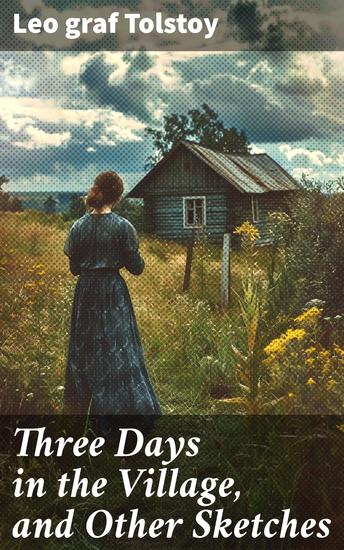
Three Days in the Village and Other Sketches - Capturing the Essence of Russian Peasant Life in Short Stories - cover
LER

Three Days in the Village and Other Sketches - Capturing the Essence of Russian Peasant Life in Short Stories

Leo graf Tolstoy

Tradutor Aylmer Maude, Louise Maude

Editora: Good Press

  • 0
  • 0
  • 0

Sinopse

In "Three Days in the Village, and Other Sketches," Leo Tolstoy presents a compelling exploration of rural Russian life through a series of poignant narratives. This collection is notable for its incisive observation and lyrical prose, intertwining the complexities of human emotions with vivid depictions of village life. Tolstoy'Äôs keen attention to detail creates a profound understanding of the social and philosophical undercurrents within the Russian peasantry, reflecting his broader existential inquiries and moral contemplations characteristic of his later works. The sketches serve as a microcosm of the perennial struggles, joys, and mundane realities that define the human experience, wrapped in Tolstoy's astute yet compassionate voice. Leo Tolstoy, a giant of Russian literature, was profoundly influenced by his own experiences living amongst the peasantry and his philosophical explorations regarding morality and spirituality. His rich background in the aristocracy, combined with a radical rejection of materialism and an embrace of simpler, more meaningful living, informed his literary endeavors. The sketches in this collection emerged during a period of intense reflection and personal transformation for Tolstoy, making them an integral part of his legacy. Recommended for both fans of classical literature and those intrigued by social realism, "Three Days in the Village" invites readers to immerse themselves in the poignant and often heart-wrenching tales that resonate with a universal truth, revealing the beauty and complexity of life in a simple village setting.
Disponível desde: 26/10/2023.
Comprimento de impressão: 47 páginas.

Outros livros que poderiam interessá-lo

  • Ancient Egyptian Legends - cover

    Ancient Egyptian Legends

    Margaret Alice Murray

    • 0
    • 0
    • 0
    Brought to you by Altrusian Grace Media and narrated by Matthew Schmitz. 
    "Ancient Egyptian Legends" by Margaret Alice Murray is a collection of mythological tales written in the early 20th century. The book recounts the rich legends of ancient Egyptian gods and their exploits, offering readers an accessible retelling of stories that have captivated scholars and enthusiasts alike. Aimed at a general audience, it presents narratives of legendary figures such as King Rameses, Osiris, and Horus, highlighting their adventures and relationships within a vibrant mythological context. The opening of the work introduces the premise and intentions behind the narratives presented. The author explains her approach to retelling these legends, maintaining the essence of the Egyptian stories while adapting them for English readers. The first story, "The Princess and the Demon," features King Rameses, who is beset with challenges surrounding his newfound love, Queen Neferu-Ra, and her family. As the tale unfolds, it explores themes of love, duty, and supernatural intervention, setting the stage for the epic conflicts and divine interactions that characterize the subsequent stories in the collection. Overall, this introduction promises a rich exploration of Egyptian mythology, inviting the reader into a fascinating world of gods, kings, and enchanted beings.  
    Eleven tales of mythology concerning the Ancient Egyptian gods and goddesses. Stories such as The Princess And The Demon, The King's Dream, The Book Of Thoth, The Scorpians Of Isis, The Battles Of Horus, The Name Of Ra and The Regions Of Night And Darkness.
    Ver livro
  • The Piece of String - cover

    The Piece of String

    Guy de Maupassant

    • 0
    • 0
    • 0
    “The Piece of String” by Guy de Maupassant is a timeless short story from 1883 that captures the tension between appearance and truth in a small French village. With sharp irony and emotional depth, Maupassant explores how pride, suspicion, and social perception can shape a man’s fate. Originally published in the collection Miss Harriet, this classic work of French literature is a compelling reflection on human nature, reputation, and the power of rumor.
    Ver livro
  • Mother A (Unabridged) - cover

    Mother A (Unabridged)

    James Joyce

    • 0
    • 0
    • 0
    James Augustine Aloysius Joyce (2 February 1882 - 13 January 1941) was an Irish novelist, short story writer, poet and literary critic. He contributed to the modernist avant-garde movement and is regarded as one of the most influential and important writers of the 20th century.
    A MOTHER: Mr Holohan, assistant secretary of the Eire Abu Society, had been walking up and down Dublin for nearly a month, with his hands and pockets full of dirty pieces of paper, arranging about the series of concerts.
    Ver livro
  • Gentle Breathing - From their pens to your ears genius in every story - cover

    Gentle Breathing - From their...

    Ivan Bunin

    • 0
    • 0
    • 0
    Ivan Alekseyevich Bunin was born on 22nd October 1870 in Voronezh province, in the South-West of the Russian Empire. 
    His early life was plagued by his Father’s gambling habits which caused his education to be erratic and the family to lose most of their wealth. 
    Bunin published his first poem in 1887 in St Petersburg and later in Oryol he worked for the local paper and became its editor, handily allowing him to publish his own poems and short stories.  There he met and married Varvara Pashchenko.  Ivan Bunin's debut book of poetry ‘Poems (1887–1891)’ was published in 1891. 
    This poetry and his translation of Longfellow garnered him his first Pushkin Prize.  Now he switched to writing prose and his novella ‘Antonov Apples’ is regarded as his first masterpiece.  Many more would follow. 
    The October Revolution of 1905 found Bunin in the Crimea.  Scenes of ‘class struggle’ he saw more as the oppressed people's craving for anarchy and destruction. 
    In November 1906 he began a passionate affair with Vera Muromtseva, within a few months they were touring through Egypt and Palestine.  ‘The Bird's Shadow’ collection was the result.   
    His second Pushkin Prize came in 1909 for Poems (1903–1906) and further translations.  He was now elected to the prestigious Russian Academy. 
    More widespread fame came in 1910 with ‘The Village’, a controversial and bleak portrayal of Russian country life.  Travel too beckoned them back to the Middle East, Ceylon (now Sri Lanka) and for winters in Capri with their friend Maxim Gorky.  
    That friendship suddenly ended in April 1917 as the revolution began to ferment in war-ravaged Russia.  After the Bolsheviks took power and the upheavals continued, he decided to leave Russia, finally achieving that in early 1920.  
    It would take some time to heal the wounds and stress he had been under and for his writing to begin again.  Settled in France, Bunin published many of his previous works and collections of novellas.  He also made regular contributions to the Russian emigre press.  
    Although reluctant to become involved in politics, Bunin was now feted as both a writer and the figurehead of non-Bolshevik Russian values and traditions.  In 1933 he became the first Russian to be awarded the Nobel Prize for Literature ‘for following through and developing with chastity and artfulness the traditions of Russian classic prose.’  
    In 1938 Bunin began working on the celebrated cycle of nostalgic, and erotically themed stories known Dark Avenues (or Dark Alleys).  
    As World War II broke out he chose to remain in Grasse spending the war at his remote Villa Jeanette, high in the mountains.  
    Ivan Bunin was a staunch anti-Nazi, and often, under difficult conditions, sheltered fugitives after Vichy was occupied by the Germans.  He wrote but did not publish during these years until on August 23rd the Nazi’s fled Grasse without a fight.  The next day the Americans came.  
    In May 1945 he returned to Paris and, apart from convalescing at times in Juan-les-Pins, he stayed for the rest of his life. 
    After 1948, with his health deteriorating, Bunin concentrated upon writing his memoirs and a book on Chekhov.  His last years were overshadowed by bitterness and despair at the situation in Russia and the treatment of its peoples.  He was suffering now from asthma, bronchitis and chronic pneumonia. 
    Ivan Alekseyevich Bunin died in a Paris attic flat on 8th November 1953.  Heart failure, cardiac asthma and pulmonary sclerosis were given as the causes of death.  He was 83.
    Ver livro
  • The Sorrows of Young Werther - cover

    The Sorrows of Young Werther

    Johann Wolfgang von Goethe

    • 0
    • 0
    • 0
    Enter the tormented heart of a young man overwhelmed by passion, beauty, and the crushing pain of unreturned love. In The Sorrows of Young Werther, Goethe presents the personal letters of Werther, a tender, idealistic artist who falls deeply for Charlotte—an alluring woman already engaged to someone else. 
    As Werther’s admiration turns into fixation, his thoughts on love, nature, art, and suffering become more intense and consuming. Framed by the scenic beauty of the German countryside, his emotional journey unfolds into a moving exploration of yearning, heartbreak, and the blurry boundary between romantic idealism and emotional collapse. 
    A defining work of the Sturm und Drang era and a seminal piece of Romantic literature, The Sorrows of Young Werther is far more than a love story—it’s a raw, lyrical outpouring from a soul in turmoil. It moved a generation and shocked Europe with its emotional candor and heartbreaking conclusion. 
    Whether you see it as a tragic love story or a reflection of your own quiet desires, Werther’s voice will linger long after you’ve turned the last page.
    Ver livro
  • Robinson Crusoe - cover

    Robinson Crusoe

    Daniel Defoe

    • 0
    • 0
    • 0
    "Robinson Crusoe" is one of the earliest novels in the English language, written by Daniel Defoe and first published in 1719. It tells the story of a young man named Robinson Crusoe who desires to go to sea, against the wishes of his family. After several voyages and misadventures, he finds himself shipwrecked on a deserted island. With only a few salvaged items from the ship, Crusoe learns to create a life for himself, building shelter, hunting, and planting crops. He remains on the island for 28 years, experiencing encounters with cannibals, mutineers, and even befriending a man whom he names Friday. The novel delves deep into themes of survival, civilization versus nature, and the human drive for mastery and control.
    Ver livro