Begleiten Sie uns auf eine literarische Weltreise!
Buch zum Bücherregal hinzufügen
Grey
Einen neuen Kommentar schreiben Default profile 50px
Grey
Jetzt das ganze Buch im Abo oder die ersten Seiten gratis lesen!
All characters reduced
The Slavery of Our Times - Enriched edition - cover

The Slavery of Our Times - Enriched edition

Leo Tolstoy

Verlag: DigiCat

  • 0
  • 0
  • 0

Beschreibung

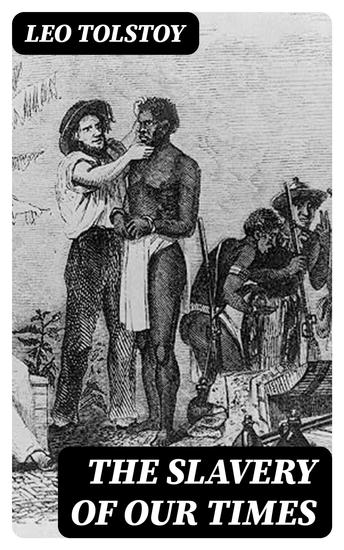
In "The Slavery of Our Times," Leo Tolstoy delves into the urgent social issues of his era, exploring the theme of moral and economic servitude that pervades society. Written in his characteristic style of profound simplicity intertwined with philosophical depth, the work critiques the systemic inequalities of late 19th-century Russia. Tolstoy's incisive prose illuminates the plight of the laboring class, revealing how societal structures perpetuate bondage under the guise of progress. This eloquent essay, reflective of the realist movement, presents an incisive commentary on human dignity, emphasizing the interconnectedness of personal and societal morality. Leo Tolstoy, renowned for his monumental novels such as "War and Peace" and "Anna Karenina," was not merely a fiction writer but a profound thinker deeply engaged with the moral issues of his time. His personal experiences as a landowner and his subsequent moral awakening led him to advocate for social change and the alleviation of human suffering. Tolstoy's exposure to various social movements and his spiritual inquiries further shaped his perspective, laying the groundwork for this compelling analysis of modern slavery. Readers seeking a thought-provoking examination of social justice and individual responsibility will find "The Slavery of Our Times" an essential read. Tolstoy's compelling arguments and moral reflections provoke critical thinking, encouraging readers to confront the ethical dilemmas of their own lives. This work not only serves as a powerful critique of socio-economic conditions but also urges a more profound introspection into the nature of freedom and human dignity.

In this enriched edition, we have carefully created added value for your reading experience:
- A succinct Introduction situates the work's timeless appeal and themes.
- The Synopsis outlines the central plot, highlighting key developments without spoiling critical twists.
- A detailed Historical Context immerses you in the era's events and influences that shaped the writing.
- An Author Biography reveals milestones in the author's life, illuminating the personal insights behind the text.
- A thorough Analysis dissects symbols, motifs, and character arcs to unearth underlying meanings.
- Reflection questions prompt you to engage personally with the work's messages, connecting them to modern life.
- Hand‐picked Memorable Quotes shine a spotlight on moments of literary brilliance.
- Interactive footnotes clarify unusual references, historical allusions, and archaic phrases for an effortless, more informed read.
Verfügbar seit: 29.05.2022.
Drucklänge: 59 Seiten.


Weitere Bücher, die Sie mögen werden

  • On Disinformation - How to Fight for Truth and Protect Democracy - cover

    On Disinformation - How to Fight...

    Lee McIntyre

    • 0
    • 0
    • 0
    The effort to destroy facts and make America ungovernable didn't come out of nowhere. It is the culmination of seventy years of strategic denialism. In On Disinformation, Lee McIntyre shows how the war on facts began, and how ordinary citizens can fight back against the scourge of disinformation that is now threatening the very fabric of our society. Drawing on his twenty years of experience as a scholar of science denial, McIntyre explains how autocrats wield disinformation to manipulate a populace and deny obvious realities, why the best way to combat disinformation is to disrupt its spread, and most importantly, how we can win the war on truth. 


    McIntyre goes through the history of strategic denialism to show how we arrived at this precarious political moment and identifies the creators, amplifiers, and believers of disinformation. On Disinformation lays out ten everyday practical steps that we can take as ordinary citizens—from resisting polarization to pressuring our Congresspeople to regulate social media—as well as the important steps our government (if we elect the right leaders) must take. 


    On Disinformation empowers us to save our republic from autocracy before it is too late.
    Zum Buch
  • Feudalism: An Overview - The Structure and Dynamics of Medieval Societies - cover

    Feudalism: An Overview - The...

    Arlo Holders

    • 0
    • 0
    • 0
    Feudalism is often regarded as one of the defining features of medieval European society, deeply influencing the social, political, and economic structures from the 9th to the 15th century. At its core, feudalism is a system of reciprocal relationships based on land ownership, loyalty, and service. It is a hierarchical structure where power and land are distributed among various levels of society, creating an intricate web of obligations and rights. Understanding the foundations of feudalism requires examining its emergence, the key concepts involved, and its significance in shaping medieval societies. 
    The origins of feudalism can be traced back to the collapse of the Western Roman Empire in the 5th century. With the fall of centralized Roman authority, European territories faced instability and frequent invasions, notably from the Vikings, Magyars, and Muslims. As local rulers sought to protect their lands and people, they established systems of landholding that were based on personal loyalty rather than the centralized control of a king or emperor. This shift marked the beginning of feudalism. The need for defense and local governance led to a system where lords granted land, known as fiefs, to vassals in exchange for military service or other forms of support. The vassals, in turn, would offer protection and land to lower-ranking individuals, establishing a hierarchical pyramid of power. 
    At the heart of feudalism lies the concept of mutual obligations. Lords, who were often nobility or monarchs, provided land to their vassals, who were typically knights or lesser nobles. In return, vassals pledged their loyalty, military service, and counsel to their lords.
    Zum Buch
  • When Left Moves Right - The Decline of the Left and the Rise of the Populist Right in Postcommunist Europe - cover

    When Left Moves Right - The...

    Maria Snegovaya

    • 0
    • 0
    • 0
    Over the past two decades, postcommunist countries have witnessed a sudden shift in the electoral fortunes of their political parties: previously successful center-left parties suffered dramatic electoral defeats and disappeared from the political scene, while right-wing populist parties soared in popularity and came to power. This dynamic echoed similar processes in Western Europe and raises a question: Were these dynamics in any way connected? When Right Moves Left argues that they were. And that the root of the connection between them lies in the pro-market rebranding of the ex-communist left—the key explanatory variable. This book asserts that, though the left's pro-market shift initially led to electoral rewards, it had a less straightforward impact on left-wing parties' electoral fortunes in the long run. 


    The book draws upon different levels of analysis: cross-country observational data, case studies, and individual-level experimental surveys. It argues that scholars should incorporate the economic policy dimension when explaining the demise of the left and the rise of the populist right in the region. It also examines important parallels between the dynamics of Western and postcommunist countries by arguing that the idiosyncrasy of Eastern European politics has been overstated in scholarly literature.
    Zum Buch
  • The Gas and Flame Men - Baseball and the Chemical Warfare Service during World War I - cover

    The Gas and Flame Men - Baseball...

    Jim Leeke

    • 0
    • 0
    • 0
    The Gas and Flame Men is the first full account of Major League ballplayers who served in the Chemical Warfare Service during World War I. Four players, two club executives, and a manager served in the small and hastily formed branch, six of them as gas officers. Remarkably, five of the seven—Christy Mathewson, Branch Rickey, Ty Cobb, George Sisler, and Eppa "Jeptha" Rixey—are now enshrined in the National Baseball Hall of Fame at Cooperstown, New York. The son of a sixth Hall of Famer, player and manager Ned Hanlon, was a young officer killed in action in France with the First Gas Regiment. Prominent chemical soldiers also included veteran Major League catcher and future manager George "Gabby" Street and Boston Braves president and former Harvard football coach Percy D. Haughton. 


    The Gas and Flame Men explores how these famous baseball men, along with an eclectic mix of polo players, collegiate baseball and football stars, professors, architects, and prominent social figures all came together in the Chemical Warfare Service. Jim Leeke examines their service and its long-term effects on their physical and mental health—and on Major League Baseball and the world of sports. The Gas and Flame Men also addresses historical inaccuracies and misperceptions surrounding Christy Mathewson's early death from tuberculosis, long attributed to wartime gas exposure.
    Zum Buch
  • Navy Dog - A Dog's Days in the US Navy - cover

    Navy Dog - A Dog's Days in the...

    Captain US Navy (ret) Neal J....

    • 0
    • 0
    • 0
    Having Seaman Jenna as the mascot on the USS Vandegrift was never meant to be a statement or symbolic act, or to put the crew on the radars of four-star admirals. Jenna came aboard unannounced, a Christmas gift that brought instant joy to the crew and transformed a gray ship into a home for 225 sailors. Her addition was not pre-approved by the chain of command—contrary to military protocol. Before long, Jenna became a phenomenon—the only dog on a Navy ship since World War II—despite the best efforts to keep her from the public eye. This orphaned Shiba Inu and the displaced crew shared countless adventures and trials during her five years on board. Jenna dodged being eaten in Korea (a country that still views dogs as edible fare), sidestepped Hawaii's strict quarantine law, avoided threats of being shot in Australia, charmed a Chinese admiral, and nearly initiated an international incident in Pakistan. Jenna became a symbol of the ship and of free will, and created a bond amongst the crew that remains strong decades later . . . long after her death. Neal Kusumoto is proud to say that he was the captain of that fine ship, blessed with a magnificent crew that included one special sea dog. Join Seaman Jenna as a part of the crew on her five-year adventure on the high seas.
    Zum Buch
  • Summary: The Creature from Jekyll Island - A Second Look at the Federal Reserve by G Edward Griffin: Key Takeaways Summary & Analysis - cover

    Summary: The Creature from...

    Brooks Bryant

    • 0
    • 0
    • 0
    Disclaimer: This is a summary book; not the official book & it does not accompany it. 
    Uncover the mysteries of the American financial system in our succinct summary of 'The Creature from Jekyll Island: A Second Look at the Federal Reserve' by G. Edward Griffin. This revealing exploration invites you on a journey into the shadowy corridors of power, shedding light on the origins and operations of the U.S Federal Reserve. 
    Griffin's probing examination raises critical questions about the true nature of this influential institution. Is the Federal Reserve a benign entity serving the public good or a clandestine machine that manipulates economies for the benefit of a select few?
    Zum Buch