Join us on a literary world trip!
Add this book to bookshelf
Grey
Write a new comment Default profile 50px
Grey
Subscribe to read the full book or read the first pages for free!
All characters reduced
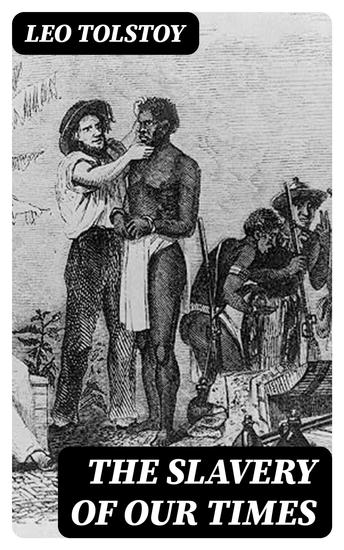
The Slavery of Our Times - Enriched edition - cover

The Slavery of Our Times - Enriched edition

Leo Tolstoy

Publisher: DigiCat

  • 0
  • 0
  • 0

Summary

In "The Slavery of Our Times," Leo Tolstoy delves into the urgent social issues of his era, exploring the theme of moral and economic servitude that pervades society. Written in his characteristic style of profound simplicity intertwined with philosophical depth, the work critiques the systemic inequalities of late 19th-century Russia. Tolstoy's incisive prose illuminates the plight of the laboring class, revealing how societal structures perpetuate bondage under the guise of progress. This eloquent essay, reflective of the realist movement, presents an incisive commentary on human dignity, emphasizing the interconnectedness of personal and societal morality. Leo Tolstoy, renowned for his monumental novels such as "War and Peace" and "Anna Karenina," was not merely a fiction writer but a profound thinker deeply engaged with the moral issues of his time. His personal experiences as a landowner and his subsequent moral awakening led him to advocate for social change and the alleviation of human suffering. Tolstoy's exposure to various social movements and his spiritual inquiries further shaped his perspective, laying the groundwork for this compelling analysis of modern slavery. Readers seeking a thought-provoking examination of social justice and individual responsibility will find "The Slavery of Our Times" an essential read. Tolstoy's compelling arguments and moral reflections provoke critical thinking, encouraging readers to confront the ethical dilemmas of their own lives. This work not only serves as a powerful critique of socio-economic conditions but also urges a more profound introspection into the nature of freedom and human dignity.

In this enriched edition, we have carefully created added value for your reading experience:
- A succinct Introduction situates the work's timeless appeal and themes.
- The Synopsis outlines the central plot, highlighting key developments without spoiling critical twists.
- A detailed Historical Context immerses you in the era's events and influences that shaped the writing.
- An Author Biography reveals milestones in the author's life, illuminating the personal insights behind the text.
- A thorough Analysis dissects symbols, motifs, and character arcs to unearth underlying meanings.
- Reflection questions prompt you to engage personally with the work's messages, connecting them to modern life.
- Hand‐picked Memorable Quotes shine a spotlight on moments of literary brilliance.
- Interactive footnotes clarify unusual references, historical allusions, and archaic phrases for an effortless, more informed read.
Available since: 05/29/2022.
Print length: 59 pages.

Other books that might interest you

  • What's Wrong with the World - cover

    What's Wrong with the World

    G. K. Chesterton

    • 0
    • 0
    • 0
    Explore the thought-provoking ideas of G.K. Chesterton in What’s Wrong with the World, a powerful critique of modern society that remains as relevant today as when it was first written. Chesterton examines the issues of his time—inequality, education, politics, and family dynamics—through his sharp wit and deeply human perspective. With a unique blend of humor and insight, he challenges conventional wisdom and offers timeless reflections on the balance between individual freedom and social responsibility. 
    This book is a compelling exploration of human nature, community, and the enduring need for meaningful reform. Chesterton's wisdom and eloquence continue to inspire readers to question the status quo and envision a better world. 
    Brought to life with engaging narration, this audiobook is perfect for listeners seeking intellectual stimulation and fresh perspectives. 
    Start listening to What’s Wrong with the World today and join Chesterton in uncovering timeless truths about society and human values.
    Show book
  • Calm Leadership - Developing leaders that last - cover

    Calm Leadership - Developing...

    Patrick Cozier

    • 0
    • 0
    • 0
    Drawing on his twenty-four years' experience, Patrick Cozier reflects on the reality of school leadership in Calm Leadership, providing a candid and personal account of his journey. Patrick first stepped into headship in 2006, one of the few Black school leaders in the UK at the time. Over the next two decades, he learned to lead through the highs and lows of the role, from navigating imposter syndrome and everyday pressures to experiencing moments of joy and hard-won progress and to do so calmly.
    At the heart of this book is Patrick's 'CALM' leadership model, honed and crafted by him over many years, which entails:
    
    - Confronting uncalm feelings
    - Adapting to the feeling of leadership
    - Leading people with humanity and understanding
    - Maturing into the leader you are meant to be
    This model offers a framework for managing stress, staying well and maintaining a positive outlook so that readers can sustain leadership roles in the long term.  This book addresses a part of leadership that's often overlooked: what it actually feels like to lead.
    The central message of this book is that leadership doesn't have to be a burnout job; it can be a source of joy, fulfilment and lasting impact when approached with the right mindset and strategies, which Patrick presents with clarity, passion and heart.
    Essential for current and aspiring school leaders at all levels.
    Show book
  • War Crimes - Accountability and Justice for the Atrocities of War - cover

    War Crimes - Accountability and...

    Marcus Klein

    • 0
    • 0
    • 0
    War crimes represent some of the most heinous acts of violence committed during conflict, violating the basic principles of humanity and decency. These crimes, which range from genocide to the targeting of civilians, are not only devastating to the victims but also to the social fabric of entire societies. Over the centuries, the world has witnessed numerous atrocities during wartime, but the formal recognition and prosecution of these crimes have evolved significantly, especially in the last century. 
      
    The need for accountability in the face of war crimes is critical. It is not only about bringing perpetrators to justice but also about establishing a global standard that deters such crimes in the future. The introduction of international laws and institutions aimed at prosecuting war crimes marks a pivotal shift in the international community's approach to warfare. The atrocities committed during World War II, particularly the Holocaust and other acts of genocide, were a wake-up call for the global community. This led to the creation of the Nuremberg Trials, the first real attempt to hold individuals accountable for war crimes, and set the foundation for modern international law. 
      
    The purpose of this book is to explore the concept of war crimes, the historical development of international law designed to address such crimes, and the ongoing challenges of prosecuting these atrocities. We will examine the evolution of legal frameworks, such as the Geneva Conventions and the establishment of the International Criminal Court, and discuss how these institutions work to hold individuals and states accountable for their actions during wartime.
    Show book
  • A Precarious Enterprise - Making a Life in Canadian Publishing - cover

    A Precarious Enterprise - Making...

    Scott McIntyre

    • 0
    • 0
    • 0
    “A Precarious Enterprise has all of the DNA necessary for future historians to fully understand the joyous and unexpected rodeo that was CanLit 1.0. It was a cherished window in time, and Scott tells of it with love and the ultimate insider’s POV.” — Douglas Coupland, author and artist
    		 
    Ever wondered how a publishing house works? Scott McIntyre tells all in this behind-the-scenes look at Canadian publishing
    		 
    Scott McIntyre has lived the story of Canadian book publishing. Beginning his career at McClelland & Stewart in 1967, he went on to cofound his own publishing house, Douglas & McIntyre, in 1970 and made his mark on the industry amid the country’s exhilarating literary coming-of-age.
    		 
    Becoming one of Canada’s largest and most respected publishing houses and among the first to embrace Indigenous issues, Douglas & McIntyre and its associated children’s publisher, Groundwood Books, published some 900 authors and 2,000 books in less than 50 years. For McIntyre, the authors always came first, and he worked closely with many important figures, including Doris Shadbolt, Wayson Choy, Richard Wagamese, Anna Porter, Will Ferguson, Douglas Coupland, Hugh Brody, Robert Bringhurst, Wade Davis, and Farley Mowat.
    		 
    Telling stories featuring a colorful array of characters who rebuilt the publishing world following WWII and anecdotes about how book publishing works, McIntyre touches upon the guiding philosophy and historic traditions still animating the industry today. More than the story of one publisher and his company, this is a first-person account of the buoyant period when writers, their books, and the companies who published them changed the nation.
    Show book
  • Kingdom of Pontus The: The History of the Ancient Anatolian Kingdom Before It Was Conquered by Rome - cover

    Kingdom of Pontus The: The...

    Editors Charles River

    • 0
    • 0
    • 0
    Rome faced many formidable enemies over the course of nearly 1,000 years, but perhaps none were as enigmatic and forgotten as King Mithridates VI of Pontus. Despite numerous ancient sources detailing the life of the foreign monarch and his wars with Rome, and despite being an interesting character who endured years as a fugitive in his youth, enjoyed a fascination with poisons, and held mercy and pragmatic ruthlessness in a delicate balance, very few scholarly books and works have been produced about the king. It may be that his largely unsuccessful military campaigns have contributed to his disappearance from active historical examination, but despite his poor record in engagements against the Romans, the Kingdom of Pontus dominated much of Asia Minor in the 1st century BCE, and the Romans themselves considered the kingdom one of its most dangerous enemies. According to Plutarch, when Mithridates died, the Roman soldiers felt that “in the person of Mithridates ten thousand enemies had died.” By then, it had required three of Rome’s most famous generals - Sulla, Lucullus, and Pompey - to finally subdue his kingdom.  
    	The early Pontic kings found themselves in the midst of the Diadochi Wars, quickly learning that the survival of their kingdom depended upon which Macedonian general to support and which ones to oppose. For the most part, the kings chose wisely and were able to not only stay independent but also to expand their kingdom’s borders. Somewhat fittingly, as the Pontic kings battled their neighbors for control of the Black Sea basin, they promoted a culture that grafted Greek, Persian, and local Anatolian traditions into a unique identity.  
    The Kingdom of Pontus’ power and prestige grew until it caught the attention of the Romans, whose upward trajectory coincided with Pontus’ in many ways. 
    Show book
  • The Pillow Book - cover

    The Pillow Book

    Sei Shōnagon

    • 0
    • 0
    • 0
    The Pillow Book of Sei Shonagon is a fascinating, detailed account of Japanese court life in the closing years of the 10th century. Written by a lady of the court at the height of Heian culture, this book enthrals with its lively gossip, witty observations and subtle impressions.  
     
    Lady Shonagon was an erstwhile rival of Lady Murasaki, whose novel, The Tale of Genji, fictionalized the elite world Lady Shonagon so eloquently relates. Featuring reflections on royal and religious ceremonies, nature, conversation, poetry and many other subjects, The Pillow Book is an intimate look at the experiences and outlook of the Heian upper class.  
     
    Sei Shonagon, born around 965, was lady-in-waiting to Empress Sadako and between the early 990s and 1002, she kept these ‘personal notes’, recording what she saw and encountered with wit, accuracy and intelligence. There is immense variety here. There are more than 320 entries, each with its own heading: ‘Birds’, Trees’, ‘When His Excellency The Chancellor Had Departed’, ‘Unreliable Things’.... Some entries are very brief, no more than ‘asides’, and there are even concise lists. Some reflect the sensitive Japanese response to nature or patterned silk, and there are longer narratives of incidents involving prominent political figures. Her singular humour is often to the fore: ‘Masahiro really is a laughing stock. I wonder what it is like for his parents and friends.’   
     
    But there are also entries which reflect a considerate nature as shown in ‘One of Her Majesty’s Wet-Nurses’. 
     
    While Arthur Waley’s classic translation remains well-known it was abridged, and this Ukemi recording presents the translation by Ivan Morris, the first unabridged English version. It is fluent and lively, and reflects the sparkling character of Sei Shonagon’s writing which, in the 21st century, belies its ancient origins and its academic standing as one of the great works of Japanese literature. This is perfectly captured by in Georgina Sutton’s reading.
    Show book