Rejoignez-nous pour un voyage dans le monde des livres!
Ajouter ce livre à l'électronique
Grey
Ecrivez un nouveau commentaire Default profile 50px
Grey
Abonnez-vous pour lire le livre complet ou lisez les premières pages gratuitement!
All characters reduced
On the Significance of Science and Art - Enriched edition - cover

On the Significance of Science and Art - Enriched edition

Leo Tolstoy

Traducteur Isabel F. Hapgood

Maison d'édition: DigiCat

  • 0
  • 0
  • 0

Synopsis

In "On the Significance of Science and Art," Leo Tolstoy presents a profound examination of the roles that science and art play in society. Written in a straightforward yet poignant style, Tolstoy critiques the prevailing notions of progress and intellectualism of his time, advocating for a symbiotic relationship between the two disciplines. He argues that true art fosters moral and spiritual growth, while science, devoid of ethical consideration, can lead society astray. This book situates itself within the larger context of Tolstoy's exploration of the human experience, offering insights into the nature of beauty, truth, and the ethical responsibilities of both artists and scientists. Leo Tolstoy, one of the literary giants of the 19th century, draws on his extensive life experiences and philosophical inquiries to inform his writing. His encounters with the brutality of war and the hypocrisy of social norms led him to pursue deeper questions about morality, purpose, and the human spirit. "On the Significance of Science and Art" reflects his mature thinking during a period marked by profound societal change, revealing the essence of his belief that art should inspire compassion and understanding. This seminal work is recommended for readers seeking to understand the intricate dynamics between creativity and knowledge. Tolstoy's insights not only challenge conventional wisdom but also advocate for a more harmonious existence that values both scientific inquiry and artistic expression. It is essential reading for anyone interested in the moral implications of creativity and its impact on humanity.

In this enriched edition, we have carefully created added value for your reading experience:
- A succinct Introduction situates the work's timeless appeal and themes.
- The Synopsis outlines the central plot, highlighting key developments without spoiling critical twists.
- A detailed Historical Context immerses you in the era's events and influences that shaped the writing.
- An Author Biography reveals milestones in the author's life, illuminating the personal insights behind the text.
- A thorough Analysis dissects symbols, motifs, and character arcs to unearth underlying meanings.
- Reflection questions prompt you to engage personally with the work's messages, connecting them to modern life.
- Hand‐picked Memorable Quotes shine a spotlight on moments of literary brilliance.
- Interactive footnotes clarify unusual references, historical allusions, and archaic phrases for an effortless, more informed read.
Disponible depuis: 15/09/2022.
Longueur d'impression: 60 pages.

D'autres livres qui pourraient vous intéresser

  • Party Lines - Dance Music and the Making of Modern Britain - cover

    Party Lines - Dance Music and...

    Ed Gillett

    • 0
    • 0
    • 0
    A Guardian Guide Cultural Book of the Year 2023An Irish Times Music Book of the Year 2023'A deep, engrossing history' The Observer'A fascinating deep dive' Jeremy DellerFrom the illicit reggae blues dances and acid-rock free festivals of the 1970s, through the ecstasy-fuelled Second Summer of Love in 1988, to the increasingly corporate dance music culture of the post-Covid era, Party Lines is a groundbreaking new history of UK dance music, exploring its pivotal role in the social, political and economic shifts on which modern Britain has been built.Taking in the Victorian moralism of the Thatcher years, the far-reaching restrictions of the Criminal Justice Act in 1994, and the resurgence of illegal raves during the Covid-19 pandemic, Party Lines charts an ongoing conflict, fought in basement clubs, abandoned warehouses and sunlit fields, between the revolutionary potential of communal sound and the reactionary impulses of the British establishment. Brought to life with stunning clarity and depth, this is social and cultural history at its most immersive, vital and shocking.____'Excellent' The Sunday Times'Reminds us why the dance floor matters . . . fascinating' Telegraph
    Voir livre
  • And I Cried Too - Confronting Evil in a Small Town (a memoir) - cover

    And I Cried Too - Confronting...

    Mike Hartnett

    • 0
    • 0
    • 0
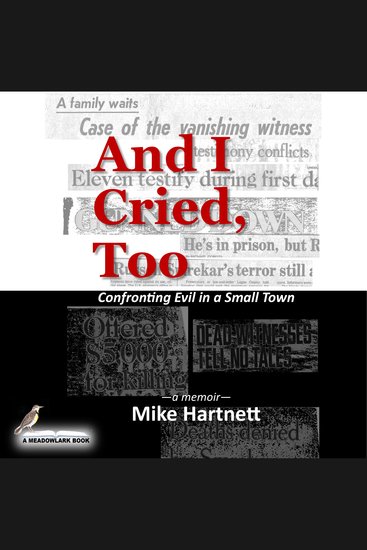
    Mike and his wife, Barbara, moved to Lincoln, Illinois, in 1972. The town of 17,000 was charming, friendly, and safe. As employees of Lincoln College, a small, private junior college, they quickly grew to enjoy the subtle pleasures of small-town living. Then the campus was hit with a series of burglaries and a student disappeared. Finally, the murders began. This is Mike Hartnett’s personal story, memories that have taken him more than forty years to write. This is not a true crime exposé or a who-dunnit mystery. This is simply a story about one man on the periphery of a series of events that devastate a community for a time. It is a story about the guilt that lingers and the questions that remain. 
    About the Author: 
    Mike Hartnett was a retired high school English/Speech teacher and business journalist (magazine columnist and editor and newsletter publisher), winning awards from the American Society of Business Press Editors. He led a memoir-writing group for the Douglas County Senior Citizen Center and was a co-leader of a men’s writing group at the Douglas County Jail. 
         Mike is the co-author of a play, Worthy of the Name, which was presented at Chicago’s Cultural Affairs Center, and a collaborator of a readers’ theater production, Prose & Cons, Voices From Behind Bars. 
    Voir livre
  • Awakening the Spirit of America - FDR's War of Words With Charles Lindbergh – and the Battle to Save Democracy - cover

    Awakening the Spirit of America...

    Paul M. Sparrow

    • 0
    • 0
    • 0
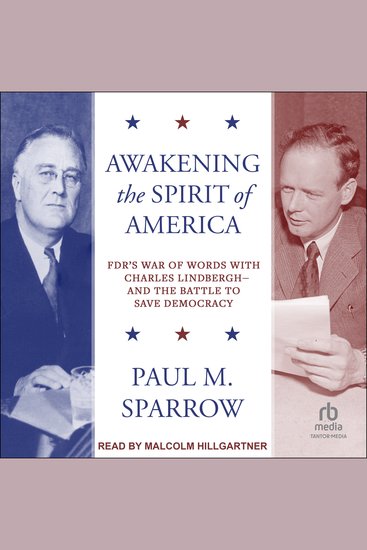
    Franklin Roosevelt awoke on September 1, 1939 to the news that Germany invaded Poland, signaling the start of World War II. The president warned for years that Hitler's fascist regime posed an existential threat to democracy, but the American public remained stubbornly isolationist as fascist sympathizing groups, egged on by right wing media stars promoting anti-Semitic conspiracy theories, plotted to overthrow the president. 


    The situation was dire, and Roosevelt found himself facing an unexpected adversary: Charles Lindbergh. Wildly popular, the famed aviator's youthful charm, plainspoken rhetoric, and media magnetism earned him a massive following as he led an attack on FDR's policies. The German government provided secret funds to Lindbergh's Nazi followers as he led the radical America First Committee in an effort to prevent Roosevelt from aiding England's survival—and the world's. 


    Awakening the Spirit of America shows how Roosevelt overcame the forces aligned against him in a war against fascism. Paul Sparrow, former director of the FDR Presidential Library, reveals how FDR's triumph of leadership was by no means a foregone conclusion. Awakening the Spirit of America provides a riveting account of FDR's ultimate victory over pro-Nazi isolationists and provides vital insight into American history and an iconic president.
    Voir livre
  • A Model Crime - From their pens to your ears genius in every story - cover

    A Model Crime - From their pens...

    William Pett Ridge

    • 0
    • 0
    • 0
    William Pett Ridge was born at Chartham, near Canterbury, Kent, on 22nd April 1859.  
    His family’s resources were certainly limited. His father was a railway porter, and the young Pett Ridge, after schooling in Marden, Kent became a clerk in a railway clearing-house. The hours were long and arduous, but self-improvement was Pett Ridge’s goal.  After working from nine until seven o’clock he would attend evening classes at Birkbeck Literary and Scientific Institute and then to follow his passion; the ambition to write.  He was heavily influenced by Dickens and several critics thought he had the capability to be his successor.  
    From 1891 many of his humourous sketches were published in the St James's Gazette, the Idler, Windsor Magazine and other literary periodicals of the day. 
    Pett Ridge published his first novel in 1895, A Clever Wife. By the advent of his fifth novel, Mord Em'ly, a mere three years later in 1898, his success was obvious.  His writing was written from the perspective of those born with no privilege and relied on his great talent to find humour and sympathy in his portrayal of working class life. 
    Today Pett Ridge and other East End novelists including Arthur Nevinson, Arthur Morrison and Edwin Pugh are being grouped together as the Cockney Novelists.   
    In 1924, Pugh set out his recollections of Pett Ridge from the 1890s: “I see him most clearly, as he was in those days, through a blue haze of tobacco smoke. We used sometimes to travel together from Waterloo to Worcester Park on our way to spend a Saturday afternoon and evening with H. G. Wells. Pett Ridge does not know it, but it was through watching him fill his pipe, as he sat opposite me in a stuffy little railway compartment, that I completed my own education as a smoker... Pett Ridge had a small, dark, rather spiky moustache in those days, and thick, dark, sleek hair which is perhaps not quite so thick or dark, though hardly less sleek nowadays than it was then”. 
    With his success, on the back of his prolific output and commercial success, Pett Ridge gave generously of both time and money to charity. In 1907 he founded the Babies Home at Hoxton.  This was one of several organisations that he supported that had the welfare of children as their mission.  
    His circle considered Pett Ridge to be one of life's natural bachelors. In 1909 they were rather surprised therefore when he married Olga Hentschel.  
    As the 1920’s arrived Pett Ridge added to his popularity with the movies. Four of his books were adapted into films.  
    Pett Ridge now found the peak of his fame had passed. Although he still managed to produce a book a year he was falling out of fashion and favour with the reading public and his popularity declined rapidly.  His canon runs to over sixty novels and short-story collections as well as many pieces for magazines and periodicals. 
    William Pett Ridge died, on 29th September 1930, at his home, Ampthill, Willow Grove, Chislehurst, at the age of 71. 
    He was cremated at West Norwood on 2nd October 1930.
    Voir livre
  • Ronald Reagan - Destiny at His Side - cover

    Ronald Reagan - Destiny at His Side

    Janet Benge, Geoff Benge

    • 0
    • 0
    • 0
    From his early days living in small-town poverty, young Dutch Reagan's thoughts were always on the future. Whether helping his family through financial hard times or doggedly pursuing opportunities reserved for the few, Dutch knew that all the knowledge that he had absorbed over the years was waiting inside of him for a chance to come out. Achieving success as an athlete, sports announcer, and actor, Ronald Reagan discovered his greatest role late in life, as the fortieth president of the United States and The Great Communicator, a man with the ability to reach out to the American people and leave a lasting legacy.
    Voir livre
  • Roughing It - cover

    Roughing It

    Mark Twain

    • 0
    • 0
    • 0
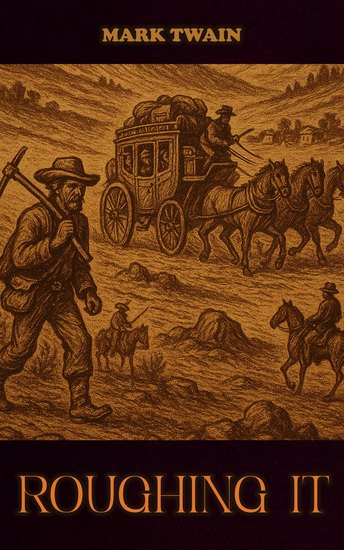
    "Roughing It" by Mark Twain is a lively, humorous, and vividly detailed account of the author's adventures in the American West during the mid-19th century. Blending memoir, travel writing, and tall-tale storytelling, Twain chronicles his experiences as a young man seeking fortune and purpose amid the raw energy of frontier life.
    
    Beginning with Twain's journey by stagecoach from Missouri to Nevada, the book captures the excitement, danger, and absurdity of westward expansion. Twain recounts encounters with colorful characters, prospectors, outlaws, journalists, and dreamers, bringing to life the mining camps, desert landscapes, and boomtowns of Nevada and California. His misadventures in silver mining, brief military service, and early days as a newspaper writer form the heart of the narrative.
    
    Beyond the American West, Roughing It also follows Twain to Hawaii (then the Sandwich Islands), where his keen observations and playful humor illuminate island life, local customs, and natural wonders. Throughout the book, Twain's storytelling blends exaggeration with truth, creating a uniquely entertaining portrait of frontier America.
    
    While often laugh-out-loud funny, Roughing It also offers valuable insights into the spirit of ambition, risk, and reinvention that defined the era. Twain captures the optimism and chaos of a rapidly expanding nation, while subtly critiquing greed, folly, and the myth of easy success.
    
    Energetic, observant, and irresistibly entertaining, Roughing It stands as one of Mark Twain's most beloved nonfiction works. It is an essential read for fans of classic American literature, travel memoirs, and stories of adventure on the wild frontier.
    Voir livre