Rejoignez-nous pour un voyage dans le monde des livres!
Ajouter ce livre à l'électronique
Grey
Ecrivez un nouveau commentaire Default profile 50px
Grey
Abonnez-vous pour lire le livre complet ou lisez les premières pages gratuitement!
All characters reduced
Apocalypse Still - Stories - cover

Apocalypse Still - Stories

Leah Nicole Whitcomb

Maison d'édition: Starclay Publishing

  • 0
  • 0
  • 0

Synopsis

A dark yet heartwarming collection perfect for fans of Deesha Philyaw, Tracy Deonn, and Octavia Butler.When the world as we know it ends, society turns a blind eye; however, Apocalypse Still explores the fears, rage, and hopes of Black women and girls who can’t ignore the defeating circumstances of their apocalyptic worlds. In these ten earth-shattering scenarios, young Black women question what they believe, who to trust, and how to survive.When society collapses, Gada infiltrates a secret organization in search of food but bites off more than she can chew. Paranoid Jenise realizes that the government may be lying about the zombie virus. Kiana’s kink helps her time travel between lovers. Trying to understand the truth of her disability, Monice uncovers an alien conspiracy.This debut collection weaves the grotesque and the beautiful, the extraordinary and the mundane together in these tender tales of community, ancestral gifts, and the lengths we go through to survive.
Disponible depuis: 13/03/2024.
Longueur d'impression: 178 pages.

D'autres livres qui pourraient vous intéresser

  • A Case of Identity - cover

    A Case of Identity

    Sir Arthur Conan Doyle

    • 0
    • 0
    • 0
    Against the wishes of her stepfather, Mary Sutherland has become engaged to Hosmer Angel. Will Sherlock reveal Hosmer's true identity?
    Voir livre
  • Passed - From their pens to your ears genius in every story - cover

    Passed - From their pens to your...

    Charlotte Mew

    • 0
    • 0
    • 0
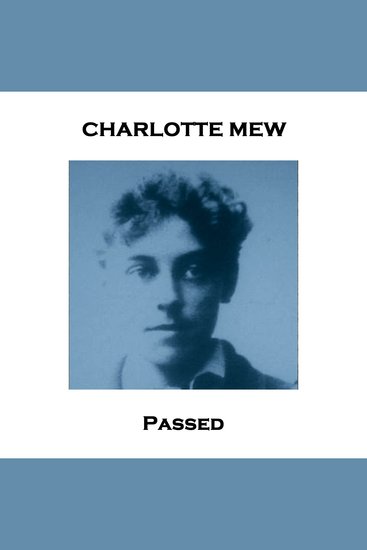
    Charlotte Mary Mew was born on 15th November, 1869 in London to professional parents – her father was responsible for the design of Hampstead Town Hall. 
    Charlotte, one of seven children; three of whom died in early childhood, was educated at Lucy Harrison's School for Girls and attended lectures at University College, London. 
    In 1898 her father died but failed to make provision for the family. Her mother, anxious about the family's social standing, did not want that known even though there was heavy ongoing expense for two other siblings who were in mental institutions. 
    However for Charlotte helping to support this overhead and her mother and sister, Anne, meant that her ambition to be a paid writer must now become a reality. Initially this meant prose - her poetry was to gestate until later in life. 
    During this time Charlotte and Anne made a pact never to marry for fear of passing on insanity to their children. 
    As a writer Charlotte was a modernist, resisting the shackles of Victorian society's suffocating demands on behaviour especially for women. Despite her diminutive figure and dainty feet, she wore trousers, kept her hair short, smoked roll ups, was a Lesbian and tried to appear masculine. 
    Her difficult family life, although her close relationship with Anne was a constant source of comfort and companionship until her death in 1927, was coupled with rejection in her personal life but also provided inspiration for her wonderfully insightful and original poetry that you can read here. 
    Despite her fans including Thomas Hardy, Virginia Woolf and Siegfried Sassoon, Charlotte's works have been shamefully neglected.  
    Charlotte Mew died on 24th March in 1928 and was buried at Hampstead Cemetery.
    Voir livre
  • Forgotten Authors The - Volume 4 - Jane Findlater to George Griffiths - cover

    Forgotten Authors The - Volume 4...

    Jane Findlater, Charles Foley,...

    • 0
    • 0
    • 0
    Throughout the long centuries of human history is the want, and the need, to share information, to exchange ideas and for that knowledge and experience, for curiosity and learning, to be the basis of a civil society. 
    In literature the ambition is much narrower.  In order to be known, to be popular, you had to be published.  And for that people had to know you existed and your ideas worth reading.  Obviously for most of humanity’s time people couldn’t read and texts couldn’t be published in any great number. 
    In the 15th Century Gutenberg’s printing press began the revolution to address the second and by the 19th century had gathered pace with startling speed and mass distribution.  Education for the many was brought in to help people understand more of their world and, with new skills, how to have a better place within it.  Now, if the powers that owned the presses and means of distribution agreed an audience would now be able to avail themselves of your ideas, your printed words.  
    Sadly, in the thirst for the new, the recent and the past fell from sight, relegated to dark corners and dusty shelves.   
    But the printed word is rarely without someone, somewhere busying themselves through piles of papers and books rediscovering what a good story is, whatever its age. 
    Sadly, in the thirst for the new, the recent and the past fell from sight, relegated to dark corners and dusty shelves.    
    But the printed word is rarely without someone, somewhere busying themselves through piles of papers and books rediscovering what a good story is, whatever its age. 
    In this volume we offer up a small selection of those talents whose time has now come again.
    Voir livre
  • Piñen - Stories - cover

    Piñen - Stories

    Daniela Catrileo

    • 0
    • 0
    • 0
    A fierce, tender collection of stories about the lives, traumas, and dreams of Mapuche youth in modern-day Chile. 
    The word "piñen" comes from Mapudungun and refers to the dust or the dirt that sticks to the body. 
     
    In the all-too-real streets of Santiago de Chile, Daniela Catrileo gives us a portrait of a generation in search of itself. In “Warriache,” two childhood friends whose lives have been marked by their part-Mapuche identity and the memories that bind them circle each other at a party. Their dance of delays and inevitable meeting expands into a tale across epochs—one that gives life to the hidden and suppressed experiences of those who live on the margins of other stories. In “Pornomisery,” a young girl considers the sexual violence that seems to lurk behind every closed door in her cloistered community and darken every possible route of exit. 
     
    Piñen is suffused with the humanity of its vivid, complex characters, bringing a side of modern Chile to vibrant life. It also marks the confident next step in the career of a writer poised to become one of the boldest and most uncompromising chroniclers of modern life in Latin American literature.
    Voir livre
  • Mnemonic Phantasms - cover

    Mnemonic Phantasms

    AvA SiLiCa

    • 0
    • 0
    • 0
    Buckle Up for a Deliriously Uncanny Literary Ride 
    Have you ever wondered about the deep-sea depths of unorthodox, unclassifiable stories that most ghostwriters take to their graves unseen? The kind of tales that straddle realities and make you second-guess the line between fact and fabulist fiction? 
    If so, "Mnemonic Phantasms" is the deliciously twisted tell-all you've been waiting for. In this daring anthology, an anonymous ghostwriter exposes some of the most bizarre, mind-bending client requests they've encountered over decades of sculpting prose in the shadows. 
    From crafting alien abduction memoirs and decoding subterranean civilisation epics to channelling celebrity afterlife autobiographies and exorcising cult leader manifestos - no paranormal subject, interdimensional whisper, or eccentric megalomania is off limits. 
    With dizzying narrative dexterity and a masterful command of speculative psychosphere violation, "Ava Silica" (a soigné nom de plume) brings readers along for a wild ride. It's a no-holds-barred immersion into the most uncharted, unchartable territories where few ghostwriters dare to tread. 
    Part memoir, part uncategorisable omnibus, this one-of-a-kind volume boldly unveils every ghostwriter's darkest secret—that the most unbelievable assignments are also often the most demanding. Thanks to Silica's decision to shatter the civility cloaks of confidentiality, you, the reader, get to experience the delicious, disturbing psilocybin trip of sheer WTF?! First-hand.
    Voir livre
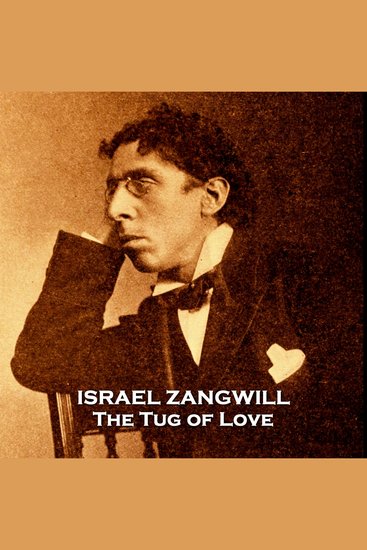
  • The Tug of Love - From their pens to your ears genius in every story - cover

    The Tug of Love - From their...

    Israel Zangwill

    • 0
    • 0
    • 0
    Israel Zangwill was born in London on 21st January 1864, to a family of Jewish immigrants from the Russian Empire.  
    Zangwill was initially educated in Plymouth and Bristol.  At age 9 he was enrolled in the Jews' Free School in Spitalfields in east London. Zangwill excelled here.  He began to teach part-time at the school and eventually full time.  Whilst teaching he also studied with the University of London and by 1884 had earned his BA with triple honours in philosophy, history, and the sciences. 
    His writing earned him the sobriquet "the Dickens of the Ghetto" primarily based on his much lauded novel ‘Children of the Ghetto: A Study of a Peculiar People’ in 1892 and its glimpse of the poverty-stricken life in London's Jewish quarter. 
    As a writer he was keen to reflect on his political and social outlooks.  His simulation of Yiddish sentence structure in English aroused great interest. His mystery work, ‘The Big Bow Mystery’ (1892) was the first locked room mystery novel.   
    Zangwill was also involved with narrowly focused Jewish issues as an assimilationist, an early Zionist, and later a territorialist. In the early 1890s he joined the Lovers of Zion movement in England. In 1897 he joined Theodor Herzl (considered the father of modern political Zionism) in founding the World Zionist Organization.   
    Zangwill quit the established philosophy of Zionism when his plan for a homeland in Uganda was rejected and founded his own organisation; the Jewish Territorialist Organization. Its stated goal was to create a Jewish homeland in whatever territory in the world could be found for them.  
    Amongst the challenges in his life he found time to write poetry.  He had translated a medieval Jewish poet in 1903 and his volume ‘Blind Children’ in 1908 was well received.  
    ‘The Melting Pot’ in 1909 made Zangwill’s name as an admired playwright.  When the play opened in Washington D.C., former President Theodore Roosevelt leaned over the edge of his box and shouted, "That's a great play, Mr. Zangwill, that's a great play."   
    Israel Zangwill died on 1st August 1926 in Midhurst, West Sussex.
    Voir livre