Begleiten Sie uns auf eine literarische Weltreise!
Buch zum Bücherregal hinzufügen
Grey
Einen neuen Kommentar schreiben Default profile 50px
Grey
Jetzt das ganze Buch im Abo oder die ersten Seiten gratis lesen!
All characters reduced
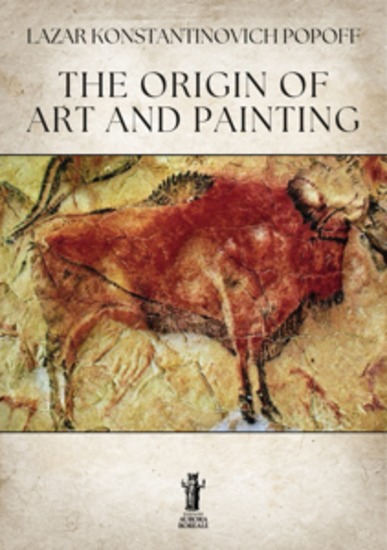
The Origin of Art and Painting - cover

The Origin of Art and Painting

Lazar Konstantinovich Popoff

Verlag: Edizioni Aurora Boreale

  • 0
  • 0
  • 0

Beschreibung

Lazar Konstantinovich Popoff (1851-1917) was a Russian writer, journalist and interpreter of science. He played an important role in the intellectual and social life of Russia, in particular, of St. Petersburg, and was the first to have clearly articulated and demonstrated the idea of ​​the magical nature of Paleolithic drawings, having applied ethnographic data to archaeological materials.
Popoff was born on February 22, 1851 in the city of Mariupol in the family of a trader, Konstantin Kiriakovich Popoff (apparently, of Greek origin).
He wrote a number of books, as well as hundreds of articles, notes and reviews in the journals and newspapers. His name and pen name (El’pe) are mentioned in the letters and  diaries  of  Lev Nikolàevič Tolstoj, Anton Pavlovich Chekhov, Gleb Ivanovich Uspensky and Vasily Vasilievich Rozanov. In his works, Popov touched upon different subjects related to botany, zoology, anthropology, physics, chemistry, healthy lifestyle, and gardening. Moreover, he edited numerous translations, such as The Life of Animals by Alfred Brehm, and was a full member of the Russian Physico-chemical Society and the Imperial Society of Devotees of Natural Science, Anthropology and Ethnography.
Today we offer our readers two fundamental articles by Popoff, The Origin of Art and The Origin of Painting, published in 1891 and 1894 in the magazine Popular Science Monthly.
Verfügbar seit: 31.12.2024.


Weitere Bücher, die Sie mögen werden

  • The American Operations in WW2: Po Valley - cover

    The American Operations in WW2:...

    History U.S. Army Center of...

    • 0
    • 0
    • 0
    World War II was the largest and most violent armed conflict in the history of mankind. Highly relevant today, World War II has much to teach us, not only about the profession of arms, but also about military preparedness, global strategy, and combined operations in the coalition war against fascism. This book follows military operations in Italy from 5 April to 8 May 1945. 
    The Allies had begun their invasion of the Italian mainland in early September 1943 with the promise of a quick drive north, up the "soft underbelly" of Europe and into the German heartland. Yet nineteen months later, after hard fighting up the rugged mountainous spine of the narrow Italian peninsula, such goals still eluded the Anglo-American military leaders of the Mediterranean Theater. To be sure, long before April 1945 Rome had fallen to Allied arms and fascist Italy had been knocked almost completely out of the war. But in the interval France had also been liberated, and the Soviet Union had reclaimed almost all of its territory previously conquered by the once invincible German war machine.
    Italy had in fact become a sideshow, a secondary theater, since the spring of 1944 when the western Allies had shifted their military resources north to support the buildup and execution of Operation OVERLORD, the invasion of Normandy. After that, there had been no turning back on the Anglo-American side, with its main effort directed east through the northern European plains. Thus, by April Germany was besieged on three sides, although the Allied forces in the south, those strung out along the northern Apennines overlooking the Po Valley, were now the farthest away from the tottering Third Reich. British Prime Minister Winston Churchill continued to strongly support an advance from northern Italy into the Balkans and southern Germany. However, the ability of the Italian-based Allied armies to sustain such an effort with minimal support in men and materiel seemed problematic…
    Zum Buch
  • How to Find Happiness - An Ancient Guide to the Good Life - cover

    How to Find Happiness - An...

    Marcus Tullius Cicero, Katharina...

    • 0
    • 0
    • 0
    Does happiness come from the pursuit of pleasure or moral virtue? A vivid new translation of Cicero’s exploration of a timeless question“Of course, we all want to be happy.” So wrote the Roman statesman, orator, and philosopher Marcus Tullius Cicero. He and his fellow Greek and Roman philosophers agreed that the secret to happiness—or what they called the “good life”—is pursuing the “greatest good.” The only problem is that they couldn’t agree on what the greatest good is. Cicero addressed this dilemma by composing a set of dialogues, On the Greatest Good and Evil (De finibus bonorum et malorum), in which he pitted advocates of different philosophical approaches to happiness against one another. Notably, these include the Epicureans (who believe that the greatest good is pleasure) and the Stoics (according to whom it is moral virtue). Rather than choosing sides, Cicero considers the pros and cons of the different philosophies, ultimately leaving it to his readers to make up their own minds. In How to Find Happiness, Katharina Volk offers a vivid new translation of selections from Cicero’s work, complete with an introduction and the original Latin text on facing pages. The result is a lively and engaging debate that invites each of us to discover our own path to happiness.
    Zum Buch
  • For The People - Fighting Authoritarianism Saving Democracy - cover

    For The People - Fighting...

    A. C. Grayling

    • 0
    • 0
    • 0
    Around the world the foundations of democracy, freedom, civil liberties are being eroded—what can be done?Are we living through the end of the democratic moment? While democracy once seemed the bedrock of Western societies, the past few decades have revealed a fragile reality. Once liberal countries are turning to authoritarianism, wealthy individuals and corporations are interfering with elections evermore flagrantly, and faith in democracy has plummeted among every demographic. What happened?From gerrymandering and partisanship to corporate interference and tainted donations, A. C. Grayling reveals the forces undermining our democratic ideals and offers bold solutions. An urgent wake-up call to the risks this poses to us all, For The People reminds us why democracy remains worth fighting for.
    Zum Buch
  • Hungarian History - The Complete History of Hungary - From Prehistoric Times to the Present Day - cover

    Hungarian History - The Complete...

    History Retold

    • 0
    • 0
    • 0
    Are you curious about the history of Hungary, a country with a rich and complex past that has played a significant role in shaping European history?  
    Do you want to discover the fascinating stories of its people and the events that shaped its destiny? 
    If so, this book is for you. 
    In this book, you'll find a comprehensive overview of Hungary's rich history, covering its political, cultural, and social developments. The book begins with the country's early beginnings, tracing its roots to the ancient tribes that settled in the Carpathian Basin. You'll learn about the country's early kingdoms and its struggles for independence, as well as its cultural and artistic achievements. 
    As you progress through the book, you'll be taken on a journey through Hungary's turbulent past. You'll discover the stories of the country's most famous historical figures, including kings, queens, and military leaders, and learn about their triumphs and tragedies. You'll explore the country's involvement in major historical events, such as the Turkish and Habsburg occupations, the world wars, and the Cold War.  
    Throughout the book, you'll be immersed in the country's unique identity and its influence on European history. You'll learn about the country's complex relationship with its neighbours and the world, and discover how Hungary has shaped the course of European history. 
    This book is perfect for anyone interested in the history of Hungary.  
    Order your copy today and discover the rich and fascinating history of Hungary for yourself.
    Zum Buch
  • From Zero to Four Figures - Making $1000 a Month Self-Publishing Fiction - cover

    From Zero to Four Figures -...

    Paul Austin Ardoin

    • 0
    • 0
    • 0
    Starting out as an indie author can be daunting, especially if you don't have much money to invest in marketing. If you've published one or more books but are struggling to get sales, this is the book for you! 
    In From Zero to Four Figures, USA TODAY bestselling author Paul Austin Ardoin shows you the strategy that helped him build an audience and grow his self-published fiction business to $1,000 a month within two years. Increasing your sales requires the right books, mindset, and marketing — many new authors lack one or more of these pillars. This book helps identify the gaps and mistakes that are holding you back. 
    These guidelines are repeatable, proven, inexpensive, and attainable—and will help get your self-published fiction business off the ground.
    Zum Buch
  • A Rare Recording of President Truman On The Establishment Of Israel - cover

    A Rare Recording of President...

    President Harry S. Truman

    • 0
    • 0
    • 0
    Harry S. Truman (May 8, 1884 - December 26, 1972) was the 33rd president of the United States, serving from 1945 to 1953. A member of the Democratic Party, he previously served as vice president from January to April 1945 under FDR and as a US senator from Missouri from 1935 to January 1945. Assuming the presidency after FDR's death, Truman implemented the Marshall Plan to rebuild the economy of Western Europe and established both the Truman Doctrine and NATO to contain the expansion of Soviet communism. In these recordings from the 1960s, Truman discusses the establishment of Israel in 1948, the bravery of Jewish soldiers, and his view of the Jewish-Arab conflict in Palestine.
    Zum Buch