




ÉCOUTER EXTRAIT

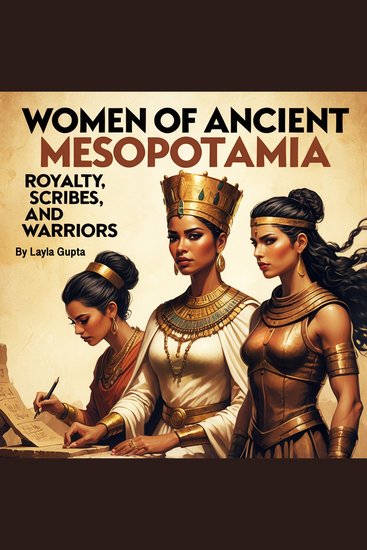
Women of Ancient Mesopotamia - Royalty Scribes and Warriors
Layla Gupta
Narrateur Freya Johnston
Maison d'édition: Cobbo Publishing LLC
Synopsis
In Ancient Mesopotamia, women in positions of royalty wielded significant power and influence, though their roles were often intertwined with the male-dominated political and religious systems. These women were not only important figures within their families and courts but also held sway over matters of governance, culture, and religion. The Mesopotamian concept of royalty was complex, encompassing both divine authority and political responsibility, and women in royal families were frequently called upon to uphold and represent these ideals.
One of the most prominent ways in which women in Mesopotamian royalty exercised their power was through marriage alliances. Royal women were often married to powerful kings or high-ranking officials, and these unions were strategically arranged to secure political stability, territorial expansion, and alliances between city-states. While the majority of these marriages were political in nature, some royal women were able to carve out roles of personal power and influence. For instance, Queen Shub-Ad, who ruled the Sumerian city-state of Ur, is believed to have held a direct and significant role in political decision-making during her reign. Her involvement in military campaigns, the construction of monumental architecture, and religious rituals showcases the multifaceted nature of female royal authority.
In addition to their marriages, royal women in Mesopotamia often took on important religious roles. Many queens and princesses served as high priestesses, a position that not only gave them spiritual authority but also political power. Priestesses were central figures in the worship of the gods, and as such, they were deeply connected to the divine. Enheduanna, the daughter of the Akkadian king Sargon, is one of the most well-known royal women from Mesopotamian history.
Durée: environ 2 heures (01:46:19)
Date de publication: 19/04/2025; Unabridged; Copyright Year: — Copyright Statment: —




