Begleiten Sie uns auf eine literarische Weltreise!
Buch zum Bücherregal hinzufügen
Grey
Einen neuen Kommentar schreiben Default profile 50px
Grey
Jetzt das ganze Buch im Abo oder die ersten Seiten gratis lesen!
All characters reduced
By Ox Team to California - A Narrative of Crossing the Plains in 1860 - cover

By Ox Team to California - A Narrative of Crossing the Plains in 1860

Lavinia Honeyman Porter

Verlag: Madison & Adams Press

  • 0
  • 0
  • 0

Beschreibung

By Ox Team to California is a firsthand account of a pioneer woman's journey across the West in 1860. The author brings thrilling and exciting stories from a 2000 miles journey from Hannibal, Missouri, to California, via Colorado and Utah.
Verfügbar seit: 01.07.2022.
Drucklänge: 120 Seiten.

Weitere Bücher, die Sie mögen werden

  • Train Your Mind for Peak Performance - A Science-Based Approach for Achieving Your Goals - cover

    Train Your Mind for Peak...

    Jr. Lyle E. Bourne, PhD Alice F....

    • 0
    • 0
    • 0
    Whether you're training to play the piano, speak a foreign language, shoot a target with a bow and arrow, or master the techniques of fine carpentry, the conditions of your training will affect how successfully you learn and perform. How can you process needed new information in order to remember it better and use it in the future? How long should you work, study, or practice before taking a break? How can you counteract fatigue and boredom to improve performance if the task is tedious? This book shares practical tips to help you learn quickly, remember what you learn, and apply it to real-world performance.
    Zum Buch
  • English Armada The: The History of the Counter Armada Sent by Queen Elizabeth to Spain in 1589 - cover

    English Armada The: The History...

    Editors Charles River

    • 0
    • 0
    • 0
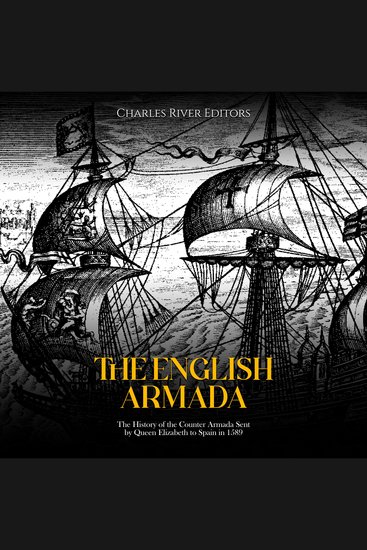
    On July 12, 1588, the legendary Spanish Armada headed for the English Channel. The Spanish plan was to take this invasion, led by the Duke of Parma, to the coast of southeast England, where they would be unleashed to conquer Elizabethan England for Spain’s King Philip II and Catholic Christendom. The Armada included over 150 ships, 8,000 sailors, and 18,000 soldiers, and it boasted a firepower of 1,500 brass guns and 1,000 iron guns. Just leaving port itself took the entire Armada two days.  
    	As everyone who has been taught history now knows, the Armada was one of the most famous military debacles in history. Regardless of the debate over whether it was simple mathematical miscalculation or plain bad luck, coupled with English fire ships assailing the Spanish ships, the Armada was decisively defeated. The Armada ultimately found its reluctant way home in awful conditions, having permanently lost over a third of the ships, and on the Irish coast, the Armada suffered further losses.  
    	For the Counter Armada, Elizabeth turned to the most notorious English sailor of the era. The life of Sir Francis Drake, or, more precisely the tale of it, is a prime example that history is written by the winners. Drake’s successes against the Spanish as a captain and a privateer were legendary, and Drake was celebrated for fighting the queen’s enemies, sinking their ships and capturing the treasure that would otherwise be used to finance attacks on England. Drake vigorously pursued every mission given to him by Elizabeth I, and he brought all his skill, experience, and training to bear against her enemies. He was recognized at court for his valor, praised in story and song, and remembered for the kind of personality and esprit de corps that the English have long desired and celebrated in their military heroes. They were to patrol the shores of England and Spain and destroy any remaining Spanish ships.
    Zum Buch

  • From Classroom to Achievement - Unlocking Student Potential - cover

    From Classroom to Achievement -...

    Dr. David K. Ewen

    • 0
    • 0
    • 0
    Student success is the heartbeat of any educational institution, a compass guiding the efforts of educators, parents, and stakeholders. It encompasses academic achievement, personal growth, and the development of essential life skills. The topics of building strong bonds, united vision, celebration, clear communication, values integration, leadership modeling, policy involvement, and continuous improvement collectively form a rich tapestry that not only fosters a positive school culture but also lays the foundation for understanding and nurturing student success.Dr. David K. Ewen is an esteemed educator whose journey has been marked by unwavering commitment, academic excellence, and a profound dedication to global education. His remarkable path began when he earned his Master of Education degree (M.Ed.) in 1988. Armed with a passion for learning and a vision for impactful education, Dr. Ewen launched into the realm of corporate training, where he honed his skills in fostering effective communication and development within the corporate sphere.As his expertise flourished, Dr. Ewen's ambitions expanded further. In 1994, he established Enterprise College, a visionary initiative that aimed to reshape the educational landscape. This endeavor marked a pivotal step in his career, paving the way for his next remarkable venture.In 1998, Dr. Ewen assumed the role of a touring professor, taking his knowledge and insights to diverse corners of the globe. This endeavor not only showcased his commitment to reaching students worldwide but also solidified his reputation as an innovative and dedicated educator.Dr. Ewen's illustrious journey recently culminated in a significant recognition of his contributions. In 2023, he was awarded an honorary Doctor of Education degree (Ed.D.), a testament to his exceptional achievements and the impact he has had on the field of education. This honor was bestowed upon him in recognition of his remarkable work in running a global education
    Zum Buch
  • The Meme Humanoids - Modern Myths or Real Monsters - cover

    The Meme Humanoids - Modern...

    Lon Strickler

    • 0
    • 0
    • 0
    In 2012, an incredible phenomenon began to occur. Internet users, in earnest, began reporting frightening encounters with emaciated, pale, hairless humanoids that, for the most part, crawled on all fours. Internet users attempted to equate these entities with characters of Native American mythology, oblivious to the fact that the humanoids in these encounters bore a resemblance to the fictional Rake. Many witnesses suggested that they were "Skinwalkers," medicine men or witches of traditional Navajo lore who possess the ability to transform into animals. Others proposed that these emaciated humanoids were manifestations of the "Wendigo," a malevolent cannibalistic spirit of Cree and Algonquin legend. Others still began to invent new names for these creatures, such as "Fleshgaits" and "Crawlers," the latter evoking the 2005 movie entities that likely helped to inspire the Rake originally. 


    The humanoid encounters and sightings that are detailed in this book over varied glimpses into the phenomenon. Ask yourself—are these humanoids actual corporeal beings that are manifested by the human mind and perceivable by others? Or are we witnessing the nexus of an unknown and monstrous species of humanoid?
    Zum Buch
  • Nathaniel Hawthorne: A short biography - 5 Minutes: Short on time - long on info! - cover

    Nathaniel Hawthorne: A short...

    5 Minutes, 5 Minute Biographies,...

    • 0
    • 0
    • 0
    Nathaniel Hawthorne, American writer of the 19th century: Life and work in a short biography! Everything you need to know, brief and concise. Infotainment, education and entertainment at its best!
    Zum Buch
  • The War in the Air - How Aerial Combat Changed Warfare Forever - cover

    The War in the Air - How Aerial...

    Sage Winters

    • 0
    • 0
    • 0
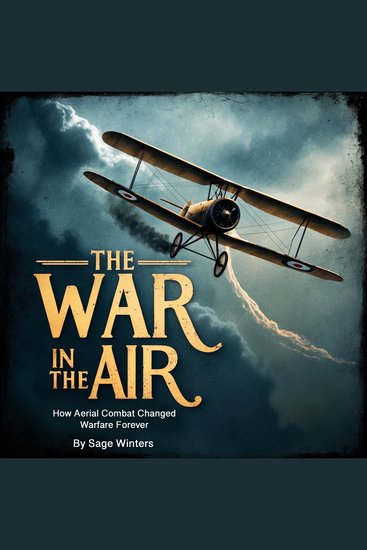
    The early 20th century marked a transformative period in military history, where the introduction of flight reshaped the very nature of warfare. Prior to this, battles were fought on the ground and at sea, with strategy revolving around infantry, artillery, and naval power. However, as aviation technology advanced rapidly, it presented military commanders with new opportunities and challenges that would forever alter how conflicts were conducted. 
      
    At the outset of World War I, the concept of aerial combat was in its infancy. Airplanes were initially seen as reconnaissance tools, providing vital intelligence for ground forces. Yet, it didn’t take long for the potential of aircraft to be realized in more aggressive terms. Pioneers such as the Wright brothers had already demonstrated the possibilities of flight, but the practical application of aircraft in combat was a game-changer. The skies above the battlefield soon became a new front, and aviation quickly proved indispensable in both strategic and tactical operations. 
      
    The early airmen of World War I were explorers of a new domain, and their role would evolve from mere observers to active participants in combat. The introduction of fighter aircraft, along with advancements in technology like the machine gun, turned the skies into a dangerous and dynamic environment. Aerial dogfights became iconic moments of the war, and the stakes of air superiority were made clear. As aircraft became faster, more maneuverable, and capable of carrying greater payloads, they not only impacted the outcome of individual battles but also began to influence the strategic decisions of entire nations.
    Zum Buch