Rejoignez-nous pour un voyage dans le monde des livres!
Ajouter ce livre à l'électronique
Grey
Ecrivez un nouveau commentaire Default profile 50px
Grey
Abonnez-vous pour lire le livre complet ou lisez les premières pages gratuitement!
All characters reduced
Not Without Challenges - cover

Not Without Challenges

Lavender Lively

Maison d'édition: Next Chapter

  • 0
  • 0
  • 0

Synopsis

Ever dreamed the wrong dream?Made a decision that caused a stir?Found yourself in an awkward situation without any recourse?
 
Then welcome to NOT WITHOUT CHALLENGES, a collection of stories and poems that will help answer those questions.
 
The pieces in this collection are more on a personal level, taken from experiences of either myself or of acquaintances. The collection does contain fictional accounts as well - I'll let you figure out which is which.
Disponible depuis: 10/04/2024.
Longueur d'impression: 58 pages.

D'autres livres qui pourraient vous intéresser

  • The White People - cover

    The White People

    Arthur Machen

    • 0
    • 0
    • 0
    This audiobook is narrated by an AI Voice. The White People leads us into a mesmerizing world where sin and sainthood dance on a razor's edge. Ambrose, the enigmatic philosopher, challenges conventional wisdom, blurring the lines between good and evil, unveiling the enthralling beauty of sin and the austerity of sainthood. As young Cotgrave delves into a forbidden diary, he unravels the story of a young girl's initiation into the mystical realms of the White People, weaving a vivid tapestry of fairy folk, witches, and otherworldly experiences.
    Voir livre
  • When The Yule Log Burns - cover

    When The Yule Log Burns

    Leona Dalrymple

    • 0
    • 0
    • 0
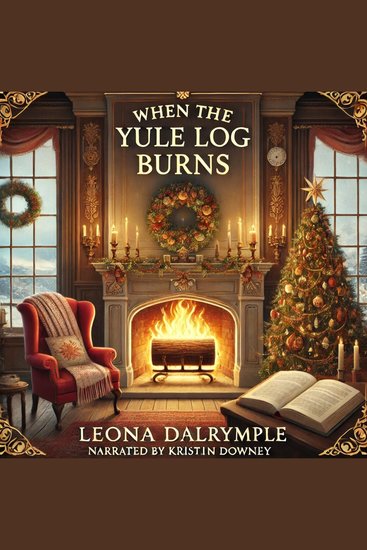
    Leona Dalrymple’s When the Yule Log Burns is a heartwarming holiday tale filled with nostalgia, tradition, and the spirit of Christmas. Set in a cozy home during the holiday season, the story captures the essence of Christmas gatherings, family connections, and cherished memories. As the Yule log burns in the fireplace, past and present intertwine, weaving together tales of love, kindness, and the enduring magic of the season. 
    Narrated by Kristin Downey, this audiobook brings to life the warmth and sentimentality of Dalrymple’s prose, transporting listeners to a world of crackling fires, snow-covered landscapes, and the timeless joy of Christmas. A perfect listen for those who love classic holiday literature, When the Yule Log Burns reminds us that the greatest gifts are often found in the moments we share with loved ones.
    Voir livre
  • The Spike - From their pens to your ears genius in every story - cover

    The Spike - From their pens to...

    George Orwell

    • 0
    • 0
    • 0
    Eric Arthur Blair was born on 25th June 1903 in Motihari, Bihar, in what was then British India. When Eric was one his mother took him to England and they settled at Henley-on-Thames in Oxfordshire.  
    His education was at the nearby convent school before moving on to St Cyprian's School at Eastbourne and finally Eton where his academic studies were sidelined in favour of work on college publications. 
    University could not be achieved without a scholarship, which depended on good grades, and so it was decided that Eric should join the Imperial Police. Now 19 he chose a posting in Burma, then a province of British India. He was appointed an Assistant District Superintendent in November 1922. In Burma, he was an outsider. However, he acquired a moustache and some local tattoos—small badly drawn blue circles on his knuckles. 
    In 1927 he contracted dengue fever and returned to England to convalesce. At home he reappraised his life and resigned his job to become a writer. His police experiences were later used for ‘Burmese Days’.  
    By 1932 he had a literary agent who secured him an offer to publish a non-fiction work ‘Down and Out in London and Paris’ for a £40 advance, through the radical and socialist Victor Gollancz publishing house.  It was published in January 1933 as ‘by George Orwell’, it was modestly successful. 
    ‘Burmese Days’ (1934) and ‘A Clergyman's Daughter’ (1935) were published whilst Orwell kept on with writing ‘Keep the Aspidistra Flying’.  In January 1936, he set out by public transport to research life for the ordinary man and woman in Wigan. From these experiences emerged ‘The Road to Wigan Pier’. He also caught the eye of Special Branch who kept him under surveillance until the year before the release of ‘Nineteen Eighty-Four’. 
    Later in December 1936 Orwell set out to fight in the Spanish Civil War. Initially stationed at Alcubierre 1,500 feet above sea level, in the depth of winter on the Aragon Front. Military action was scant as was the lack of munitions, food and firewood. In April, Orwell returned to Barcelona and was caught up in the Barcelona May Days and its factional in-fighting. Returning to the Aragon Front he was almost immediately hit by a sniper's bullet through the throat. The bullet barely missed the artery but he survived.  His experiences were expressed in ‘Homage to Catalonia’ (1938) but, out of fashion with its times, it was a commercial failure.  
    When World War Two started Orwell was declared ‘unfit for any kind of military service’ but finally obtained ‘war work’ with the BBC's Eastern Service.  In September 1943, after two years Orwell left the BBC to concentrate on a new idea: ‘Animal Farm’.  
    By April 1944 ‘Animal Farm’ was ready for publication. It was a huge and resounding success.   
    Orwell left London for the island of Jura in April 1947 to work on ‘Nineteen Eighty-Four’. Once more health became an issue and in December a chest specialist was summoned from Glasgow who diagnosed tuberculosis.  By the end of July Orwell was able to return to Jura to finish ‘Nineteen Eighty-Four’. It was published the following June to immediate critical and popular acclaim. 
    By Christmas Orwell's health had again begun to decline. Early on the morning of 21st January, an artery burst in Orwell's lungs. It was fatal. He was dead at 46.
    Voir livre
  • A Man and Some Others - cover

    A Man and Some Others

    Stephen Crane

    • 0
    • 0
    • 0
    Stephen Crane (November 1, 1871 - June 5, 1900) was an American novelist, poet and journalist. He was born in Newark, NJ. Crane is noted for his early employment of naturalism, a literary style in which characters face realistically portrayed and often bleak circumstances, but Crane added impressionistic imagery and biblical symbolism to the austere realism.
    Voir livre
  • The Murders in the Rue Morgue - cover

    The Murders in the Rue Morgue

    Edgar Allan Poe

    • 0
    • 0
    • 0
    Dive into the origins of detective fiction with "The Murders in the Rue Morgue," the seventh part of an Edgar Allan Poe short story collection, narrated by Jake Urry. This groundbreaking tale follows C. Auguste Dupin, a brilliant detective, as he investigates the brutal and baffling murders of two women in a Parisian apartment. With no apparent motive and clues that defy explanation, Dupin uses his keen analytical mind to unravel the mystery. 
    Jake Urry's engaging narration brings Poe's pioneering detective story to life, capturing the intrigue and intellectual challenge of Dupin's investigation. His voice lends depth and suspense to this classic tale, making it an essential listen for fans of mysteries and classic literature alike.
    Voir livre
  • Mutiny - A womans quest for social advancement meets a reporter investigating the truth aboard a ship - cover

    Mutiny - A womans quest for...

    Dorothy Edwards

    • 0
    • 0
    • 0
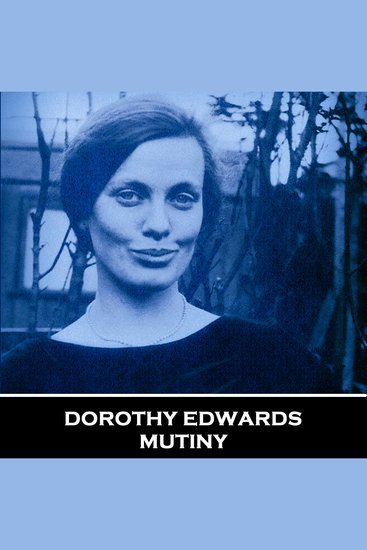
    Dorothy Edwards, an only child, was born on the 18th August 1902 at Ogmore Vale in Glamorgan. 
     
    Her father was a headmaster and an early activist in the Independent Labour Party.  At age 9 Dorothy, dressed in red, welcomed Keir Hardy on to the stage at Tonypandy during the national coal strike of 1912. She was taught that revolution was at hand, that class barriers would be a thing of the past. 
      
    Dorothy won a scholarship and boarded at Howell's School for Girls in Llandaff before moving to University College of South Wales and Monmouthshire where she read Greek and philosophy. 
     
    Her early hopes to be an opera singer were set to one side after graduating and the death of her father. Instead she took on part-time work to supplement her mother’s pension with whom she now lived. 
     
    Dorothy managed to write a number of short stories which appeared in the literary journals of the day.  She spent several months with her mother in Vienna, all the time revising or writing before embarking on ‘Winter Sonata’, a short novel published in 1928. 
     
    Introductions to several members of the Bloomsbury Group meant a move to London and a division of her time between child-care for the family of Bloomsbury author David Garnett and the promise of an advance payment for her work on a new volume of stories. 
     
    However, Dorothy’s life was starting to spiral out of control; she was attracted to the Welsh nationalist movement but felt that her Welsh provincialism made her, in London at least, feel socially inferior. Leaving her mother dependent on a hired companion consumed her with guilt as did the end of an affair with a married musician. 
     
    On the 5th January 1934, having spent the morning burning her papers, Dorothy Edwards threw herself in front of a train near Caerphilly railway station.  
     
    Her suicide note read: "I am killing myself because I have never sincerely loved any human being all my life. I have accepted kindness and friendship and even love without gratitude, and given nothing in return."
    Voir livre