Rejoignez-nous pour un voyage dans le monde des livres!
Ajouter ce livre à l'électronique
Grey
Ecrivez un nouveau commentaire Default profile 50px
Grey
Abonnez-vous pour lire le livre complet ou lisez les premières pages gratuitement!
All characters reduced
Canute the Great 995 (circa)-1035 and the Rise of Danish Imperialism during the Viking Age - Enriched edition - cover

Canute the Great 995 (circa)-1035 and the Rise of Danish Imperialism during the Viking Age - Enriched edition

Laurence Marcellus Larson

Maison d'édition: DigiCat

  • 0
  • 0
  • 0

Synopsis

In "Canute the Great, 995 (circa)-1035, and the Rise of Danish Imperialism during the Viking Age," Laurence Marcellus Larson presents a meticulous examination of the life and rule of the influential Viking monarch Canute. Larson employs a scholarly narrative style, integrating a wealth of historical sources and archaeological evidence to create a vivid portrayal of Canute's empire, which extended beyond Denmark to include England and parts of Norway. The book situates Canute within the shifting power dynamics of the Viking Age, illuminating how his reign exemplified the triumphs and tribulations of a period characterized by conquest, cultural exchange, and the seeds of emerging nation-states. Laurence Marcellus Larson, a distinguished historian with a profound interest in Norse history and culture, draws on his extensive research in medieval studies to craft this compelling account. His academic background and rigorous scholarship allow Larson to connect Canute's achievements with broader themes of imperialism and identity during the Viking Age, reflecting on how Canute's legacy influenced subsequent generations in Northern Europe. Highly recommended for historians, students, and enthusiasts of medieval Europe, Larson's work is an indispensable text that not only chronicles the life of Canute the Great but also offers invaluable insights into the complexities of Viking imperialism and its enduring impact on European history.

In this enriched edition, we have carefully created added value for your reading experience:
- Hand‐picked Memorable Quotes shine a spotlight on moments of literary brilliance.
- Interactive footnotes clarify unusual references, historical allusions, and archaic phrases for an effortless, more informed read.
Disponible depuis: 04/09/2022.
Longueur d'impression: 2866 pages.
D'autres livres qui pourraient vous intéresser

  • NASM CPT Study Guide 2024-2025 - Review Book with 360 Practice Questions and Answer Explanations for the Certified Personal Trainer Exam - cover

    NASM CPT Study Guide 2024-2025 -...

    Shawn Blake

    • 0
    • 0
    • 0
    Find everything you need to confidently prepare and pass the NASM CPT exam with this all-in-one study guide 
      
    The National Academy of Sports Medicine or NASM CPT exam can provide the certification you need to succeed in your career as a personal trainer. 
      
    With its comprehensive and practical approaches to ensure safe but effective training, a NASM certificate can provide the knowledge and competence you need to safely guide and train your clients to achieve their fitness goals. 
      
    However, due to its varying and often challenging topics, approximately only 74% of exam takers pass the NASM CPT exam. 
      
    But don’t let numbers stop you from trying your best. 
      
    With the right study guide and strategies to maximize preparation time, anyone can pass the NASM CPT exam and start their career. 
      
    Grab a pen, and don’t forget to take notes as you discover: 
     How to physically and mentally prepare yourself for the exam with the ACE MethodAn in-depth discussion on basic and applied sciences and nutritional concepts you will find in the NASM CPT examThe importance of understanding the psychology of exercise and strategies to coach your clients using behavioral approachesWhy conducting assessments can help you create an effective and successful exercise program for your potential clientsHow to use the OPT model and design a program for clients with various fitness levelsThe importance of incorporating different types of training concepts to help your clients achieve their fitness goals 
      
    And so much more! 
      
    Take a closer step toward your dream career.Ace the NASM CPT Exam and start your personal trainer career.
    Voir livre
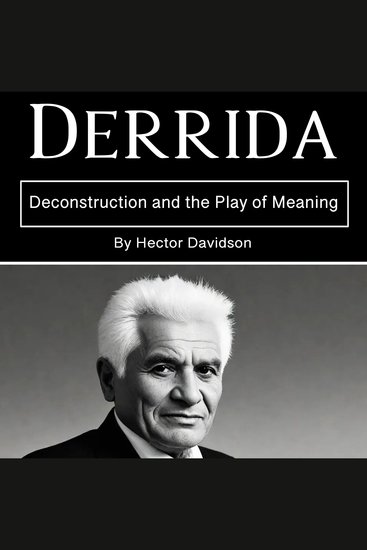
  • Derrida - Deconstruction and the Play of Meaning - cover

    Derrida - Deconstruction and the...

    Hector Davidson

    • 0
    • 0
    • 0
    Jacques Derrida, one of the most influential philosophers of the 20th century, revolutionized the way we think about language, meaning, and interpretation. His development of the concept of deconstruction has left a profound impact on philosophy, literary theory, and critical thought. To understand Derrida's legacy, it is essential to explore the key elements of his intellectual journey and how his ideas continue to shape contemporary discourse. 
    Derrida was born in Algeria in 1930, and his philosophical development was deeply influenced by the intellectual currents of post-war Europe, particularly phenomenology, structuralism, and existentialism. His work challenged the assumptions that underpinned much of Western thought, especially the metaphysical foundations of philosophy. One of his central concerns was the question of meaning and how it is constructed. He argued that meaning is never fixed, but instead is constantly shifting and dependent on a network of differences. This idea of différance, a term Derrida coined to describe the interplay of differences in language, became a cornerstone of his philosophy. 
    At the heart of Derrida's thought is the critique of the Western philosophical tradition, which he believed had centered itself around binary oppositions—such as presence/absence, speech/writing, and mind/body. These oppositions, Derrida argued, are not natural or inherent, but rather are constructed and perpetuated through language. By deconstructing these binaries, Derrida aimed to reveal the hidden power structures and assumptions that shaped our understanding of the world. He proposed that language itself is unstable, always in flux, and that meaning can never be fully contained or reduced to simple terms.
    Voir livre
  • American Patriarchy - cover

    American Patriarchy

    Laurel A. Rockefeller

    • 0
    • 0
    • 0
    Following the structure of American Poverty, American Patriarchy takes on the hottest topics affecting women living in 21st century America today. From abortion to femicide to mansplaining to education, this micro history takes you into women’s lives and experiences with the insights and analyses you have grown to trust in Laurel A. Rockefeller.
    Voir livre
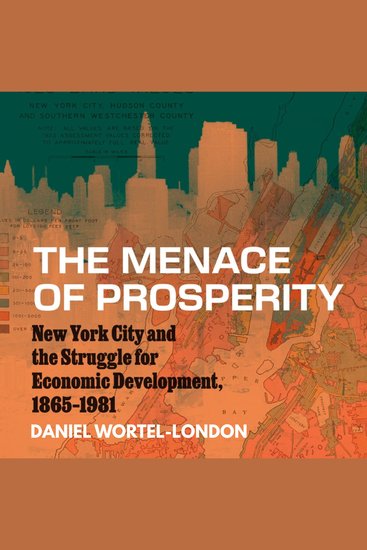
  • The Menace of Prosperity - New York City and the Struggle for Economic Development 1865–1981 - cover

    The Menace of Prosperity - New...

    Daniel Wortel-London

    • 0
    • 0
    • 0
    Many local policymakers make decisions based on a deep-seated belief: what’s good for the rich is good for cities. Convinced that local finances depend on attracting wealthy firms and residents, municipal governments lavish public subsidies on their behalf. Whatever form this strategy takes—tax-exempt apartments, corporate incentives, debt-financed mega projects—its rationale remains consistent and assumed to be true. But this wasn’t always the case. Between the 1870s and the 1970s, a wide range of activists, citizens, and intellectuals in New York City connected local fiscal crises to the greed and waste of the rich. These figures saw other routes to development, possibilities rooted in alternate ideas about what was fiscally viable. 
      
    In The Menace of Prosperity, Daniel Wortel-London argues that urban economics and politics are shaped by what he terms the “fiscal imagination” of policymakers, activists, advocates, and other figures. His survey of New York City during a period of explosive growth shows how residents went beyond the limits of redistributive liberalism to imagine how their communities could become economically viable without the largesse of the wealthy. Their strategies—which included cooperatives, public housing, land-value taxation, public utilities, and more—centered the needs and capabilities of ordinary residents as the basis for local economies that were both prosperous and just. 
      
    Overturning stale axioms about economic policy, The Menace of Prosperity shows that not all growth is productive for cities. Wortel-London’s ambitious history demonstrates the range of options we’ve abandoned and hints at the economic frameworks we could still realize—and the more democratic cities that might result.
    Voir livre
  • Dressed and Oppressed 3 - Up For Sale: A Forced Feminization Fantasy - cover

    Dressed and Oppressed 3 - Up For...

    Jane Fox

    • 0
    • 0
    • 0
    When Jordan commits a minor offense against Ron's girlfriend, Jordan has to pay. At first he thinks it's a joke, being forced to model a bra in front of his friends. But when they also put him in panties, when they shave him and make him up and turn him into a slutty-looking girl, he realizes this punishment is going to go a lot further than he ever would have thought. At the height of his humiliation, they sell his body to strangers, to be used as an object. And yet...he discovers he actually likes this brand of humiliation, and asks himself how much further he could take this enjoyable degradation.
    Voir livre
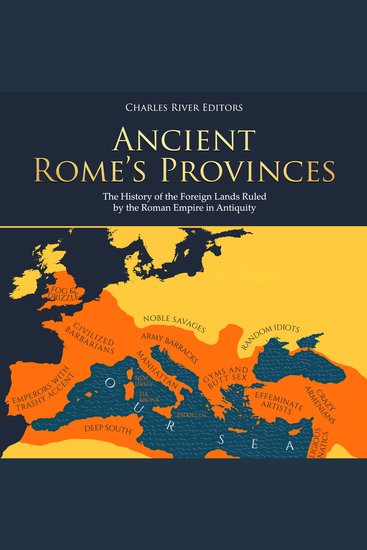
  • Ancient Rome’s Provinces: The History of the Foreign Lands Ruled by the Roman Empire in Antiquity - cover

    Ancient Rome’s Provinces: The...

    Editors Charles River

    • 0
    • 0
    • 0
    It can be argued that Roman culture was, indeed, Graeco-Roman rather than Roman. It was the Greek language that served as the lingua franca in the Eastern Empire and much of the west including Italy. Many Greek intellectuals, including Galen, were based in Rome and the Roman aristocracy more and more came to embrace Greek literature and philosophy. Homer’s epics inspired Virgil’s Aeneid and Seneca wrote in Greek. Earlier, Scipio Africanus (236 – 183 B.C.), the epitome of the Roman martial hero, studied Greek philosophy and regarded Greek culture as the benchmark against which all others had to be judged. The Roman poet and philosopher Horace studied in Athens during the Principate and, in common with many of his class, saw that city as the intellectual centre of the world. 
    In the minds of most people today, Gaul equates to modern France. However, the vast geographical area that Caesar named Gaul, in fact, was made up of a number of very distinct regions and covered, in addition to modern-day France, Belgium, Luxembourg, parts of the Netherlands, Germany, Switzerland and Northern Italy. The Romans called the northern area of the Italian peninsula, which is now part of modern Italy, Cisalpine Gaul, or Gaul on this side of the Alps. Early Romans did not even consider this region as part of Italy and repeated incursions southwards, and the sacking of Rome itself in 390 B.C., resulted in Rome taking full control of the area in 221 B.C. and thoroughly Romanizing it to the extent that even the Celtic language totally disappeared and was replaced by Latin. The region was initially a province but by the beginning of the 1st century B.C., it had become fully integrated into the Roman heartland and became an administrative region of Italy rather than a province. 
    Voir livre