Begleiten Sie uns auf eine literarische Weltreise!
Buch zum Bücherregal hinzufügen
Grey
Einen neuen Kommentar schreiben Default profile 50px
Grey
Jetzt das ganze Buch im Abo oder die ersten Seiten gratis lesen!
All characters reduced
Canute the Great 995 (circa)-1035 and the Rise of Danish Imperialism during the Viking Age - Enriched edition - cover

Canute the Great 995 (circa)-1035 and the Rise of Danish Imperialism during the Viking Age - Enriched edition

Laurence Marcellus Larson

Verlag: DigiCat

  • 0
  • 0
  • 0

Beschreibung

In "Canute the Great, 995 (circa)-1035, and the Rise of Danish Imperialism during the Viking Age," Laurence Marcellus Larson presents a meticulous examination of the life and rule of the influential Viking monarch Canute. Larson employs a scholarly narrative style, integrating a wealth of historical sources and archaeological evidence to create a vivid portrayal of Canute's empire, which extended beyond Denmark to include England and parts of Norway. The book situates Canute within the shifting power dynamics of the Viking Age, illuminating how his reign exemplified the triumphs and tribulations of a period characterized by conquest, cultural exchange, and the seeds of emerging nation-states. Laurence Marcellus Larson, a distinguished historian with a profound interest in Norse history and culture, draws on his extensive research in medieval studies to craft this compelling account. His academic background and rigorous scholarship allow Larson to connect Canute's achievements with broader themes of imperialism and identity during the Viking Age, reflecting on how Canute's legacy influenced subsequent generations in Northern Europe. Highly recommended for historians, students, and enthusiasts of medieval Europe, Larson's work is an indispensable text that not only chronicles the life of Canute the Great but also offers invaluable insights into the complexities of Viking imperialism and its enduring impact on European history.

In this enriched edition, we have carefully created added value for your reading experience:
- Hand‐picked Memorable Quotes shine a spotlight on moments of literary brilliance.
- Interactive footnotes clarify unusual references, historical allusions, and archaic phrases for an effortless, more informed read.
Verfügbar seit: 04.09.2022.
Drucklänge: 2866 Seiten.
Weitere Bücher, die Sie mögen werden

  • NASM CPT Study Guide 2024-2025 - Review Book with 360 Practice Questions and Answer Explanations for the Certified Personal Trainer Exam - cover

    NASM CPT Study Guide 2024-2025 -...

    Shawn Blake

    • 0
    • 0
    • 0
    Find everything you need to confidently prepare and pass the NASM CPT exam with this all-in-one study guide 
      
    The National Academy of Sports Medicine or NASM CPT exam can provide the certification you need to succeed in your career as a personal trainer. 
      
    With its comprehensive and practical approaches to ensure safe but effective training, a NASM certificate can provide the knowledge and competence you need to safely guide and train your clients to achieve their fitness goals. 
      
    However, due to its varying and often challenging topics, approximately only 74% of exam takers pass the NASM CPT exam. 
      
    But don’t let numbers stop you from trying your best. 
      
    With the right study guide and strategies to maximize preparation time, anyone can pass the NASM CPT exam and start their career. 
      
    Grab a pen, and don’t forget to take notes as you discover: 
     How to physically and mentally prepare yourself for the exam with the ACE MethodAn in-depth discussion on basic and applied sciences and nutritional concepts you will find in the NASM CPT examThe importance of understanding the psychology of exercise and strategies to coach your clients using behavioral approachesWhy conducting assessments can help you create an effective and successful exercise program for your potential clientsHow to use the OPT model and design a program for clients with various fitness levelsThe importance of incorporating different types of training concepts to help your clients achieve their fitness goals 
      
    And so much more! 
      
    Take a closer step toward your dream career.Ace the NASM CPT Exam and start your personal trainer career.
    Zum Buch
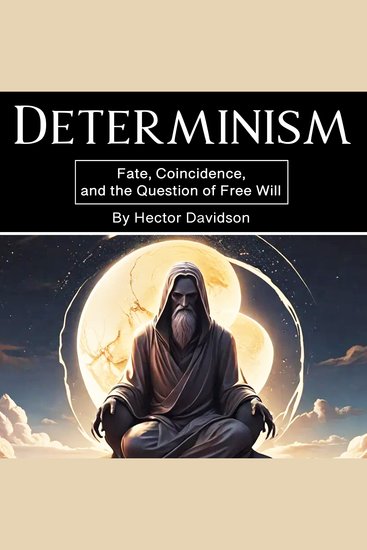
  • Determinism - Fate Coincidence and the Question of Free Will - cover

    Determinism - Fate Coincidence...

    Hector Davidson

    • 0
    • 0
    • 0
    The question of whether humans possess free will has intrigued philosophers, scientists, and thinkers for centuries. At the heart of this debate lies the concept of determinism—the idea that every event or action is the result of preceding causes, governed by laws of nature and logic. If everything that happens is the result of a cause, can we truly say we have control over our decisions? Is free will simply an illusion? These questions challenge our sense of autonomy and personal responsibility, and they invite us to explore the complex relationship between fate, coincidence, and choice. 
    Determinism suggests that all events, including human actions, are preordained by prior causes. From a deterministic standpoint, the universe is a vast, interconnected web of cause and effect, where each moment flows seamlessly from the one before it. This view raises profound questions about the nature of human agency. If every decision we make, every thought we have, and every action we take is determined by a series of preceding events—genetic, environmental, and even cosmic—where does the space for free will lie? Are we merely puppets of fate, our strings pulled by forces beyond our control? 
    However, this deterministic view is not universally accepted. Many philosophers argue that humans can exercise free will—that we have the capacity to make choices independent of the deterministic forces at play. This belief in free will asserts that while factors such as genetics, upbringing, and circumstances may influence our decisions, we retain the ability to act in ways that transcend these influences. The challenge, then, is reconciling the possibility of free will with the idea that many of our actions may be shaped or even constrained by forces outside our conscious control.
    Zum Buch
  • American Patriarchy - cover

    American Patriarchy

    Laurel A. Rockefeller

    • 0
    • 0
    • 0
    Following the structure of American Poverty, American Patriarchy takes on the hottest topics affecting women living in 21st century America today. From abortion to femicide to mansplaining to education, this micro history takes you into women’s lives and experiences with the insights and analyses you have grown to trust in Laurel A. Rockefeller.
    Zum Buch
  • Wired Wisdom - How to Age Better Online - cover

    Wired Wisdom - How to Age Better...

    Eszter Hargittai, John Palfrey

    • 0
    • 0
    • 0
    A surprising window into the online lives of people sixty and over—offering essential insights, no matter your age. 
     
    Many popular accounts say the older you are, the greater your tech struggles. And it’s worrying to think of loved ones emailing cringe-worthy misinformation, falling for phishing attacks, or becoming lonelier with increasing time spent online.  
     
    But in their eye-opening book on the internet’s fastest-growing demographic, researchers Eszter Hargittai and John Palfrey offer a more nuanced picture—debunking common myths about older adults’ internet use to offer hope and a necessary call to action. Incorporating original interviews and survey results from thousands of people sixty and over, Wired Wisdom shows that many, in fact, use technology in ways that put younger peers to shame. Over-sixties are often nimble online and quicker to abandon social media platforms that don’t meet their needs. Despite being targeted more often, they also may be less likely to fall for scams than younger peers. And fake news actually fools fewer people over sixty, who have far more experience evaluating sources and detecting propaganda. Still, there are unseen risks and missed opportunities for this group. Hargittai and Palfrey offer practical advice and show that our stereotypes can be hurdles that keep us from building intergenerational support communities, helping loved ones adopt new technology that may improve their lives, and thriving together online.
    Zum Buch
  • Dressed and Oppressed 2 - Tulle and Unusual Punishment: A Forced Feminization Fantasy - cover

    Dressed and Oppressed 2 - Tulle...

    Jane Fox

    • 0
    • 0
    • 0
    Sally's being fitted for a bridesmaid's dress, but her boyfriend Trip is being a nightmare about it! But the seamstress of the shop brings out a little gift to put Trip in his place: A form-fitting gown that shapes him like a woman. With him in his new dress, Sally and her best friend Joan make Trip into "the weaker sex"...leading to a wedding where bridesmaid Trip will be the star of a very humiliating show.
    Zum Buch
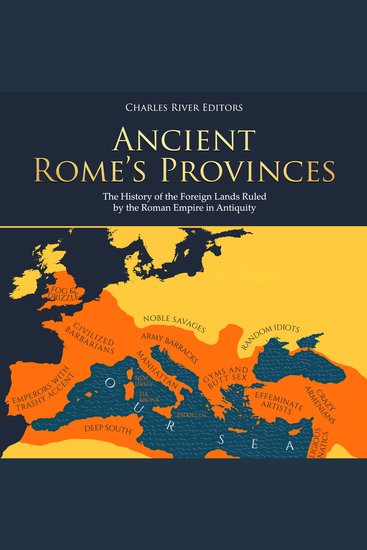
  • Ancient Rome’s Provinces: The History of the Foreign Lands Ruled by the Roman Empire in Antiquity - cover

    Ancient Rome’s Provinces: The...

    Editors Charles River

    • 0
    • 0
    • 0
    It can be argued that Roman culture was, indeed, Graeco-Roman rather than Roman. It was the Greek language that served as the lingua franca in the Eastern Empire and much of the west including Italy. Many Greek intellectuals, including Galen, were based in Rome and the Roman aristocracy more and more came to embrace Greek literature and philosophy. Homer’s epics inspired Virgil’s Aeneid and Seneca wrote in Greek. Earlier, Scipio Africanus (236 – 183 B.C.), the epitome of the Roman martial hero, studied Greek philosophy and regarded Greek culture as the benchmark against which all others had to be judged. The Roman poet and philosopher Horace studied in Athens during the Principate and, in common with many of his class, saw that city as the intellectual centre of the world. 
    In the minds of most people today, Gaul equates to modern France. However, the vast geographical area that Caesar named Gaul, in fact, was made up of a number of very distinct regions and covered, in addition to modern-day France, Belgium, Luxembourg, parts of the Netherlands, Germany, Switzerland and Northern Italy. The Romans called the northern area of the Italian peninsula, which is now part of modern Italy, Cisalpine Gaul, or Gaul on this side of the Alps. Early Romans did not even consider this region as part of Italy and repeated incursions southwards, and the sacking of Rome itself in 390 B.C., resulted in Rome taking full control of the area in 221 B.C. and thoroughly Romanizing it to the extent that even the Celtic language totally disappeared and was replaced by Latin. The region was initially a province but by the beginning of the 1st century B.C., it had become fully integrated into the Roman heartland and became an administrative region of Italy rather than a province. 
    Zum Buch