Junte-se a nós em uma viagem ao mundo dos livros!
Adicionar este livro à prateleira
Grey
Deixe um novo comentário Default profile 50px
Grey
Assine para ler o livro completo ou leia as primeiras páginas de graça!
All characters reduced
Nautilus - A Journey of Reflection and Discovery in 19th Century New England - cover
LER

Nautilus - A Journey of Reflection and Discovery in 19th Century New England

Laura Elizabeth Howe Richards

Editora: Good Press

  • 0
  • 0
  • 0

Sinopse

In "Nautilus," Laura Elizabeth Howe Richards employs a vivid and imaginative narrative that intricately weaves themes of exploration, natural history, and human resilience. Set against a backdrop of marine adventure, Richards uses rich, descriptive language reminiscent of Romantic literature, allowing readers to immerse themselves in the wonders of the ocean and the depths of human emotion. The book stands as a reflection of the late 19th-century fascination with both the natural world and technological innovation, showcasing the interplay between humanity's quest for knowledge and the mysteries of nature. Laura Elizabeth Howe Richards, a prolific author, and poet, was deeply influenced by her familial legacy in literature and her keen interest in science and social reform. The daughter of the prominent writer and social activist, Anna Mary Wells, Richards grew up in an environment ripe for creativity and intellectual exploration. Her diverse background and progressive ideals are palpable throughout "Nautilus," where she channels her passions into a narrative that celebrates both the beauty of the aquatic world and human connection. Readers seeking a blend of captivating storytelling and thoughtful reflection will find "Nautilus" to be an enriching experience. Richards'Äôs masterful prose invites contemplation on human endeavors amidst nature's grandeur, making this book a must-read for those intrigued by literature that bridges the realms of adventure, science, and the human experience.
Disponível desde: 12/08/2023.
Comprimento de impressão: 74 páginas.

Outros livros que poderiam interessá-lo

  • The Adventure of the Bruce-Partington Plans - cover

    The Adventure of the...

    Arthur Conan Doyle

    • 0
    • 0
    • 0
    The Adventure of the Bruce-Partington Plans is one of the 56 Sherlock Holmes short stories written by Sir Arthur Conan Doyle. It is one of eight stories in the cycle collected as His Last Bow, and is the second and final appearance of Mycroft Holmes. Doyle ranked "The Adventure of the Bruce-Partington Plans" fourteenth in a list of his nineteen favourite Sherlock Holmes stories. The monotony of thick smog-shrouded London is broken by a sudden visit from Holmes' brother Mycroft. He has come about some missing, secret submarine plans. Seven of the ten pages—three are still missing—were found with Arthur Cadogan West's body. He was a young clerk in a government office at Royal Arsenal, Woolwich, whose body was found next to the Underground tracks near the Aldgate tube station, his head crushed. He had little money with him (although there appears to have been no robbery), theatre tickets, and curiously, no Underground ticket. The three missing pages by themselves could enable one of Britain's enemies to build a Bruce-Partington submarine.It seems clear that Cadogan West fell from a train and that he stole the plans, meaning to sell them, but the mystery is truly complex...Famous works of the author Arthur Conan Doyle: A Study in Scarlet, The Sign of the Four, The Adventures of Sherlock Holmes, The Memoirs of Sherlock Holmes, The Hound of the Baskervilles, The Return of Sherlock Holmes, The Valley of Fear, His Last Bow, The Case-Book of Sherlock Holmes, Stories of Sherlock Holmes, The Lost World.
    Ver livro
  • Rats in the Walls The (Unabridged) - cover

    Rats in the Walls The (Unabridged)

    H. P. Lovecraft

    • 0
    • 0
    • 0
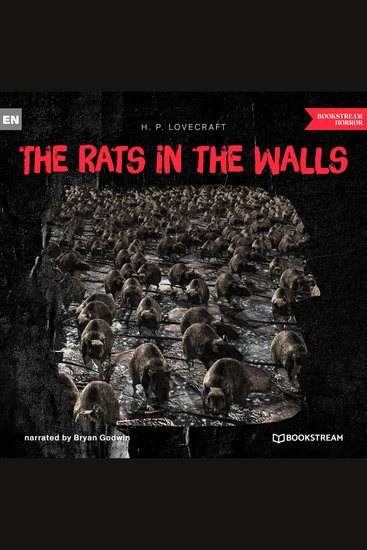
    In 1923, an American named Delapore, the last descendant of the De la Poer family, moves to his ancestral estate in England following the death of his only son during World War I. To the dismay of nearby residents, he restores the estate, called Exham Priory. After moving in, Delapore and his cat frequently hear the sounds of rats scurrying behind the walls. Upon investigating further, and through recurring dreams, Delapore learns that his family maintained an underground city for centuries, where they raised generations of "human cattle"-some regressed to a quadrupedal state-to supply their taste for human flesh. This was stopped when Delapore's ancestor killed his entire family in their sleep and left the country in order to end the horror, leaving the remaining human livestock and a surviving relative to be devoured by the rats inhabiting the city's cesspits. Maddened by the revelations of his family's past, a hereditary cruelty, and his anger over his son's death, Delapore attacks one of his friends in the dark of the cavernous city and begins eating him while rambling in a mixture of Middle English, Latin, and Gaelic, before devolving into a cacophony of animalistic grunts. He is subsequently subdued and placed in a mental institution. At least one other investigator, Thornton, has gone insane as well. Soon after, Exham Priory is destroyed and the investigators decide to cover up the existence of the underground city. Delapore maintains his innocence, proclaiming that it was "the rats, the rats in the walls", who ate the man. He continues to be plagued by the sound of rats in the walls of his cell.
    Ver livro
  • The Haunted Baronet - cover

    The Haunted Baronet

    Joseph Sheridan Le Fanu

    • 0
    • 0
    • 0
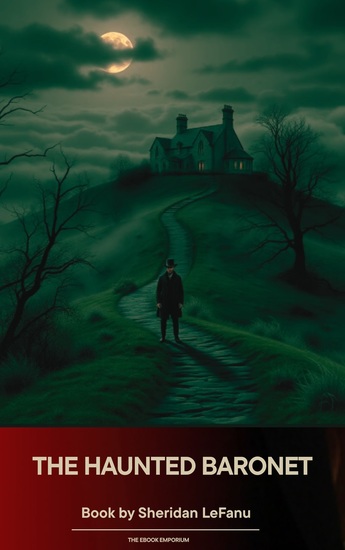
    "The lake does not give up its dead easily, and the House of Mardykes has a long memory."
    
    Sir Bale Mardykes is a man of iron will and a cold heart, living in the ancestral home of Mardykes Hall near the secluded village of Golden Friars. He believes he is the master of his own fate, but he is haunted by a centuries-old prophecy of doom. When he cruelly causes the death of his secretary and distant relative, Philip Feltram, Sir Bale believes he has cleared a nuisance from his path. But when Feltram returns—changed, silent, and carrying the chill of the lake—Sir Bale realizes that the dead have a way of reclaiming what is theirs. It is a slow-burn masterpiece of Gothic tension, where the environment itself seems to conspire against the living.
    
    The Environment as Antagonist: Le Fanu utilizes the "Atmospheric Gothic" to its fullest potential here. The swirling mists of the Lake District, the echoes in the mountain passes, and the bottomless depths of the lake serve as metaphors for Sir Bale's mounting paranoia. The house and the land are not just settings; they are active participants in the baronet's downfall.
    
    A Study in Psychological Ruin: Unlike many contemporary ghost stories, the horror in The Haunted Baronet is deeply internal. We watch Sir Bale's skepticism slowly erode as the supernatural elements become undeniable. The figure of the "Returned" Feltram is one of Le Fanu's most effective creations—a ghost that doesn't just haunt, but inhabits the social space of the living.
    
    The Weight of Ancestry: Le Fanu explores the idea that we are never truly free from the actions of our forefathers. Sir Bale is a victim of his own bloodline as much as his own choices. The novella builds to a tragic and inevitable climax that proves that some debts can only be paid in lifeblood.
    
    Beware the calm waters of Golden Friars. Purchase "The Haunted Baronet" today.
    Ver livro
  • Browdean Farm - From their pens to your ears genius in every story - cover

    Browdean Farm - From their pens...

    A M Burrage

    • 0
    • 0
    • 0
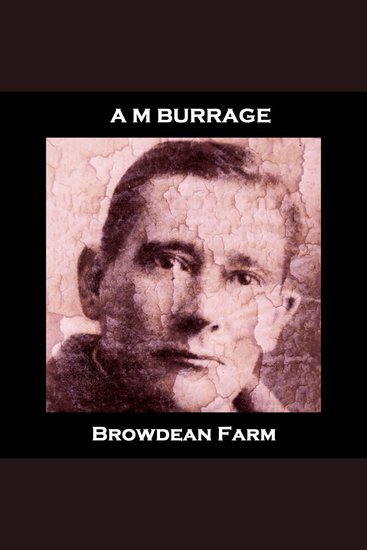
    Alfred McLelland Burrage was born in Hillingdon, Middlesex on 1st July, 1889. His father and uncle were both writers, primarily of boy’s fiction, and by age 16 AM Burrage had joined them.  The young man had ambitions to write for the adult market too.  The money was better and so was his writing. 
    From 1890 to 1914, prior to the mainstream appeal of cinema and radio the printed word, mainly in magazines, was the foremost mass entertainment.  AM Burrage quickly became a master of the market publishing his stories regularly across a number of publications. 
    By the start of the Great War Burrage was well established but in 1916 he was conscripted to fight on the Western Front. He continued to write during these years documenting his experiences in the classic book War is War by Ex-Private X. 
    For the remainder of his life Burrage was rarely printed in book form but continued to write and be published on a prodigious scale in magazines and newspapers.  In this volume we concentrate on his supernatural stories which are, by common consent, some of the best ever written.  Succinct yet full of character each reveals a twist and a flavour that is unsettling…..sometimes menacing….always disturbing.
    Ver livro
  • The Wood Beyond the World - cover

    The Wood Beyond the World

    William Morris

    • 0
    • 0
    • 0
    In "The Wood Beyond the World," William Morris crafts a captivating tale of adventure and enchantment. Walter, a disenchanted young man, embarks on a voyage that leads him to a mystical land beyond comprehension. There, he encounters a beguiling Lady, a sinister King, and a mysterious Maid, entwining him in their magical intrigues. As Walter navigates this fantastical realm, Morris explores themes of love, destiny, and the eternal struggle between freedom and tyranny.
    Ver livro
  • Jane Eyre - cover

    Jane Eyre

    Charlotte Brontë

    • 0
    • 0
    • 0
    “I would always rather be happy than dignified.”“There is no happiness like that of being loved by your fellow-creatures, and feeling that your presence is an addition to their comfort.”From Jane EyreJane Eyre is a novel by English writer Charlotte Brontë, published under the pen name "Currer Bell", on October 16, 1847, by Smith, Elder & Co. of London. The first American edition was published the following year by Harper & Brothers of New York. Jane Eyre is a Bildungsroman that follows the experiences of its eponymous heroine, including her growth to adulthood and her love for Mr. Rochester, the brooding master of Thornfield Hall. The novel revolutionized prose fiction by being the first to focus on its protagonist's moral and spiritual development through an intimate first-person narrative, where actions and events are colored by a psychological intensity. Charlotte Brontë has been called the "first historian of the private consciousness". The work contains elements of social criticism with a strong sense of Christian morality at its core, and it is considered by many to be ahead of its time because of Jane's individualistic character and how the novel approaches the topics of class, sexuality, religion, and feminism. Jane Eyre is one of the most famous romance novels of all time.
    Ver livro