Join us on a literary world trip!
Add this book to bookshelf
Grey
Write a new comment Default profile 50px
Grey
Subscribe to read the full book or read the first pages for free!
All characters reduced
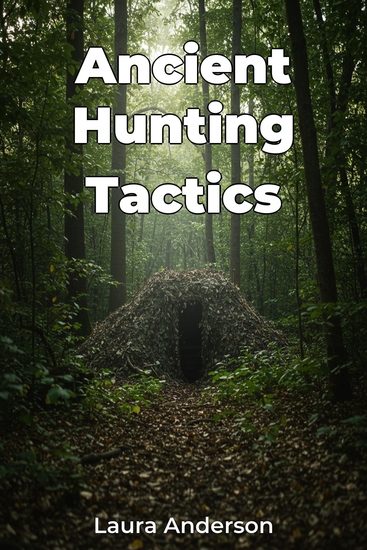
Ancient Hunting Tactics - cover

Ancient Hunting Tactics

Laura Anderson

Translator A AI

Publisher: Publifye

  • 0
  • 0
  • 0

Summary

"Ancient Hunting Tactics" explores how early humans and indigenous peoples skillfully hunted and thrived by developing sophisticated strategies for survival. It examines the ingenious methods these groups used to obtain food, clothing, and tools, revealing their profound connection to the natural world. Highlighting the interconnectedness of human innovation, ecological awareness, and social cooperation, the book delves into trapping techniques, the art of using decoys and lures, and the importance of cooperative hunting. Did you know that analyzing animal remains from archaeological sites provides insights into the effectiveness of specific hunting methods? The book argues that these practices represent a complex system of knowledge, challenging simplistic views of early humans.


The book progresses through an exploration of fundamental principles of hunting and tracking, with sections dedicated to trapping, decoy usage, and cooperative strategies. Each section examines specific techniques used by different cultures, accompanied by detailed illustrations. What sets this book apart is its integrated approach, combining archaeological evidence with ethnographic insights, presenting a holistic understanding of ancient hunting practices within their social, cultural, and ecological contexts.


The book culminates by discussing the ecological impact of these practices and their relevance to modern conservation efforts.
Available since: 03/29/2025.
Print length: 61 pages.

Other books that might interest you

  • Bigger Than Bernie - How We Go from the Sanders Campaign to Democratic Socialism - cover

    Bigger Than Bernie - How We Go...

    Anonymous

    • 0
    • 0
    • 0
    Bernie Sanders's 2016 candidacy expanded the scope of political possibility in the United States, putting socialism and class politics back on the map. His radical campaign—not just for the Democratic presidential candidacy but against "the billionaire class"—helped catalyze other transformative left-wing politicians like Alexandria Ocasio-Cortez to seek and win office, just as he inspired teachers from West Virginia to Los Angeles to win hard-fought, historic strike campaigns. Sanders has, in short, helped cohere a new movement in American politics. 


    But even when coverage of Sanders takes stock of the sea change he has affected in American politics, it all too often fails to grasp what's unique about his approach. The senior senator from Vermont has demanded new policies and political approaches in this country—though he has also hinted at more, calling repeatedly for a "political revolution," something that he says would involve "millions of Americans" getting involved in politics not just at the ballot box, but in their workplaces and neighborhoods, too. 


    In this book, Micah Uetricht and Meagan Day go beyond a simple balance sheet of Democratic Party politics. In a clear and effective style, they detail what we need to do to get beyond the Sanders campaign or presidency to transform the US from top to bottom.
    Show book
  • The REWRITE Method - The Parent and Educator Guide for Getting Middle Schoolers to Fall in Love with Writing - cover

    The REWRITE Method - The Parent...

    TD Flenaugh

    • 0
    • 0
    • 0
    The REWRITE Method: The Parent and Educator Guide for Getting Middle Schoolers to 
    Fall in Love with Writing is the ultimate writing improvement book! It is a simple guide that will give you step-by-step instructions on how to get your child from hating writing to loving it. 
    - Learn how to accelerate progress by focusing on your child’s writing strengths  
    - Learn how to motivate young writers  
    - Challenge your young authors to elevate their craft with creative structure and real-world tasks.   
     - Establish a writing practice that will grow writing from elementary level to secondary level proficiency and beyond!
    Show book
  • The Busy Woman's Guide to Writing a World-Changing Book - cover

    The Busy Woman's Guide to...

    Cynthia Morris

    • 0
    • 0
    • 0
    If you’ve been hoping to write a book your whole life, this will help you finally get your words out. The Busy Woman’s Guide to Writing a World-Changing Book is what you’ve been looking for to take the confusion and uncertainty out of getting your ideas into book form. 
    Writing a book is a bucket list item for many people. But it’s tough to know where to start and how to gather the focus required to do the work.  
    The Busy Woman’s Guide to Writing a World-Changing Book offers a path to finally get the book that’s been inside you for so long out of your head and onto the page. 
    Most books about writing are long on inspiration and short on action, or they’re too prescriptive, assuming every writer has the same needs. The Busy Woman’s Guide to Writing a World-Changing Book gives you the insight and advice you need to craft your book, your way. 
    For twenty-five years, Cynthia Morris has been coaching people to establish solid practices to help them write anything, anytime. She put everything she knows about writing a non-fiction book into this so you can write your book more easily and quickly. 
    This book gives you a map to help you design, enjoy and thrive in your own writing practice. With this in place, you will be able to write your book, and others, with joy and ease. The chapters are short and sweet. Reading them will be like having Cynthia as your coach on call. 
    You will be able to pick up The Busy Woman’s Guide to Writing a World-Changing Book, find an answer to your question and get to writing. No long-winded stories or research. Just straight-talking support for you to get your words out, your way. 
    If writing a book is on your list, it’s time to make it a priority.
    Show book
  • American Civil War in 1864 The: The History and Legacy of the War’s Penultimate Year - cover

    American Civil War in 1864 The:...

    Editors Charles River

    • 0
    • 0
    • 0
    Americans have long been fascinated by the Civil War, marveling at the size of the battles, the leadership of the generals, and the courage of the soldiers. Since the war's start over 150 years ago, the battles have been subjected to endless debate among historians and the generals themselves. The Civil War was the deadliest conflict in American history, and had the two sides realized it would take 4 years and inflict over a million casualties, it might not have been fought. Since it did, however, historians and history buffs alike have been studying and analyzing the biggest battles ever since.  
    	By the close of 1864, Abraham Lincoln had been reelected, the Union army had taken Nashville from General Hood, and Sherman had concluded his total war, “slash-and-burn” march of destruction to Savannah, Georgia, offering it as a Christmas present to Lincoln. Nevertheless, with everything seemingly falling to pieces, the South still held out hope of some sort of miracle, and Davis even attempted to send a peace delegation to meet with Lincoln in the early months of 1865. On January 28, 1865 as Union General Ulysses S. Grant was continuing to lay siege to Lee’s army at Petersburg, Virginia, Davis sent three commissioners headed by Vice-President Stephens to initiate informal peace talks with Lincoln. By February 3, however, the talks, known as the Hampton Roads Conference, came to a stalemate as Lincoln would accept nothing less than total union, while Davis would only accept Southern independence.  
    	Even at that point, the South was clearly on its last legs. General George H. Thomas destroyed John Bell Hood’s Confederate army at the battles of Nashville and Franklin, leaving only two large Confederate armies still in the field. Lee's army was weakened by desertion, lack of supplies and casualties, and Joseph E. Johnston’s army could barely resist against Sherman’s army as it was advancing north toward Virginia.
    Show book
  • Roman Empire The: The History and Legacy of the Ancient World’s Most Famous Empire from Julius Caesar to Its Collapse - cover

    Roman Empire The: The History...

    Editors Charles River

    • 0
    • 0
    • 0
    Possibly the most important man of antiquity, and even all of history, was Julius Caesar. Alexander Hamilton, the famous American patriot, once remarked that “the greatest man who ever lived was Julius Caesar”. Such a tribute, coming from one of the Founding Fathers of the quintessential modern democracy in reference to a man who destroyed the Roman Republic, is testament to the enduring mark that Caesar left upon the world. The ultimate conqueror, statesman, dictator, visionary, and opportunist, during his time in power Caesar expanded the borders of Rome to almost twice their previous size, revolutionized the infrastructure of the Roman state, and destroyed the Roman Republic for good, leaving a line of emperors in its place. His legacy is so strong that his name has become, in many languages, synonymous with power: the Emperors of Austria and Germany bore the title Kaiser, and the Czars of Russia also owe the etymology of their title to Caesar. His name also crept further eastward out of Europe, even cropping up in Hindi and Urdu, where the term for “Emperor” is Kaisar. 
    Even in his time, Caesar was in many ways larger than life, and because of his legacy as virtual founder of the Roman Empire, much of what was written about – and by – him during his life and immediately after his assassination was politically motivated. His successor, Octavian Augustus, had a strong interest in ensuring that Caesar’s life be painted in a favorable light, while Caesar’s political enemies attempted to paint him as a corrupt, undemocratic dictator who was destroying the old order of the Republic.  
    As Roman leaders vied with each other for power and constantly fought civil wars, Rome’s famous roads fall into disrepair, the economy was crippled, the continent-wide trade system that had flourished in the previous years was replaced with a basic barter system, and there was a reduction in international trade.
    Show book
  • Beyond Good and Evil - cover

    Beyond Good and Evil

    Friedrich Nietzsche

    • 0
    • 0
    • 0
    What if everything you believe about morality, truth, and human nature is only the beginning?
    In Beyond Good and Evil, Friedrich Nietzsche shatters conventional thinking with a fearless examination of values, culture, religion, and the psychology behind human motivation. With razor-sharp insight and brilliant provocation, he challenges readers to question inherited beliefs and to seek a deeper, more powerful understanding of themselves and the world.
    
    Praised as "one of the most influential works in modern philosophy," this classic continues to inspire—challenging minds, sparking debate, and encouraging bold, independent thought. Nietzsche's voice remains as urgent, electric, and transformative today as when it was first written.
    
    If you crave ideas that push boundaries, ignite curiosity, and reawaken intellectual courage, this masterpiece is essential reading.
    
    Open the book—and step into a world where thinking for yourself becomes the ultimate revolution.
    Show book