Begleiten Sie uns auf eine literarische Weltreise!
Buch zum Bücherregal hinzufügen
Grey
Einen neuen Kommentar schreiben Default profile 50px
Grey
Jetzt das ganze Buch im Abo oder die ersten Seiten gratis lesen!
All characters reduced
Applied Deep Learning on Graphs - Leverage graph data for business applications using specialized deep learning architectures - cover

Applied Deep Learning on Graphs - Leverage graph data for business applications using specialized deep learning architectures

Lakshya Khandelwal, Subhajoy Das

Verlag: Packt Publishing

  • 0
  • 0
  • 0

Beschreibung

With their combined expertise spanning cutting-edge AI product development at industry giants such as Walmart, Adobe, Samsung, and Arista Networks, Lakshya and Subhajoy provide real-world insights into the transformative world of graph neural networks (GNNs).
This book demystifies GNNs, guiding you from foundational concepts to advanced techniques and real-world applications. You’ll see how graph data structures power today’s interconnected world, why specialized deep learning approaches are essential, and how to address challenges with existing methods. You’ll start by dissecting early graph representation techniques such as DeepWalk and node2vec. From there, the book takes you through popular GNN architectures, covering graph convolutional and attention networks, autoencoder models, LLMs, and technologies such as retrieval augmented generation on graph data. With a strong theoretical grounding, you’ll seamlessly navigate practical implementations, mastering the critical topics of scalability, interpretability, and application domains such as NLP, recommendations, and computer vision.
By the end of this book, you’ll have mastered the underlying ideas and practical coding skills needed to innovate beyond current methods and gained strategic insights into the future of GNN technologies.
Verfügbar seit: 27.12.2024.
Drucklänge: 250 Seiten.
Weitere Bücher, die Sie mögen werden

  • Brain Health Sleep Sounds - 40 Hz Sound Therapy for Brain Health Memory and Deep Rest - cover

    Brain Health Sleep Sounds - 40...

    Sleeptime Publications

    • 0
    • 0
    • 0
    Enhance Your Brain Health While You Sleep. 
    What if the right sounds could improve your memory, support cognitive function, and promote deeper sleep? 40 Hz sound therapy has been studied for its ability to stimulate neural activity, strengthen brain connections, and aid in memory retention—all while guiding you into a state of deep rest.Unlock the Power of 40 Hz for Mental Clarity and Deep Sleep. 
    The 40 Hz frequency is linked to gamma brainwaves, which play a vital role in learning, memory, and cognitive function. Research in the Journal of Alzheimer’s Disease found that exposure to 40 Hz sound waves enhanced brain activity and improved memory in individuals with early cognitive decline. Another study in Neurobiology of Learning and Memory showed that 40 Hz auditory stimulation promotes synaptic plasticity—essential for learning and memory retention.Simply Press Play and Let Your Brain Recharge. 
    With this audiobook, you’ll experience: 
    ✅ 40 Hz sound therapy designed to support brain health and memory 
    ✅ Scientifically backed frequencies that enhance cognitive function 
    ✅ A natural way to promote mental clarity and deep relaxation 
    ✅ Restorative sleep that helps optimize brain performanceStrengthen Your Mind and Sleep Better—Effortlessly. 
    Give your brain the care it deserves. Press play now and let 40 Hz sound therapy guide you into deep rest, clarity, and renewal.
    Zum Buch
  • Agile Manifesto - Unpacking the Agile Manifesto for Modern Development - cover

    Agile Manifesto - Unpacking the...

    Jacob Richardson

    • 0
    • 0
    • 0
    Dive into the essence of Agile methodologies with "Agile Manifesto: Unpacking the Agile Manifesto for Modern Development." This comprehensive guide explores each of the core values and principles declared in the Agile Manifesto, providing a deep and actionable understanding tailored for today's dynamic development environments. 
    In February 2001, seventeen software developers crafted the Agile Manifesto to address the inefficiencies of traditional software development practices. They proposed a revolutionary approach centered around flexibility, collaboration, and customer satisfaction. This book revisits these foundational ideas, breaking down complex concepts into practical applications, from small teams to large enterprises. 
    "Agile Manifesto" offers:In-depth analysis of the four core values and twelve principles of Agile.Practical insights on implementing Agile practices such as Scrum, Kanban, and XP within your teams.Strategies for effectively using Agile tools and technologies that enhance collaboration and productivity.Guidance on navigating challenges in distributed teams and scaling Agile methodologies across large organizations.Perspectives on the future of Agile, including its application beyond software development. 
    Whether you are a software developer, project manager, or business leader seeking to instill flexibility and efficiency in your projects, this book provides the tools and knowledge to effectively implement Agile practices. Through real-world case studies, expert interviews, and a clear, engaging narrative, "Agile Manifesto" is an essential resource for anyone looking to foster a truly Agile environment in the modern workplace. Rediscover the Agile Manifesto and transform your approach to software development and beyond. 
     
    Zum Buch
  • Algorithms - cover

    Algorithms

    Panos Louridas

    • 0
    • 0
    • 0
    Digital technology runs on algorithms, sets of instructions that describe how to do something efficiently. Application areas range from search engines to tournament scheduling, DNA sequencing, and machine learning. Arguing that every educated person today needs to have some understanding of algorithms and what they do, in this volume in the MIT Press Essential Knowledge series, Panos Louridas offers an introduction to algorithms that is accessible to nonspecialists. Louridas explains not just what algorithms are but also how they work, offering a wide range of examples and keeping mathematics to a minimum. 


    After discussing what an algorithm does and how its effectiveness can be measured, Louridas covers three of the most fundamental applications areas: graphs, which describe networks, from eighteenth-century problems to today's social networks; searching, and how to find the fastest way to search; and sorting, and the importance of choosing the best algorithm for particular tasks. He then presents larger-scale applications: PageRank, Google's founding algorithm; and neural networks and deep learning. Finally, Louridas describes how all algorithms are nothing more than simple moves with pen and paper, and how from such a humble foundation rise all their spectacular achievements.
    Zum Buch
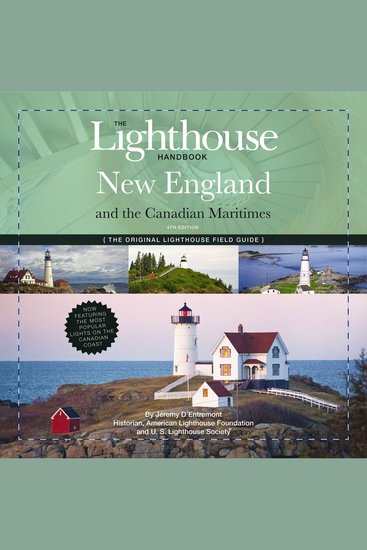
  • The Lighthouse Handbook New England and Canadian Maritimes 4th Edition - The Original Lighthouse Field Guide (Now Featuring the Most Popular Lighthouses on the Canadian Coast!) - cover

    The Lighthouse Handbook New...

    Jeremy D'Entremont

    • 0
    • 0
    • 0
    Explore and experience all of the East Coast's many lighthouses with the newly updated and expanded edition of The Original Lighthouse Field Guide. Enthusiasts will enjoy the details and facts of each lighthouse as they embark on one of the most scenic summer road trips in America, the New England coastline! 
    Explore the living history of New England and Canadian maritime lighthouses with Jeremy D'Entremont, New England's foremost lighthouse authority, and the original lighthouse field guide. Perfect for day trips or planning your next adventure, you’ll explore each of New England's lighthouses and their history, as well as several Canadian lighthouses, with the trained precision of an expert in this definitive guide. 
    The newly updated 4th edition adds new profiles including five additional Canadian lighthouses in Nova Scotia and New Brunswick, more fun facts, and even visiting guides to help you plan your next lighthouse trip in style. 
     This updated 4th edition is:A perfect gift for hobbyist or enthusiasts for Christmas, birthdays, or other gift-giving occasionsGreat to take on summer road trips so the whole family can enjoy the history of each lighthouse along with fun factsA must have for any trip itinerary, vacation, or family reunions along the new England coast 
      
    Maps, a glossary, suggested reading, and reference material can be found in the audiobook companion PDF download. 
    Zum Buch
  • Methuselah's Zoo - What Nature Can Teach Us about Living Longer Healthier Lives - cover

    Methuselah's Zoo - What Nature...

    Steven N. Austad

    • 0
    • 0
    • 0
    Opossums in the wild don't make it to the age of three; our pet cats can live for a decade and a half; cicadas live for seventeen years. Whales, however, can live for two centuries and tubeworms for several millennia. Meanwhile, human life expectancy tops out around the mid-eighties, with some outliers living past 100 or even 110. Is there anything humans can learn from the exceptional longevity of some animals in the wild? In Methusaleh's Zoo, Steven Austad tells the stories of some extraordinary animals, considering why, for example, animal species that fly live longer than earthbound species and why animals found in the ocean live longest of all. 


    Austad—the leading authority on longevity in animals—argues that the best way we will learn from these long-lived animals is by studying them in the wild. Accordingly, he proceeds habitat by habitat, examining animals that spend most of their lives in the air, comparing insects, birds, and bats; animals that live on, and under, the ground—from mole rats to elephants; and animals that live in the sea. 


    Humans have dramatically increased their lifespan with only a limited increase in healthspan; we're more and more prone to diseases as we grow older. By contrast, these species have successfully avoided both environmental hazards and the depredations of aging. Can we be more like them?
    Zum Buch
  • What Could Go Right - cover

    What Could Go Right

    Justin Bean

    • 0
    • 0
    • 0
    WINNER: Nautilus Awards and Book Excellence Awards (Sustainability)Amazon BestsellerTired of all the doom and gloom? What Could Go Right invites you to ditch cynicism about the future, and build the one you want.Instead of worst-case scenarios or Pollyanna optimism, you can envision an ideal world and be empowered to build it. The opportunity of our era is to transition to a sustainable, equitable, abundant global economy. Rethink your mindset, understand tech and social trends, & design a future you want to live in, you can thrive through building a better future for us all. Packed with insights, tools, and ideas for what an ideal future might look like and how to build it, What Could Go Right helps you rethink:Your Mindset: Rather than accepting dystopian tropes about our future, we'll look at the reality of our current time as the most abundant and empowered humanity has ever been-and witness it getting better. You'll explore tools and frameworks like Design Thinking, Three Horizons, Five Dynamics, to turn inspiration into pragmatic thinking, planning, and execution. Trends and Opportunities: Explore the empowering tools, sustainable shifts in industry and technology, and social evolutions that are making a more equitable, distributed, democratic, cleaner economy possible. The economic, climate, and social crises around us are accelerating the urgency for change and are inspiring innovators to create new tools and approaches-all to make the transition to a better future. Your Vision of a Better Future: Start imagining what an ideal future might look like by making the most of existing technology and knowledge. With thought leaders and industry experts, you'll tour a future that is abundant, a Zero Marginal Cost Society, post-scarcity, and Omni-Thriving. Apply Maslow's hierarchy of personal needs to social needs. "We don't get the world we want simply by fighting the one we don't. We get the world we want by envisioning, designing, and building it."
    Zum Buch