Join us on a literary world trip!
Add this book to bookshelf
Grey
Write a new comment Default profile 50px
Grey
Subscribe to read the full book or read the first pages for free!
All characters reduced
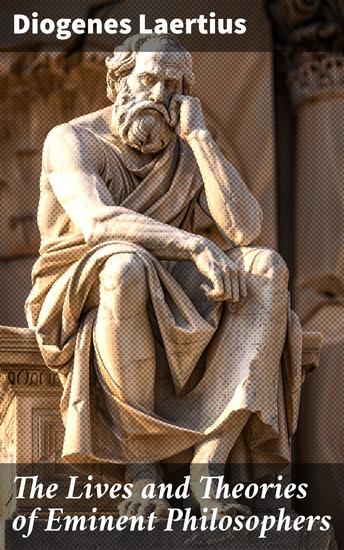
The Lives and Theories of Eminent Philosophers - Exploring Ancient Philosophical Lives and Theories - cover

The Lives and Theories of Eminent Philosophers - Exploring Ancient Philosophical Lives and Theories

Laertius Diogenes

Translator Charles Duke Yonge

Publisher: Good Press

  • 0
  • 0
  • 0

Summary

In "The Lives and Theories of Eminent Philosophers," Diogenes Laertius presents an unparalleled compendium of philosophical thought from ancient Greece, meticulously chronicling the lives and doctrines of major philosophers from Homeric times through to the Hellenistic era. Employing a biographical and anecdotal literary style, Laertius not only relays philosophical doctrines but also embellishes them with stories that reveal the personal quirks and societal contexts of the philosophers he admires. His work serves as both a historical record and a critical examination of the philosopher's contributions, blending narrative with analysis in a manner that highlights the rich tapestry of philosophical inquiry. Diogenes Laertius, a 3rd-century CE historian, was deeply influenced by the philosophical milieu of his time. Lesser-known details of his life suggest that Laertius may have been a committed Stoic, which likely informed his selection of subjects and the emphasis on individual character alongside philosophical thought. His work reflects not only an affinity for ethics but also a quest to preserve the intellectual legacies of figures like Socrates, Plato, and Epicurus, striving to anchor their philosophy in lived experience. This book is an essential read for anyone fascinated by the roots of Western philosophy. Laertius' engaging narratives serve as a gateway for scholars and enthusiasts alike, offering critical insights into the interplay between life and philosophy. Readers are encouraged to explore this intricate blend of biography and philosophy, which remains a foundational text for understanding the evolution of thought that continues to influence contemporary discourse.
Available since: 12/17/2023.
Print length: 428 pages.

Other books that might interest you

  • Presidential Assassinations: The History of the Killing of Abraham Lincoln James Garfield William McKinley and John F Kennedy - cover

    Presidential Assassinations: The...

    Editors Charles River

    • 0
    • 0
    • 0
    Until April 14, 1865, John Wilkes Booth was one of the most famous actors of his time, and President Abraham Lincoln had even watched him perform. But his most significant performance at a theater did not take place on the stage. That night, Booth became one of history’s most infamous assassins when he assassinated President Lincoln at Ford's Theatre in Washington, D.C. 
    	In 1880, Civil War veteran James Garfield was running as a Republican for president, and one of his supporters was a man named Charles Guiteau, who wrote and circulated a speech called “Garfield vs. Hancock” that aimed to rally support for the Republican candidate. Though few knew it, Guiteau’s family had already deemed him insane and attempted to keep him committed in an asylum, only to have him manage an escape from confinement.  
    	In September 1901, the city of Buffalo was full of celebration. The Pan-American Exposition was ongoing, and it brought notable figures to northern New York, including President William McKinley, who had been reelected less than a year earlier. But also in Buffalo was Leon Czolgosz, a young man who had turned to anarchy years earlier after losing his job, Embracing his philosophy wholeheartedly, Czolgosz believed it was his mission to take down a powerful leader he considered oppressive, and McKinley’s attendance gave him the chance. 
    	In the annals of American history, few moments have been so thoroughly seared into the nation’s conscience that Americans can remember exactly where and when they heard about an earth-shattering event. In the 20th century, there was Pearl Harbor and the assassination of President John F. Kennedy. November 22, 1963 started as a typical Friday, and many Americans were unaware that President Kennedy was even heading to Dallas, Texas. 
    Show book
  • Jane Austen's Little Book of Wisdom - Words on Love Life Society and Literature - cover

    Jane Austen's Little Book of...

    Jane Austen

    • 0
    • 0
    • 0
    The ultimate companion for the Jane Austen fan filled with her penetrating insights and humor on life, love, and death. “A valuable resource for any Austen lover to use for quick reference or to read through.” —Library Journal Jane Austen is one of the most popular female writers in history, best known for her stories of love, loss, and hope, which are cleverly intertwined with her witty insights into the traits and expectations of English Georgian society.   Here, in this stunning little book, you will be able to read hundreds of individual quotes from her famous works—from Pride and Prejudice and Emma to Persuasion and Sense and Sensibility—each prompting an emotional response, thoughtful musing, or even a little snigger at the wise and shrewd perceptions that Austen had of the world around her.   Utterly charming and very profound, fans of Jane Austen can revel in these much-loved quotes, while a new audience will be introduced to the joys that her books have provided since their publication many years ago. With each chapter focusing on a different theme—from Love & Longing to Female Strength—this gorgeous gift book is the perfect compilation of Austen’s funny, moving, and thought-provoking words.   Content of themes:  Love & Longing  Friendship  Society  Female Strength  Life & Death  Faith  Art & Literature “The wit of Jane Austen has for a partner the perfection of her taste.” —Virginia Woolf   
    Show book
  • Operation Sea Lion Succeeds - Britain Falls to Nazi Germany (Alternate History) - cover

    Operation Sea Lion Succeeds -...

    Marcus Draysun

    • 0
    • 0
    • 0
    The real Operation Sea Lion was fraught with logistical challenges, poor planning, and the formidable defenses of the British military. However, in this alternate history, key factors aligned to turn Hitler’s gamble into a shocking success. The fall of Britain was not inevitable, but a series of strategic shifts, political missteps, and military breakthroughs paved the way for an event that would alter the course of history forever. 
    One of the most significant changes was a decisive shift in Germany’s air strategy. Instead of squandering resources on bombing civilian targets, the Luftwaffe focused relentlessly on eliminating the Royal Air Force. A more coordinated assault on British radar stations, airfields, and aircraft production facilities crippled Britain’s ability to defend its skies. With the RAF severely weakened, the Germans gained air superiority far earlier than in reality, making an amphibious invasion far more feasible. 
    German naval strategy also played a critical role. In this timeline, the Kriegsmarine, instead of being vastly outmatched by the Royal Navy, benefited from increased coordination with the Luftwaffe and U-boat support. The Channel crossing was still risky, but a well-timed offensive, bolstered by deception tactics and a more aggressive submarine campaign, created an opening for German forces to land successfully on British shores.
    Show book
  • Soap Magic Part 5 - A Porn Shoot for the Neighbours - cover

    Soap Magic Part 5 - A Porn Shoot...

    Kathrin Pissinger

    • 0
    • 0
    • 0
    Magic. Mayhem. Soap. 
    Well, this went well, didn't it? So let's just go down the list and visit some more old schoolmates. Luckily, they aren't too hard to find, thanks to the magic of internet porn sites. And isn't it interesting the stuff you can find there? Time to go and get a private shoot with soap. 
    Right. I'm not sure it can get any steamier, but I'm certainly going to try. Which is to say, there's getting served in every hole and quite possibly some smattering of pee play and domination thrown into the mix, just for good measure. And soap.
    Show book
  • Success Without School - Unschooling my Children from Birth to College - cover

    Success Without School -...

    Jean Proffitt Nunnally

    • 0
    • 0
    • 0
    Consequences of the ongoing pandemic have seriously affected educational systems in the U.S. and around the world. School closures and the opportunities or nightmares of remote learning have caused many parents to reconsider options for schooling their children. Alternatives to conventional school are currently hot topics, strongly motivated by growing racism and the social bullying that confront many youngsters and teens in todays school environment. (New Yorker Magazine, June 21, 2021, "The Rise of Black Homeschooling") 
    Jean Nunnally's memoir of her trials and triumphs in unschooling her two children from birth to college provides an enlightening insight into the innate learning ability of humans, showing how self-esteem, trust and personal responsibility were preserved and strengthened for herself and her kids. "Unschooling" the author says, "is the way we have learned throughout time and the way adults learn when they are free to pursue their interests." Her book gives an overview of unschooling or self-directed learning, but so much more. Jean not only did the work, but her son and daughter are proof that unschooling works. They were each accepted in and graduated from prestigious U.S. colleges and testify, in personal reflections at the end of the narrative, to the happiness and fulfillment of their elementary and high school years following their passions, their hobbies, their music, their dreams, often in stark contrast to the struggles with traditional forms their peers were required to submit to. 
    Success Without School addresses myths and misperceptions of unschoolers. She explains how her view of school changed, and changed her, as she proceeded to unschool her children. She leaves the reader with an encouraging description of the three jobs of an unschooling parent: exposure, facilitation, and modeling; and offers her unique approach to preparing an unschooled teen for college, and the specific challenges that required.
    Show book
  • War of the Keys The: The History and Legacy of the Military Conflict Between the Holy Roman Empire and the Vatican - cover

    War of the Keys The: The History...

    Editors Charles River

    • 0
    • 0
    • 0
    It has been famously pointed out that the Holy Roman Empire was neither holy, nor Roman, but it was also not an empire in the sense people expect when hearing the term. In theory, the emperor was the highest prince in Christendom, and his dominion extended the length and breadth of Western Europe. The empire had been created by the papacy when Pope Leo III famously crowned the supposedly unwitting Charlemagne in Saint Peter’s Basilica, intending to recreate the Western Roman Empire. In truth, the imperial power did not extend beyond central Europe, which by the beginning of the 16th century included Germany, northern Italy, and the Netherlands. Even in these lands, however, the emperor struggled to command obedience. His dominion over northern Italy was theoretical only, the cities of the Netherlands were deeply conscious of their ancient rights and privileges, and Germany had long ceased to be compliant. The latter had become a collection of principalities, dukedoms and bishoprics which vied with each other and pursued their own agendas. They were, however, united in only one sense: denying the emperor power and resisting attempts to centralize the government. 
    The clergy occupied a privileged place in medieval society. Europe had inherited Christianity from the Roman Empire, and the concept of a united Christendom and empire were practically synonymous. Indeed, there was no real consciousness of the Roman Empire ever having ended. After the Western Roman Empire collapsed in the late 5th century, the Germanic rulers of Western Europe continued to recognize the Eastern Emperor in Constantinople until Charlemagne, and after the dissolution of the Frankish Empire, the imperial seat was transferred to Otto I, King of East Francia in modern Germany. 
    By the late 10th century, however, the emperor’s reach was rarely felt beyond Germany and northern Italy, and the question of who was supposed to be the imperial head was unresolved.
    Show book