Begleiten Sie uns auf eine literarische Weltreise!
Buch zum Bücherregal hinzufügen
Grey
Einen neuen Kommentar schreiben Default profile 50px
Grey
Jetzt das ganze Buch im Abo oder die ersten Seiten gratis lesen!
All characters reduced
Pilgrimage to Mecca - cover

Pilgrimage to Mecca

Lady Evelyn Cobbold

Verlag: Medina Publishing

  • 0
  • 0
  • 0

Beschreibung

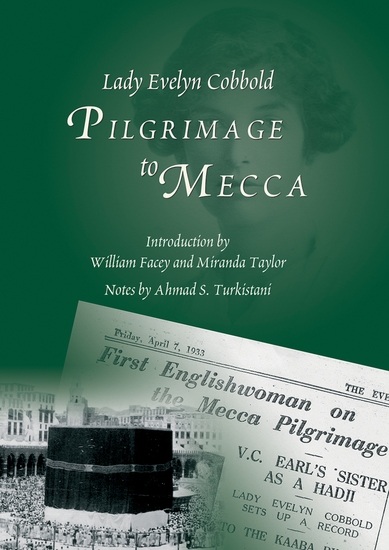
As the first British woman convert to Islam on record as making the pilgrimage to Mecca and visiting Medina, Lady Evelyn Cobbold (1867- 1963) cuts a unique figure in the annals of the Muslim Hajj. Anglo-Scottish aristocrat and landowner, Evelyn Murray had spent childhood winters in North Africa.
 
There she had been imbued with the Muslim way of life, becoming, as she puts it, a little Muslim at heart. While travelling widely as an adult in the Arab world, she also maintained a conventional place in society at home, marrying the wealthy John Cobbold in 1891 and devoting herself to her Suffolk and London houses and her Scottish estate, where she became a renowned deer-stalker. Deciding to perform the pilgrimage in 1933, at the age of 66, she stayed with the Philbys in Jeddah while awaiting permission to go to Mecca, and received visits from various dignitaries, notably the King's son the Amir Faysal (later King Faysal).
 
Pilgrimage to Mecca is as much an account of an interior journey of faith as a conventional travelogue. It takes the form of a day-by-day journal interspersed with digressions on the history and merits of Islam. She is the first English writer to give a first-hand description of the life of the women's quarters of the households in which she stayed in Medina, Mecca and Muna - an account remarkable for its sympathy and vividness. Her book was first published in 1934 but has never until now been reprinted. This new edition, with a substantial biographical introduction by William Facey and Miranda Taylor (a great-great-niece of Lady Evelyn), serves to rescue this unique and intriguing Anglo-Muslim from the obscurity that has since befallen her.
Verfügbar seit: 21.02.2023.
Drucklänge: 352 Seiten.

Weitere Bücher, die Sie mögen werden

  • Swords of Lightning - Green Beret Horse Soldiers and America's Response to 9 11 - cover

    Swords of Lightning - Green...

    Bob Pennington, Jim DeFelice,...

    • 0
    • 0
    • 0
    The first-person account of how a small band of Green Berets used horses and laser-guided bombs to overthrow the Taliban and al-Qaeda in Afghanistan after 9/11. 


    They landed in a dust storm so thick the chopper pilot used dead reckoning and a guess to find the ground. Welcomed by a band of heavily armed militiamen, they climbed a mountain on horseback to meet the most ferocious warlord in Asia. They plotted a war of nineteenth-century maneuvers against a twenty-first-century foe. They trekked through minefields, sometimes past the mangled bodies of local tribesmen who'd shared food with them hours before. They saved babies and treated fractures, sewed up wounded who'd been transported from the battlefield by donkey. They found their enemy hiding in thick bunkers, dodged bullets from machine-gun-laden pickup trucks, and survived mass rocket attacks from vintage Soviet-era launchers. They battled the Taliban while mediating blood feuds between rival allies. They fought with everything they had, from smart bombs to AK-47s.The men they helped called them brothers. Hollywood called them the Horse Soldiers. 


    They called themselves Green Berets—Special Forces ODA 595.
    Zum Buch
  • The Bible Told Them So - How Southern Evangelicals Fought to Preserve White Supremacy - cover

    The Bible Told Them So - How...

    J. Russell Hawkins

    • 0
    • 0
    • 0
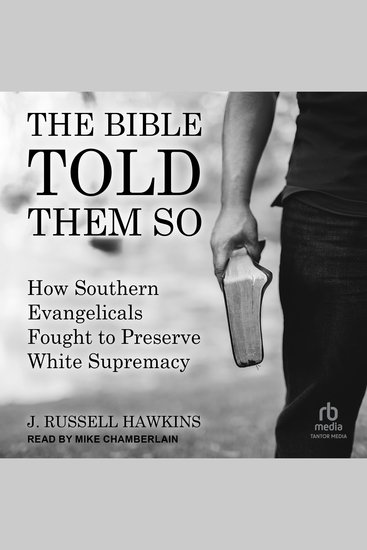
    Why did southern white evangelical Christians resist the civil rights movement in the 1950s and 1960s? Simply put, they believed the Bible told them so. These white Christians entered the battle certain that God was on their side. Ultimately, the civil rights movement triumphed in the 1960s and fundamentally transformed American society. But this victory did little to change southern white evangelicals' theological commitment to segregation. Rather than abandoning their segregationist theology, white evangelicals turned their focus on institutions they still controlled and fought on. 


    Focusing on the case of South Carolina, The Bible Told Them So shows how, despite suffering defeat in the public sphere, white evangelicals continued to battle for their own institutions, preaching and practicing a segregationist Christianity they continued to believe reflected God's will. Increasingly caught in the tension between their sincere belief that God desired segregation and their reluctance to give voice to such ideas for fear of being perceived as bigoted or intolerant, by the late 1960s southern white evangelicals embraced the rhetoric of colorblindness and protection of the family as measures to maintain both segregation and respectable social standing. This strategy set southern white evangelicals on an alternative path for race relations in the decades ahead.
    Zum Buch
  • Losing Afghanistan - The Fall of Kabul and the End of Western Intervention - cover

    Losing Afghanistan - The Fall of...

    Brian Brivati

    • 0
    • 0
    • 0
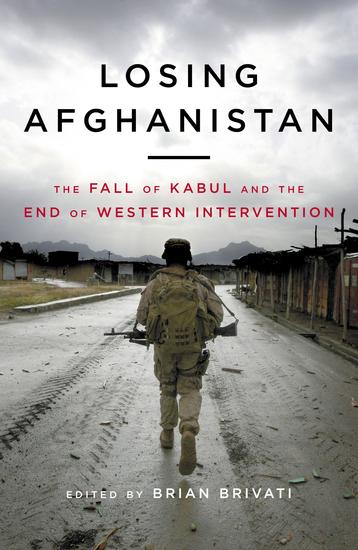
    "Those who wonder how the international community failed so dramatically in Afghanistan need look no further … Losing Afghanistan explores the arguments for and against intervention and highlights the difficulty of establishing unity of purpose and effort in such demanding circumstances. Above all, it poses a question: how can we in the West claim we know so much, yet demonstrate in Afghanistan that we understand so little?" – General (retd) Sir Jack Deverell OBE, former Commander-in-Chief of Allied Forces Northern Europe
    "A wonderful book of insightful essays on Afghanistan from an outsider lens." – Ezatullah Adib, head of research at Integrity Watch Afghanistan and national country representative at the World Association for Public Opinion Research
    "The strategic question posed by these brilliant essays is: how can the doctrine of liberal intervention be reframed to ensure the West intervenes overseas to manage future humanitarian calamities for reasons beyond just national security?" – Brigadier (retd) Justin Hedges OBE
    ***
    When Taliban forces took Kabul on 15 August 2021, it marked the end of the Western intervention that had begun nearly twenty years earlier with the US-led invasion.
    The fall of Afghanistan triggered a seismic shock in the West, where US President Joe Biden announced an end to America's involvement in conflicts overseas. In Afghanistan itself it produced terror for the future for those who had worked with and grown up under the coalition-supported administration.
    Now, with the country spiralling into economic collapse and famine, Losing Afghanistan is a plea for us to keep our gaze on the plight of the people of Afghanistan and to understand how action and inaction in the West shaped the fate of the nation.
    Why was Afghanistan lost? Can it be regained? And what happens next? Edited by international development expert Brian Brivati, this collection of twenty-one essays by analysts, politicians, soldiers, commentators and practitioners – interspersed with powerful eyewitness testimony from Afghan voices – explains what happened in Afghanistan and why, and what the future holds both for its people and for liberal intervention.
    Zum Buch
  • Your Eyes Will Be My Window - Essays - cover

    Your Eyes Will Be My Window -...

    Jodi Varon

    • 0
    • 0
    • 0
    Your Eyes Will Be My Window reclaims the two erasures of Esta Plat. Murdered in Ukraine by Nazi troops in 1942, evidence of the life of Esta Plat was preserved in a bundle of her letters until the letters were tossed into a dumpster and destroyed. Haunted by the inheritance of survivor's guilt and shame in a family that kept no Old World keepsakes except her grandmother's one-sentence memory of Esta Plat, Jodi Varonis compelled to sift through records of Europe's genocidal past. 


    Pitting grandiose Holocaust memorials against the act of bearing witness, Varon confronts the limitations of history, folklore, archival data, and survivor testimonies. Seeking solace in ritual, she challenges her upbringing as an outlier Jew in the Rocky Mountain West to provide a window to the meaning of cultural displacement in immigrant communities. When an ethnic German woman's corpse was discarded across from Varon's rented flat in Baden-Württemberg, the homemade memorial for Nadine E. prompts a meditation on violence against women and girls as a weapon of suppression and war. The record of unfiltered emotions among Kindertransport survivors in Europe, journalists in Ludwigsburg, and archivists and guides in Jerusalem, Your Eyes Will Be My Window is a defiant exercise in honoring the lost.
    Zum Buch
  • The South - Jim Crow and Its Afterlives - cover

    The South - Jim Crow and Its...

    Jr. Adolph L. Reed, Barbara J....

    • 0
    • 0
    • 0
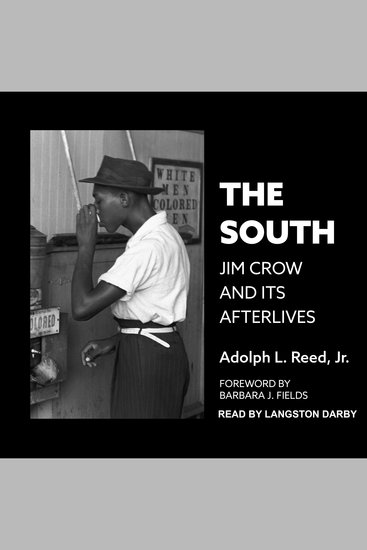
    The last generation of Americans with a living memory of Jim Crow will soon disappear. They leave behind a collective memory of segregation shaped increasingly by its horrors and heroic defeat but not a nuanced understanding of everyday life in Jim Crow America. In The South, Adolph L. Reed Jr.—New Orleanian, political scientist, and according to Cornel West, "the greatest democratic theorist of his generation"—takes up the urgent task of recounting the granular realities of life in the last decades of the Jim Crow South. 


    Reed illuminates the multifaceted structures of the segregationist order. Through his personal history and political acumen, we see America's apartheid system from the ground up, not just its legal framework or systems of power, but the way these systems structured the day-to-day interactions, lives, and ambitions of ordinary working people. 


    The South is more than a memoir or a history. Filled with analysis and fascinating firsthand accounts of the operation of the system that codified and enshrined racial inequality, this book is required reading for anyone seeking a deeper understanding of America's second peculiar institution the future created in its wake.
    Zum Buch
  • Endangered Eating - America's Vanishing Foods - cover

    Endangered Eating - America's...

    Sarah Lohman

    • 0
    • 0
    • 0
    Apples, a common New England crop, have been called the United States' most endangered food. The iconic Texas Longhorn cattle is categorized at critical risk for extinction. Unique date palms, found nowhere else on the planet, grow in California’s Coachella Valley, but the family farms that caretake them are shutting down. Apples, cattle, dates?these are foods that carry significant cultural weight. But they’re disappearing. In Endangered Eating, culinary historian Sarah Lohman draws inspiration from the Ark of Taste, a list compiled by Slow Food International that catalogues important regional foods. She travels the country learning about the distinct ingredients at risk of being lost: in Hawaii, she learns the stories behind heirloom sugarcane; in the Navajo Nation, she assists in the traditional butchering of a Navajo Churro ram; in the Upper Midwest, she harvests wild rice; in the Pacific Northwest, she spends a day reefnet fishing; on the Gulf Coast, she devours gumbo made with filé powder; in the Lowcountry of South Carolina, she tastes America’s oldest peanut. She learns from those who love these rare ingredients: shepherds, fishers, farmers, scientists, historians, and activists. And she tries her hand at raising these crops and preparing these dishes. Animated by stories yet grounded in research, Endangered Eating gives listeners the tools to support community organizations and producers that work to preserve local culinary traditions and rare, cherished foods.
    Zum Buch