Rejoignez-nous pour un voyage dans le monde des livres!
Ajouter ce livre à l'électronique
Grey
Ecrivez un nouveau commentaire Default profile 50px
Grey
Abonnez-vous pour lire le livre complet ou lisez les premières pages gratuitement!
All characters reduced
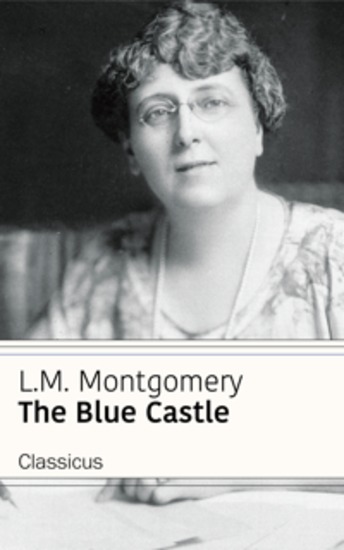
The Blue Castle (Classicus Edition) - cover

The Blue Castle (Classicus Edition)

L. M. Montgomery

Maison d'édition: Classicus

  • 0
  • 0
  • 0

Synopsis

L.M. Montgomery’s The Blue Castle is a deeply romantic and quietly rebellious novel about a woman who dares to break free from the life others have chosen for her. Set in the rugged beauty of early 20th-century Ontario, it follows Valancy Stirling, a timid and overlooked woman of twenty-nine whose days are dictated by her overbearing family and the stifling social codes of her small town. Her only escape lies in her vivid daydreams of the Blue Castle—a place where she imagines herself free, bold, and loved.     When Valancy receives unexpected news that shatters her perception of time and safety, she makes the first daring choice of her life: to live honestly and for herself. She leaves behind everything familiar and scandalizes her relatives by befriending outcasts, challenging norms, and eventually striking out into the wilderness with a mysterious man known as Barney Snaith. What begins as a retreat from the world becomes a profound journey toward love, self-discovery, and quiet joy in a life lived authentically.     First published in 1926, The Blue Castle is one of Montgomery’s few adult novels, but it pulses with the same emotional intelligence, humor, and lyricism that made Anne of Green Gables a classic. This Classicus edition reintroduces a tale that is by turns dreamy, defiant, and tender—a novel that speaks to anyone who has ever longed to escape, to reinvent, or to finally choose happiness on their own terms.
Disponible depuis: 03/04/2025.

D'autres livres qui pourraient vous intéresser

  • The Copper Mountain double feature - cover

    The Copper Mountain double feature

    Pavel Bazhov

    • 0
    • 0
    • 0
    These two fascinating pieces about the Mistress of the Copper Mountain come from Pavel Patrovich Bazhov's much larger collection of stories collected over many years and based on the lore of the Ural Mountains.
    Voir livre
  • Dreams in the Witch House The (Unabridged) - cover

    Dreams in the Witch House The...

    H. P. Lovecraft

    • 0
    • 0
    • 0
    "The Dreams in the Witch House" is a horror short story by American writer H. P. Lovecraft, part of the Cthulhu Mythos cycle. It was written in January/February 1932 and first published in the July 1933 issue of Weird Tales
    Voir livre
  • My Antonia - cover

    My Antonia

    Willa Cather

    • 0
    • 0
    • 0
    My Antonia tells of the wholesome friendship and affection between a boy and girl and the shared childhood bonds that tie them together. At the end of the 19th century, fourteen-year-old Ántonia Shimerda has realized the immigrant's dream. She has just arrived in rural Nebraska with her Bohemian (Czech) family at the same time as ten-year-old Jim Burden, an orphan sent to live with his grandparents. While Jim's family is prosperous and steady, the Shimerdas quickly find themselves mired in poverty and struggle to make ends meet. But they live near to each other (by pioneer standards), and the two youngsters become close. Reminiscing about his dearest childhood friend, Ántonia is a personification of Jim's free-spirited bygone days spent chasing rabbits and prairie dogs. Ántonia's warmth belongs to the land and the people who love her. For Jim, Ántonia is home.
    Voir livre
  • A Legend - From their pens to your ears genius in every story - cover

    A Legend - From their pens to...

    Alexander Kuprin

    • 0
    • 0
    • 0
    Alexander Kuprin was born in Narovchat, Penza in Russia on 7th September 1870. 
    At 3 his Father died and he and mother moved to Moscow. By 10 he was enrolled at the Second Moscow Military High School and there his interest in literature began. The Alexander Military Academy followed and two years later he was a sub-lieutenant and posted to an Infantry Regiment for a further four years. 
    Despite his duties he was a now a keen writer and published his first short story at this time. His military duties also garnered him experiences for his breakthrough work ‘The Duel’.  Leaving the military he left for Kiev to work for local newspapers.  He continued to publish both stories and novels and by 1901 he was in St Petersburg becoming part of a group that included Chekhov, Ivan Bunin, Maxim Gorky and Leonid Andreyev.  
    In the years that followed further controversial works and acclaim followed.  His comments on the regime meant he was also put under secret police surveillance.   
    As World War I erupted, Kuprin opened a military hospital but was then given command of an infantry company in Finland. He was soon discharged on grounds of ill health.  
    The October Revolution saw him praise Lenin, but he warned that the Bolsheviks threatened Russian culture and might cause further widespread suffering to the peasants.  As Civil War raged he took his family to Helsinki and then on to Paris. 
    Exile saw his talents decline further and his succumbing to alcoholism. He became lonely and withdrawn. The family's poverty increased his malaise.   
    In May 1937, the Kuprin’s returned to Moscow.  He now saw his work published but wrote almost nothing new.  In 1938 his health rapidly deteriorated.  Already suffering from a kidney problems and sclerosis, he had now developed cancer of the oesophagus.  
    Alexander Kuprin died on 25th August 1938.
    Voir livre
  • The Metropolis - cover

    The Metropolis

    Upton Sinclair

    • 0
    • 0
    • 0
    This gripping novel follows Allan Montague, a young lawyer who enters the dazzling high society of New York City, only to uncover a web of corruption, greed, and moral decay. As Montague navigates the glittering ballrooms and shadowy boardrooms of the elite, he is forced to confront the stark realities behind the facade of wealth and power. Sinclair's incisive critique of the American Gilded Age unveils the stark contrasts between opulence and poverty, integrity and vice.
    Voir livre
  • Hand and Heart - From their pens to your ears genius in every story - cover

    Hand and Heart - From their pens...

    Elizabeth Gaskell

    • 0
    • 0
    • 0
    Elizabeth Stevenson was born in Chelsea in London on 29th September 1810.  
    Both parents embedded their strong Unitarian beliefs into Elizabeth who rebelliously was often reluctant to display these religious convictions.  
    The early death of Elizabeth’s mother saw her sent away to be brought up by her maternal aunt in Knutsford, Cheshire.  
    Her father now remarried but Elizabeth spent most of her childhood in Cheshire away from her father and his new family but was supportive towards her half-siblings.  
    Elizabeth’s aunt encouraged her education and particularly to read and express herself through writing.   
    In 1828, her brother John, who worked in the merchant navy, disappeared on a journey to India. This disastrous loss depressed her father, and she went to his household to nurse him for the next year before he died.  
    In 1832, she fell in love with William Gaskell, a Unitarian minister like her father, and married him.  They settled in Manchester. This booming industrial city had a great impact on Elizabeth who felt the need to speak up for poor workers and their exploitation by large industrial companies. A collection of poems and short stories, ‘Sketches among the Poor’ appeared in 1837, co-authored by her husband.  Her first major work, under a pseudonym, was ‘Mary Barton: A Tale of Manchester Life’ published in 1848. 
    During her career she worked continually with Charles Dickens and published much in his various magazines. With him she published ‘Lizzie Leigh’ in 1850 which dealt with the taboo subject of prostitution.  She was an excellent writer and impressed her many Victorian literary peers. Much of her writing reflects her work as a social critic highlighting the exploitation of the working class and the situation of women in society.  
    On 12th November 1865, Elizabeth Gaskell died in Holybourne, Hampshire, after suffering from a heart attack a month earlier.
    Voir livre