Rejoignez-nous pour un voyage dans le monde des livres!
Ajouter ce livre à l'électronique
Grey
Ecrivez un nouveau commentaire Default profile 50px
Grey
Abonnez-vous pour lire le livre complet ou lisez les premières pages gratuitement!
All characters reduced
Engaging in Counseling Research with Curiosity and Wisdom - A Christian Integrative Approach - cover

Engaging in Counseling Research with Curiosity and Wisdom - A Christian Integrative Approach

Kristen Kansiewicz, Paul Loosemore

Maison d'édition: IVP Academic

  • 0
  • 0
  • 0

Synopsis

Discover Research as a Spiritually Formative Journey
In counseling and psychology programs, students and educators alike often approach research with feelings of apprehension. Educators and researchers Kristen Kansiewicz and Paul Loosemore offer a different perspective. In Engaging in Counseling Research with Curiosity and Wisdom, they reveal how research is not only an essential element of mental health work but a unique invitation to curiosity, wisdom, and personal growth.
Kansiewicz and Loosemore provide an integrative connection between Christian faith and the process of research. They unpack such topics as:

- how to engage one's whole self as a researcher
- different perspectives on knowledge and truth
- the importance of diversity in research
- applying research insights to the clinical setting
Designed to accompany and enhance the primary curriculum in a research course, Engaging in Counseling Research with Curiosity and Wisdom:

- offers a Christian formation perspective of the research process.
- shows how to look at Scripture through a research lens and research through a biblical lens.
- includes discussion questions and classroom learning activities.
- contains inspiring ideas for teaching research courses.
- compliments CACREP curriculum.

God created us to be explorers, filled with awe as we uncover truths all around. Everyone in the mental health professions can benefit from understanding what good research is and how they can engage their natural curiosity wisely in every phase of their work. Whether you are an educator, student, or professional in psychology, counseling, social work, or a similar profession, this resource empowers you to engage with research in a meaningful and faithful way.
Disponible depuis: 10/02/2026.
Longueur d'impression: 256 pages.

D'autres livres qui pourraient vous intéresser

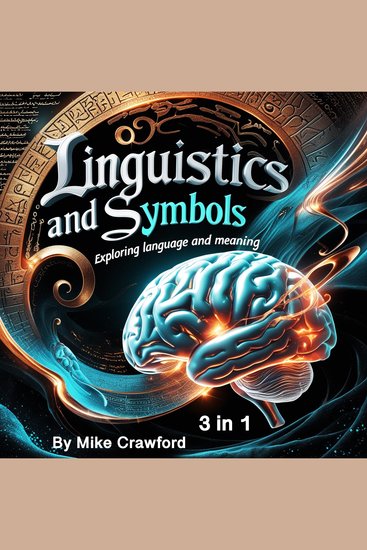
  • Linguistics and Symbols - Exploring Language and Meaning (3 in 1) - cover

    Linguistics and Symbols -...

    Mike Crawford

    • 0
    • 0
    • 0
    Linguistics and Symbols provides an in-depth look into how language, values, and symbols shape our understanding of the world. This 3-in-1 volume explores three key areas—Phonology, Axiology, and Symbology—that are foundational to the study of language, communication, and meaning. 
    The first section, Phonology, delves into the sound systems of language, examining how phonemes, tones, and patterns of speech create meaning and influence communication. It explores how different cultures and languages use sound to convey emotions, ideas, and information, showing the power of phonetics in shaping human interaction. 
    In the second section, Axiology, readers will explore the role of values in language and communication. Axiology focuses on the study of values—what people deem important and how these values influence societal structures, ethics, and language. This section highlights how language is often a reflection of the moral and cultural values of a community, shaping how we express judgments, preferences, and ideals. 
    The final section, Symbology, investigates the system of symbols and their meaning across various cultures. Symbols are powerful tools of communication, often carrying deep cultural, emotional, and historical significance. By examining symbols—whether in written form, visual representations, or gestures—this section reveals how they help convey complex ideas and how they are interpreted by different societies. 
    Linguistics and Symbols is an essential guide for anyone seeking to understand how language and symbols shape human cognition, culture, and society. It provides key insights into the fundamental components of language and meaning, offering readers a deeper appreciation of how we communicate, understand, and connect with one another through sounds, values, and symbols.
    Voir livre
  • Philosophies of Language and Society - The Shifting Understandings of Truth Power and the Social Construct (3 in 1) - cover

    Philosophies of Language and...

    Hector Davidson

    • 0
    • 0
    • 0
    This book bundle contains the following three titles:  
    - Derrida: Jacques Derrida, one of the most influential philosophers of the 20th century, revolutionized the way we think about language, meaning, and interpretation. His development of the concept of deconstruction has left a profound impact on philosophy, literary theory, and critical thought. To understand Derrida's legacy, it is essential to explore the key elements of his intellectual journey and how his ideas continue to shape contemporary discourse. 
    - Deconstructionism: Deconstructionism emerged in the late 20th century as a philosophical and literary movement that fundamentally questioned the nature of meaning, language, and interpretation. It is primarily associated with the work of French philosopher Jacques Derrida, who, in the 1960s and 1970s, began to develop ideas that would challenge long-held assumptions in philosophy, literary theory, and critical thought. The movement was a response to structuralism, which sought to uncover the underlying structures that govern language and society. In contrast, deconstruction aimed to show that meaning is inherently unstable and that texts and concepts can never be fully fixed or understood in a singular, unchanging way. 
    - Michel Foucault: Michel Foucault, a French philosopher, historian, and social theorist, is renowned for his critical exploration of power, knowledge, and social institutions. Born in 1926, Foucault’s work spans a range of disciplines, from philosophy to sociology, psychology, and political science. His intellectual journey reflects a unique approach to understanding human societies, focusing not on abstract metaphysical systems but on the structures that shape human behavior, knowledge, and institutions.
    Voir livre
  • Ghosts That I Have Known - 80 Years of Paranormal Surprises That Prove (at Least to Me) That We Will Have A Life After Death - cover

    Ghosts That I Have Known - 80...

    David D. Ferman

    • 0
    • 0
    • 0
    Dave Ferman is a former high school English and science teacher, and a communications executive in the world's largest defense corporation. In 1956, he completed a tour as a U.S. Marine Grunt, a drill instructor, a military policeman, and a pilot. He also served in Sixth Fleet Air Intelligence with a clandestine atom bomber squadron in the Mediterranean Theatre, and on the West Bank and volatile "Green Line" between Israel and the Kingdom of Jordan. Along the way, he earned a succession of hard-to-get, easy-to-lose top U.S. security clearances that make him among the most highly vetted rookie authors in literature today. Uncle Sam trusts Dave Ferman. 
     While growing up in urban Kansas during the Great Depression, the Dust Bowl, World War II and the birth of Rock 'n' Roll, Dave had several unrelated but pleasant paranormal experiences. Curious and wishing for encores at age five, in denial at age 10, and comfortably nonjudgemental until age 44 when his deceased father visited Dave one evening during a period of extreme financial stress to assure him: “Don’t worry, son. Everything is going to be alright.“ and very soon it was. After that, Dave became a converted believer in some form of life after death. What other choices did he have? 
    Dave’s message is twofold: “Don’t despair, if all goes well, you and your departed loved ones will be reunited in the hereafter,“ and “I am no longer afraid to die; and you should not be, either.“
    Voir livre
  • Sumerian Civilization The: An Enthralling Overview of Sumer and the Ancient Sumerians - cover

    Sumerian Civilization The: An...

    Enthralling History

    • 0
    • 0
    • 0
    How much do you know about the “cradle of civilization?” Come explore the legacy of the brilliant ancient Mesopotamians who transformed the world. 
    Ancient Mesopotamia’s legacy was truly revolutionary. Childlike pictures scratched into wet clay evolved into the first written language. The Mesopotamians wrote the first epic poems, the first hymns, the first histories, and the first law codes. They developed the first wheel for transportation; simple carts that hauled bricks or produce morphed into chariots racing along at thirty-five miles per hour. 
    They gazed at the sky and mapped it, observing the planets’ retrograde motions and predicting lunar and solar eclipses. They developed the concept of time, measurements, basic counting, higher math, and hydraulic engineering. 
    Mesopotamia gave birth to the world’s first great empires—the Akkadians, Assyrians, Babylonians, and Achaemenids—which stretched over three continents. 
    A glimpse at the questions this overview unpacks includes:How old is the world’s first city?How did the Eridu Genesis compare to Noah and the ark?How fast was the world’s first postal system?How many times did Babylon’s patron god Marduk get stolen?How did Hammurabi’s law code compare to the Law of Moses?Who calculated pi (π) to the value of 3.125 and understood the Pythagorean theorem twelve centuries before Pythagoras was born?Did Xerxes really have a million men in his army?Which empire encompassed 44 percent of the world’s population?What eunuch poisoned most of the Persian royal family?And much, much more! 
    Scroll up and click the “add to cart” button to learn the stories of incredible ancient Mesopotamia!
    Voir livre
  • Driven to Write - 45 Writers on the Motives and Mysteries of their Craft - cover

    Driven to Write - 45 Writers on...

    Ellen Pinsky, Michael Slevin

    • 0
    • 0
    • 0
    In this book of essays, over forty successful writers in varied fields―poetry, science, the performing and visual arts, psychoanalysis, journalism, literature, and more―explore what drives them to write, and to work at their craft. 
     
    In contributions arranged under three headings―"Models and Mentors," "Urges and Traumas," and "Evidence and Experiences"―each writer explores their personal understanding of writing as a psychological necessity. In varying ways, these candid, often emotional essays reveal a range of intimate, mysterious, and unpredictable purposes and motivations. 
     
    Driven to Write provides fresh, practical, and imaginative approaches to literary art for aspiring and established writers alike.
    Voir livre
  • Chernobyl - Details of the Worst Nuclear Disaster in History - cover

    Chernobyl - Details of the Worst...

    Kelly Mass

    • 0
    • 0
    • 0
    On April 26, 1986, the world witnessed one of the gravest technological disasters in human history: the Chernobyl nuclear catastrophe. Occurring at the Chernobyl Nuclear Power Plant's No. 4 reactor in Pripyat, then part of the Ukrainian Soviet Socialist Republic, the event not only claimed lives but also left a legacy of environmental and human suffering that persists to this day. This calamity stands as the deadliest nuclear accident in history, both in terms of its immediate human cost and its staggering financial implications. It remains one of only two incidents—alongside the 2011 Fukushima nuclear disaster in Japan—classified as a Level 7 event, the highest rating on the International Nuclear Event Scale.  
    Responding to the crisis required a monumental effort, involving over 500,000 personnel for emergency operations and subsequent environmental cleanup. This massive endeavor cost approximately 18 billion Soviet rubles, a figure equivalent to $68 billion in 2019 when adjusted for inflation. The scale of the response underscores the unprecedented challenges posed by the catastrophe, as well as the Soviet Union's desperate attempts to mitigate its consequences.  
    The disaster itself unfolded during a scheduled safety test designed to assess the reactor's ability to maintain critical operations during a power outage. The test was carried out on an RBMK-type reactor, a design already known to have significant safety flaws. During the test, a sudden and unexpected drop in power output brought the reactor to near-zero levels. The operators, unaware of the reactor's increasing instability due to incomplete and misleading operating instructions, attempted to bring the power back up to the required level. However, these efforts placed the reactor in a precarious and highly unstable state. 
    Voir livre