Begleiten Sie uns auf eine literarische Weltreise!
Buch zum Bücherregal hinzufügen
Grey
Einen neuen Kommentar schreiben Default profile 50px
Grey
Jetzt das ganze Buch im Abo oder die ersten Seiten gratis lesen!
All characters reduced
They Told Us To Move: Dakota—Cassia - cover

They Told Us To Move: Dakota—Cassia

Kok Hoe Ng

Verlag: Ethos Books

  • 0
  • 0
  • 0

Beschreibung

What happens when an entire community is moved?  
 
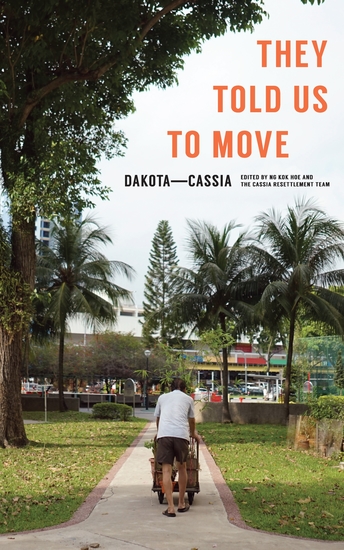
Dakota Crescent was one of Singapore's oldest public housing estates and a rental flat neighbourhood for low-income households. In 2016, its residents—many of whom are elderly—were relocated to Cassia Crescent to make way for redevelopment. To help them resettle, a group of volunteers came together and formed the Cassia Resettlement Team. 
 
They Told Us to Move tells the story of the relocation through interviews with the residents from the Dakota community and reflections by the volunteers. Accompanying these are essays by various academics on urban planning; gender and family; ageing, poverty, and social services; civil society and citizenship; and architectural heritage and place-making. Through this three-part conversation, the book explores human stories of devotion, expectation, and remembrance. It asks what we can achieve through voluntary action and how we can balance self-reliance and public services. 
 
This book is for people who want to understand the kind of society we are, and question what kind of society we want to be.
Verfügbar seit: 21.08.2024.
Drucklänge: 268 Seiten.
Weitere Bücher, die Sie mögen werden

  • The Deep End of Hope in the Wake of Hurricane Helene - 40 Days and Nights of Survival and Transformation - cover

    The Deep End of Hope in the Wake...

    Emma M. Churchman

    • 0
    • 0
    • 0
    Imagine being cut off from the world, perched atop a mountain turned into a deadly flood zone by Hurricane Helene's fury. For Emma Churchman and her husband Jeff, this nightmare became reality in September 2024. For three harrowing days, their loved ones had no idea if they were alive.
    But surviving was just the beginning.
    When they finally fought their way down three miles of treacherous terrain, they found their small mountain community of Gerton, NC transformed. Without power, phones, or internet, their neighborhood teetered between chaos and unity. As lawlessness emerged and desperation mounted, Emma made a choice that would change everything: to transform her fear into a fierce kind of love.
    With raw honesty and unexpected humor, Emma chronicles her role as a trauma chaplain in a community forced to build itself anew. Her powerful mantra becomes a lifeline not just for her, but for an entire community learning to trust again.
    "I am safe. I am warm. I am fed. I am loved"
    Part survival story, part love letter to human resilience, this unforgettable memoir shows us what's possible when crisis strips away our differences and reveals our shared humanity. In a world increasingly divided, Emma's story reminds us that our greatest strength lies not in our independence but in our connections to each other.
    With over twenty-five years of experience as a spiritual and business leader, Emma M. Churchman, MDiv, has guided thousands through the labyrinth of trauma to reclaim hope and strength. Her powerful work as a trauma chaplain and mentor is rooted in her own journey of overcoming childhood adversity.
    Zum Buch
  • Thumbelina - cover

    Thumbelina

    Rebecca Bondor

    • 0
    • 0
    • 0
    Beautiful music and fun sound-effects help tell the classic tale of “Thumbelina.” When a good-hearted poor peasant gives her last loaf of bread to a beggar, she is given a corn seed in return. Imagine the peasant woman's surprise when in the morning a beautiful flower appears with a tiny young lady inside its petals. The peasant woman names her Thumbelina. Find out what happens when an old ugly frog takes Thumbelina to be his son's wife. A happy ending adds interest to this fairy tale and encourages a lifelong love of great storytelling.
    Zum Buch
  • The Eyes of Gaza - cover

    The Eyes of Gaza

    Plestia Alaqad

    • 0
    • 0
    • 0
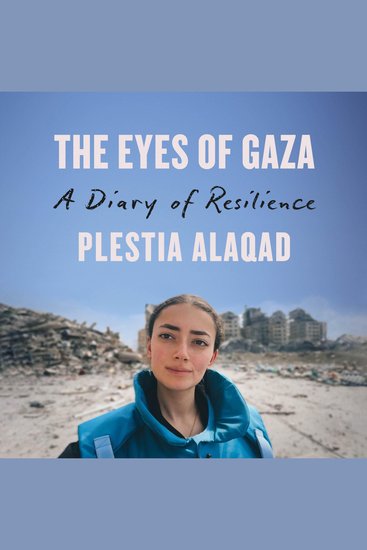
    North American edition with an exclusive afterword and photographs In early October 2023, Palestinian Plestia Alaqad was a recent university graduate dreaming of a career as a journalist. But by the end of November, her homeland was unrecognizable—and she was broadcasting videos of violence and destruction to millions online, known across the world as "The Eyes of Gaza." On the morning of October 7, 2023, 21-year-old Plestia Alaqad wakes to a flurry of messages and headlines: Gaza under bombardment. Civilians flee waves of Israeli strikes. In a few short days, she and her family will be at the epicenter of a violence that is all too familiar for Palestinians—but this time, she knows, things will never be the same. A series of diary extracts from the weeks following October 7, The Eyes of Gaza is a gutting, on-the-ground record of the turmoil and destruction endured by the men, women, and children of Palestine. As Alaqad flees from neighborhood to neighborhood, from hospital to hospital, she documents all she sees—the destruction of beloved homes, the waves of bombs, and most of all, the boundless bravery and generosity of her people—all the while trying to memorize the faces of those around her "so somebody will have known them before the end," wondering if, one day, her own journal will be discovered amidst the rubble. A document of the indomitable Palestinian spirit, told through the voice of one ordinary young woman, The Eyes of Gaza is a tribute to Alaqad's beloved Gaza, a paean to the courage and endurance of Palestine, and a manifesto of hope for its future.
    Zum Buch
  • Between the Listening and the Telling - How Stories Can Save Us - cover

    Between the Listening and the...

    Mark Yaconelli, Anne Lamott

    • 0
    • 0
    • 0
    Stories tether us to what matters most: our families, our friends, our hearts, our planet, the wondrous mystery of life itself. Yet the stories we've been telling ourselves as a civilization are killing us: Fear is wisdom. Vanity is virtuous. Violence is peace. In Between the Listening and the Telling, author and activist Mark Yaconelli leads listeners into an enchanting meditation on the power of storytelling in our individual and collective lives. We tell stories to remember who we are. We tell stories to savor the pleasure of living. Stories can be medicine, and they can transform entire communities. 


    Through his work with The Hearth nonprofit, Yaconelli has spent thousands of hours listening to people as they grieve loss, deepen friendships, strengthen families, shed light on injustice, and recover hope. In this moving exploration he shows us how individuals and communities can recover the practice of storytelling to address the despair of climate change, the trauma of school shootings, the tragedy of undocumented immigration, and the daily struggle for meaning. 


    With a foreword by Anne Lamott, Between the Listening and the Telling offers an alloy of story, commentary, and meditation. In an era of runaway loneliness, alienation, global crisis, and despair, sharing stories helps us make a home within ourselves and one another.
    Zum Buch
  • Helmut Schmidt: A short biography - 5 Minutes: Short on time - long on info! - cover

    Helmut Schmidt: A short...

    5 Minutes, 5 Minute Biographies,...

    • 0
    • 0
    • 0
    Helmut Schmidt, legendary German chancellor: Life and works in a short biography! Everything you need to know, brief and concise. Infotainment, education and entertainment at its best!
    Zum Buch
  • German Tanks in the World Wars: The History of Germany’s Most Famous Tanks during Both Conflicts - cover

    German Tanks in the World Wars:...

    Charles River Editors

    • 0
    • 0
    • 0
    One of the most important breakthroughs in military technology associated with World War I, and certainly the one that continues to capture the public imagination, was the introduction of a war machine that came to dominate the face of land battles throughout most of the 20th century: the tank. As a concept, it was not revolutionary; in fact, it harkened back to classical antiquity and to the Middle Ages, such as the covered battering rams and testudos which had made frequent appearances on ancient battlefields. In essence, it was designed to solve the age-old problem of protecting infantry from enemy projectiles while remaining mobile. 	Ironically, Germany, which would subsequently become famous for panzers and blitzkrieg warfare, was late in taking up the idea. During World War I, the Germans continued to rely on other techniques, and they produced less than two dozen models for battlefield use.  
    	The beginning of World War II found the major powers developing tanks to some extent, but lingering ideas from World War I affected the development of tanks during the Interwar period. As a result, aside from the blitzkrieg doctrine developed by the Nazis, tanks were still used in terms of infantry support, and there were few wars during this period to give strategists the chance to develop better uses for the new armored vehicles before World War II started. Commanders soon found that many of the tanks fielded in the campaigns of 1939-1941 lacked the necessary armor, guns, and designs. Inevitably, tactics evolved throughout the war. The Germans were early leaders in tank tactics, as their successes from Poland through the opening phases of Operation Barbarossa demonstrated. The main German tank tactic was the so-called Schwerpunkt (“center of gravity”), in which a concentration of tanks achieved a local superiority, broke through, and drove deep behind enemy lines.
    Zum Buch