Begleiten Sie uns auf eine literarische Weltreise!
Buch zum Bücherregal hinzufügen
Grey
Einen neuen Kommentar schreiben Default profile 50px
Grey
Jetzt das ganze Buch im Abo oder die ersten Seiten gratis lesen!
All characters reduced
The Handshake - Around the World! - cover

The Handshake - Around the World!

Kevin B DiBacco

Verlag: Success Publications

  • 0
  • 0
  • 0

Beschreibung

For thousands of years, across cultures and civilizations, the handshake has endured as one of the most ubiquitous and significant nonverbal gestures in the grand tapestry of human interaction. Its origins can be traced back as far as the 5th century BC, when we find the earliest artistic depictions of handshakes exchanged between ancient Greeks on ceramic vases and reliefs. 
Verfügbar seit: 03.06.2024.
Drucklänge: 150 Seiten.

Weitere Bücher, die Sie mögen werden

  • The Ottoman Mosaic - cover

    The Ottoman Mosaic

    Santiago Machain

    • 0
    • 0
    • 0
    1. Foundations of an Empire: The Rise of the Ottomans, 1299–1606 
    Brief synopsis 
    This volume traces how a small frontier beylik became a world empire. It follows the Ottomans from Osman and Orhan through Mehmed II and Süleyman I, explaining conquests in the Balkans, the fall of Constantinople in 1453, the building of Istanbul, and the creation of powerful institutions like the Janissaries, the timar system, and the millet framework. Alongside battles and treaties, it opens the doors of mosques, courts, workshops, and homes, showing how law, faith, art, and war worked together—right up to the first clear signs of strain around 1606.
    Zum Buch
  • Decoding Jung's Metaphysics - The Archetypal Semantics of an Experiential Universe - cover

    Decoding Jung's Metaphysics -...

    Bernardo Kastrup

    • 0
    • 0
    • 0
    More than an insightful psychologist, Carl Gustav Jung was the twentieth century's greatest articulator of the primacy of mind in nature, a view whose origins vanish behind the mists of time. Underlying Jung's extraordinary body of work, and providing a foundation for it, there is a broad and sophisticated system of metaphysical thought. This system, however, is only implied in Jung's writings, so as to shield his scientific persona from accusations of philosophical speculation. The present book scrutinizes Jung's work to distil and reveal that extraordinary, hidden metaphysical treasure: for Jung, mind and world are one and the same entity; reality is fundamentally experiential, not material; the psyche builds and maintains its body, not the other way around; and the ultimate meaning of our sacrificial lives is to serve God by providing a reflecting mirror to God's own instinctive mentation. Embodied in this compact volume is a journey of discovery through Jungian thoughtscapes never before revealed with the depth, force, and scholarly rigor you are about to encounter.
    Zum Buch
  • Our Western spring - Where is political divide leading us ? - cover

    Our Western spring - Where is...

    Nir Shvalb

    • 0
    • 0
    • 0
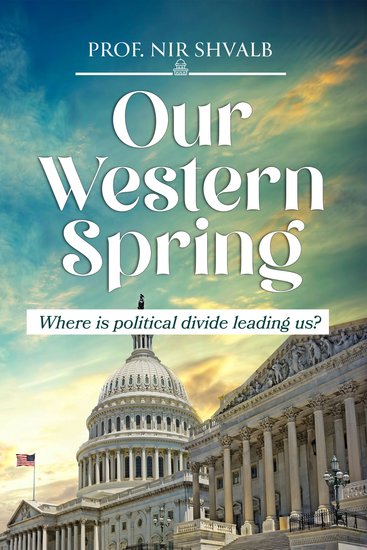
    "Progress is not just electronics and robots; it’s also adaptation and correction of social structures in light of these technological advances," Shvalb asserts, warning that "the old democracy won't survive if we don’t adjust it to the new era." 
    After reviewing the social phenomena leading societies to dangerous places, he points out, "History teaches us that civilizations tend to fade, and when they do, it can happen very suddenly." He then explores the influence of social networks on public discourse, noting that "fake news spreads six times faster than truthful news." As a scientist in the field of hard sciences, he examines the dangers of advancing technology, particularly the role of AI in societal unrest. Shvalb questions, "Can technological mega-giants know us intimately enough to control our choices?" 
    Life as we knew it no longer exists. The benefits technology has given us come with a heavy price. In a world where social interactions are shaped by powerful platforms guiding the way we think, behave, buy, and choose, there is a real risk to our societies that we must consider. The last part of the book is dedicated to practical solutions and suggestions. Yet, despite its serious themes, "Our Western Spring: Where is Political Divide Leading Us?" is engaging and fun to read. If you're curious about who suffered from scrotal ascites, what is considered the worst film of all time, or why China's government hates Winnie-the-Pooh, this book is for you. This blend of intriguing trivia and insightful analysis makes the book both thought-provoking and enjoyable, offering readers a captivating journey through the complexities of modern society.
    Zum Buch
  • Slavery and the Law: The History of the Legal Systems and Cases that Enabled Slavery in the United States - cover

    Slavery and the Law: The History...

    Editors Charles River

    • 0
    • 0
    • 0
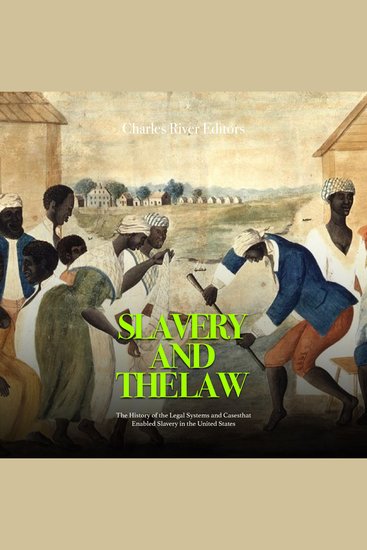
    Ultimately, while the institution of slavery existed, the principle of protecting individual property rights prevailed, alongside a necessary acknowledgment that slaves were property first and sentient human beings second. It also required a great deal of careful drafting and verbal contortions to construct the Constitution for the young republic that supported those principles of freedom and equality while at the same time facilitating the perpetuation of the “peculiar institution.” 
    	It was not until 1865, with the adoption of the Thirteenth Amendment, the instrument that abolished slavery, that any overt mention of slavery found its way into the Constitution. Before that, direct reference was always carefully avoided, although, at the same time, unmistakably alluded to. The document is filled with provisions specific to slavery, protecting and codifying it on a federal level, without anywhere making direct or overt mention of it. By 1788, when the Constitution of the United States was formally adopted, slavery had been a fact of life in the colonies for 169 years, since the first recorded arrival of black Africans in Virginia in 1619. At that time, around the institution, had evolved a system of laws that were derived in the main from English common law. The irony here is that the regime of English common law was at its root hostile to the principle of human bondage, had no tradition of slavery to call upon, and was desirous on the whole to avoid making any overt judgment or pronouncement on the matter. It, therefore, fell to colonial lawmakers to resolve that essential contradiction between treating Africans as either people or property or both. This tension remained in play throughout the era of slavery in English-speaking America until the matter was finally resolved by the outcome of the American Civil War.
    Zum Buch

  • Joker and Witch - cover

    Joker and Witch

    Poorvi Gupta

    • 0
    • 0
    • 0
    Sold three lakh units in last 12 months, says Joker & Witch Co-founder Maya Varma.
    Zum Buch
  • The Libertarian Ideal - How Libertarians Envision a Free and Open Society - cover

    The Libertarian Ideal - How...

    Arlo Holders

    • 0
    • 0
    • 0
    Libertarianism is a political philosophy that places individual liberty at its core, emphasizing the importance of personal freedom, limited government, and voluntary cooperation. Rooted in centuries of intellectual thought, libertarianism advocates for a society in which individuals are free to pursue their own goals and aspirations as long as they respect the rights of others. This emphasis on freedom and responsibility makes libertarianism distinct from other political ideologies, which often prioritize collective goals or centralized authority. 
    The roots of libertarian thought can be traced back to classical liberalism, a tradition that emerged during the Enlightenment. Philosophers such as John Locke, Adam Smith, and John Stuart Mill laid the foundation for the principles that underpin libertarianism today. Locke's theories of natural rights and property ownership, Smith's advocacy for free markets, and Mill's emphasis on individual autonomy and freedom of expression all contribute to the philosophical underpinnings of libertarianism. In the modern era, thinkers like Friedrich Hayek, Milton Friedman, and Ayn Rand have further developed these ideas, providing a framework for how a free society can function effectively. 
    At its heart, libertarianism is built on the idea of self-ownership—the belief that individuals have an inherent right to control their own lives, bodies, and property. From this principle flows the concept of voluntary interaction, which holds that relationships and exchanges between people should occur through mutual consent rather than coercion. Libertarians reject the use of force, except in cases of self-defense or the defense of others, and they champion the principle of non-aggression as a moral guide.
    Zum Buch