Begleiten Sie uns auf eine literarische Weltreise!
Buch zum Bücherregal hinzufügen
Grey
Einen neuen Kommentar schreiben Default profile 50px
Grey
Jetzt das ganze Buch im Abo oder die ersten Seiten gratis lesen!
All characters reduced
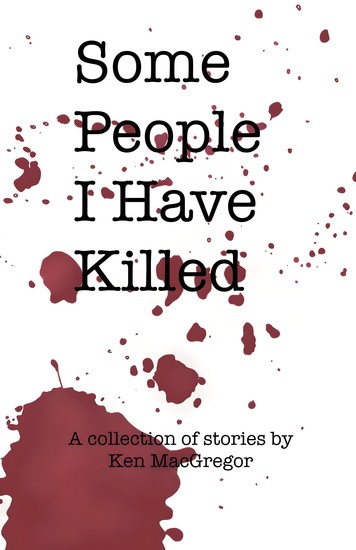
Some People I Have Killed - cover

Some People I Have Killed

Ken MacGregor

Verlag: Publishdrive

  • 0
  • 0
  • 0

Beschreibung

Ever wonder what it's like to die?
 
How you might meet your end?
 
In these stories, Ken MacGregor kills real people based on their own fears and passions, their wants and revulsions. Sometimes, they don't die-sometimes it's worse.
 
Come. Find out what it's like...
 
to be killed by Ken.
Verfügbar seit: 18.06.2025.
Drucklänge: 326 Seiten.

Weitere Bücher, die Sie mögen werden

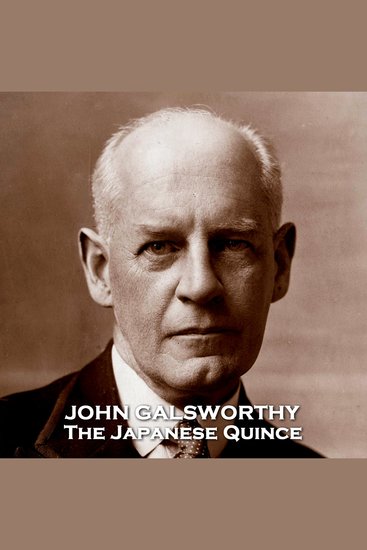
  • The Japanese Quince - From their pens to your ears genius in every story - cover

    The Japanese Quince - From their...

    John Galsworthy

    • 0
    • 0
    • 0
    John Galsworthy was born on the 14th August 1867 on the family estate, Parkfield, in Kingston-upon-Thames.  His family’s wealth came from the shipping industry 
    At age nine he began his education at Saugeen, a Bournemouth preparatory school, before moving to Harrow school in 1881, distinguishing himself as an athlete.  
    Galsworthy attended New College, Oxford to read law and left with a second-class degree with honours in 1889. The bar called him in 1890 but Galsworthy decided he would rather run the family’s shipping business. This also meant travelling to destinations such as Vancouver, South Africa and Australia. 
    In 1895 Galsworthy began a decade long affair with Ada Nemesis Pearson Cooper, the wife of his first cousin. It was only when, in 1905, she divorced and married Galsworthy that their affair became known. 
    His literary career began in 1897 with a short story volume, ‘From the Four Winds’, with the pseudonym John Sinjohn as were three further works. Under his own name, in 1904, came ‘The Island Pharisees’, a novel of social observation, seasoned with flashes of satire and propaganda. He also switched from small, independent publishers to the larger Heinemann and to whom he remained for the duration of his career. 
    1906 saw first major play, ‘The Silver Box’, and the novel ‘The Man of Property’. Each to considerable acclaim. The latter was the first in ‘The Forsyte Saga’ trilogy written between 1906 and 1921. It dealt with the questions of status, class and materialism through Soames Forsyte, who is acutely aware of his ‘new money’ status. Jealous of his wife, his machinations drive her into the arms of another. Soames engages in a terrible revenge with terrible consequences.  
    His social agenda was enlightened particularly in his condemnation over the use of solitary confinement in prisons, his attacks on theatrical censorship and campaigning for animal rights. 
    Galsworthy, having been passed over for active service, spent much of the First World War working as an orderly in a field hospital in France. 
    Despite his it was only in 1920 that he had his first blockbuster play ‘The Skin Game’, a melodrama dealing with ethics, property and class.  
    In 1920 ‘In Chancery’ also arrived with further discourse on the marital disharmony between Soames Forsyte and his wife.  
    The appreciation of his work gradually shifted from plays to novels, particularly through his detailing English social difference, tension and pretension with the Forsytes.  A second trilogy, ‘A Modern Comedy’, followed, examining his love for his daughter Fleur and the English commercial upper-middle class, its ideologies and Soames’ poisonous materialism.  
    Having rejected a knighthood in 1918 he was appointed, in 1929, to the Order of Merit. Galsworthy spent his last years writing a third Forsythe trilogy, ‘End of the Chapter’.   
    In 1932 he was awarded the Nobel Prize, but by now failing health meant he was too ill to attend the ceremony. 
    John Galsworthy died at his Hampstead home of a brain tumour on 31st January, 1933. He was cremated and his ashes scattered from an aeroplane over the South Downs.
    Zum Buch

  • The Forgotten Planet - cover

    The Forgotten Planet

    Murray Leinster

    • 0
    • 0
    • 0
    The "forgotten" planet had been seeded for life, first with microbes and later with plants and insects. A third expedition, intended to complete the seeding with animals, never occurred. Over the millennia the insects and plants grew to gigantic sizes. The action of the novel describes the fight for survival by descendants of a crashed spaceship as they battle wolf-sized ants, flies the size of chickens, and gigantic flying wasps. (Summary by Wikipedia)
    Zum Buch
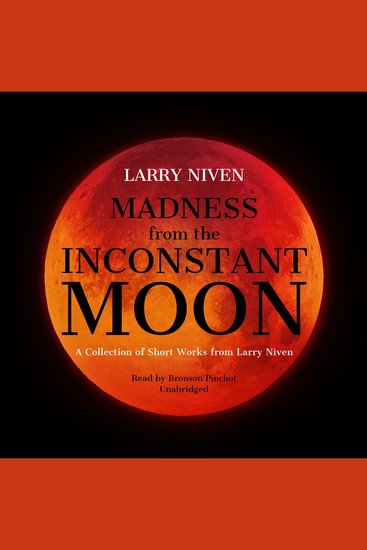
  • Madness from the Inconstant Moon - A Collection of Short Works from Larry Niven - cover

    Madness from the Inconstant Moon...

    Larry Niven

    • 0
    • 0
    • 0
    Madness from the Inconstant Moon is a collection of early short science fiction works by Larry Niven, the multiple Hugo and Nebula Award–winning author of the Ringworld series. 
    “All the Myriad Ways” (1968)“Passerby” (1969)“For a Foggy Night” (1968)“Wait It Out” (1968)“The Jigsaw Man” (1967)“Not Long before the End” (1969)“Unfinished Story No. 1” (1970)“Unfinished Story No. 2” (1971)“Man of Steel, Woman of Kleenex” (essay, 1969)“Exercise in Speculation: The Theory and Practice of Teleportation” (essay, 1969)“The Theory and Practice of Time Travel” (essay, 1971)“Inconstant Moon” (1971)“What Can You Say about Chocolate Covered Manhole Covers?” (1971)“Becalmed in Hell” (1965)
    Zum Buch
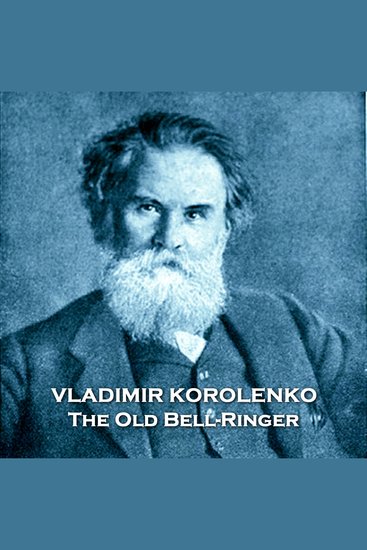
  • The Old Bell-Ringer - From their pens to your ears genius in every story - cover

    The Old Bell-Ringer - From their...

    Vladimir Korolenko

    • 0
    • 0
    • 0
    Vladimir Galaktionovich Korolenko was born in Zhytomyr, Ukraine, then part of the Russian Empire on 27th July 1853. 
    His father died when he was 13 and life was then often struck with bouts of poverty, which resulted in his education being somewhat erratic.   A spell in exile at 23 was followed by another as the politics of the times opposed his volatile but heart-felt passions. 
    Writing was also coming to the fore and in 1879 his debut short story telling of a young Narodnik searching for social and spiritual identity, was published. 
    In 1881, Korolenko refused to swear allegiance to the new Russian Tsar and was again exiled, this time much farther afield.  He spent the next three years doing manual work, but took time to study local customs and history.  These impressions in exile provided rich material for his writings. 
    In 1885 he was allowed to settle in Nizhny, where again he repeatedly questioned the authorities.  That same year ‘Makar's Dream’ established his literary reputation and was part of his first collection ‘Sketches and Stories’, the following year. 
    In the early 1890’s when famine struck Central Russia, he went to work on relief missions, collecting donations, supervising the delivery and distribution of food, opening 45 free canteens, all this while writing the graphic reports that would later be published as ‘In the Year of Famine’ in 1893. 
    By 1896 despite some psychological disorders, he was well regarded amongst Russian writers and was even a member of the Russian Academy of Sciences.  Throughout his writing career Korolenko was a staunch advocate of human rights, putting that sacred activity above what he called his 'part-time-writing'. 
    In the Revolutionary year of 1905, under his editorship, Russkoye Bogatstvo published the Manifest by the Petersburg Soviet of the Workers' deputies. Korolenko was now repeatedly harassed by the authorities, had his flat raided many times and materials confiscated. 
    As a lifetime opponent of Tsarism, he guardedly welcomed the Revolution of 1917.  Once the nature of Bolshevism was established, he soon started to criticize it. During the Russian Civil War that ensued, he condemned both the Red Terror and the White Terror.  
    Despite suffering from a progressive heart disorder, he collected food packages for children in famine-stricken Moscow and Petrograd as well as organised orphanages and shelters for the homeless.  
    Vladimir Korolenko died in Poltava, Ukraine, of the complications of pneumonia on 25th December 1921.  He was 68.
    Zum Buch
  • More Ghost Stories - cover

    More Ghost Stories

    M.R. James

    • 0
    • 0
    • 0
    M. R. James second collection of  ghost stories which he wrote while Provost of King's College, Cambridge. Written to be read aloud.
    Zum Buch
  • Dracula's Guest and Other Weird Stories - cover

    Dracula's Guest and Other Weird...

    Bram Stoker

    • 0
    • 0
    • 0
    Experience the chilling and macabre tales of Bram Stoker, a master of horror fiction, renowned for his iconic novel Dracula. Delve into a collection of spine-tingling stories, curated by Stoker's widow. Unveiling myths, legends, and unimaginable malevolence, this compilation showcases the breadth and depth of Stoker's unparalleled prowess in the realm of horror writing.
    Zum Buch