Rejoignez-nous pour un voyage dans le monde des livres!
Ajouter ce livre à l'électronique
Grey
Ecrivez un nouveau commentaire Default profile 50px
Grey
Abonnez-vous pour lire le livre complet ou lisez les premières pages gratuitement!
All characters reduced
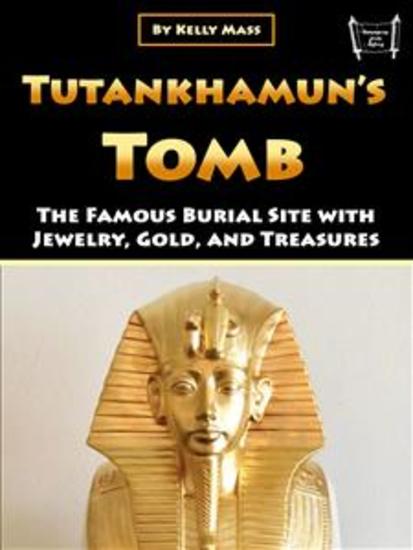
Tutankhamun’s Tomb - The Famous Burial Site with Jewelry Gold and Treasures - cover

Tutankhamun’s Tomb - The Famous Burial Site with Jewelry Gold and Treasures

Kelly Mass

Maison d'édition: Efalon Acies

  • 0
  • 0
  • 0

Synopsis

King Tutankhamun, commonly referred to as King Tut, served as an ancient Egyptian pharaoh, reigning at the close of the 18th Dynasty, around 1332–1323 BC in traditional chronology, during the New Kingdom of Egypt.

Akhenaten, identified through the discovery of his mummy in tomb KV55, is believed to be his father, while his mother, the mysterious mummy known as "The Younger Lady" in KV35, was determined through DNA testing to be his father's sister.
Ascending the throne at the tender age of eight or nine,Tutankhamun owed his kingship to the unparalleled viziership of his eventual successor, Ay, who may have had familial ties with him. He entered matrimony with Ankhesenamun, his paternal half-sister, and tragically lost two daughters during their union
—one in the fifth or sixth month of pregnancy and the other shortly after full-term birth.

The names Tutankhaten and Tutankhamun are thought to represent "Living image of Aten" and "Living image of Amun," respectively, as Amun took precedence after Akhenaten's demise. While some Egyptologists contest this translation, proposing alternatives like "The-life-of-Aten-is-pleasing" or "One-perfect-of-life-is-Aten."
Disponible depuis: 12/12/2023.

D'autres livres qui pourraient vous intéresser

  • Traveling Without Moving - Essays from a Black Woman Trying to Survive in America - cover

    Traveling Without Moving -...

    Taiyon J. Coleman

    • 0
    • 0
    • 0
    Amid the White smiles of Minnesota Nice and the Minnesota Paradox—the insidious racism of an ostensibly inclusive place to live—what do you do? If you're Taiyon J. Coleman, you write. 


    In Traveling without Moving, Coleman shares intimate essays from her life: her childhood in Chicago—growing up in poverty with four siblings and a single mother—and the empowering decision to leave her first marriage. She writes about being the only Black student in a prestigious and predominantly White creative writing program, about institutional racism and implicit bias in writing instruction, about the violent legacies of racism in the US housing market, about the maternal health disparities seen across the country and their implication in her own miscarriage. She explores what it means to write her story and that of her family—an act at once a responsibility and a privilege—bringing forth the inherent contradictions between American ideals and Black reality. 


    Using a powerful blend of perspectives that move between a first-person lens of lived experience and a wider-ranging critique of US culture, policy, and academia, Coleman's writing evinces how a Black woman in America is always on the run, always Harriet Tubman, traveling with her babies in tow, seeking safety, desperate to survive, thrive, and finally find freedom.
    Voir livre
  • Hidden History of Long Island - cover

    Hidden History of Long Island

    Richard Panchyk

    • 0
    • 0
    • 0
    Long Island's history is filled with fascinating firsts, magnificent mansions, and captivating characters. 


    From Glenn Curtiss, the first pilot to fly a plane on the island, to Earle Ovington, who carried the country's first airmail, the area has been known as the cradle of aviation. Millionaire William K. Vanderbilt's Long Island Motor Parkway, remnants of which still remain, was the nation's first highway. The desolate ruins of an exiled Albanian king's estate lie in the midst of the woods of the Muttontown Preserve. Captain William Kidd, pirate chaser turned pirate, is rumored to have buried treasure on the island. Richard Panchyk reveals the rapidly vanishing traces of Long Island's intriguing history.
    Voir livre
  • Delhi Sultanate - Muslim Dynasties That Shaped Medieval India - cover

    Delhi Sultanate - Muslim...

    Rolf Hedger

    • 0
    • 0
    • 0
    The Delhi Sultanate was a defining era in Indian history, marking the establishment of Muslim rule in northern India. Its rise was shaped by a series of invasions, strategic conquests, and the formation of a centralized administration. The foundation of the Sultanate can be traced back to the late 12th century when Muslim forces, primarily from Central Asia, began making inroads into the Indian subcontinent. These incursions set the stage for a new political order that would influence the region for centuries. 
    One of the earliest significant Muslim invasions was led by Mahmud of Ghazni in the 11th century. Although he did not establish permanent rule, his raids weakened Indian kingdoms and demonstrated the vulnerability of the region. However, it was Muhammad Ghori in the late 12th century who laid the groundwork for the Delhi Sultanate. Unlike Mahmud, Ghori aimed for long-term control rather than mere plundering. His victory over Prithviraj Chauhan at the Second Battle of Tarain in 1192 was a turning point, allowing Muslim forces to establish a foothold in northern India. 
    Following Ghori’s assassination in 1206, his general, Qutb al-Din Aibak, took control of his Indian territories and proclaimed himself the first Sultan of Delhi. Aibak, originally a slave who rose through the ranks, became the founder of the Mamluk or Slave Dynasty. He consolidated his rule by strengthening administrative structures and commissioning architectural marvels like the Qutb Minar, which symbolized the establishment of Muslim rule. However, his reign was short-lived, and his successor, Iltutmish, played a more crucial role in shaping the Delhi Sultanate into a powerful and stable empire.
    Voir livre
  • Northern Indian Invaders - Empires of Foreign Origin (3 in 1) - cover

    Northern Indian Invaders -...

    Rolf Hedger

    • 0
    • 0
    • 0
    Northern India has long been a battleground for powerful invaders who established vast empires, shaping the region’s culture, politics, and economy. Among these, the Kushan Empire, the Delhi Sultanate, and the Mughal Empire stood out for their foreign origins and lasting influence on Indian civilization.  
    The Kushans, originally from Central Asia, played a vital role in connecting India with the Silk Road, fostering trade and spreading Buddhism across the subcontinent.  
    The Delhi Sultanate, founded by Turkic and Afghan rulers, introduced Islamic governance, transforming India's political landscape through military conquests and administrative innovations.  
    Later, the Mughal Empire, with its Timurid roots, brought about a golden age of Indo-Islamic culture, marked by architectural marvels like the Taj Mahal, advancements in art, and economic prosperity.  
    These empires, though foreign in origin, became deeply intertwined with India's history, leaving behind a complex yet enduring legacy of conquest, governance, and cultural exchange.
    Voir livre
  • Hieroglyphs - The Language and Script of Ancient Egypt - cover

    Hieroglyphs - The Language and...

    Omar Khalil

    • 0
    • 0
    • 0
    The origins of hieroglyphic writing in ancient Egypt trace back to the dawn of Egyptian civilization, around 3100 BCE. Considered one of the oldest writing systems in human history, hieroglyphs emerged as a complex script combining logographic, syllabic, and alphabetic elements. The early development of this script was intricately linked to the formation of a centralized state, where the need for recording and communication became essential. 
    The earliest evidence of hieroglyphic writing appears on pottery, labels, and stone artifacts from the pre-dynastic period. These rudimentary symbols gradually evolved into more structured and standardized forms during the Early Dynastic period. As Egypt unified under a single ruler, the writing system became an essential tool for administration, religious practices, and the consolidation of royal authority. Early inscriptions on monuments and ceremonial palettes reveal a combination of pictorial symbols and phonetic elements, reflecting both artistic expression and linguistic utility. 
    Throughout the Old Kingdom, hieroglyphs developed significantly in both style and function. They became integral to monumental inscriptions, recording achievements of pharaohs and religious texts. The Pyramid Texts, found within the pyramids of the Fifth and Sixth Dynasties, are among the oldest religious texts written in hieroglyphs. These inscriptions aimed to ensure the safe passage of the deceased into the afterlife, indicating that the script held profound religious and cultural significance.
    Voir livre
  • Guatemala - High Life Low Life - cover

    Guatemala - High Life Low Life

    Steven Froelich

    • 0
    • 0
    • 0
    Fresh from a night in a Miami jail, Steven lands in Guatemala City, ready for riotous road trips fuelled by booze, cocaine and passionate curiosity about people from all walks of life.
    
    His guide? Antonio, a sweet-natured, streetwise hotel concierge who shepherds Steven through colonial Antigua, the volcanic shores of Lake Atitlán and the untamed beaches of Monterrico. Danger is never far off, but neither are laughs – and there's plenty of both when Steven accompanies Antonio on a visit to his rural home village.
    
    Then there's Anabella, a glamourous, garrulous, middle-aged woman with whom Steven strikes up an unlikely friendship, accompanying her back to the capital with her family. There he mooches an open-ended stay in her gated community, which bristles with armed guards and famous eccentrics.
    
    Froelich's gonzo travelogue is a darkly hilarious, unapologetic plunge into beauty and madness, privilege and privation. With a raw, witty voice, Froelich explores the absurdities of the human condition, never letting truth get in the way of a good story.
    Voir livre