Rejoignez-nous pour un voyage dans le monde des livres!
Ajouter ce livre à l'électronique
Grey
Ecrivez un nouveau commentaire Default profile 50px
Grey
Abonnez-vous pour lire le livre complet ou lisez les premières pages gratuitement!
All characters reduced
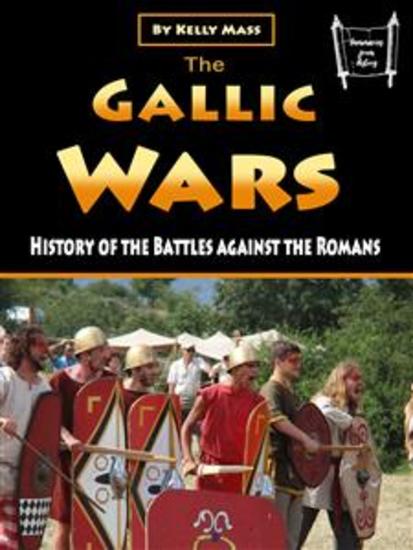
The Gallic Wars - History of the Battles against the Romans - cover

The Gallic Wars - History of the Battles against the Romans

Kelly Mass

Maison d'édition: Efalon Acies

  • 0
  • 0
  • 0

Synopsis

The Gallic Wars took place between 58 and 50 BC, and they were led by Julius Caesar, a Roman general, against the Gallic people residing in present-day France, Belgium, and parts of Germany. The Gallic, Germanic, and Britonic tribes valiantly defended their homelands against the aggressive Roman expansion.

The critical Battle of Alesia in 52 BC proved decisive, resulting in a resounding victory for the Romans and the eventual annexation of Gaul into the Roman Republic. Although the Gallic force was formidable, internal divisions among the Gallic tribes played to Caesar's advantage. Gaulish chieftain Vercingetorix's attempt to unite the tribes came too late to thwart Caesar's advancements. While Caesar framed the invasion as a defensive measure, historians generally agree that his primary motivations were to advance his political career and settle his debts.

Nevertheless, Rome valued Gaul as a strategic military stronghold, considering that native tribes in the region had previously attacked the Roman Republic. The conquest of Gaul allowed Rome to secure the natural frontier of the Rhine River.

The Gallic campaign began with the Wars of the Helvetii in 58 BC, revolving around the Helvetii migration, which drew in surrounding tribes and the Germanic Suebi. By 57 BC, Caesar had set his sights on capturing all of Gaul. He faced fierce battles in the east, particularly with the formidable Nervii. In 56 BC, Caesar achieved naval victories over the Veneti, expanding Roman control over most of northwest Gaul. In 55 BC, Caesar endeavored to improve his public image by leading pioneering expeditions across the Rhine and the English Channel, making him the first Roman to do so. Although his initial British expedition was modest, his return in the following year with a proper army led to significant conquests in Britain. Meanwhile, on the continent, Gallic tribes rose against the Romans, leading to embarrassing defeats for Caesar's forces. In response, a harsh war was waged against the Gauls in 53 BC. However, the Gallic coalition mounted a major rebellion in 52 BC, led by Vercingetorix. The Battle of Gergovia proved to be a significant victory for the Gallic armies, but they were ultimately crushed by the Romans' formidable siege fortifications at the Battle of Alesia.
Disponible depuis: 16/01/2024.

D'autres livres qui pourraient vous intéresser

  • Richard the Lionheart - The True Story of the Life & Time of Richard I - King of England - cover

    Richard the Lionheart - The True...

    Liam Dale

    • 0
    • 0
    • 0
    There have been both remarkable and notorious Kings and Queens in English history, with public opinion often divided on their legacies. King Richard I, famously known as the Lionheart, presents a unique challenge in this regard, as he oscillated between the roles of a valiant, chivalrous crusader and a ruthless despot. 
     
    Richard the Lionheart's historical significance extends beyond England, given his extensive global travels, especially through regions still central to contemporary global conflicts. This history journal embarks on a quest to unravel the enigmatic man behind the legend and shed light on the multifaceted Lionheart. 
     
    Discover: 
    - Medieval era and the murder of Thomas A. Becket 
    - Richard's birth, his parents, and life at the French court 
    - His participation in the First, Second, and Third Crusades 
    - Coronation, rapid departure for the Holy Land 
    - Battles with Saladin and his eventual return to England 
    - Capture, ransom, release, and unexpected demise 
     
    Explore the complex legacy of King Richard the Lionheart, a monarch who defies easy categorisation.
    Voir livre
  • End of World War II The: The History of the Battles that Ended the Fighting in Europe and the Pacific - cover

    End of World War II The: The...

    Editors Charles River

    • 0
    • 0
    • 0
    After the successful amphibious invasion on D-Day in June 1944, the Allies began racing east toward Germany and liberating France along the way. The Allies had landed along a 50 mile stretch of French coast, and despite suffering 8,000 casualties on D-Day, over 100,000 still began the march across the western portion of the continent. By the end of August 1944, the German Army in France was shattered, with 200,000 killed or wounded and a further 200,000 captured. However, Adolf Hitler reacted to the news of invasion with glee, figuring it would give the Germans a chance to destroy the Allied armies that had water to their backs. As he put it, “The news couldn’t be better. We have them where we can destroy them.” While that sounds delusional in retrospect, it was Hitler’s belief that by splitting the Allied march across Europe in their drive toward Germany, he could cause the collapse of the enemy armies and cut off their supply lines.  
    Near the end of 1944, as Allied forces were pushing across the Pacific and edging ever closer to Japan, plans were drawn up to invade the Ryuku islands, the most prominent of them being Okinawa. Military planners anticipated that an amphibious campaign would last a week, but instead of facing 60,000 Japanese defenders as estimated, there were closer to 120,000 on the island at the beginning of the campaign in April 1945. The Battle of Okinawa was the largest amphibious operation in the Pacific theater, and it would last nearly 3 months and wind up being the fiercest in the Pacific theater during the war, with nearly 60,000 American casualties and over 100,000 Japanese soldiers killed. In addition, the battle resulted in an estimated 40,000-150,000 Japanese civilian casualties.
    Voir livre
  • Positive Affirmations for Black Women - Raise Your Vibration with Uplifting Words for Black Women Overcome Self-Sabotage Attract Success and Wealth in Your Life Guided Meditations Included - cover

    Positive Affirmations for Black...

    Rose J. McBride

    • 0
    • 0
    • 0
    Do you want to achieve lifelong happiness? 
    Are you struggling with a lack of self-confidence? 
    If so, Rose J. McBride’s book is the perfect fit for you. 
    These daily sayings can help you overcome self-doubt, self-sabotage and fear. Inner peace is something that everyone should have, and it's something that you can work to achieve. Using positive affirmations is a great way to start a journey towards healing your past hurts and embracing who you are. 
    Take a couple of minutes each day to read a couple of affirmations. This routine will change your life. The affirmations will help you eliminate fears, increase your self-love, and build your self-confidence. Affirmations can help you face the world with a belief in yourself and your abilities. Use the affirmations to help you change your mindset and negative self-talk and focus on a more positive outlook of your life. 
    The journey to becoming a more confident, powerful, and unstoppable woman will start the moment you pick up this book.  
    The benefits you will receive:Increase motivationFind inner peace from a chaotic worldImprove self-esteemOvercome all your insecuritiesFind successReplace limiting beliefs with empowering onesFind unconditional loveStart living your best lifeAnd so much more 
      
    If you want to change your life for the better, starting with only 5 minutes of reflection each day, then scroll up and click “Buy Now”!
    Voir livre
  • Bertolt Brecht: A short biography - 5 Minutes: Short on time – long on info! - cover

    Bertolt Brecht: A short...

    5 Minutes, 5 Minute Biographies,...

    • 0
    • 0
    • 0
    Bertolt Brecht, communist, theater genius, world citizen: Life and work in a short biography! Everything you need to know, brief and concise. Infotainment, education and entertainment at its best!
    Voir livre
  • Democracy - A Guided Tour - cover

    Democracy - A Guided Tour

    Jason Brennan

    • 0
    • 0
    • 0
    In this short, accessible book, leading democratic theorist Jason Brennan guides listeners through the evolution of the concept of democracy and actual democratic practice over time to help them understand the foundations of this longstanding and yet newly fragile political system. 


    In his wide-ranging tour of the concept, Brennan will examine what democracy meant to the Greeks who first developed the concept before examining how it changed throughout European and later Western history. This will open up rich and perplexing questions. Over time, democracy shifted from being a fringe idea to the gold standard of political institutions: how did this change occur? How did the question of who counts as part of the ruling "people" change over time? As monarchies were replaced with democracies, what did theorists think the promises and perils of republican democracy were? How did actual democratic practice change the debates? What have we learned about how democracy functions—and in some cases, doesn't function—and what does this mean for future philosophical or empirical work? Brennan provides a curated, guided tour of the most important arguments for and against democracy, looking through the core values of stability, virtue, wisdom, freedom, and equality. The goal is to help listeners understand what is really at stake in democracy and its alternatives.
    Voir livre
  • Utopia - cover

    Utopia

    Thomas Moore

    • 0
    • 0
    • 0
    What would a perfect society really look like?
    
    Written in 1516, Utopia by Thomas More is one of the most influential works of political philosophy ever published. Through a vivid fictional island society, More explores ideas of justice, equality, governance, education, and the relationship between individuals and the state.
    
    This timeless classic challenges readers to question accepted social norms and reflect on the strengths and flaws of their own societies. Blending satire with serious philosophical inquiry, Utopia remains remarkably relevant in discussions of politics, economics, and social reform.
    
    Inside this eBook, you'll explore:
    
    A detailed vision of an idealized society and its laws
    
    Early critiques of wealth inequality and corruption
    
    Thought-provoking ideas on property, work, religion, and government
    
    A foundational text that shaped modern political and social theory
    
    Studied in universities worldwide and debated for centuries, Utopia continues to inspire thinkers, reformers, and readers interested in the future of society.
    
    Whether you are a student of philosophy, a lover of classic literature, or a reader curious about political ideals, this essential work belongs in your collection.
    
    Discover the book that gave the world the word "utopia." Buy now and explore one of the most important classics in political thought.
    Voir livre