Begleiten Sie uns auf eine literarische Weltreise!
Buch zum Bücherregal hinzufügen
Grey
Einen neuen Kommentar schreiben Default profile 50px
Grey
Jetzt das ganze Buch im Abo oder die ersten Seiten gratis lesen!
All characters reduced
The Book of the Dead - History of the Ancient Egyptian Mortuary Texts Collection - cover

The Book of the Dead - History of the Ancient Egyptian Mortuary Texts Collection

Kelly Mass

Verlag: Efalon Acies

  • 0
  • 0
  • 0

Beschreibung

The ancient Egyptian mortuary text known as the Book of the Dead had its heyday from the onset of the New Kingdom (around 1550 BCE) until approximately 50 BCE. Crafted on papyrus, this collection of magical spells, coined as the "Book," aimed to guide the departed through the Duat, or underworld, into the realm beyond. It represented an amalgamation of texts contributed by various priests over nearly 1,000 years.

Stored within the deceased's coffin or burial chamber, the Book of the Dead marked a continuation of funerary literature, succeeding the Pyramid Texts and Coffin Texts, which were inscribed on items rather than papyrus. Some spells within the book dated back to the third millennium BCE, while others emerged during the Third Intermediate Period (11th to 7th centuries BCE). These spells, once inscribed on tomb walls and sarcophagi, eventually found their place in the Book of the Dead.
Verfügbar seit: 12.12.2023.

Weitere Bücher, die Sie mögen werden

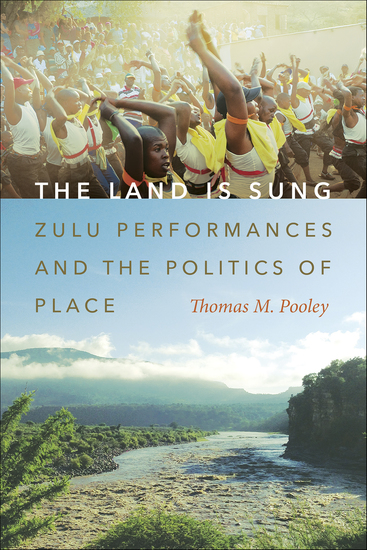
  • The Land Is Sung - Zulu Performances and the Politics of Place - cover

    The Land Is Sung - Zulu...

    Thomas M. Pooley

    • 0
    • 0
    • 0
    What does it mean to belong? In The Land is Sung, musicologist Thomas M. Pooley shows how performances of song, dance, and praise poetry connect Zulu communities to their ancestral homes and genealogies. For those without land tenure in the province of KwaZulu-Nata, performances articulate a sense of place. Migrants express their allegiances through performance and spiritual relationships to land are embodied in rituals that invoke ancestral connection while advancing well-being through intergenerational communication. Engaging with justice and environmental ethics, education and indigenous knowledge systems, musical and linguistic analysis, and the ethics of recording practice, Pooley's analysis draws on genres of music and dance recorded in the midlands and borderlands of South Africa, and in Johannesburg's inner city. His detailed sound writing captures the visceral experiences of performances in everyday life. The book is richly illustrated and there is a companion website featuring both video and audio examples.
    Zum Buch
  • Consider the Turkey - cover

    Consider the Turkey

    Peter Singer

    • 0
    • 0
    • 0
    Why this holiday season is a great time to rethink the traditional turkey feast 


    A turkey is the centerpiece of countless Thanksgiving and Christmas dinners. Yet most of us know almost nothing about today's specially bred, commercially produced birds. In this brief book, bestselling author Peter Singer tells their story—and, unfortunately, it's not a happy one. Along the way, he also offers a brief history of the turkey and its consumption, ridicules the annual US presidential "pardon" of a Thanksgiving turkey, and introduces us to "a tremendously handsome, outgoing, and intelligent turkey" named Cornelius. Above all, Singer explains how we can improve our holiday tables—for turkeys, people, and the planet—by liberating ourselves from the traditional turkey feast. In its place, he encourages us to consider trying a vegetarian alternative—or just serving the side dishes that many people already enjoy far more than turkey. Consider the Turkey will make you reconsider what you serve for your next holiday meal—or even tomorrow's dinner.
    Zum Buch
  • Capitalism Socialism and Democracy - cover

    Capitalism Socialism and Democracy

    Joseph A. Schumpeter

    • 0
    • 0
    • 0
    "Capitalism, Socialism, and Democracy," authored by Joseph A. Schumpeter and first published in 1942, stands as a cornerstone in the study of economics and political science. In this profound and ambitious work, Schumpeter delves into the intricate mechanisms that drive capitalist economies and the transformative forces that shape them. Central to his analysis is the concept of "creative destruction," a process through which old industries and economic structures are continuously dismantled and replaced by innovative enterprises and technologies. This relentless cycle of innovation, while fostering economic growth and progress, also brings about significant disruption and dislocation, posing challenges to established businesses and labor markets.Schumpeter's exploration of capitalism is multifaceted. He acknowledges the system's remarkable capacity for innovation and wealth creation but also highlights its inherent vulnerabilities. These include tendencies toward monopolistic practices, social inequality, and cyclical crises. Schumpeter provocatively argues that capitalism, despite its successes, harbors the seeds of its own decay. As capitalism progresses, he suggests, it creates conditions—such as the rise of large corporations and bureaucratic structures—that may eventually undermine its dynamic and entrepreneurial spirit.Turning his attention to socialism, Schumpeter offers a nuanced examination of its potential as an alternative to capitalism. He considers socialism's promise to address the inequities and inefficiencies of capitalism, particularly through the redistribution of wealth and more centralized economic planning. However, he also recognizes significant obstacles, such as the potential stifling of individual initiative and the complexities of managing a planned economy on a large scale. Schumpeter's analysis of socialism is neither purely optimistic nor wholly dismissive; instead, it reflects a balanced inquiry into its feasibility and implications.A key component of Schumpeter's work is his discussion on democracy and its interaction with economic systems. He questions whether democratic institutions can withstand the pressures and demands of a rapidly evolving economic landscape. Schumpeter introduces the idea of "democratic elitism," suggesting that modern democracies are managed by a select group of individuals rather than by the populace at large. This perspective leads to critical reflections on the sustainability of democratic governance in the face of economic upheaval and social change.Overall, "Capitalism, Socialism, and Democracy" is a thought-provoking and comprehensive treatise that continues to resonate with scholars and policymakers. Schumpeter's insights into the dynamics of economic change, the potential trajectories of capitalist and socialist systems, and the challenges facing democratic governance remain relevant in understanding the complexities of contemporary economic and political life.
    Zum Buch
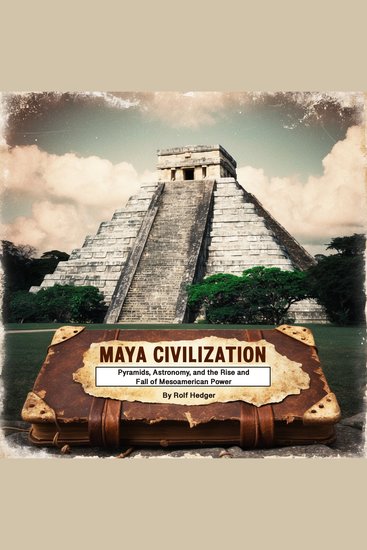
  • Maya Civilization - Pyramids Astronomy and the Rise and Fall of Mesoamerican Power - cover

    Maya Civilization - Pyramids...

    Rolf Hedger

    • 0
    • 0
    • 0
    The Maya civilization emerged from the fertile lands of Mesoamerica, where early agricultural societies gradually developed into one of the most advanced cultures of the ancient world. Long before the rise of monumental cities and towering pyramids, the ancestors of the Maya lived in small villages, relying on farming, hunting, and fishing for sustenance. Corn, or maize, became the cornerstone of their diet and played a central role in their mythology, economy, and daily life. Over time, these early settlements expanded, evolving into complex societies with trade networks, religious practices, and political hierarchies. 
    The roots of Maya civilization can be traced back to the Preclassic period, around 2000 BCE. During this time, small communities scattered across present-day southern Mexico, Guatemala, Belize, Honduras, and El Salvador began cultivating staple crops such as maize, beans, squash, and chili peppers. As agricultural techniques improved, populations grew, leading to the formation of larger settlements. Villages transitioned into regional centers, where early forms of leadership and governance emerged. These developments set the stage for the sophisticated city-states that would later define the Maya world. 
    The Maya were not isolated in their cultural development. They shared Mesoamerica with other influential civilizations, most notably the Olmecs, who thrived along the Gulf Coast of Mexico. The Olmecs, often considered the “mother culture” of Mesoamerica, left a lasting impact on the Maya through their artistic styles, religious beliefs, and ceremonial architecture. The colossal stone heads of the Olmecs, their early writing systems, and their concept of a sacred ballgame were all absorbed and adapted by the Maya. This exchange of ideas helped shape the foundations of Maya civilization, leading to the rise of the first great Maya cities.
    Zum Buch
  • Embodied Self Awakening - Somatic Practices for Trauma Healing and Spiritual Evolution - cover

    Embodied Self Awakening -...

    Nityda Gessel

    • 0
    • 0
    • 0
    An offering to be with, and to turn toward, the feelings from which we instinctively recoil. 


    We have learned how to suppress our pain and deny its presence, but when we fight against our internal turmoil, glimmers of peace are short-lived. Rejecting our suffering is not a sustainable solution because trauma is held in the body. In this book, Nityda Gessel invites listeners on a journey toward lasting freedom, with insights and experiential practices that marry the wisdom of Buddhist psychology, yogic teachings, and Indigenous understanding with somatic psychotherapy and neuroscience. 


    When we heal, our actions and attitudes are not hijacked by our nervous systems as easily. We begin to feel more comfortable in our bodies; more at peace, awake, and free. With Gessel's invitation, listeners will learn to look out into the world, and see more than their own trauma reflected back.
    Zum Buch
  • Terra Viva - My Life in a Biodiversity of Movements - cover

    Terra Viva - My Life in a...

    Vandana Shiva

    • 0
    • 0
    • 0
    Vandana Shiva has been described in many ways: the “Gandhi of Grain,” “a rock star” in the battle against GMOs, and “the most powerful voice” for people of the developing world. For over four decades, she has vociferously advocated for diversity, indigenous knowledge, localization, and real democracy; she has been at the forefront of seed saving, food sovereignty, and connecting the dots between the destruction of nature, the polarization of societies, and indiscriminate corporate greed. In Terra Viva, Dr. Shiva shares her most memorable campaigns, alongside some of the world’s most celebrated activists and environmentalists, all working toward a livable planet and healthier democracies. For the very first time, she also recounts the stories of her childhood in post-partition India?the influence of the Himalayan forests she roamed; her parents, who saw no difference in the education of boys and girls at a time when this was not the norm; and the Chipko movement, whose women were “the real custodians of biodiversity-related knowledge.” Throughout, Shiva’s pursuit of a unique intellectual path marrying quantum physics with science, technology, and environmental policy will captivate listeners. Terra Viva is a celebration of a remarkable life and a clear-eyed assessment of the challenges we face moving forward?including those revealed by the COVID crisis, the privatization of biotechnology, and the commodification of our biological and natural resources.
    Zum Buch