¡Acompáñanos a viajar por el mundo de los libros!
Añadir este libro a la estantería
Grey
Escribe un nuevo comentario Default profile 50px
Grey
Suscríbete para leer el libro completo o lee las primeras páginas gratis.
All characters reduced
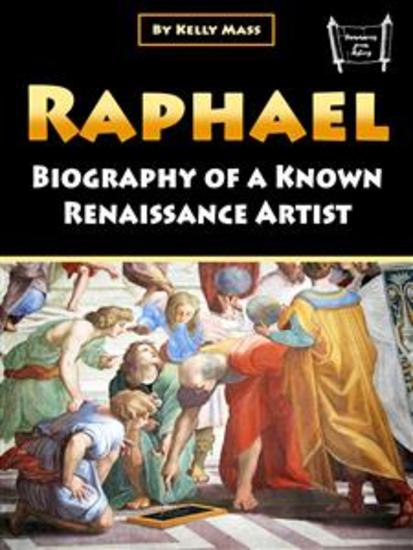
Raphael - Biography of a Known Renaissance Artist - cover

Raphael - Biography of a Known Renaissance Artist

Kelly Mass

Editorial: Efalon Acies

  • 0
  • 0
  • 0

Sinopsis

Raffaello Sanzio da Urbino, an illustrious Italian painter and architect of the High Renaissance, stands among the distinguished triumvirate of great masters from that period, alongside Michelangelo and Leonardo da Vinci. His artistic legacy is marked by paintings renowned for their lucid forms, harmonious compositions, and the visual embodiment of the Neoplatonic ideal of human grandeur.

Despite his untimely demise at the age of 37, Raphael's prolific artistic journey unfolded through distinct phases and styles, as meticulously chronicled by Giorgio Vasari. His early years in Umbria set the stage, followed by a transformative four-year stint (1504–1508) in Florence, absorbing the city's rich artistic traditions. The final chapter unfolded in Rome, spanning twelve intense and triumphant years. During this period, Raphael served two popes and their inner circles, leaving an indelible mark on the Vatican Palace. Notably, the frescoed Raphael Rooms, a monumental achievement, showcased his artistic prowess. The iconic "School of Athens" in the Vatican Stanza della Segnatura stands as his magnum opus, capturing the essence of his genius.

In the aftermath of his death, Raphael's influence waned momentarily as Michelangelo's prominence soared. However, the 18th and 19th centuries witnessed a resurgence of appreciation for Raphael's serene and harmonious attributes. His enduring impact extended beyond Rome, particularly through collaborative printmaking in his workshop, albeit with a notable decline in quality compared to his personal endeavors.

Posthumously, Raphael's legacy faced shifting tides. While Michelangelo's sway held sway for a time, the 18th and 19th centuries brought about a renewed recognition of Raphael's calm and harmonious qualities as exemplars in the realm of art. Neoclassical painting, shaped significantly by Raphael's influence, found its roots in the admiration espoused by art historian Johann Joachim Winckelmann. However, it's worth noting that Raphael's approaches met dissenting voices, notably from groups like the Pre-Raphaelite Brotherhood, who distinctly repudiated his methods while navigating the evolving landscape of artistic appreciation.
Disponible desde: 13/01/2024.

Otros libros que te pueden interesar

  • If the Allies Had Fallen - The Consequences of Losing D-Day - cover

    If the Allies Had Fallen - The...

    Marcus Draysun

    • 0
    • 0
    • 0
    The success of D-Day was never inevitable. The invasion of Normandy was the most ambitious military operation of the war, requiring precise coordination, secrecy, and an extraordinary amount of luck. The Allies knew that failure would not just be a setback—it could mean the prolonged survival of Nazi Germany and a vastly different world order. Every decision leading up to June 6, 1944, carried immense weight, as the fate of millions hung in the balance. 
    For months, Allied planners debated the best approach for opening a Western Front. The Soviets, engaged in brutal combat with German forces on the Eastern Front, pressured Britain and the United States to act quickly. Churchill, haunted by the disastrous Gallipoli campaign of World War I, feared the consequences of a premature landing. General Dwight D. Eisenhower, the Supreme Allied Commander, had to make the ultimate call: when and where to launch the largest amphibious invasion in history. 
    The chosen location—Normandy—was a calculated risk. Pas de Calais, the closest point between Britain and France, seemed like the most obvious target, and the Germans heavily fortified it. By contrast, Normandy’s beaches offered a less expected but still formidable challenge. Hitler’s Atlantic Wall, a vast network of bunkers, mines, and obstacles, was designed to repel any invasion. The Germans had tens of thousands of troops stationed along the coast, and if they had guessed the true landing site, they could have crushed the invasion before it gained a foothold.
    Ver libro
  • You Can Heal - How to Heal From an Unhealthy Relationship and Learn to Love Yourself - cover

    You Can Heal - How to Heal From...

    Shena Major

    • 0
    • 0
    • 0
    This book will help you find the strength you need to leave a relationship that you know is not good for you. It will take you through a healing process throughout each chapter that can give you the courage to walk away from relationships that don't serve you. 
    You will learn truths from the following areas: Recognizing You Need to HelpUnderstanding What Got You HereDoing the Work~Healing Emotional WoundsSelf-CareAcceptanceDiscovering Who You Really AreWhat You Really Want.  
    You will begin to build confidence, value yourself and practice Self-Love after experiencing this book.
    Ver libro
  • Leonardo da Vinci - An Untraceable Life - cover

    Leonardo da Vinci - An...

    Stephen J. Campbell

    • 0
    • 0
    • 0
    Leonardo da Vinci (1452–1519) never signed a painting, and none of his supposed self-portraits can be securely ascribed to his hand. He revealed next to nothing about his life in his extensive writings, yet countless pages have been written about him that assign him an identity: genius, entrepreneur, celebrity artist, outsider. Addressing the ethical stakes involved in studying past lives, Stephen J. Campbell shows how this invented Leonardo has invited speculation from figures ranging from art dealers and curators to scholars, scientists, and biographers, many of whom have filled in the gaps of what can be known of Leonardo's life with claims to decode secrets, reveal mysteries of a vanished past, or discover lost masterpieces of spectacular value. 


    In this original and provocative book, Campbell examines the strangeness of Leonardo's words and works, and the distinctive premodern world of artisans and thinkers from which he emerged. By investigating the politics and cultural tensions of the era as well as the most recent scholarship on Leonardo's contemporaries, workshop, and writings, Campbell places Leonardo back into the milieu that shaped him and was shaped by him. He shows that it is in the gaps and contradictions of what we know of Leonardo's life that a less familiar and far more historically significant figure appears.
    Ver libro
  • Mortimer and the Witches - A History of Nineteenth-Century Fortune Tellers - cover

    Mortimer and the Witches - A...

    Marie Carter

    • 0
    • 0
    • 0
    Under the pseudonym Q. K. Philander Doesticks, P. B., humor writer Mortimer Thomson went undercover to investigate and report on the fortune tellers of New York City's tenements and slums. When his articles were published in 1858, they catalyzed a series of arrests that scandalized and delighted the public. In Mortimer and the Witches, author Marie Carter examines the lives of these marginalized fortune tellers while detailing Mortimer Thomson's peculiar and complicated biography. 


    Nineteenth-century fortune tellers offered their clients answers to all questions in astrology, love, and law matters. Yet Doesticks saw them as the worst of the worst. His investigative reporting aimed to stop unsuspecting young women from seeking the corrupt soothsaying advice of these so-called clairvoyants and to expose the absurd predictions of these "witches." 


    Carter views these stories of working-class, immigrant women with more depth than Doesticks's mocking articles. She presents them as three-dimensional figures rather than the caricatures. 


    Mortimer and the Witches offers new insight into the neglected histories of working-class fortune tellers and the creative ways that they tried to make a living.
    Ver libro
  • Hanuman The Servitor Of Ram - The Teachings Of Neem Karoli Baba - cover

    Hanuman The Servitor Of Ram -...

    Sripad Jagannatha Dasa

    • 0
    • 0
    • 0
    "Sripad Jagannatha Dasa guides us into the sacred heart space of this life-changing hymn as only a dedicated lifelong Ram bhakta may. A self-realized yogi - a wonderful trip!." The Yoga Journal 
     
    "I bow to the Hanuman who is swifter than the mind and wind. The sacred one who has controlled his senses, the one who is the epitome of learning and wisdom. Salutations to the son of the God of Air and chief of the Vanaras, I pray always to Lord Hanuman." 
     
    The Hanuman Chalisa is a Vedic devotional hymn (stotra) in praise of Hanuman authored by the poet sage Tulsi Das. The word "ch?l?s?" means the number forty in Sanskrit, as the Hanuman Chalisa has forty verses. Lord Hanuman is a great devotee of Sri Ram and one of the central characters in the epic, Ramayan. Hanuman is also an incarnation of Shiva. The qualities of Hanuman - his strength, courage, wisdom, celibacy, devotion to Lord Ram, and the many names by which he is known are all in the Hanuman Chalisa. Devotional recitation of this sacred prayer is done by millions every day. 
     
    Hanumanji is the greatest devotee of Sri Ram and an incarnation of the mighty Lord Shiva. He is therefore the epitome of ultimate devotion manifested with its full glory unchallenged in all times and places. By the power of his devotion to Sita Ram, he easily achieved supreme status as the perfect devotee and servitor. 
     
    Lord Hanuman is the eternal link between all devotees and Ram whom he serves, inspires, and protects. By honoring Hanuman one is blessed with all kinds of siddhis including power, valor, prosperity, and devotion. 
     
    Reciting or hearing the Hanuman Chalisa infuses one with unlimited energy and prana. This sacred mantra also increases a person's resilience and they emerge victorious in every challenging situation.
    Ver libro
  • The Social Construction of Reality - How Our Perceptions Shape Our World - cover

    The Social Construction of...

    Fred Grandsen

    • 0
    • 0
    • 0
    The concept of social construction challenges the idea that reality exists independently of human perception. Instead, it argues that much of what people take for granted as "real" is actually the result of social interactions, shared meanings, and cultural influences. This perspective does not deny the existence of a material world but emphasizes that human understanding of this world is shaped by society. From values and norms to institutions and identities, social construction theory suggests that reality is not simply discovered but created through collective human agreement. 
    One of the foundational aspects of social construction is the distinction between objective reality and socially constructed reality. Objective reality refers to things that exist independently of human beliefs, such as gravity or biological processes. In contrast, socially constructed reality consists of meanings, categories, and interpretations that humans assign to objects, actions, and relationships. For example, money has no intrinsic value beyond the materials it is made from; its worth comes from a collective belief in its function as a medium of exchange. Similarly, concepts like race, gender, and even time are shaped by cultural and historical contexts rather than existing as fixed, natural categories.
    Ver libro