Rejoignez-nous pour un voyage dans le monde des livres!
Ajouter ce livre à l'électronique
Grey
Ecrivez un nouveau commentaire Default profile 50px
Grey
Abonnez-vous pour lire le livre complet ou lisez les premières pages gratuitement!
All characters reduced
Cold War - History of the Ideological and Geopolitical Tension between the United States and the Soviet Union - cover

Cold War - History of the Ideological and Geopolitical Tension between the United States and the Soviet Union

Kelly Mass

Maison d'édition: Efalon Acies

  • 0
  • 0
  • 0

Synopsis

Between 1947 and 1991, the United States and the Soviet Union engaged in an escalating geopolitical confrontation known as the Cold War. Historians differ on the exact start and end dates of this period, with some pointing to the Truman Doctrine in 1947 and the dissolution of the Soviet Union in 1991. Throughout this era, there was no direct large-scale warfare between the two superpowers, but they sponsored significant regional conflicts, often referred to as proxy wars, which earned the title of a "cold war." The rivalry began after their temporary alliance and victory over Nazi Germany in 1945, as both countries sought global dominance based on their respective ideologies and geopolitical interests. While nuclear weapons and conventional military forces played a role in this struggle for supremacy, other methods, such as psychological warfare, propaganda, espionage, extensive embargoes, and competition in areas like sports and the Space Race, were also employed.

The Western Bloc, led by the United States and other First World nations, was generally characterized by liberal democratic principles. However, they were often allied with authoritarian regimes, many of which were former colonies of Western powers. On the other hand, the Eastern Bloc, dominated by the Soviet Union and its Communist Party, had a significant influence on the world during and after World War II. Russia supported communist parties and revolutions worldwide, while the United States backed right-wing regimes and movements. The Cold War's battleground extended to nearly every colonial state as they gained independence between 1945 and 1960.
Disponible depuis: 16/01/2024.

D'autres livres qui pourraient vous intéresser

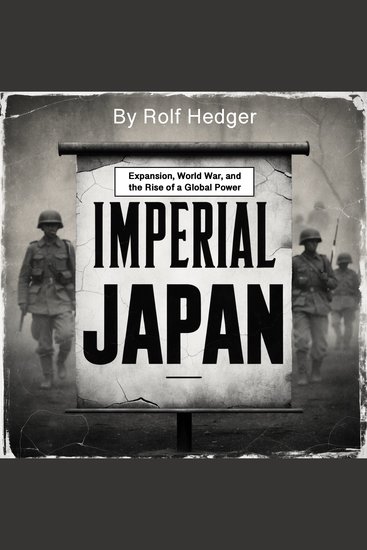
  • Imperial Japan - Expansion World War and the Rise of a Global Power - cover

    Imperial Japan - Expansion World...

    Rolf Hedger

    • 0
    • 0
    • 0
    The rise of Imperial Japan is a remarkable story of transformation and ambition. It was a journey from isolation to global power, marked by rapid modernization, industrialization, and an expanding empire. At the start of the 19th century, Japan was still a feudal society, deeply rooted in its traditional ways, with the Tokugawa shogunate governing the country in relative peace for over two centuries. However, Japan’s world would change forever when the United States, under Commodore Matthew Perry, forced the country to open its ports in 1854 after a period of strict isolation. 
    This marked the beginning of the Meiji Restoration in 1868, a pivotal event that reshaped Japan’s destiny. The Meiji Restoration was a time of intense reform, where Japan sought to modernize in order to survive and compete with the Western powers. The young Emperor Meiji played a crucial role in transforming Japan from a feudal society into a centralized, modern state. The Japanese government adopted Western methods of governance, education, and technology, while also developing a new sense of national pride and unity. The feudal system was dismantled, and Japan was rapidly industrialized, building a powerful military and a burgeoning economy. 
    The Meiji government’s aggressive modernization policies allowed Japan to catch up with the West in terms of technological and military advancements. Railroads, factories, and telegraphs quickly spread throughout the country. The education system was restructured, producing a new generation of skilled workers and intellectuals who were eager to contribute to Japan’s growing power. By the late 19th century, Japan had established a modern, strong economy capable of competing on the world stage.
    Voir livre
  • German Americans in the Civil War: The History and Legacy of German Units Who Fought on Both Sides of the War - cover

    German Americans in the Civil...

    Editors Charles River

    • 0
    • 0
    • 0
    Americans have long been fascinated by the Civil War, marveling at the size of the battles, the leadership of the generals, and the courage of the soldiers. The Civil War was the deadliest conflict in American history, and had the two sides realized it would take four years and inflict over a million casualties, it might not have been fought. Since it did, however, historians and history buffs alike have been studying and analyzing the military and political history of the conflict ever since.  
    	Immigration to what is now the United States began long before the country was independent. That early immigration included tens of thousands of Germans, many of them religious dissidents like the Dunkards, Amish and Mennonites, who settled particularly in Pennsylvania and in Virginia’s Shenandoah Valley. However, the steady migration became a flood, with a half million German immigrants coming between 1840 and 1850, and almost a million more between 1850 and 1860. 
    	The more recent immigrants tended to settle in cities like New York City, Cincinnati, St. Louis, Milwaukee and Chicago. More than 90% of them settled in states that would remain in the Union, and only a relatively small number settled in what became the Confederacy. Still, there were significant populations of German-born immigrants in the Southern cities of Charleston, Richmond, Wheeling and most notably, New Orleans. 
    	In terms of the Civil War, the most important of the German immigrants were the Forty-Eighters, perhaps 5,000 who had been involved in the Europe-wide revolutions of 1848. Their nickname “Forty-Eighters” refers to the year 1848, when revolutions broke out across Europe. The revolutions in the various German states sought to unify Germany into one nation, topple the old aristocratic structure and turn society toward democracy and socialism.
    Voir livre
  • Soul of a Dog - Mirror of a Man - Building Trust Overcoming Fear and Becoming the Leader Your Dog Needs - cover

    Soul of a Dog - Mirror of a Man...

    Andreas Wojtaschek

    • 0
    • 0
    • 0
    A dog is more than a companion—he is a mirror, reflecting our strengths, our fears, and the person we have the potential to become. 
    Soul of a Dog – Mirror of a Man invites you on an extraordinary, deeply personal journey that will transform not just your relationship with your dog, but your entire life. 
    This book is not your average dog-training manual. It is an intimate exploration of self-discovery through the remarkable bond between humans and dogs. Every frustration in dog training, every test of patience, is actually an invitation to look deeper into yourself, to confront your own fears, doubts, and limitations—and to grow beyond them. 
    Soul of a Dog – Mirror of a Man reveals how true leadership has nothing to do with dominance or power over your dog, but everything to do with inner clarity, emotional honesty, and authentic trust. By embracing these insights, you’ll find yourself leading a more fulfilling, self-aware, and genuinely joyful life. 
    Inside this transformative book, you will discover:Dogs as Mirrors of Human Nature: Understand your dog's behavior through understanding yourself first.Overcoming Fear and Personal Growth: Face challenges with your dog, turning them into opportunities for courage and resilience.Building an Unbreakable Bond: Foster trust, affection, and cooperation through clear, empathetic communication.Trust and Mutual Understanding: Create leadership based on respect, mutual understanding, and meaningful routines.Transformation Through Shared Growth: Experience how your dog’s honest, mindful nature can guide your own journey to unconditional love and happiness.
    Voir livre
  • Blank Canvas - The Amazing Story of a Woman Who Awoke from a Coma to a Life She Couldn’t Remember - cover

    Blank Canvas - The Amazing Story...

    Marcy Gregg

    • 0
    • 0
    • 0
    When Marcy Gregg awoke from a coma, 13 years had vanished from her memory.She was 30 years old; she thought she was still 17. She didn’t recognize the man who introduced himself as her husband. She stared at pictures of the three children they said were hers, trying desperately to remember them, but her mind was blank.Terrified and confused, Marcy did the only thing she could think of: she faked it. She told the doctors she was starting to remember and bluffed her way through visits from friends and family. Against all odds, it worked: she was released to a home, family, and life she should have known intimately―but seemed to be a stranger’s. How was she going to pull off the biggest acting challenge imaginable―and would her memories ever return?Ghost Boy meets What Alice Forgot in this amazing true story of a woman who lost herself and tried to fight her way back on her own―but who found unexpected beauty in hope, faith, and second chances.
    Voir livre
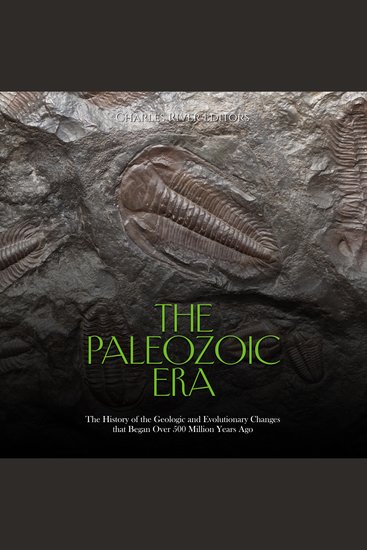
  • Paleozoic Era The: The History of the Geologic and Evolutionary Changes that Began Over 500 Million Years Ago - cover

    Paleozoic Era The: The History...

    Editors Charles River

    • 0
    • 0
    • 0
    The current view of science is that Earth is around 4.6 billion years old, and the first 4 billion years of its development are known as the Precambrian period. For the first billion years or so, there was no life in Earth. Then the first single-celled life-forms, early bacteria and algae, began to emerge. It’s unclear where they came from or even if they originated on this planet at all, but this gradual development continued until around four billion years ago when suddenly (in geological terms) more complex forms of life began to emerge.  
    	Scientists call this time of an explosion of new forms of life the Paleozoic Era, and it stretched from around 541 to 250 million years ago. In the oceans and then on land, new creatures and plants began to appear in bewildering variety, and by the end of this period, life on Earth had diversified into a myriad of complex forms that filled virtually every habitat and niche available in the seas and on the planet’s only continent, Pangea. 
    	The Precambrian Period is divided into three eons: the Hadean, the Archaean, and the Proterozoic. One layer of carbon in rocks that date to the Archaean Eon, found on islands west of Greenland, seems to have fossilized tracks that may have been left by some form of organic life, but scientists simply are not certain. The oldest confirmed remains of life date from the same eon and were found in rocks in Western Australia, which were found to contain fossilized bacteria estimated to be 3.46 billion years old. It seems likely that there were thousands, perhaps even millions of forms of life in these early periods, and most seem to have been microscopic in size and very simple in developmental terms.
    Voir livre
  • BOOM Your Understanding of Change - "Revamp your grasp on change! Dive into engaging audio lessons designed to boost your learning experience dramatically" - cover

    BOOM Your Understanding of...

    Benaiah Hawthorn

    • 0
    • 0
    • 0
    BOOM! Your Understanding of Change 
    ⭐⭐ A Simplified Guide to Revitalizing Economic Insight and Growth ⭐⭐ 
    Are you eager to advance in your career and solidify your knowledge by mastering the complexities of economic transformation? 
    In search of a comprehensive resource that equips you with everything you need to understand and thrive in today's changing economic landscape? 
    Your quest ends here! 
    This guide is your ultimate partner for enhancing your knowledge, applying practical skills, and engaging in interactive exercises. With this resource, you are set on the path to success. 
    Updated to Reflect Current Economic Paradigms. 
    Key features of this enriched guide include: 
    - In-depth insights into the dynamics of economic change 
    - Clarification of essential concepts related to change and growth 
    - Effective strategies for embracing and adapting to transformation 
    Our guide stands out due to its thorough coverage, which is crucial for your success. We don't merely touch on concepts; we explore them with clarity and precision. 
    Organized with a clear structure and accessible language, our guide ensures seamless transitions between topics. Say goodbye to convoluted jargon and welcome content that is clear, precise, and technically sound. 
    So, why delay? Click the BUY NOW button, secure your guide, and embark on your journey to mastering economic understanding and growth! 
    All these insights and more await you in this indispensable guide!
    Voir livre