
Begleiten Sie uns auf eine literarische Weltreise!
Buch zum Bücherregal hinzufügen
Grey
Einen neuen Kommentar schreiben Default profile 50px
Grey
Jetzt das ganze Buch im Abo oder die ersten Seiten gratis lesen!
All characters reduced
Cold War - History of the Ideological and Geopolitical Tension between the United States and the Soviet Union - cover

Cold War - History of the Ideological and Geopolitical Tension between the United States and the Soviet Union

Kelly Mass

Verlag: Efalon Acies

  • 0
  • 0
  • 0

Beschreibung

Between 1947 and 1991, the United States and the Soviet Union engaged in an escalating geopolitical confrontation known as the Cold War. Historians differ on the exact start and end dates of this period, with some pointing to the Truman Doctrine in 1947 and the dissolution of the Soviet Union in 1991. Throughout this era, there was no direct large-scale warfare between the two superpowers, but they sponsored significant regional conflicts, often referred to as proxy wars, which earned the title of a "cold war." The rivalry began after their temporary alliance and victory over Nazi Germany in 1945, as both countries sought global dominance based on their respective ideologies and geopolitical interests. While nuclear weapons and conventional military forces played a role in this struggle for supremacy, other methods, such as psychological warfare, propaganda, espionage, extensive embargoes, and competition in areas like sports and the Space Race, were also employed.

The Western Bloc, led by the United States and other First World nations, was generally characterized by liberal democratic principles. However, they were often allied with authoritarian regimes, many of which were former colonies of Western powers. On the other hand, the Eastern Bloc, dominated by the Soviet Union and its Communist Party, had a significant influence on the world during and after World War II. Russia supported communist parties and revolutions worldwide, while the United States backed right-wing regimes and movements. The Cold War's battleground extended to nearly every colonial state as they gained independence between 1945 and 1960.
Verfügbar seit: 16.01.2024.

Weitere Bücher, die Sie mögen werden

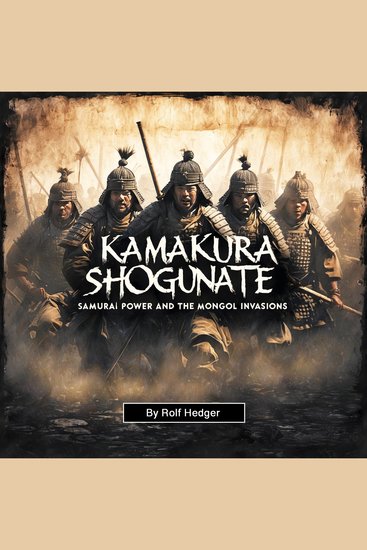
  • Kamakura Shogunate - Samurai Power and the Mongol Invasions - cover

    Kamakura Shogunate - Samurai...

    Rolf Hedger

    • 0
    • 0
    • 0
    The rise of the Kamakura Shogunate marks a pivotal moment in Japanese history, transitioning from the aristocratic Heian period to the feudal system dominated by the samurai. This era began with the victory of Minamoto no Yoritomo, who, after the Genpei War (1180-1185), established a new form of governance centered in Kamakura, a small coastal town far from the imperial capital of Kyoto. 
    The Genpei War was a civil conflict between the Taira and Minamoto clans, which ultimately ended with the defeat of the Taira in the Battle of Dan-no-ura in 1185. Minamoto no Yoritomo, the leader of the Minamoto clan, emerged as the victor, but his triumph was not simply a personal or clan-based success. Yoritomo's victory laid the foundation for a shift in the political landscape of Japan. The Taira had represented the old courtly aristocracy that governed Japan through the imperial system, but the rise of the Minamoto signaled the beginning of samurai dominance and a move toward military rule. 
    In 1192, Yoritomo was granted the title of shogun by the emperor, an act that formalized his military authority. This title, meaning "generalissimo" or "commander of the army," was traditionally given to military leaders in times of war but had never been used as the primary governing title before. This marked the official beginning of the Kamakura Shogunate, a military dictatorship that would rule Japan for over a century. Though the emperor remained the nominal ruler, Yoritomo’s power was based in Kamakura, far from the imperial court, which shifted the balance of power from the capital to the military elite.
    Zum Buch
  • The Timeline of Intelligent Life on Earth - From Millions of Years Ago To the Present - cover

    The Timeline of Intelligent Life...

    Martin K. Ettington

    • 0
    • 0
    • 0
    I’m fascinated with Ancient History because there are continuous new discoveries which push back the dawn of civilization by thousands of years. In the last couple of decades, the discoveries at Gobekli Tepe in eastern Turkey pushed back man-made structures to the time period of 9,000-11,000 B.C. Thousands of years before the next know civilizations existed. 
    This book includes my research on ancient sites around the world, underground structures, giants, the destruction of civilization about 10,500 B.C., the real Atlantis, and out of place objects which can be millions of years old. 
    Yes-I’m saying intelligent life has existed on Earth that long, and since humanity and even primates don’t exist in those times at all, aliens must have lived on the Earth at that time. 
    There are three parts to this book: 
    Part One - Millions of Years Ago 
    This includes stories of aliens existing on Earth in our history, and many out of place objects made by intelligent beings, and the fossil record which provides supporting evidence that intelligent life did exist at those times. 
    Part Two - The Unknown Civilizations of Man 
    Here we have evidence of structures built by man but way before any accepted records that civilization or man made constructions existed. Some of these things may go back 100,000 years ago. 
    Part Three – Post Ice Age Civilizations 
    This part includes evidence that the Younger Dryas event was actually comets striking the Earth which caused major disasters and probably the destruction of civilizations about 10,500 B.C. 
    My intention is that this timeline will provide a skeleton of mankind and intelligent life’s early history on Earth which can be filled in overtime to become much more detailed and prove the truth of this point of view to skeptics worldwide. 
     
    Zum Buch
  • The Art of Forgiveness - cover

    The Art of Forgiveness

    Rachael Coopes

    • 0
    • 0
    • 0
    A how-to on letting go, and finding peace.  
     
    Are you suffering from anger, bitterness or regret? Or are you simply yearning to live a calmer and more connected life? 
     
    By exploring a range of winning philosophies – from the Stoics to Zen Buddhism – author Rachael Coopes shares how to properly let go and find peace. 
     
    Combining personal stories and advice mixed with solid, expert-based research, anecdotal evidence and case studies, The Art of Forgiveness is a compassionate guide underpinned by sensible philosophies to help you live a calmer, happier life.
    Zum Buch
  • Small Power - How Local Parties Shape Elections - cover

    Small Power - How Local Parties...

    David Doherty, Michael G....

    • 0
    • 0
    • 0
    An insider's look into the largely anonymous volunteers in local party organizations who make decisions in elections with profound implications for American democracy. 


    Although scholars have long recognized that local American parties play an important role in elections, surprisingly little is known about the individuals who lead these typically small, volunteer-based organizations. As David Doherty, Conor M. Dowling, and Michael G. Miller show in Small Power, local party leaders influence the electoral process in myriad ways: They recruit and support candidates, interface with state-wide and federal campaigns, and get out the vote in their communities. Drawing from a survey of over 850 Democratic and Republican local party chairs, a nationally representative sample of voters, and dozens of in-depth interviews, the authors describe how parties are organized, who party chairs are, and how they serve the party. Leveraging novel experiments that illuminate how chairs make choices about which individuals to recruit as candidates—as well as whether those choices reflect voters' preferences—Small Power sheds new light on how seemingly mundane local decisions can shape party goals, influence candidate pipelines, and affect who ends up winning elections.
    Zum Buch
  • Colonization and Decolonization of Africa The: The History and Legacy of European Imperialism across the African Continent - cover

    Colonization and Decolonization...

    Editors Charles River

    • 0
    • 0
    • 0
    The modern history of Africa was, until very recently, written on behalf of the indigenous races by the white man, who had forcefully entered the continent during a particularly hubristic and dynamic phase of European history. In 1884, Prince Otto von Bismark, the German chancellor, brought the plenipotentiaries of all major powers of Europe together, to deal with Africa's colonization in such a manner as to avoid provocation of war. This event—known as the Berlin Conference of 1884-1885—galvanized a phenomenon that came to be known as the Scramble for Africa. The conference established two fundamental rules for European seizure of Africa. The first of these was that no recognition of annexation would granted without evidence of a practical occupation, and the second, that a practical occupation would be deemed unlawful without a formal appeal for protection made on behalf of a territory by its leader, a plea that must be committed to paper in the form of a legal treaty. 
    This began a rush, spearheaded mainly by European commercial interests in the form of Chartered Companies, to penetrate the African interior and woo its leadership with guns, trinkets and alcohol, and having thus obtained their marks or seals upon spurious treaties, begin establishing boundaries of future European African colonies. The ease with which this was achieved was due to the fact that, at that point, traditional African leadership was disunited, and the people had just staggered back from centuries of concussion inflicted by the slave trade. Thus, to usurp authority, to intimidate an already broken society, and to play one leader against the other was a diplomatic task so childishly simple, the matter was wrapped up, for the most part, in less than a decade. 
    This audiobook examines the turbulent history of imperialism across Africa and the consequences it has had.
    Zum Buch
  • Rekindling Affairs: Secrets to Thriving Love - "Transform your love life! Access compelling audio lessons to enhance your relationship and deepen your connections" - cover

    Rekindling Affairs: Secrets to...

    Cassian Merriwether

    • 0
    • 0
    • 0
    Rekindling Affairs: Secrets to Thriving Love 
    ⭐️⭐️ Simplified Guide & Explanations Included ⭐️⭐️ 
    Are you ready to enhance the quality of your relationships and gain deeper insights into love and connection? 
    Do you seek a thorough guide that covers all the essential elements for fostering thriving relationships? 
    Look no further! 
    This guide is your ultimate companion for deepening your understanding, applying your skills, and engaging in meaningful exercises that will transform your approach to love. 
    Key features of this enriched guide include: 
    - Profound insights into building and maintaining healthy relationships 
    - Detailed discussions on the principles of honesty and communication in love 
    - Effective strategies for relationship growth and overcoming challenges 
    Our guide stands out with its comprehensive approach, which is vital for nurturing successful connections. Concepts are explored with depth and clarity, ensuring a thorough understanding. 
    Please note that this guide is an independent resource and is not affiliated with any official relationship organizations. 
    Designed with a clear structure and straightforward language, our guide ensures seamless transitions between topics. Say goodbye to complex jargon and welcome clear, precise, and applicable content. 
    So, why wait? Click the BUY NOW button, secure your guide, and embark on your journey toward thriving relationships! 
    Transform your understanding of relationships through honesty!
    Zum Buch