¡Acompáñanos a viajar por el mundo de los libros!
Añadir este libro a la estantería
Grey
Escribe un nuevo comentario Default profile 50px
Grey
Suscríbete para leer el libro completo o lee las primeras páginas gratis.
All characters reduced
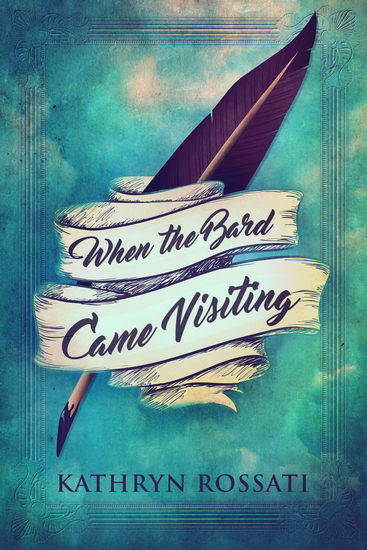
When The Bard Came Visiting - cover

When The Bard Came Visiting

Kathryn Rossati

Editorial: Next Chapter

  • 0
  • 0
  • 0

Sinopsis

A cantankerous old woman is charged with aiding a young girl. A male dryad finds his place in the world. Paralyzed from the neck down, a teenage sculpting prodigy is given a new opportunity to pursue her art again. A Victorian professor journeys across England to lecture on evolution, only to walk into trouble at every turn.
 
In this eclectic mix of stories, spanning historical fiction, magical realism, contemporary, and sci-fi, The Bard instructs only one thing: journey away with the words and see where they take you.
Disponible desde: 08/02/2022.

Otros libros que te pueden interesar

  • The Short Stories of Arthur Conan Doyle - Creator of Sherlock Holmes who wrote many other equally impressive stories - cover

    The Short Stories of Arthur...

    Arthur Conan Doyle

    • 0
    • 0
    • 0
    Arthur Conan Doyle was born in Edinburgh, Scotland on 22nd May 1859.  His childhood was blighted by his father’s heavy drinking which for some years broke up the family. Fortunately, wealthy uncles were willing to support them by paying for education and clothing.  
     
    He was accepted at the University of Edinburgh to study medicine and also began to write short stories the first, ‘The Haunted Grange of Goresthorpe’, was published in Blackwood’s Magazine.  Despite several other stories and some articles in the British Medical Journal his medical studies took priority. 
     
    When these finished he was appointed as Doctor on the Greenland whaler ‘Hope of Peterhead’ in 1880 and then, after graduation, as ship’s surgeon on the SS Mayumba on its voyage to West Africa. 
     
    1882 saw a move to Plymouth and his own independent practice. With few patients he resumed writing and completed his first novel, ‘The Mystery of Cloomber’, although most of his output was short stories based on his experiences at sea.  
     
    He married Louisa Hawkins in 1885. However, two years later he met and fell in love with Jean Elizabeth Leckie, though they remained platonic out of respect for, and loyalty to, his wife. 
     
    His literary career suddenly burst into life in November 1886 with ‘A Study In Scarlet’, the first of the fabulously successful Sherlock Holmes stories.  
     
    With two children to support he now revisited his haphazard commercial arrangements and curtailed everything save for commissions from the Strand Magazine.  
     
    As a sportsman he was remarkably proficient. He was goalkeeper for Portsmouth Association Football Club and played ten first-class cricket matches for the Marylebone Cricket Club as well as captain of the Crowborough Beacon Golf Club in East Sussex.  
     
    In 1891 tired of writing Holmes stories, he began a series of historical novels and even went so far as to apparently kill off Holmes in a lethal brawl with his arch-nemesis Moriarty. 
     
    Despite heavy and sustained criticism he continued to write in support of the Boer War, a fact he thought contributed to his knighthood in 1902.  The following year to great relief and acclaim he brought Sherlock Holmes back from the dead in his first outing for a decade. 
     
    Sadly, his wife Louisa died from TB in 1906 and, a year later, he at last married Jean.  
     
    During the War and for several years after family deaths had left him depressed. In a search for solace and answers he alighted upon spiritualism and, such was his interest, that he wrote several books on the subject. 
     
    On 7th July 1930 Conan Doyle was discovered in the hall of Windlesham Manor, his house in East Sussex, clutching his chest dying of a heart attack.  He was 71. 
    01 - Arthur Conan Doyle - A Short Story Collection - An Introduction 
    02 - The Striped Chest by Arthur Conan Doyle 
    03 - How It Happened by Arthur Conan Doyle 
    04 - B24 by Arthur Conan Doyle 
    05 - The Cabman's Story. The Mystery of a London Growler by Arthur Conan Doyle 
    06 - The Final Problem by Arthur Conan Doyle
    Ver libro
  • A Wireless Message - From their pens to your ears genius in every story - cover

    A Wireless Message - From their...

    Ambrose Bierce

    • 0
    • 0
    • 0
    Ambrose Gwinnett Bierce was born on 24th June 1842 at Horse Cave Creek in Meigs County, Ohio. His parents were poor but they introduced him to literature at an early age, instilling in him a deep appreciation of books, the written word and the elegance of language.  
    Growing up in Koscuisko County, Indiana poverty and religion were defining features of his childhood, and he would later describe his parents as “unwashed savages” and fanatically religious, showing him little affection but always quick to punish. He came to resent religion, and his introduction to literature appears to be their only positive effect. 
    At age 15 Bierce left home to become a printer’s devil, mixing ink and fetching type at The Northern Indian, a small Ohio paper. Falsely accused of theft he returned to his farm and spent time sending out work in the hopes of being published. 
    His Uncle Lucius advised he be sent to the Kentucky Military Institute. A year later he was commissioned as an Officer.  As the Civil War started Bierce enlisted in the 9th Indiana Infantry Regiment.  
    In April 1862 Bierce fought at the Battle of Shiloh, an experience which, though terrifying, became the source of several short stories. Two years later he sustained a serious head wound and was off duty for several months. He was discharged in early 1865.  
    A later expedition to inspect military outposts across the Great Plains took him all the way to San Francisco. He remained there to become involved with publishing and editing and to marry, Mary Ellen on Christmas Day 1871.  They had a child, Day, the following year.  
    In 1872 the family moved to England for 3 years where he wrote for Fun magazine. His son, Leigh, was born, and first book, ‘The Fiend’s Delight’, was published.  
    They returned to San Francisco and to work for a number of papers where he gained admiration for his crime reporting. In 1887 he began a column at the William Randolph Hearst’s San Francisco Examiner.  
    Bierce’s marriage fell apart when he discovered compromising letters to his wife from a secret admirer. The following year, 1889 his son Day committed suicide, depressed by romantic rejection. 
    In 1891 Bierce wrote and published the collection of 26 short stories which included ‘An Occurrence at Owl Creek Bridge’.  Success and further works including poetry followed.  
    Bierce with Hearst’s resources helped uncover a financial plot by a railroad to turn 130 million dollars of loans into a handout. Confronted by the railroad and asked to name his price Bierce answered “my price is $130 million dollars. If, when you are ready to pay, I happen to be out of town, you may hand it over to my friend, the Treasurer of the United States”.  
    He now began his first foray as a fabulist, publishing ‘Fantastic Fables’ in 1899.  But tragedy again struck two years later when his second son Leigh died of pneumonia relating to his alcoholism.  
    He continued to write short stories and poetry and also published ‘The Devil’s Dictionary’.  
    At the age of 71, in 1913 Bierce departed from Washington, D.C., for a tour of the battlefields where he had fought during the civil war. At the city of Chihuahua he wrote his last known communication, a letter to a friend. It’s closing words were “as to me, I leave here tomorrow for an unknown destination,” Ambrose Bierce then vanished without trace.
    Ver libro
  • Hand and Heart - From their pens to your ears genius in every story - cover

    Hand and Heart - From their pens...

    Elizabeth Gaskell

    • 0
    • 0
    • 0
    Elizabeth Stevenson was born in Chelsea in London on 29th September 1810.  
    Both parents embedded their strong Unitarian beliefs into Elizabeth who rebelliously was often reluctant to display these religious convictions.  
    The early death of Elizabeth’s mother saw her sent away to be brought up by her maternal aunt in Knutsford, Cheshire.  
    Her father now remarried but Elizabeth spent most of her childhood in Cheshire away from her father and his new family but was supportive towards her half-siblings.  
    Elizabeth’s aunt encouraged her education and particularly to read and express herself through writing.   
    In 1828, her brother John, who worked in the merchant navy, disappeared on a journey to India. This disastrous loss depressed her father, and she went to his household to nurse him for the next year before he died.  
    In 1832, she fell in love with William Gaskell, a Unitarian minister like her father, and married him.  They settled in Manchester. This booming industrial city had a great impact on Elizabeth who felt the need to speak up for poor workers and their exploitation by large industrial companies. A collection of poems and short stories, ‘Sketches among the Poor’ appeared in 1837, co-authored by her husband.  Her first major work, under a pseudonym, was ‘Mary Barton: A Tale of Manchester Life’ published in 1848. 
    During her career she worked continually with Charles Dickens and published much in his various magazines. With him she published ‘Lizzie Leigh’ in 1850 which dealt with the taboo subject of prostitution.  She was an excellent writer and impressed her many Victorian literary peers. Much of her writing reflects her work as a social critic highlighting the exploitation of the working class and the situation of women in society.  
    On 12th November 1865, Elizabeth Gaskell died in Holybourne, Hampshire, after suffering from a heart attack a month earlier.
    Ver libro
  • Blood - From their pens to your ears genius in every story - cover

    Blood - From their pens to your...

    Hanns Heinz Ewers

    • 0
    • 0
    • 0
    Hanns Heinz Ewers was born on 3rd November 1871 in Düsseldorf, Germany. 
    His first published poem was at 17 on the death, after a reign of only 99 days, of the German Emperor Frederick III. 
    A stint in the German military was cut short after only 44 days because of his myopia.  Writing was to be the way forward for him with a book of satiric verse published in 1901. At the same time he co-founded a literary vaudeville troupe that toured central and eastern Europe before censors and expenses forced its closure.  An inveterate traveller he was in South America when the Great War enveloped Europe and he relocated to New York. 
    From here his story darkens. Although by now a successful and admired author he was arrested in the U S in 1918 as a German Agent on the pretext of his travels and a falsified Swiss passport. Interned, he was released in 1921 and returned to Germany.  He claimed only to be raising money for the German Red Cross. 
    His literary fame is decidedly easier to clarify. His novels beginning with ‘The Sorcerer’s Apprentice’ in 1910 are dark, they bristle with evil intent and are littered with characters who have a dubious moral compass and yet, along with his short stories, are brazen, brilliant feats of literary narrative. 
    He also wrote and published plays, fairy tales, opera librettos, critical essays and lectured for many years on ‘The Religion of Satan’ and was one of the first to write scripts for the cinema, which he considered a legitimate art form. 
    As the Weimar republic began its chaotic death throes Ewers became attracted to the rising Nazi Party.  At first he was warmly received despite disagreeing with its anti-semitism (his most famed literary character had a Jewish mistress) and he was even commissioned by Hitler to write a biography of the Nazi martyr Horst Wessel.  This together with his own homosexuality culminated with his works being banned in 1934 and his assets and property seized.  It took him many years to have the ban lifted.  This association rightfully clouds his personal reputation but has meant his literary contributions are also overlooked and neglected. 
    Hanns Heinz Ewers died of tuberculosis on 12th June 1943 in his Berlin apartment.
    Ver libro
  • Wonder Of Women - Psychological Supernatural Thrillers - Celebrate the true pioneers of female literature - cover

    Wonder Of Women - Psychological...

    Edith Nesbit, Lady Eleanor...

    • 0
    • 0
    • 0
    Let’s be clear. We are all equal under the law.  However, even in these more modern times that is not an absolute and still remains a distant ambition for many.  
     
    In the days when Britain ruled the waves and bestrode the world as its policeman and plunderer in chief it also subjugated half of its own people to second class status.  Women were chattel and property.  There were some exceptions based on wealth and birthright but for the overwhelming majority your lot was to fall in with the rules and do as you were told.  Many did. 
     
    But whilst male society sought to place obstacles in the path to equality, it could not deny their literary talents, which many times they circumvented by using male pseudonyms.  However, the soaring sales of magazines and periodicals during the Victorian Age meant they had voracious appetites for literature, whatever the sex of its gender. 
     
    Dozens of authors appeared to fill the need.  Narratives had new ideas.  Characters were emboldened by societal changes and the female voice taking responsibility. 
     
    The women included here are talents that dazzle.  Put them up against anyone and they rise to the top.  Whether they remain with an avid readership today or faded to obscurity with the passing of the times their quality remains undimmed.   
     
    1 - Women of Wonder - Psychological Supernatural Thriller - An Introduction 
    2 - Man Size In Marble by Edith Nesbit 
    3 - Mrs Raeburn's Waxwork by Lady Eleanor Smith 
    4 - The Devil's Stone by Beatrice Heron-Maxwell 
    5 - Was It An Illusion. A Parson's Story by Amelia Edwards 
    6 - In the Séance Room by Lettice Galbraith 
    7 - The Truth, the Whole Truth and Nothing But the Truth by Rhoda Broughton 
    8 - The Cold Embrace by Mary Elizabeth Braddon 
    9 - Let Loose by Mary Cholmondeley.wav 
    10 - Dionea - Part 1 by Vernon Lee 
    11 - Dionea - Part 2 by Vernon Lee
    Ver libro
  • The Descent - cover

    The Descent

    Mai Redding

    • 0
    • 0
    • 0
    On a late-night flight from New York to Seattle, Jonathan experiences an unsettling series of 
    events as turbulence escalates, throwing the plane into chaos. Amidst growing panic, he spots a 
    mysterious, ragged figure on board, and the descent takes a chilling turn. As the plane levels 
    out, Jonathan uncovers a horrifying truth about himself. 
    Mai Redding, both author and narrator of this chilling tale, weaves a haunting story. With a sharp 
    eye for gothic suspense and psychological horror, she brings stories to life, immersing readers 
    in a world where eerie tales make your spine tingle and the fight for survival is relentless.
    Ver libro