Begleiten Sie uns auf eine literarische Weltreise!
Buch zum Bücherregal hinzufügen
Grey
Einen neuen Kommentar schreiben Default profile 50px
Grey
Jetzt das ganze Buch im Abo oder die ersten Seiten gratis lesen!
All characters reduced
The Awakening and Selected Short Stories (Legend Classics) - cover

The Awakening and Selected Short Stories (Legend Classics)

Kate Chopin

Verlag: Legend Press

  • 0
  • 0
  • 0

Beschreibung

“The bird that would soar above the level plain of tradition and prejudice must have strong wings. It is a sad spectacle to see the weaklings bruised, exhausted, fluttering back to earth.” 
The Awakening follows Edna Pontellier, a resident of coastal Grand Isle of Louisiana, in her late twenties, who has a quintessential set-up for a content housewife. Indeed, her husband makes good money, and her daily routine should gleefully hinge on the two children, but, Edna is neither a self-sacrificing mother, nor a devoted wife. Instead, she is gradually awoken to rebel against this ‘perfect set-up’. Edna finds herself in the middle of two extremes. On one hand, she finds selfless Madame Ratignolle, who is a model wife. On the other, there is dejected Mademoiselle Reisz, who pursues her artistic aspiration in solitude. While taking bold decisions and carving her niche, she explores her sexuality with a womanizer, Alcee and an intimate understanding with a young man, Robert Lebrun. Will this awakening predetermine her ultimate happiness or signpost personal tragedy? Will the duality of the ‘outward existence’ and ‘inward life’ be reconciled for Edna to signify her emancipation? 
This short novel is widely acknowledged to do both, encapsulating the features of fin de siècle realism in its linear narrative, and anticipates literary modernism of the early twentieth century. Edna’s defiance of the American alternative of Victorian ‘Angel in the House’ is reminiscent of such classics as Anna Brontë’s Tenant of the Wildfell Hall. The Awakening also procures modernist works where the heroines look for the self - namely, Mrs Dalloway, Their Eyes Were Watching God and The Bell Jar. The condensed and intense prose style gives the novel a cryptic charm in line with Fitzgerald’s classic, The Great Gatsby. Besides, vivid natural symbolism of water, birds and the moon are the calling card of the novel that enhances its level of ambiguity and multivalence. 
The Legend Classics series:Around the World in Eighty DaysThe Adventures of Huckleberry FinnThe Importance of Being EarnestAlice's Adventures in WonderlandThe MetamorphosisThe Railway ChildrenThe Hound of the BaskervillesFrankensteinWuthering HeightsThree Men in a BoatThe Time MachineLittle WomenAnne of Green GablesThe Jungle BookThe Yellow Wallpaper and Other StoriesDraculaA Study in ScarletLeaves of GrassThe Secret GardenThe War of the WorldsA Christmas CarolStrange Case of Dr Jekyll and Mr HydeHeart of DarknessThe Scarlet LetterThis Side of ParadiseOliver TwistThe Picture of Dorian GrayTreasure IslandThe Turn of the ScrewThe Adventures of Tom SawyerEmmaThe TrialA Selection of Short Stories by Edgar Allan PoeGrimm Fairy TalesThe AwakeningMrs DallowayGulliver’s TravelsThe Castle of OtrantoSilas MarnerHard Times
Verfügbar seit: 30.09.2022.


Weitere Bücher, die Sie mögen werden

  • The Unpleasantness at the Bellona Club - cover

    The Unpleasantness at the...

    Dorothy L. Sayers

    • 0
    • 0
    • 0
    General Fentiman is found dead on the afternoon of November 11 in his armchair at the Bellona Club—just hours after the passing of his wealthy estranged sister. At ninety years old, his physician certifies death by natural causes. The important question, then, is not how he died, but when, as the answer determines the fate of an inheritance worth half a million pounds. If he died after his sister, her fortune stands to go to his grandsons, who are sorely in need of the funds. However, if his sister outlived him—even if only briefly—the money instead goes to his sister's companion, Ann Dorland. Fellow Bellona Club member and amateur sleuth Lord Peter Wimsey has to untangle a series of events to determine the general's precise time of death—and figure out if it was, in fact, a result of natural causes.
    Zum Buch
  • Villette - cover

    Villette

    Charlotte Brontë

    • 1
    • 0
    • 0
    A woman alone in a foreign city. A school filled with secrets. A quiet heart carrying storms no one else can see.
    After losing everything familiar, Lucy Snowe travels to the city of Villette to rebuild her life. There she steps into a world of mystery, unspoken affections, strict classrooms, and shadows that stir with memory and longing. As she forms fragile connections and faces the ache of solitude, Lucy confronts truths about love, identity, and the strength required to stand alone.
    
    Praised as "Charlotte Brontë's most psychological and daring novel," this masterpiece captivates readers with its emotional depth, gothic tension, and unforgettable exploration of a woman's inner world. Lucy Snowe remains one of literature's most complex, quietly powerful heroines.
    
    If you crave introspective storytelling, subtle romance, and a haunting atmosphere that lingers, this novel will stay with you long after the final page.
    
    Step into Villette—and discover a story of resilience, longing, and the courage to live on one's own terms.
    Zum Buch
  • The Legend of Sleepy Hollow - The iconic gothic tale of the headless horseman that is still widely known today despite being written over 200 years ago - cover

    The Legend of Sleepy Hollow -...

    Washington Irving

    • 0
    • 0
    • 0
    Washington Irving was born on 3rd April, 1783, the youngest of 11, in New York. 
      
    Irving found his real interests away from school in literature and the theatre.  An outbreak of yellow fever at 15 moved him away from Manhattan and into the surrounding countryside providing valuable settings for later works such as ‘The Legend of Sleepy Hollow’. 
     
    By 19 Irving was writing regularly to the New York Morning Chronicle, commenting on the theatrical and social scenes.  When his health began to fail, he was sent on the Grand Tour of Europe.  Bizarrely he ignored most of the great sights on offer to concentrate on developing his social and conversational powers.  His health, though, did improve.  
     
    In 1806, back in New York to study law, he scraped a pass at the bar and then founded with several others the literary magazine Salmagundi. Irving nicknamed the city ‘Gotham City’, a name still in use today.  Moderately successful, the magazine spread Irving’s reputation beyond New York. 
     
    In 1809 while mourning the death of his teenage fiancée Irving finished his first significant book, ‘A History of New-York from the Beginning of the World to the End of the Dutch Dynsasty, by Diedrich Knickerbocker’.  It satirised local history, local historians and politics.  It received great critical acclaim. 
     
    Unfortunately his family’s established trading company was now facing great upheavals and Irving was dispatched to England to try to sort it out.  After two years he could see no way out but bankruptcy.  This left him in England with no real employment prospects, and so he returned to writing.  
     
    He sent some short stories back to New York to be published as ‘The Sketch Book of Geoffrey Crayon, Gent’.  The first part included ‘Rip Van Winkle’ and was extremely successful.  The sixth part contained ‘The Legend of Sleepy Hollow’.  
     
    Beset by literary piracy, with no copyright law at the time, he set about publishing legitimate copies in England to outwit the bootleggers.  From now on Irving published concurrently in America and England in order to render piracy obsolete.  
     
    In August 1824, he published ‘Tales of a Traveller’, which included the famed ‘The Devil and Tom Walker’.  
     
    In 1826, the American Minister to Spain, invited him to Madrid where he could examine the many historical documents that he had access to.  Irving reveled in both the size of the libraries he was granted access to and their rich quality.  Historical works flowed from his pen further enhancing his reputation and fortune.   
     
    Following the completion of ‘Tales of the Alhambra’ in 1832, Irving returned to America after 17 years abroad. He was now a figurehead of American literature and dispensed advice to Edgar Allan Poe amongst others.  Irving also became an advocate for American copyright legislation.  
     
    A later appointment as Minister to Spain in 1842 left him disheartened at the antics of the various political factions he encountered.  It also afforded him no time to write as he had hoped.  
     
    On his return home he began an ‘Author’s Revised Edition’ of his works agreeing an unprecedented deal for 12 per cent of the retail profits.  
     
    Washington Irving died of a heart attack at his ‘Sunnyside’ home on the 28th November 1859 at the age of 76, a few months after completing his five volume George Washington biography, in whose honour he had been named.  
     
    ‘The Legend of Sleepy Hollow’ is a story almost everyone has encountered.  An enormous success at the time it is now an undeniable American Spooky classic.
    Zum Buch
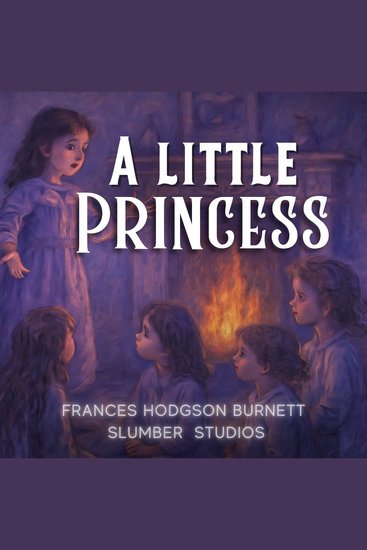
  • A Little Princess - A soothing reading for sleep and relaxation - cover

    A Little Princess - A soothing...

    Frances Hodgson Burnett

    • 0
    • 0
    • 0
    Drift into a peaceful night's sleep with A Little Princess, the cherished classic by Frances Hodgson Burnett, narrated by the soothing voice of Andrew Bond and produced by Slumber Studios. 
    This gentle audiobook is designed to ease you into rest. It carries you softly into the world of Sara Crewe - a kind, imaginative girl whose spirit remains bright even when life grows dim. 
    Let Andrew’s calming voice guide you through the hush of Victorian London and the quiet halls of Miss Minchin’s school, where Sara’s kindness and courage turn hardship into hope. 
    Rather than sorrow or drama, this adaptation flows at a soothing pace. Burnett’s tender storytelling, paired with delicate background music and unhurried narration, becomes a gentle balm for the mind... a comforting companion as you drift toward dreams. 
    At Slumber Studios, every audiobook is carefully produced to help you rest deeply. We preserve the heart and warmth of each story while gently editing moments that might disturb your peace, ensuring a listening experience that is calm, restorative, and filled with quiet magic. 
    If you’re seeking a peaceful way to end your day, A Little Princess offers the perfect escape. Just press play, settle into bed, and let Andrew’s retelling of this classic story carry you into a world of kindness, imagination, and tranquil sleep.
    Zum Buch
  • The Garden Party and Other Stories - cover

    The Garden Party and Other Stories

    Katherine Mansfield

    • 0
    • 0
    • 0
    Written during the final stages of her illness, "The Garden Party and Other Stories" is full of a sense of urgency and was Katherine Mansfield's last collection to be published during her lifetime. The fifteen stories featured, many of them set in her native New Zealand, vary in length and tone from the opening story, "At the Bay, " a vivid impressionistic evocation of family life, to the short, sharp sketch "Mrs. Brill, " in which a lonely woman's precarious sense of self is brutally destroyed when she overhears two young lovers mocking her. Sensitive revelations of human behaviour, these stories reveal Mansfield's supreme talent as an innovator who freed the story from its conventions and gave it a new strength and prestige.
    Zum Buch
  • War and Peace (Book Eleven: 1812) - cover

    War and Peace (Book Eleven: 1812)

    Leo Tolstoy

    • 0
    • 0
    • 0
    War and Peace is a literary work mixed with chapters on history and philosophy by the Russian author Leo Tolstoy. It was first published serially, then published in its entirety in 1869. It is regarded as one of Tolstoy's finest literary achievements and remains an internationally praised classic of world literature.
    Book 11: 1812: Absolute continuity of motion is not comprehensible to the human mind. Laws of motion of any kind become comprehensible to man only when he examines arbitrarily selected elements of that motion; but at the same time, a large proportion of human error comes from the arbitrary division of continuous motion into discontinuous elements.
    Zum Buch