Rejoignez-nous pour un voyage dans le monde des livres!
Ajouter ce livre à l'électronique
Grey
Ecrivez un nouveau commentaire Default profile 50px
Grey
Abonnez-vous pour lire le livre complet ou lisez les premières pages gratuitement!
All characters reduced
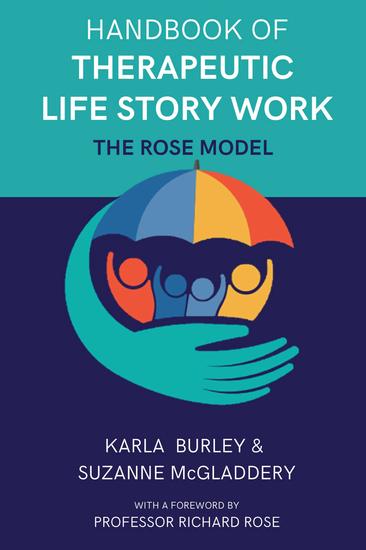
Handbook of Therapeutic Life Story Work - The Rose Model - cover

Handbook of Therapeutic Life Story Work - The Rose Model

Karla Burley, Suzanne McGladdery

Maison d'édition: Grosvenor House Publishing

  • 0
  • 0
  • 0

Synopsis

'Life Story Work is something we do all the time, be it reminiscing with friends or family about a particular event or period of our lives, or keeping memorabilia, photographs, and written records. Reflecting on and re-examining past events and experiences helps us to make meaning of them in the present.'
As a certified play therapist and a qualified social worker, Karla and Suzanne have come together as independent Therapeutic Life Story Work practitioners to explore their experiences and the challenges they have faced to guide other practitioners entering this important area of practice. They share journeys they have taken alongside the many families they have supported; drawn from completing Professor Richard Rose's Diploma in Therapeutic Life Story Work (TLSW).
The authors take the reader through the process of Therapeutic Life Story Work from beginning to end, linking theory with practice. They identify areas to consider in preparing to do this work and the referral process, give practical first steps in information gathering, and provide a wealth of activities and techniques that can be undertaken in sessions. Written during the time of a global pandemic, it includes working on-line and the many creative ways of supporting children and adults in making meaning and creating a more coherent narrative of their lives.
They share the complexities of working with birth families, neurodiversity, measuring outcomes and the recent strong evidence base for this intervention, as well as a unique model of creating therapeutic stories in therapeutic life story work. They highlight the importance of self-care and supervision when working with trauma, consider what to do when things go wrong, and the importance of creating emotional safety within this work. The content is drawn from many hours of work, challenges faced within the work, and an idea that it could be beneficial to others undertaking or interested in Therapeutic Life Story Work.
Therapeutic Life Story Work is an area of practice that Karla and Suzanne are passionate about. They decided to write this book in response to the questions they are frequently asked about setting up as independent practitioners and how they work in practice. Their aim is to continue to support children and young people in their journey to make sense of their lives, as well as supporting practitioners and developing Therapeutic Life Story Work worldwide.
The Handbook of Therapeutic Life Story Work is essential reading for those working with children, young people and adults, including social workers, therapists, family support workers, residential care staff, teachers, adopters, foster carers, special guardians, connected carers, students, psychologists and any other professionals involved in working with traumatised children.
Disponible depuis: 09/05/2024.
Longueur d'impression: 342 pages.
D'autres livres qui pourraient vous intéresser

  • Faith 301 - cover

    Faith 301

    Good Head Group Audiobooks,...

    • 0
    • 0
    • 0
    Faith 301: Results of Self Love is the third of a four-book series about faith, Results of Self Love helps readers to build on the mindset of increasing your faith, understanding yourself, what you believe and how to manifest results. Starting with getting to know yourself by Setting Your Third Set of Intentions, Looking into Self, Self-Love & Acceptance, Pursuing Your Purpose, Creating a Vision in Meditative Prayer, and many other topics. When purchased with the Faith: 301 Workbook, you have a self-paced course on that helps you recognize the Results of Self- Love in faith based on your personal understanding and experiences. No matter what your religious preference is, Faith 301 is sure to help you develop your faith and reap the results of the soul growth you desire.
    Voir livre
  • The Father - The completely gripping crime thriller from John Nicholl - cover

    The Father - The completely...

    John Nicholls

    • 0
    • 0
    • 0
    A completely gripping crime thriller that will have you hooked, from UK Top 50 bestselling author of The Bride  
    'A dark and devastating story that grips you from the very first page' T. J. Emerson, author of The Perfect Holiday. 
    What you don’t know can hurt you. 
    Thirty years ago Anthony Mailer was a seven-year-old boy trapped in Dr Galbraith’s basement. Now he’s a journalist, a husband and a father. But no matter how far he’s come, at times he’s still that scared little boy. 
    In order to save his marriage, he has to stop hiding from what happened and deal with it once and for all. 
    But digging into the past holds dangers Anthony never imagined . . . 
    A note from the author: While fictional, this book was inspired by true events. It draws on the author’s experiences as a police officer and child protection social worker. The story contains content that some readers may find upsetting. It is dedicated to survivors everywhere. 
    Get ready to be gripping onto your seat during this twisty, dark thriller. If you loved The Housemaid, The Girl on the Train, and The Couple at No.9 you'll love The Father. 
    Praise for The Father: 
    'The chill is tangible' Owen Mullen 
    'Dark, disturbing, and brilliant. Kept me up all night!' Diana Wilkinson 
    'A frightening book that lures us into the darkness where monsters live. John Nicholl's knowledge of this world from his years of police work makes his characters ring true' Billy Hayes 
    'An emotional roller coaster... I couldn't stop reading until I reached the end' McGarvey Black 
    'Dark and disturbing. One to really get your pulse racing. This is a story you won't forget' Ross Greenwood 
    ‘An outstanding piece of work by a truly masterful storyteller’ Anita Waller 
    'Disturbing and gripping . . . John Nicholl’s experience of police and child protection work adds truth and reality to Anthony’s search for closure' Phil Rowlands
    Voir livre
  • The Reconquista - Christian Spain's Crusade - cover

    The Reconquista - Christian...

    Harris Ropes

    • 0
    • 0
    • 0
    The Reconquista, meaning "reconquest" in Spanish, refers to the centuries-long struggle by Christian kingdoms to reclaim the Iberian Peninsula from Muslim rule. Its origins trace back to the early 8th century, when the Islamic Umayyad forces crossed the Strait of Gibraltar in 711 and swiftly conquered much of what is now Spain and Portugal. The defeat of the Visigothic King Roderic at the Battle of Guadalete marked the beginning of Muslim dominance in Iberia. Within a few years, nearly the entire peninsula had fallen under Muslim control, becoming part of the vast Umayyad Caliphate. This rapid conquest, however, did not erase the memory of Christian rule, especially in the remote and mountainous regions of the north. 
    In these isolated territories, remnants of the Visigothic nobility and clergy began to organize resistance. The Kingdom of Asturias, founded by Pelayo, a nobleman of likely Visigothic heritage, emerged as the first bastion of Christian defiance. According to tradition, Pelayo’s victory at the Battle of Covadonga in 722 symbolized divine favor and the beginning of a sacred mission to restore Christian rule. Though modest in scope, this victory held immense symbolic weight and inspired future generations to continue the struggle. Over time, Asturias would expand and give rise to other Christian polities such as León and Castile, each taking up the cause of the Reconquista in their own right. 
    The idea of reconquest was not purely political; it was deeply tied to religious identity. The fall of the Visigothic kingdom was viewed by many Christians as a divine punishment for past sins, but it also fostered a sense of purpose and redemption. Reclaiming lost territories became not just a matter of sovereignty but a spiritual imperative. The Christian leaders and their subjects saw themselves as the defenders of the true faith, fighting to restore a sacred order.
    Voir livre
  • Stalking the Great Killer - Arkansas's Long War on Tuberculosis - cover

    Stalking the Great Killer -...

    Larry C. Floyd, Joseph H. Bates

    • 0
    • 0
    • 0
    Stalking the Great Killer is the story of Arkansas's struggle to control tuberculosis, and how the state became a model in its treatment of the disease. 


    To place the story of tuberculosis in Arkansas in historical perspective, the authors trace the origins of the disease. Arkansas suffered some of the worst ravages of the disease, and the authors argue that many of the improvements in the state's medical infrastructure grew out of the desperate need to control it. 


    In the early twentieth century, Arkansas established a sanatorium and thirty years later, the segregated Black sanitorium. These institutions helped slow the disease but at a cost: removed from families and communities, patients suffered from the isolation. Joseph Bates saw this when he delivered an uncle to the sanitorium in the 1940s. In the 1960s, Bates, now a physician, and his colleague Paul Reagan overcame a resistant medical-political system to develop a new approach to treating the disease. 


    In the age of Covid-19, this history offers valuable lessons about community involvement in public health, the potential efficacy of public-private partnerships, and the importance of leadership in the battle to eradicate disease.
    Voir livre
  • Make to Know - From spaces of uncertainty to creative discovery - cover

    Make to Know - From spaces of...

    Lorne Buchman

    • 0
    • 0
    • 0
    A journey through the minds of some of the most creative people on the planet reveals that creativity is rarely a “lightbulb moment” and instead arrives through a process of making and self-understanding. The creative process is winding. It involves entertaining uncertainty and improvising new paths to knowing. In this insightful and informed book, Lorne M. Buchman, an international leader in art and design education and president of ArtCenter College of Design in Pasadena, California, guides readers through stories of a diverse and talented group of artists, entrepreneurs, innovators, and designers. Including such luminaries as Yves Béhar, Chris Kraus, Zack Snyder, Paula Scher, and Frank Gehry and businesses like Apple and Tesla who have changed the world as we know it, Buchman focuses on the revelatory nature of the creative journey itself. Michelangelo is said to have seen the angel in the stone and carved away until he set him free. Make to Know is about making as a path to knowing?presenting creativity as a “carving away” toward a revelation, not as a fully formed epiphany gleaned from a mysterious ether. As Buchman reveals throughout this provocative book, uncertainty is the space where discovery happens and where creators can be both playful and imaginative. Whether you’re an artist, designer, writer, daydreamer, or doodler, anyone can learn from these lessons on the varied paths to self-expression.
    Voir livre
  • Crime and Punishment in the American Colonies: The History of the Legal Systems in North America Before the Revolutionary War - cover

    Crime and Punishment in the...

    Charles River Editors

    • 0
    • 0
    • 0
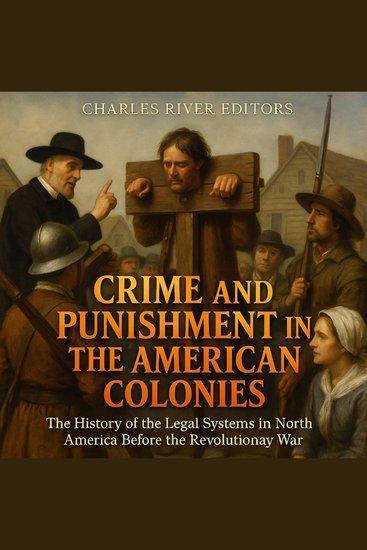
    Even though the colonists eventually broke free from Great Britain, plenty of British customs and practices affected the fledgling United States, particularly when it came to law. While the most notable ramifications can be found in the Fourth Amendment to the Constitution, which forbids illegal searches and seizures by the government, the extensive legal background from Britain impacted how American lawyers and courts operated as well, even as legal codes differed considerably from colony to colony because of their charters. The local codes had to broadly conform with the current laws in England, and the early equivalent of the Colonial Office examined colonial laws if someone sued. Laws found to be inconsistent with English practice were sometimes voided.  
    	On paper, the New England codes were extremely harsh, but in practice, they were often mildly enforced, if enforced at all. One law on the books was that a son could be executed if he cursed his parents, but no one was ever executed for it. Many crimes were offenses against public decorum, but there was a wide range of things considered misbehaviors. Punishments varied but tended to be either financial or public, with humiliation and shame being a large part of it.  
    	Conversely, while the New Englanders tended to base their codes on the Old Testament, in Pennsylvania, the Quaker establishment sought to reform criminals rather than punish them. Consequently, they probably had the least number of capital offenses of any place in the English-speaking world. Furthermore, over time, the list of what constituted crimes changed somewhat, as did the emphasis. The fast growth of populations brought large numbers of immigrants and indentured servants and a more complex society. Diversity increased, and the rise of slavery concentrated in (but was not limited to) the Southern colonies, bringing with it codes of law to control slaves and deal with offenses committed by them.
    Voir livre