Begleiten Sie uns auf eine literarische Weltreise!
Buch zum Bücherregal hinzufügen
Grey
Einen neuen Kommentar schreiben Default profile 50px
Grey
Jetzt das ganze Buch im Abo oder die ersten Seiten gratis lesen!
All characters reduced
Gun running for Casement in the Easter rebellion 1916 - cover

Gun running for Casement in the Easter rebellion 1916

Karl Spindler

Verlag: DigiCat

  • 0
  • 0
  • 0

Beschreibung

In "Gun Running for Casement in the Easter Rebellion, 1916," Karl Spindler presents a meticulous exploration of the clandestine arms operations that fueled the pivotal uprising. Employing a blend of historical analysis and narrative storytelling, Spindler captures the tension and urgency of 1916, illuminating the interplay between local insurgents and international allies. The work is contextualized within the broader spectrum of Irish nationalism and the socio-political landscape of early 20th-century Europe, drawing on primary sources that lend authenticity and immediacy to his narrative. Karl Spindler, an accomplished historian and scholar, specializes in Irish revolutionary history. His keen interest in the complexities of national identity and the quest for self-determination is evidenced through his extensive research and fieldwork. Through his unique lens, Spindler not only recounts historical events but also echoes the voices of those who were often marginalized in traditional accounts, providing a more nuanced understanding of the motivations behind these revolutionary actions. For those interested in the intricacies of the Easter Rebellion and the broader narrative of Irish resistance, Spindler's work is an essential and enlightening read. It offers not only a detailed account of arms smuggling but also an exploration of the larger ideals that drove men and women to risk everything for their cause.
Verfügbar seit: 05.09.2022.
Drucklänge: 153 Seiten.
Weitere Bücher, die Sie mögen werden

  • Fort Pillow and the Crater: The History of the Most Notorious Battles Where the Confederates Massacred Black Soldiers - cover

    Fort Pillow and the Crater: The...

    Editors Charles River

    • 0
    • 0
    • 0
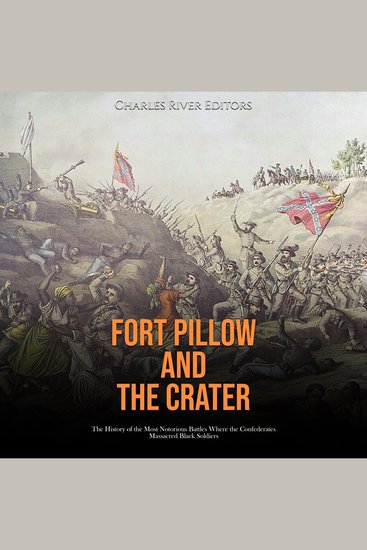
    As far as skirmishes go, Fort Pillow was a completely unremarkable fight. Before attacking, Forrest demanded the unconditional surrender of the Union garrison, a normal custom of his, and he warned the Union commanding officer that he would not be responsible for his soldiers’ actions if the warning went unheeded. What made Fort Pillow markedly different was that a sizable amount of the Union garrison defending the Fort was comprised of black soldiers, which particularly enraged Confederate soldiers whenever they encountered those they viewed as former slaves in the field. It is still unclear exactly how the fighting unfolded, but what is clear is that an unusually high percentage of Union soldiers were killed, and the Confederates were accused of massacring black soldiers after they had surrendered. Primary sources tell conflicting accounts of what happened at Battle of Fort Pillow, leaving scholars to piece together the battle and determine whether Confederate soldiers purposely shot Union soldiers after they had surrendered. 
    The mine that precipitated the Battle of the Crater during the Siege of Petersburg produced one of the most amazing scenes of the entire Civil War. The force of the explosion created a crater that was nearly 200 feet long, 100 feet wide, and 30 feet deep. Remnants of the crater can still be seen today. But through a mix of bad luck, fog of war, and incompetent leadership, the Union assault that followed the explosion was badly bungled. Instead of capturing Petersburg, the Battle of the Crater was a Union debacle that left more than 4,000 Union soldiers killed, wounded, or captured. The Confederates lost about 1,500, with nearly 300 of them being casualties of the initial explosion. The Battle of the Crater didn’t help the Confederates much in front of Petersburg, but it remains the most memorable and controversial battle of the entire siege.
    Zum Buch
  • Is It Racist? Is It Sexist? - Why Red and Blue White People Disagree and How to Decide in the Gray Areas - cover

    Is It Racist? Is It Sexist? -...

    Betsy Leondar-Wright, Jessi Streib

    • 0
    • 0
    • 0
    Is It Racist? Is It Sexist? Two questions that seem simple on their face, but which invite a host of tangled responses. Jessi Streib and Betsy Leondar-Wright offer a new way of understanding how inequalities persist by focusing on the individual judgment calls that lead us to decide what's racist, what's sexist, and what's not. 


    Racism and sexism often seem like optical illusions, but the lines that most consistently divide our decisions might surprise you. Indeed, white people's views of what's racist and sexist are increasingly up for grabs. As the largest racial group in the country and the group that occupies the most and the highest positions of power, what they decide is racist and sexist helps determine the contours of inequality. 


    By asking white people—Southerners and Northerners, Republicans and Democrats, working-class and professional-middle-class, men and women—to decide whether specific interactions and institutions are racist, sexist, or not, Streib and Leondar-Wright take us on a journey through the decision-making processes of white people in America. The authors are able to distinguish the responses as being characteristic of different patterns of reasoning. They produce a framework for understanding these patterns that invites us all to engage with each other in a new way, even on topics that might divide us.
    Zum Buch
  • Cold War Texas - cover

    Cold War Texas

    Landry Brewer

    • 0
    • 0
    • 0
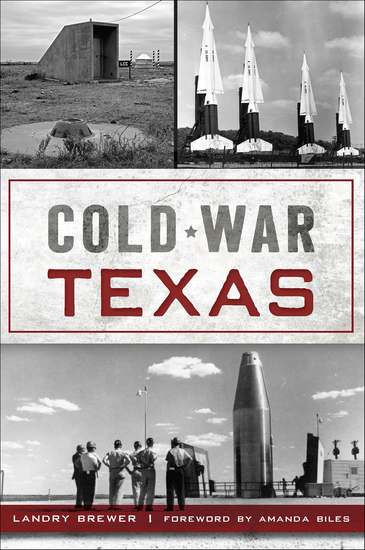
    From missile launch sites to Soviet espionage, experience the Cold War deep in the heart of Texas.In an era when miscalculation or a mistake could lead to global annihilation, Texas operated 12 Atlas F intercontinental ballistic missile launch sites near Abilene's Dyess Air Force Base. Nuclear-capable Nike Hercules surface-to-air antiaircraft missiles protected Austin and the Metroplex from a Soviet bomber attack. An American pilot stationed at Laughlin Air Force Base near Del Rio was the only fatality of the Cuban Missile Crisis. After he was accused of spying for the Soviet Union, former Ranger College professor Maurice Halperin fled the country. Amarillo's Pantex plant, where three employees died in a 1977 explosion, maintains the security and reliability of the nation's nuclear weapons arsenal. Landry Brewer explores how the Lone Star State shaped American Cold War policy.
    Zum Buch
  • Denisovans The: A Captivating Guide to the Extinct Cousins of Neanderthals Who Lived Across Asia during the Paleolithic Period - cover

    Denisovans The: A Captivating...

    Captivating History

    • 0
    • 0
    • 0
    Discover the Denisovans: A Lost Human Species Still in Our DNA 
    In 2008, scientists found evidence of a new ancient human species—the Denisovans. While they lived at the same time as the Neanderthals, the Denisovans were different in surprising ways. The most amazing part? They left traces of their DNA in us. 
    This audiobook takes you on an exciting journey into the past to uncover the story of the Denisovans. Hidden deep in the Denisova Cave in Siberia, their remains went unnoticed for centuries. But when scientists discovered them, it changed what we knew about human history. 
    Here’s What You’ll Learn:How the Denisovans were found: The story of the surprising discovery of Denisovan bones in a Siberian cave.Proving a new species: See how scientists used DNA to confirm Denisovans were not Neanderthals or Homo sapiens but a unique species.The Denisovan family tree: Learn how Denisovans fit into human evolution and who their ancestors were.What Denisovan life was like: Explore what scientists know about their biology, culture, and how they lived.How they mixed with Neanderthals and humans: Find out how Denisovans interacted with both Neanderthals and early Homo sapiens.The Denisovan legacy: Discover how Denisovan DNA still affects certain human populations today. 
    This audiobook tells the Denisovan story in a way that’s easy to understand, showing how their discovery changed our view of human history forever. If you’re curious about our ancient ancestors and what’s hidden in our DNA, this is the audiobook for you. 
    Scroll up and click the “add to cart” button to explore the world of the Denisovans and their lasting impact on humans!
    Zum Buch
  • Reboot Your Mindset - Unlock Fresh Perspectives for Success - cover

    Reboot Your Mindset - Unlock...

    Caleb David

    • 0
    • 0
    • 0
    What if the only thing standing between you and the life you want is the way you think? "Reboot Your Mindset: Unlock Fresh Perspectives for Success" is a game-changing guide to reshaping your mental habits, overcoming limiting beliefs, and achieving breakthroughs in every area of your life. Caleb David empowers you with practical strategies to reframe your thoughts, see challenges as opportunities, and adopt a mindset of resilience and abundance. Through cutting-edge research, inspiring stories, and step-by-step exercises, you'll learn how to harness the power of a renewed perspective to accelerate personal and professional growth. This is more than just a book—it's a blueprint for transforming your mind and unlocking the life you've always envisioned.
    Zum Buch
  • Food of the Cods: How Fish and Chips Made Britain - cover

    Food of the Cods: How Fish and...

    Daniel Gray

    • 0
    • 0
    • 0
    Shortlisted for Debut Food Book of the Year at the Fortnum and Mason Food and Drink Awards 2024Guild of Food Writers 2024 Finalist, Food Book of the Year 
    ‘A lyrical, amiable and educational celebration of what may be our greatest achievement: the chippy.’ Stuart Maconie 
    Step inside and unwrap this deliciously entertaining look at Britain’s national dish. 
    There is a corner of every town and city in Britain where the air is tangy with vinegar and the scent of frying. Following the irresistible lure, Daniel Gray ponders the magic of chippies and the delights they have sprinkled among us for the last 150 years as he investigates the social – and sociable – history of fish and chips. 
    Travelling to chippies from Dundee to Devon via South Shields, Oldham, Bradford, Bethnal Green, the Rhondda Valley and more – Daniel Gray explores our fish-and-chip nation to show how chippies have helped emancipate women, promote equality for immigrants and shape local and national identity. 
    Whether you were raised eating scraps of Wolverhampton’s orange chips, London’s ‘wallies’ or Hull’s chip spice – even if you think you know whether tea, Vimto or dandelion and burdock is the best accompaniment – this mouth-watering book is as much about who we are as what we eat. 
    In this top non-fiction, Gray takes us on a regional journey through the ethnic corners of Britain, from English chippies to Scottish fry-ups, and Welsh delights. His narratives, as crisp as the chips he describes, serve as essays on cooking, culture, and identity. 
    For fans of Jonathan Wilson (Kick and Run), Jon Spurling (Death or Glory), Alan Partridge (Alan Partridge), Tim Rich (On Days Like These), and Pen Vogler (Scoff). 
    HarperCollins 2023
    Zum Buch