Rejoignez-nous pour un voyage dans le monde des livres!
Ajouter ce livre à l'électronique
Grey
Ecrivez un nouveau commentaire Default profile 50px
Grey
Abonnez-vous pour lire le livre complet ou lisez les premières pages gratuitement!
All characters reduced
Pebble Russian Project Abacus (or) Pebble Schoty Project Abacus - Pebble Russian Project Abacus (or) Pebble Schoty Project Abacus - cover

Pebble Russian Project Abacus (or) Pebble Schoty Project Abacus - Pebble Russian Project Abacus (or) Pebble Schoty Project Abacus

Kambhamm Vara Lakshmi

Maison d'édition: Publishdrive

  • 0
  • 0
  • 0

Synopsis

The Abacus, a humble device with a rich history, has been a companion to mathematicians for centuries. Its origins can be traced back to ancient Mesopotamia, where civilizations like the Sumerians used it for calculations. Over time, the abacus took on different forms in various cultures, but its core principle remained the same – manipulating beads on rods to represent numbers and perform arithmetic operations.Despite the rise of modern calculators, the abacus is still used in some parts of the world, particularly in Asia. It's also gaining popularity as a mental math tool, as studies show that using an abacus can improve mental ability and calculation skills.Example: Shepherds have used pebbles for centuries as a simple and effective way to keep track of their sheep or goats. Each time a goat passes through a gate or enclosure, the shepherd moves a pebble from one pile to another. By the end of the day, the pebbles tell the shepherd exactly how many goats they have. Once all the goats have been counted, the shepherd can simply count the pebbles in the pouch to determine the total number of goats. This method is especially useful for shepherds who may not be able to read or write, or who find it easier to manipulate physical objects than numbers.


Early counting tools evolved into the Abacus we know today. Here's a brief history of its development:* Mud Lines and Pebbles: The earliest ancestors of the abacus were likely simple markings in mud or sand, perhaps alongside pebbles or sticks to represent quantities.* Wooden Frame and Rods: Later, counting boards made of wood with grooves or rods emerged, allowing for a more permanent and organized way of calculating.* Beads on Rods: Finally, beads were added to the rods, making it easier to manipulate and keep track of numbers. This is the type of abacus most commonly associated with the tool today.Learning to use an Abacus can offer a number of benefits for children, including:* Stronger math skills: Abacus use can help kids develop a better understanding of mathematical concepts, improve their mental math abilities, and increase their calculation speed and accuracy.* Enhanced memory and concentration: Abacus programs often involve memorization techniques and require focused attention to manipulate the beads and solve problems. This can lead to improved memory and concentration in other areas of life as well.* Boosted confidence: As children master Abacus skills and see their math abilities improve, their confidence can grow. This can have a positive impact on their overall academic performance.* Improved cognitive skills: Abacus use may enhance cognitive skills such as visual-spatial reasoning, problem-solving, and critical thinking math skills and improve their confidence in math.
Disponible depuis: 11/12/2024.
Longueur d'impression: 63 pages.

D'autres livres qui pourraient vous intéresser

  • The Problems with Philosophy - cover

    The Problems with Philosophy

    Bertrand Russell

    • 0
    • 0
    • 0
    The Problems of Philosophy is a 1912 book by Bertrand Russell, in which the author attempts to create a brief and accessible guide to the problems of philosophy. Focusing on problems he believes will provoke positive and constructive discussion, Russell concentrates on knowledge rather than metaphysics: If it is uncertain that external objects exist, how can we then have knowledge of them but by probability. There is no reason to doubt the existence of external objects simply because of sense data.
    Voir livre
  • Longing to Know - The Philosophy of Knowledge for Ordinary People - cover

    Longing to Know - The Philosophy...

    Esther Lightcap Meek

    • 0
    • 0
    • 0
    We don't often think about the act of knowing, but if we do, the question of what we know and how we know it becomes murky indeed. Longing to Know is a book about knowing: knowing how we know things, knowing how we know people, and knowing how we know God. 
    This book is for those who are considering Christianity for the first time, as well as Christians who are struggling with issues related to truth, certainty, and doubt. As such, it is a wonderful resource for evangelists, pastors, and counselors. This unique look at the questions of knowing is both entertaining and approachable. Questions for reflection make it ideal for students of philosophy and all those wrestling with the questions of knowledge.
    Voir livre
  • Enchanted Plants - A Treasury of Botanical Folklore and Magic - cover

    Enchanted Plants - A Treasury of...

    Varla A. Ventura

    • 0
    • 0
    • 0
    From fairy tales to your garden, Enchanted Plants is a treasure trove of the lore and magic in the kingdom of plants. Take a walk through mystical, magical, and folkloric gardens and discover the plants and flowers that have captured our hearts and minds for centuries. Will you dare to pick a golden apple or seize the perfect rose? Will you sneak through the gilded gates of the poison garden where plants both alluring and life-saving intertwine? From the baneful bog to the garden gate, plant lover and lover of the bizarre Varla Ventura brings together forgotten lore of plants for the ultimate romp through a botanical wonderland, including excerpts from fairy tales and a lively discussion of each plant's legendary magical and medicinal properties. Don't forget your scissors. Enchanted Plants is arranged by general environment: cultivated plants and edibles; toxic plants; meadowlands; the woods; marshes and swamps; and tropical plants. 
      
    Each chapter contains a cultivated selection of plants with additional information, including botanical name, common names, folklore, ethnobotanical properties, magical and occult properties, and modern usage if applicable.
    Voir livre
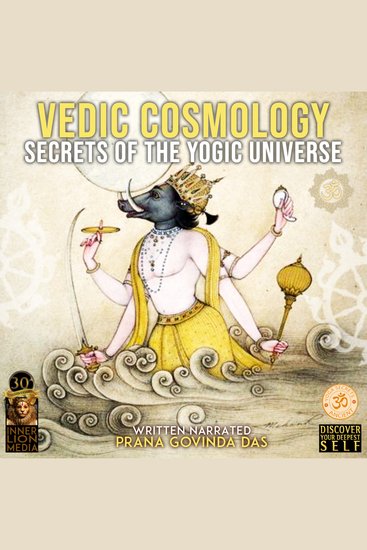
  • Vedic Cosmology - cover

    Vedic Cosmology

    Prana Govinda Das

    • 0
    • 0
    • 0
    Noted internationally known Self-help advocate and teacher of devotional yoga Prana Govinda Das was born in Liverpool, England in 1968 admittedly a pretty good year for all things bright and beautiful. He says, "From as early as I can remember I had an unquenchable thirst for knowledge, and a desire to understand the true nature of man and this world we live in. I was also always seeking out people who could answer all the questions I had about life, the universe and everything." After studying film production in the early nineties Prana was able to fulfill his lifelong desire to travel to India. admittedly his first trip changed his life completely and forever. "At that point," He recalls, "my thirst for material knowledge turned to desire to understand the spiritual side of life. For the next six years I returned frequently to, where I studied many different paths of Hinduism, Buddhism and other forms of yoga and meditation. However, even after learning and experiencing so much I was still left incomplete." in 2001 during the young man's sixth trip to India, he travelled to Vrindavan, a holy town associated with Lord Krishna south of Delhi. It was there he met his spiritual guide, and mentor Srila Bhaktivedanta Naryana Goswami. Some twenty years on, Prana has been resident in his teacher's temples all over the world, particularly India, Australia, America, and Europe. Welcome then to the inspirational, engrossing, all-inclusive teachings of Prana Govinda Das.
    Voir livre
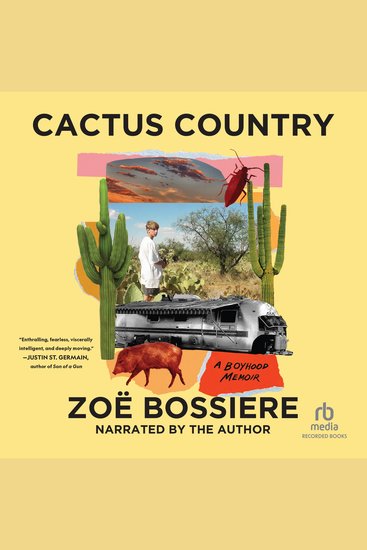
  • Cactus Country - A Boyhood Memoir - cover

    Cactus Country - A Boyhood Memoir

    Zoë Bossiere

    • 0
    • 0
    • 0
    A STRIKING MEMOIR OF GENDERFLUIDITY, CLASS, AND THE AMERICAN SOUTHWEST 
     
    Newly arrived in the Sonoran Desert, eleven-year-old Zoë enters a world of giant beetles, thundering javelinas, and gnarled palo verde trees. In Cactus Country RV Park, Zoë has been given a fresh start and a new, shorter haircut. Although Zoë doesn’t have the words to express it, he experiences life as a trans boy—and here, others begin to see him as a boy, too. Zoë spends hot days chasing shade and freight trains with an ever-rotating pack of sunburned desert kids, and nights fending off his own questions about the body underneath his baggy clothes. 
     
    As Zoë enters adolescence, he must reckon with the sexism, racism, substance abuse, and violence endemic to the working-class men he’s grown close to, whose hard masculinity seems as embedded in the desert landscape as the cacti sprouting from parched earth. In response, Zoë adopts an androgynous style and new pronouns, but still cannot escape what it means to live in a gendered body, particularly when a fraught first love destabilizes their sense of self. But beauty flowers in this desert, too. Zoë persists in searching for answers, dreaming of a day they might leave the park behind to embrace whatever awaits beyond. 
     
    Equal parts harsh and tender, Cactus Country is a precisely rendered journey of self-determination that will resonate with anyone who’s ever had to fight to be themself. 
     
    “Cactus Country shimmers with the complexity of becoming. Zoë Bossiere writes their way into a truer story of selfhood, resisting the simpler narratives the world demanded. The result is lush, beautiful, and deeply liberating.”—Alex Marzano Lesnevich, author of The Fact of a Body
    Voir livre
  • The Temptation of St Antony - A Revelation of the Soul - cover

    The Temptation of St Antony - A...

    Gustave Flaubert

    • 0
    • 0
    • 0
    "The Temptation of St. Antony" by Gustave Flaubert is a visionary exploration of faith, doubt, and the human psyche. The story follows St. Antony, a hermit in the desert, as he endures a night of supernatural trials and temptations orchestrated by demonic visions. Flaubert delves into Antony’s inner struggles, confronting themes of desire, despair, and the search for divine truth. Through vivid imagery and philosophical depth, the work examines the tension between earthly passions and spiritual devotion. A blend of mysticism and existential inquiry, it reflects Flaubert’s fascination with the complexities of belief and the soul’s resilience. This poetic masterpiece challenges readers to ponder the boundaries of faith and the eternal battle between good and evil.
    Voir livre