Begleiten Sie uns auf eine literarische Weltreise!
Buch zum Bücherregal hinzufügen
Grey
Einen neuen Kommentar schreiben Default profile 50px
Grey
Jetzt das ganze Buch im Abo oder die ersten Seiten gratis lesen!
All characters reduced
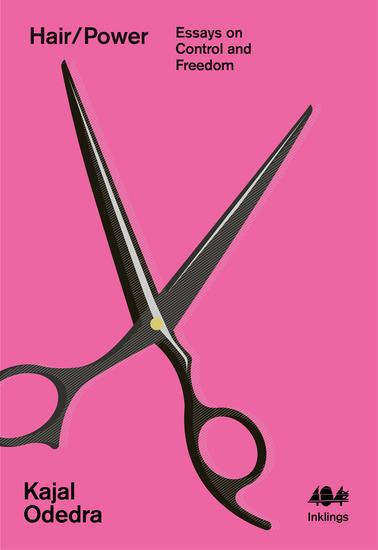
Hair Power - Essays on Control and Freedom - cover

Hair Power - Essays on Control and Freedom

Kajal Odedra

Verlag: 404 Ink

  • 0
  • 0
  • 0

Beschreibung

Hair is potent. Its presence and its absence has profound influence upon our lives, across race, gender, sexuality, status, and more. It will grow in places you don't like and it may desert you – suddenly, or gradually. Whatever your experience, you have had a relationship with hair and its power. Kajal Odedra considers how hair has shaped society today, from the 'perfect' blondes in the school playground to the angry skinheads on the streets. Mohawks, wigs, afros, these are just a few of the ways in which hair has been part of history and wider activism. The word 'essay' derives from the French 'essayer', meaning 'to try' or 'to attempt'. This is Odedra's 'try' at hair – part memoir, part observation across history, politics, religion, and culture. Hair/Power explores the power, control and ultimate liberation that hair can provide.
Verfügbar seit: 06.04.2023.
Drucklänge: 112 Seiten.


Weitere Bücher, die Sie mögen werden

  • Umar ibn al-Khattab - The Complete Life Story - cover

    Umar ibn al-Khattab - The...

    Brilliant Bio

    • 0
    • 0
    • 0
    Discover the extraordinary life of Umar ibn al-Khattab, the second caliph of Islam whose leadership transformed the early Muslim world. From his dramatic conversion to Islam to his decade of revolutionary rule, this definitive biography explores how Umar expanded the Islamic empire, established groundbreaking administrative systems, and lived with legendary justice and humility. Uncover the fascinating journey of a man who rose from fierce opponent of Islam to become one of its greatest champions and most influential figures in Islamic history. Perfect for history enthusiasts, religious scholars, and anyone seeking inspiration from one of history's most remarkable leaders.
    Zum Buch
  • The Great Famine of 1315-1317 - Europe's Darkest Hour - cover

    The Great Famine of 1315-1317 -...

    Sarah Willards

    • 0
    • 0
    • 0
    The Great Famine of 1315-1317 stands as one of the darkest periods in European history, marking a time of immense suffering, social upheaval, and devastation. It was not a single event but rather a prolonged crisis, which compounded existing vulnerabilities within medieval European society. The origins of the famine can be traced back to a confluence of environmental, social, and economic factors, all of which led to one of the worst food shortages ever experienced on the continent. 
    The famine’s roots can be found in the dramatic climatic changes of the early 14th century. The period known as the Little Ice Age brought cooler temperatures, and the years leading up to the famine saw unusual weather patterns. Prolonged rain, particularly during the summer months of 1315, led to flooding and crop failure, especially in regions dependent on staple grains like wheat, oats, and barley. The disastrous harvests were compounded by already strained food supplies and a growing population. 
    The impact of the famine was felt most acutely by the poorer classes, whose subsistence farming could not sustain them through such harsh conditions. The majority of the population in rural areas relied on farming for food and income, and with crops failing, their livelihoods were destroyed. Urban centers, though slightly better equipped to withstand hardship, faced sharp increases in food prices, making it difficult for even the wealthier classes to procure sustenance. Starvation, malnutrition, and poverty became widespread, leading to mass suffering across the continent.
    Zum Buch
  • The Lyceum Address - The Perpetuation of Our Political Institutions - cover

    The Lyceum Address - The...

    Abraham Lincoln

    • 0
    • 0
    • 0
    Abraham Lincoln's Lyceum Address, delivered in 1838, reflects on the fragility of American democracy and the potential dangers of lawlessness and mob rule. Lincoln begins by honoring the Founding Fathers and their sacrifices, emphasizing the importance of preserving their legacy. He warns against the threat posed by individuals who seek to undermine the rule of law and exploit public discontent for personal gain. Lincoln argues that the true danger to the nation comes not from external enemies but from internal strife and moral decay. 
    Central to Lincoln's message is the idea that respect for laws and institutions is essential for maintaining a stable and just society. He calls for citizens to uphold the principles of justice and equality, stressing the need for education and moral guidance to foster responsible citizenship. Lincoln uses historical examples, including the rise and fall of ancient republics, to illustrate the consequences of unchecked lawlessness and civic indifference. 
    Throughout the address, Lincoln's eloquence and deep concern for the future of democracy in America are evident. He urges his audience to cherish and protect the nation's democratic ideals, emphasizing that the strength of the United States lies in the unity and moral character of its people. Lincoln's Lyceum Address remains a timeless reminder of the enduring values that underpin a free and democratic society.
    Zum Buch
  • Military Psychology - Understanding the Mind in Defense and Combat Environments - cover

    Military Psychology -...

    Virversity Online Courses

    • 0
    • 0
    • 0
    This course offers a comprehensive introduction to Military Psychology, highlighting the vital role of psychological principles within military settings. Students will explore human behavior in combat, mental health challenges like PTSD, and leadership strategies that enhance team cohesion and decision-making.Key topics include the history and evolution of military psychology, stress and trauma management, resilience-building techniques, leadership psychology, and decision-making under pressure. The course also covers psychological assessment tools, strategic methods such as PSYOPS and behavioral profiling, and ethical considerations in military contexts.Participants will gain insight into group dynamics, mental health support for service members and their families, and rehabilitation and reintegration strategies for veterans. Emphasizing the multidisciplinary nature of military psychology, this course equips learners with practical knowledge and skills to support mental health, improve leadership effectiveness, and promote ethical military practices.By the end, students will be prepared to contribute meaningfully in military, academic, or support roles focused on the psychological well-being of those who serve.
    Zum Buch
  • Dark Psychology: The Psychological Tactics They Use to Manipulate and Deceive You - cover

    Dark Psychology: The...

    Andy Gardner

    • 0
    • 0
    • 0
    Understand all the psychological tactics people may use to manipulate, deceive and control you. 
    Have you ever wondered what dark psychology is? 
    Do you want to find out why people use manipulation techniques? 
    Are you interested in learning more about reverse psychology? 
    Do you want to learn how to protect yourself from manipulation? 
    You need to get your hands on this audiobook if you answered “yes” to these questions. No one likes doing something against their will or being manipulated into taking a certain action. Believe it or not, we are all subject to manipulation and deception. Dark psychology plays a major role in our daily social, professional, and personal lives, often without our awareness. 
    Fortunately, this guide is here to teach you everything you need to know about manipulation and deception, so you can protect yourself from these malicious attempts. 
    Upon listening to this audiobook, you will:Find out what dark psychology is in more depthLearn all about the different characteristics of manipulatorsUnderstand why people use manipulation techniquesExplore reverse psychology and brainwashing tacticsDiscover if you’re a victim of gaslighting or guilt-trippingLearn to protect yourself from manipulation 
    Complete with updated knowledge and real-life examples, this audiobook serves as an A-Z guide to dark psychology. It is easy and interesting to listen to and includes hands-on methods you can practice immediately. 
    Click on the “add to cart” button now and take control of your life.
    Zum Buch
  • Universal Declaration of Human Rights - cover

    Universal Declaration of Human...

    Eleanor Roosevelt

    • 0
    • 0
    • 0
    The Universal Declaration of Human Rights (UDHR) is a landmark document in the history of human rights, and Eleanor Roosevelt played a significant role in its development. The UDHR was adopted by the United Nations General Assembly on December 10, 1948, in Paris. It was drafted by representatives from different legal and cultural backgrounds, including Eleanor Roosevelt, who chaired the United Nations Commission on Human Rights.Eleanor Roosevelt, the widow of President Franklin D. Roosevelt, was a key figure in the drafting process. She played an instrumental role in promoting and advocating for the declaration. Her diplomatic skills and commitment to human rights made her an influential force in the commission.The Universal Declaration of Human Rights consists of 30 articles that outline fundamental human rights and freedoms to be universally protected. It covers a wide range of rights, including civil, political, economic, social, and cultural rights. The UDHR has served as a foundational document for the development of subsequent international human rights treaties and declarations.Eleanor Roosevelt's contributions to the drafting and promotion of the UDHR are widely acknowledged. Her efforts in championing human rights continued beyond the adoption of the declaration, and she remains a prominent figure in the history of human rights advocacy.
    Zum Buch