Begleiten Sie uns auf eine literarische Weltreise!
Buch zum Bücherregal hinzufügen
Grey
Einen neuen Kommentar schreiben Default profile 50px
Grey
Jetzt das ganze Buch im Abo oder die ersten Seiten gratis lesen!
All characters reduced
Time Concepts - cover

Time Concepts

Kaia Stonebrook

Übersetzer A AI

Verlag: Publifye

  • 0
  • 0
  • 0

Beschreibung

Time Concepts explores humanity's enduring quest to measure and understand time, examining how clocks and calendars have shaped societies and cultures. From ancient sundials to modern atomic clocks, the book traces the evolution of timekeeping devices, revealing their impact on everything from agriculture to astronomy. Calendars, like the Gregorian and Julian, reflect diverse cultural and astronomical understandings, each system designed to organize human activity within the rhythms of the natural world. The book uniquely integrates historical, cultural, and scientific perspectives, presenting a holistic view of time rather than solely focusing on technical details. Time Concepts delves into the scientific underpinnings of time, touching on concepts like relativity and the "arrow of time," demonstrating how physics informs our understanding. By examining archaeological findings, historical documents, and astronomical records, the book reveals how our measurement of time is intertwined with cultural, scientific, and societal evolution. Structured to provide a comprehensive exploration, the book begins with foundational concepts, progresses through the development of timekeeping technologies, analyzes various calendar systems, and culminates with a discussion of time within the framework of physics. Readers will gain a deeper appreciation for how time measurement, time zones, and the very concept of time have profoundly influenced human civilization.
Verfügbar seit: 06.03.2025.
Drucklänge: 61 Seiten.

Weitere Bücher, die Sie mögen werden

  • Old Truths and New Clichés - Essays by Isaac Bashevis Singer - cover

    Old Truths and New Clichés -...

    Isaac Bashevis Singer

    • 0
    • 0
    • 0
    Old Truths and New Clichés collects nineteen essays—most of them previously unpublished in English—by Isaac Bashevis Singer on topics that were central to his artistic vision throughout an astonishing and prolific literary career spanning more than six decades. Expanding on themes reflected in his best-known work, the book illuminates in new ways the rich intellectual, aesthetic, religious, and biographical background of Singer's singular achievement as the first Yiddish-language author to be awarded the Nobel Prize for Literature. 


    Like a modern Montaigne, Singer studied human nature and created a body of work that contributed to a deeper understanding of the human spirit. Much of his philosophical thought was funneled into his stories. Yet these essays, which Singer himself translated into English or oversaw the translation of, present his ideas in a new way, as universal reflections on the role of the artist in modern society. 


    Old Truths and New Clichés brims with stunning archival finds that will make a significant impact on how listeners understand Singer and his work. Singer's critical essays have long been overlooked because he has been thought of almost exclusively as a storyteller. This book offers an important correction to the record by further establishing Singer as a formidable intellectual.
    Zum Buch
  • Emperor Nero - The Treacherous Lustful Cruel Emperor Who Killed His Own Mother - cover

    Emperor Nero - The Treacherous...

    Kelly Mass

    • 0
    • 0
    • 0
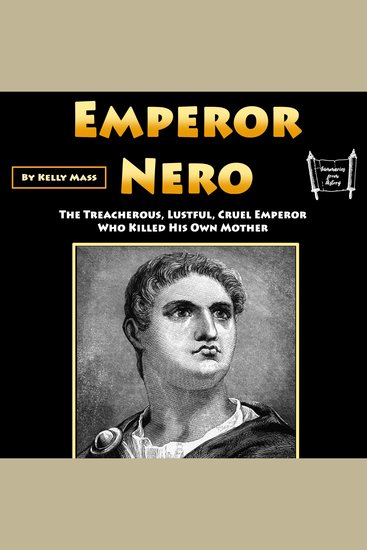
    Nero Claudius Caesar Augustus Germanicus, the fifth and final emperor of the Julio-Claudian dynasty, ruled the Roman Empire from AD 54 to 68. He was thrust into the highest seat of power at the age of sixteen after being adopted by Emperor Claudius, his stepfather. While Nero enjoyed popularity among the lower classes and the Praetorian Guard, who benefited from his patronage, the Roman aristocracy and Senate viewed him with contempt. Ancient historians portray him as a tyrannical and self-indulgent ruler, notorious for his extravagance, cruelty, and disregard for tradition. His reign ended in disgrace when the Senate declared him a public enemy, leading to his suicide at the age of thirty.  
    Born in AD 37 in the coastal town of Antium, Nero was the son of Gnaeus Domitius Ahenobarbus and Agrippina the Younger, a great-granddaughter of Emperor Augustus. His father died when he was only two years old, and his mother soon remarried, securing a position of influence at the imperial court. When Agrippina married Emperor Claudius, she maneuvered to have her son adopted as his heir, ultimately sidelining Claudius’ biological son, Britannicus. Following Claudius’ suspicious death in AD 54—widely believed to have been orchestrated by Agrippina—Nero ascended the throne with the backing of the Senate and the powerful Praetorian Guard.  
    In the early years of his reign, Nero was heavily influenced by a triad of advisers: his ambitious mother Agrippina, the philosopher and statesman Seneca the Younger, and the Praetorian prefect Sextus Afranius Burrus. Initially, the empire benefited from their guidance, as Nero enacted policies that were generally seen as moderate and pragmatic. However, as he grew older, he sought to rule independently, resenting the influence of his mother.
    Zum Buch
  • The Scandal of Cal - Land Grabs White Supremacy and Miseducation at UC Berkeley - cover

    The Scandal of Cal - Land Grabs...

    Tony Platt

    • 0
    • 0
    • 0
    The University of California, Berkeley—widely known as "Cal"—is admired worldwide as a bastion of innovation and a hub for progressive thought. Far less known are the university's roots in plunder, warfare, and the promotion of white supremacy. As Tony Platt shows in The Scandal of Cal, these original sins sit at the center of UC Berkeley's history. Platt looks unflinchingly at the university's desecration of graves and large-scale hoarding of Indigenous remains. He tracks its role in developing the racist pseudoscience of eugenics in the early twentieth century. He sheds light on the school's complicity with the military-industrial complex and its incubation of unprecedented violence through the Manhattan Project. And he underscores its deliberate and continued evasions about its own wrongdoings, which echo in the institution's decision-making up to the present day. This book, above all, illuminates Cal's culpability in some of the cruelest chapters of US history and sounds a clarion call for the university to undertake a thorough and earnest reckoning with its past. It is a must-listen for Cal alumni, students, faculty, and staff, and for anyone concerned with the impact of higher education in the United States and beyond.
    Zum Buch
  • Ancient Egypt’s Most Important Cult Centers: The History of the Sacred Sites that Shaped Egyptian Mythology - cover

    Ancient Egypt’s Most Important...

    Charles River Editors

    • 0
    • 0
    • 0
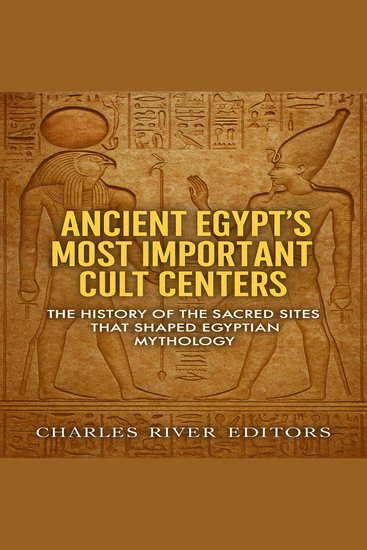
    Perhaps the most intriguing aspect of ancient Egyptian civilization was its inception from the ground up, as the ancient Egyptians had no prior civilization which they could use as a template. In fact, ancient Egypt itself became a template for the civilizations that followed.  
    One of the primary reasons why modern scholars know so much about Egyptian history is due to many monuments found up and down the Nile. Although some of the tombs built on the west bank of the Nile River have suffered a fair amount of wind damage and all of the great monuments have endured the ravages of time, they are amazingly well-preserved, thanks both to Egypt’s arid climate and good workmanship. The Egyptian monument builders were truly a class above their contemporaries in terms of their trade, which was helped by the fact that they worked with the more permanent materials of sandstone and limestone, unlike Mesopotamian builders who were forced to primarily work with mud and brick.  
    In ancient Egypt, cities held political and religious significance, which meant that if the political or religious tides changed, so too could the fortunes of particular cities. Memphis is perhaps the best known of ancient Egypt’s cities because it was fortunate enough to be the political capital of the Egyptian state for most of its history. Hundreds of miles to Memphis’ south, Thebes became an important city during the Middle Kingdom and its stature grew during the New Kingdom when many of the pharaohs came from there and the national god, Amun, had its cult center in the city. Other cities, such as Tanis and Sais, were important for much shorter periods in Egyptian history. The city of Abju, which was known as Abydus to the Greeks, and later became known simply as “Abydos” had a history that was as long as Memphis’, and although its influence on pharaonic culture may not have been as apparent, it was no less profound.
    Zum Buch
  • The Syrian Civil War - Conflict Humanitarian Crisis and the Struggle for Power - cover

    The Syrian Civil War - Conflict...

    Fredrich Hazelton

    • 0
    • 0
    • 0
    The Syrian Civil War, which began in 2011, stands as one of the most devastating conflicts in modern history, reshaping not only Syria but the entire Middle East and the international political landscape. The war has drawn in numerous global powers, each with their own motivations, and has sparked a humanitarian crisis of unparalleled scale. This conflict is not merely a battle between the Assad regime and opposition groups but a complex web of local, regional, and international rivalries, ideologies, and geopolitical interests. As the fighting continues, the war has resulted in staggering human loss, displacement, and destruction, leaving a country in ruins and millions of people displaced across borders. 
    At the heart of the Syrian Civil War lies a struggle for power, with multiple factions vying for control over a fractured nation. The Assad regime, backed by Russia and Iran, has maintained a firm grip on large parts of the country. Meanwhile, various opposition groups, initially united by a common goal of overthrowing the regime, soon fractured into competing factions with differing ideologies, including Islamic extremists and Kurdish forces. The conflict became a battleground for regional and global powers, each seeking to shape Syria’s future in line with their own strategic interests. The United States, Turkey, and other Western powers became deeply involved, often supporting rebel groups or fighting alongside Kurdish forces in the fight against the Islamic State (ISIS), further complicating an already volatile situation. 
    The humanitarian impact of the Syrian Civil War has been catastrophic. With over half of the pre-war population displaced and millions of civilians killed, the war has created one of the largest refugee crises in history. The fighting has destroyed critical infrastructure, making it difficult to deliver aid to those in need, while the global response has often been inadequate.
    Zum Buch
  • Emotional Eating - Get your life back with a healthy relationship with food - cover

    Emotional Eating - Get your life...

    David Colombo

    • 0
    • 0
    • 0
    Do you have an emotional attachment to eating that is ruining your life? 
    Is it causing excess weight and leading to other health problems? 
    Have you tried to lose weight, but nothing seems to work? 
    Emotional eating is a serious problem that affects growing numbers of people who effectively binge eat as a way of coping with their emotional needs, rather than addressing the issues at hand. Left unchecked it can lead to chronic health problems as well as the mental issues that also remain. 
    This book, Emotional Eating - Get your Life Back with a Healthy Relationship with Food, has been written to help those who have a problem with emotional eating to stop what they are doing with helpful advice on:Identify new ways to cope with stressFinding the right support to help youFighting boredomRemoving the temptations that provoke bingesEating healthy snacksAnd much more… 
    A healthy lifestyle is essential if we want to have long and active lives and at the heart of this is eating sensible foods that provide us with the nutrition we need. 
    Emotional Eating provides you with the tools you will need to beat your food binging and provide you with a much healthier lifestyle. 
    Get a copy today and if you enjoy reading it why not leave a review so that others can benefit from beating emotional eating too!
    Zum Buch