Begleiten Sie uns auf eine literarische Weltreise!
Buch zum Bücherregal hinzufügen
Grey
Einen neuen Kommentar schreiben Default profile 50px
Grey
Jetzt das ganze Buch im Abo oder die ersten Seiten gratis lesen!
All characters reduced
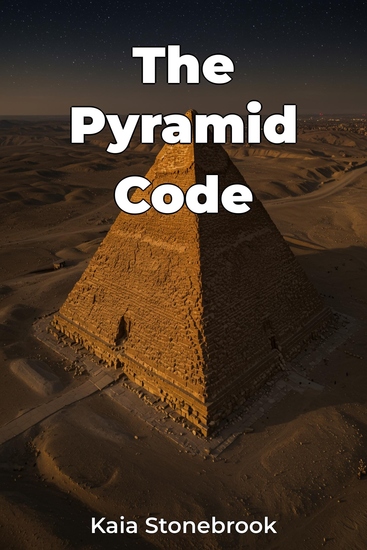
The Pyramid Code - cover

The Pyramid Code

Kaia Stonebrook

Übersetzer A AI

Verlag: Publifye

  • 0
  • 0
  • 0

Beschreibung

"The Pyramid Code" delves into the world of ancient pyramids, particularly those in Egypt, exploring the idea that they contain encoded information reflecting advanced knowledge of mathematics, astronomy, and perhaps even physics. It challenges conventional historical timelines by suggesting that ancient civilizations possessed scientific understanding far exceeding what is typically acknowledged. The book suggests the Great Pyramid of Giza, for example, may be more than just a tomb; it may be a repository of lost knowledge intended for future generations.

 
The book progresses by first establishing the historical context, then dissecting the symbols, inscriptions, and mathematical ratios embedded within these structures. These are analyzed for their potential mathematical and astronomical significance. The book examines hieroglyphs and architectural designs, fostering a connection between history, mathematics, and astronomy. This approach encourages readers to consider alternative interpretations about the construction and purpose of these ancient marvels, potentially reshaping our understanding of human history.
Verfügbar seit: 20.02.2025.
Drucklänge: 67 Seiten.

Weitere Bücher, die Sie mögen werden

  • Ride Lonesome - cover

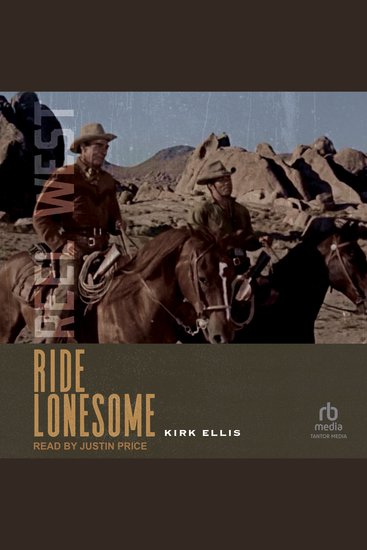
    Ride Lonesome

    Kirk Ellis

    • 0
    • 0
    • 0
    Ride Lonesome, the fifth film in the "Ranown cycle," is both the best and most representative of the whole series, which has been called "the most remarkable convergence of artistic achievement in the history of low-budget moviemaking." Director Bud Boetticher captures the alienation and loneliness of an America faced with the Cold War and the daily threat of nuclear annihilation. Shot in seventeen days for under a half-million dollars, Ride Lonesome is a masterpiece of cinematic minimalism. 


    Veteran screenwriter Kirk Ellis brilliantly unpacks the themes, narrative, visual language, and editing in this seminal film. In Ride Lonesome Ellis not only shows how this one film embodies a turning point for the Western, but he also explores the unique vision and contributions of director Boetticher and his writing partner Burt Kennedy.
    Zum Buch
  • Sylvia's Marriage - A Novel - cover

    Sylvia's Marriage - A Novel

    Upton Sinclair

    • 0
    • 0
    • 0
    "Sylvia's Marriage: A Novel" by Upton Sinclair is a compelling exploration of love, independence, and societal expectations. The story follows Sylvia, a spirited young woman navigating the complexities of marriage and personal freedom in early 20th-century America. As she confronts the constraints of traditional gender roles and economic dependence, Sylvia embarks on a journey of self-discovery and resilience. Sinclair delves into themes of class struggle, emotional growth, and the tension between individual desires and societal norms. Through Sylvia’s experiences, the novel critiques the institution of marriage and advocates for equality and autonomy. A blend of social commentary and heartfelt drama, it reflects Sinclair’s commitment to highlighting women’s struggles and the pursuit of empowerment.
    Zum Buch
  • The Serious Business of Small Talk - Becoming Fluent Comfortable and Charming - cover

    The Serious Business of Small...

    Carol Fleming

    • 0
    • 0
    • 0
    For a lucky few, light conversation at parties and social events is a breeze. For the rest of us, there is Carol Fleming (bestselling author of It's the Way You Say It), who breaks even the shortest bit of small talk into an understandable process that anyone can master. 
     
    Much of your personal success hinges on the effectiveness of your personal communication skills. Whether or not new doors are opened to you may depend on how well you can meet one of life's most frustrating social challenges--starting and developing conversations with strangers, aka "small talk." Small talk is usually considered to be a light, pleasant, and safe verbal exchange, which allows people the time and association to get a sense of each other. It consists of introductions, exchange of personal information and interests when meeting new people and searching for a topic of mutual interest. According to Carol Fleming, conversationalist-extraordinaire, the business of small talk means: 
    -Bringing people together 
    -Facilitating understanding 
    -Finding friendships, building trust and maintaining relationships 
    -Developing your business 
    -Exposing you to different points of view 
    This book teaches you the concrete skills of social behavior, and promises to increase your understanding of what small talk is and what it does, while revealing the rituals and strategies for developing conversation. You may not think you have the "gift of gab," but Carol Fleming will convince you that you can master the fine art of small talk in all your business and social encounters.
    Zum Buch
  • Doctrine of the Mean - cover

    Doctrine of the Mean

    Zi Zisi

    • 0
    • 0
    • 0
    What if the key to a balanced, fulfilling life has been hidden in a single, ancient principle for over 2,000 years?
    In Doctrine of the Mean, Zisi—Confucius's grandson—offers profound insight into moral character, self-cultivation, and the pursuit of harmony in all things. With clarity and grace, this Confucian classic explores how moderation, sincerity, and thoughtful action can guide individuals, families, and societies toward lasting peace and purpose.
    
    Praised as "one of the essential pillars of Confucian philosophy," this text remains strikingly relevant today. Its wisdom encourages readers to refine their inner selves, make balanced decisions, and walk the steady path between excess and deficiency.
    
    If you seek timeless guidance on virtue, leadership, and personal growth, this elegant classic is a source of enduring strength.
    
    Open the pages—and discover a philosophy that brings clarity, calm, and harmony to everyday life.
    Zum Buch
  • First Bull Run: The History of the Civil War’s First Major Battle - cover

    First Bull Run: The History of...

    Jonathan Gianos-Steinberg

    • 0
    • 0
    • 0
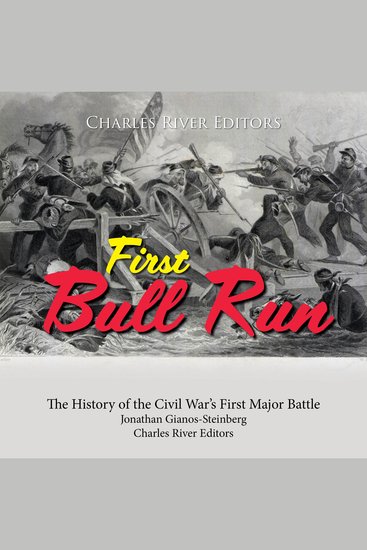
    After Fort Sumter, the Lincoln Administration pushed for a quick invasion of Virginia, with the intent of defeating Confederate forces and marching toward the Confederate capitol of Richmond. Lincoln pressed General Irvin McDowell to push forward. Despite the fact that McDowell knew his troops were inexperienced and unready, pressure from Washington politicians forced him to launch a premature offensive against Confederate forces in Northern Virginia.  
    	McDowell’s strategy during the First Battle of Bull Run was grand, and in many ways it was the forerunner of a tactic Robert E. Lee, Stonewall Jackson and James Longstreet executed brilliantly on nearly the same field during the Second Battle of Bull Run in August 1862. McDowell’s plan called for parts of his army to pin down General P.G.T. Beauregard’s Confederate soldiers in front while marching another wing of his army around the flank and into the enemy’s rear, rolling up the line. McDowell assumed the Confederates would be forced to abandon Manassas Junction and fall back to the next defensible line, the Rappahannock River. In July 1861, however, this proved far too difficult for his inexperienced troops to carry out effectively.  
    	As the first major land battle of the Civil War, the First Battle of Bull Run made history in several ways. The two sides fought near the railroad junction at Manassas on July 21, 1861, just 25 miles away from Washington, which was close enough for many civilians from the nation’s capital to come and watch what they expected to be a rout of Confederate forces, and for awhile it appeared as though that might be the case.  
    	McDowell’s strategy ultimately fell apart though, mostly thanks to the use of the railroad. Confederate reinforcements under General Joseph E. Johnston, including a brigade led by Thomas Jonathan Jackson, arrived by train in the middle of the day, a first in the history of American warfare.
    Zum Buch
  • Finding Genius: Understanding Viruses - 30 Questions 25 Geniuses 100 Amazing Insights - cover

    Finding Genius: Understanding...

    Richard Jacobs

    • 0
    • 0
    • 0
    This book is the result of 30+ interviews of genius-level science professionals in various fields. They have all been asked the same set of questions, and have answered, to the best of their ability and knowledge. What you’re about to read is the answers to these questions, not from all the individuals, but from the most interesting 4 or 5 who answered each question. These interviews are for two kinds of audiences: 1) curious amateurs, and 2) science, engineering, or other professionals who have a general knowledge of and curiosity about science, but who are not experts in the field being covered.  
    At the start of my journey in science, I already had a B.S. in Chemical Engineering, but that was from 1998, certainly not 2016 when I started. Reading scientific papers was difficult at first – I understood about 10% of what I was reading. As I interviewed more scientists, researchers, clinicians and others, I started to pick up the vocabulary and thinking process needed to read scientific papers. After a year of reading, my comprehension increased, and now stands at around 70%, typically. In the areas of Physics or other sciences in which I’m not conversant, I understand about 30%. In advanced math, since it’s a language unto itself, especially at high levels, I am back to the 10% level.  
    Apply yourself, and you’ll be surprised at what you can learn in a year’s time.
    Zum Buch