Begleiten Sie uns auf eine literarische Weltreise!
Buch zum Bücherregal hinzufügen
Grey
Einen neuen Kommentar schreiben Default profile 50px
Grey
Jetzt das ganze Buch im Abo oder die ersten Seiten gratis lesen!
All characters reduced
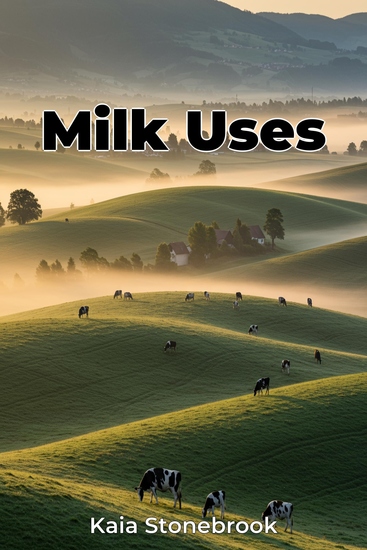
Milk Uses - cover

Milk Uses

Kaia Stonebrook

Übersetzer A AI

Verlag: Publifye

  • 0
  • 0
  • 0

Beschreibung

Milk Uses explores the extensive history and impact of milk, tracing its journey from ancient domestication practices to its role in modern food systems. The book examines how dairy farming has evolved, influencing human nutrition, economic structures, and global food security. It acknowledges milk as more than just a dietary staple, highlighting its profound influence on civilization.

 
Readers will discover intriguing aspects such as how the domestication of dairy animals promoted settled agriculture and population growth, and how milk's nutritional composition affects the human body. The book addresses the intersection of science, history, and economics within the dairy industry. It begins by introducing key concepts like domestication and industrialization, then delves into prehistoric dairy practices, the nutritional properties of different milk types, and the transformation of family farms into large-scale operations.

 
The approach blends scientific rigor with narrative elements, making complex concepts accessible. Culminating in an examination of current issues, Milk Uses covers sustainable dairy farming, ethical animal treatment, and the impact of milk alternatives. It analyzes archaeological evidence, historical records, and scientific studies to provide a data-driven exploration of the many facets of milk. This approach ensures a comprehensive understanding of milk's past, present, and future, making it valuable for students and general readers interested in food science, history, and nutrition.
Verfügbar seit: 11.03.2025.
Drucklänge: 68 Seiten.

Weitere Bücher, die Sie mögen werden

  • AI Shepherds and Electric Sheep - Leading and Teaching in the Age of Artificial Intelligence - cover

    AI Shepherds and Electric Sheep...

    Sean O'Callaghan, Paul A. Hoffman

    • 0
    • 0
    • 0
    Since ChatGPT burst into the public consciousness in 2022, AI has thoroughly infiltrated everyday life. Machines can now take on work once thought to be solely the domain of human beings--from writing college essays to composing worship music. How should Christians respond to this brave new technology? 
     
    In this accessible introduction to AI, Sean O'Callaghan and Paul Hoffman explore its social and ethical impacts for ministry and teaching. The authors shed light on the biblical vision for human flourishing--and on how AI can help or hinder that flourishing. Avoiding both alarmism and uncritical acceptance, O'Callaghan and Hoffman offer resources and practical tools for using AI in our classrooms and congregations. 
     
    AI can write a generic three-point sermon, but it cannot replace an authentic encounter between humans and the divine. In a time of cultural confusion, O'Callaghan and Hoffman encourage readers to embrace the clarity found in the gospel. The book includes a foreword by A. Trevor Sutton.
    Zum Buch
  • Invasive Plants - Guide to Identification and the Impacts and Control of Common North American Species - cover

    Invasive Plants - Guide to...

    Sylvan Ramsey Kaufman, Wallace...

    • 0
    • 0
    • 0
    Newly updated: “Invasive plants are ecological tumors that degrade food webs wherever they go. The third edition of [this book] is an invaluable reference.” —Douglas Tallamy, New York Times–bestselling author of Nature’s Best Hope   This easy-to-use, wide-ranging guide to invasive plants in North America features full-color photos and descriptions of more than 250 alien species—both terrestrial and aquatic—that are in some cases changing the landscape to an almost unimaginable degree. Accompanying text describes the plant’s environmental and economic impacts as well as management techniques used to control it. Also included is an explanation of what an invasive is and a step-by-step identification key. Used by U.S. Forest Service botanists, this is an essential guide to understanding this unprecedented environmental challenge that is threatening biodiversity—and the human population that depends on it to survive.   “A colorful, general field guide to the major invasive plants of North America…packed with relevant information.” —Great Plains Research: A Journal of Natural and Social Sciences   “A wonderful guide.” —The Roanoke Star
    Zum Buch
  • The Great Plague - A People's History - cover

    The Great Plague - A People's...

    Evelyn Lord

    • 0
    • 0
    • 0
    Focusing on Britain's peasants, shopkeepers, and other commoners, this history of the deadly Black Plague is a "local account of the countrywide calamity" (The Times). 


    In this intimate history of the extraordinary Black Plague pandemic that swept through the British Isles in 1665, Evelyn Lord focuses on the plague's effects on smaller towns, where every death was a singular blow affecting the entire community. 


    Lord's fascinating reconstruction of life during plague times presents the personal experiences of a wide range of individuals, from historical notables Samuel Pepys and Isaac Newton to common folk who tilled the land and ran the shops. The Great Plague brings this dark era to vivid life—through stories of loss and survival from those who grieved, those who fled, and those who hid to await their fate.
    Zum Buch
  • Renewable Energy Outlook for ASEAN: Towards a Regional Energy Transition (2nd Edition) - cover

    Renewable Energy Outlook for...

    Irena International Renewable...

    • 0
    • 0
    • 0
    This report details a comprehensive pathway for the development of a sustainable and cleaner regional energy system for ASEAN.
    Zum Buch
  • Crystal Bowl Meditation Music Crystal Bowl Sound Healing - Harmonize Your Mind Body and Spirit with the Healing Power of Crystal Sounds - cover

    Crystal Bowl Meditation Music...

    Sound Healing Foundation

    • 0
    • 0
    • 0
    Discover the profound healing and tranquil energy of "Crystal Bowl Meditation Music", an enchanting collection of 11 unique soundscapes designed to elevate your meditation practice and bring balance to your mind, body, and spirit. Each track is crafted using the resonant tones of crystal singing bowls, known for their ability to promote deep relaxation, emotional healing, and spiritual awakening.


    Whether you are seeking a calming backdrop for meditation, yoga, or simply a way to unwind after a long day, this album offers a sonic journey into stillness and peace. The ethereal, pure tones of the crystal bowls work harmoniously to release tension, reduce stress, and encourage a meditative state where true healing can begin.


    Perfect for anyone who desires to:
    
      Enter a state of deep relaxation and inner peace
      Rebalance their chakras and energy centers
      Soothe the nervous system and relieve anxiety
      Enhance mindfulness, clarity, and spiritual growth
    
     
    Let the soothing vibrations of crystal bowls carry you into a space of profound serenity. Whether you're a seasoned meditator or just beginning your mindfulness journey, "Crystal Bowl Meditation Music" is the ideal companion for creating a peaceful and restorative atmosphere.
     
    Are you ready to experience the transformational power of sound? Immerse yourself in the healing frequencies today!
    Zum Buch
  • Minding the Climate - How Neuroscience Can Help Solve Our Environmental Crisis - cover

    Minding the Climate - How...

    MD Ann-Christine Duhaime

    • 0
    • 0
    • 0
    If we believe the climate crisis is real, why is it so difficult to change our behavior and our consumer tendencies? 


    Minding the Climate investigates this problem in the neuroscience of decision-making. Ann-Christine Duhaime, MD, points to the evolution of the human brain during eons of resource scarcity. The brain adapted to prioritize short-term survival over more uncertain long-term outcomes. But the resulting behavioral architecture is poorly suited to the present, when scarcity is a lesser concern and slow-moving challenges like environmental issues present the greatest danger. Duhaime details how even our acknowledged best interests are thwarted by the brain's reward system: if a behavior isn't perceived as immediately beneficial, we probably won't do it—never mind that we "know" we should. 


    Luckily, we can sway our brains, and those of others, to alter our behaviors. Duhaime describes concrete, achievable interventions that have been shown to encourage our neurological circuits to embrace new rewards. Such small, incremental steps that individuals take, whether in their roles as consumers, in the workplace, or in leadership positions, are necessary to mitigate climate change. The more we understand how our tendencies can be overridden by our brain's capacity to adapt, Duhaime argues, the more likely we are to have a future.
    Zum Buch