Begleiten Sie uns auf eine literarische Weltreise!
Buch zum Bücherregal hinzufügen
Grey
Einen neuen Kommentar schreiben Default profile 50px
Grey
Jetzt das ganze Buch im Abo oder die ersten Seiten gratis lesen!
All characters reduced
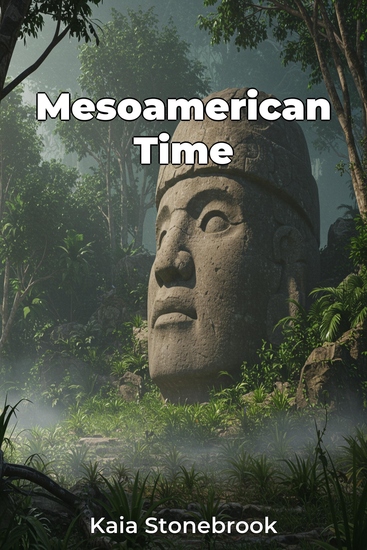
Mesoamerican Time - cover

Mesoamerican Time

Kaia Stonebrook

Übersetzer A AI

Verlag: Publifye

  • 0
  • 0
  • 0

Beschreibung

Mesoamerican Time explores the fascinating origins and evolution of ancient Mesoamerican calendars, revealing how societies without advanced technology developed remarkably precise timekeeping systems. The book traces these systems from the Olmecs and Zapotecs to the more well-known Maya and Aztecs, demonstrating how these calendars were integral to religious beliefs, agricultural practices, and political structures. Intriguingly, these calendars were not just about tracking days; they were deeply intertwined with understanding the cosmos, and the book highlights how the 260-day Tzolkin ritual calendar, and the 365-day Haab solar calendar worked together.

 
The book emphasizes the foundational contributions of the Olmecs and Zapotecs, often overlooked in favor of the Maya. It examines the Long Count calendar and other systems, presenting historical context, Mesoamerican mathematics, and hieroglyphic writing to explain their complexity. By analyzing stelae inscriptions, monumental art, and archaeological site layouts, the book progresses from introducing basic concepts to exploring the specific contributions of each civilization, ultimately examining the enduring legacy and modern relevance of these ingenious systems.
Verfügbar seit: 05.03.2025.
Drucklänge: 64 Seiten.

Weitere Bücher, die Sie mögen werden

  • I don't know how to be okay a guide to navigate the journey of grief and loss - cover

    I don't know how to be okay a...

    Missy Richardson

    • 0
    • 0
    • 0
    Lost someone dear to you and don't feel like you can carry on? 
    Wish you could find a way to see even a glimmer of hope on the horizon? 
    The first thing I want to say is that when you lose someone who means the world to you, these feelings and emotions you're experiencing right now are completely natural.  They're your hearts way of telling you that you need time to heal and there is nothing to be ashamed of.   
    The journey you're undertaking is one that's never going to be easy, but it is one you can get to the end of if you are able to connect with the right resource.  This may sound easier said than done, which is why you need to know... 
    ... you CAN get through this in your own personal way. 
    "I Don't know How To Be Okay" is for anyone going through grief and battling loss who wants to find a way to cope from one day to the next. 
    If you can keep faith, you'll be able to keep moving forwards. 
    Inside "I Don't Know How To Be Okay" you're going to learn about: 
    The fact that your feelings in these times are valid 
    How to prepare for the funeral of your loved one 
    The post funeral motions and what to expect 
    Talking to and making contact with the deceased 
    How to deal with panic attacks and uncontrollable emotions while grieving 
    Self care tips while grieving 
    How to deal with guilt, regret or self blame about the death of your loved one 
    How to start loving and dating again after a spouse's death 
    And a whole lot more! 
    This book isn't designed to lesson your loss or force you to move at a pace that just doesn't feel right.  It's designed to help you, guide you and support you in a way that makes you feel like you're never alone, no matter how long the journey takes or the diversions it sends you on along the way.
    Zum Buch
  • Three Dialogues Between Hylas and Philonous - cover

    Three Dialogues Between Hylas...

    George Berkeley

    • 0
    • 0
    • 0
    Berkeley uses the Socratic mode of inquiry in Three Dialogues between Hylas and Philonous to question fundamental beliefs about knowledge and reality. These dialogues are between Hylas (whose name is derived from the ancient Greek word for matter) and Philonous, whose name means “lover of mind.” The new physical sciences developed in the seventeenth century supported the materialism proposed by Thomas Hobbes and several other philosophers.
     
    This worldview proclaimed that all of reality consists of nothing but matter in motion, thus promoting atheism and ethical skepticism. The implications for politics, ethics, and religion caused concern among leading intellectuals in the eighteenth century. Whatever the value of the positive claims presented in this work, Berkeley foreshadows the philosophical impact of twentieth century physics, which challenges the foundations of such materialism and calls for a better understanding of both the physical and the mental aspects of reality
    Zum Buch
  • Advanced Self-Guided Shadow Work - A Workbook and Journal for Deep Sub-Conscious Exploration Emotional Mastery and Cognitive Reframing - cover

    Advanced Self-Guided Shadow Work...

    Leigh W. Hart

    • 0
    • 0
    • 0
    Embark on a transformative quest to discover your shadow, listen to its messages, and emerge with a triumphantly grounded self. 
    Here, you'll go deeper, embracing the uncharted territories of your psyche with complex, transformative practices designed for those who've already started their shadow work journey. 
    Advanced work isn't for the faint-hearted; it's for seekers like you who are willing to confront the storm within and chart a course through it. 
    Yet, those who venture into their own depths often find untapped reservoirs of resilience and insight. 
    This workbook is for those who are ready to face their shadow with eyes wide open and embrace the full spectrum of their inner world. 
    Inside, you will discover:Advanced self-reflection strategies that challenge you to look beyond what's comfortable, revealing the profound truths of your subconsciousEmotional mastery techniques that help you handle intensity and transform it into a source of strengthA journey of transformation from the echoes of past traumas to the vision of a healed self – with tools specifically designed for those who have moved past the beginner stage and are ready to address their history with courageHow to conquer the incessant chatter of negative thoughts with cognitive reframing and confidence-building strategiesWays to break free from those repetitive patterns keeping you from moving forward –start creating healthier habits ASAPA serious upgrade to relationship dynamics – foster empathy, navigate forgiveness, and elevate your communicationA robust toolkit designed for facing fears and anxiety to not just cope, but to thrive – with each technique, gain a little more ground in the battle for your peace of mind
    Zum Buch
  • The Good Captain - A Personal Memoir of America at War - cover

    The Good Captain - A Personal...

    R.D. Hooker

    • 0
    • 0
    • 0
    The veteran soldier, Pentagon advisor and White House staffer recounts his long and distinguished military career in this acclaimed memoir. 
     
    A combat soldier and leader in five wars, R. D. Hooker also served as a White House staff member in four different administrations. He retired in 2010 as the most decorated colonel in the US Army. Beginning with his enlistment at 18 in 1975, this memoir chronicles his experiences in the post-Vietnam Army as a young paratrooper, West Point cadet, and combatant in the many military conflicts which followed.  
     
    Hooker served in Grenada, Somalia. Rwanda, Bosnia, and Kosovo. He played a key role in the response to 9/11 and returned to combat in Iraq and Afghanistan. He commanded a paratroop company, battalion and brigade and served in the continental US, Latin America, Europe, the Middle East, Africa and Southwest Asia. When not deployed, he taught at West Point and served in several high-level Pentagon assignments and in the White House in the administrations of George H. W. Bush, Bill Clinton, George W. Bush and Donald Trump. 
     
    In The Good Captain, Hooker recounts his storied career with insights and lessons learned through five different conflicts. He also describes each of these campaigns from a strategic and policy perspective informed by his White House and Pentagon experiences as well as years of academic training.
    Zum Buch
  • Higher Admissions - The Rise and Fall of Standardized Testing - cover

    Higher Admissions - The Rise and...

    Nicholas Lemann

    • 0
    • 0
    • 0
    In the 1930s, American colleges and universities began to screen applications using the SAT, a mass-administered, IQ-descended standardized test. The widespread adoption of the test accompanied the development of the world's first mass higher education system—and served to promote the idea that the United States was becoming a "meritocracy." In Higher Admissions, Nicholas Lemann reflects on the state of America's aspirational meritocracy and the enduring value and meaning of standardized testing. 


    Lemann writes that the anticipation of the Supreme Court's 2023 decision banning affirmative action, plus the Covid pandemic, led hundreds of universities to stop requiring standardized admissions tests; now a handful of elite universities are reinstituting test requirements. The country is preoccupied with the admissions policies of the most selective universities, but Lemann redirects our attention to an alternate path that American higher education can still take—one that emphasizes a significant upgrade of the entire higher education system. Lemann argues that to improve the state of higher education overall, we should focus not on the narrow chokepoint of admission to highly selective colleges, but on efforts to create as much meaningful opportunity for flourishing in our vast higher education system for as many people as possible.
    Zum Buch
  • The Fall Of Homo Digitalis - Impersonal Intimacy And New Relationships in The Digital Era - cover

    The Fall Of Homo Digitalis -...

    Brian Gibson

    • 0
    • 0
    • 0
    With unparalleled insight and a keen understanding of the digital revolution's impact on our lives, this book explores the rise of Homo Digitalis, a new era of human existence where screens, algorithms, and data have reshaped how we interact. 
    From the exhilarating thrill of swiping right to the troubling reality of social media-driven envy, this book delves into the paradox of our time: the paradox of impersonal intimacy. We've become experts at connecting with others across the globe while sometimes struggling to communicate with those closest to us. "The Fall of Homo Digitalis" examines how these unprecedented technological advancements have redefined our notions of love, friendship, and human connection. 
    Whether you're a digital native, a concerned parent, or anyone curious about the transformative power of technology on our relationships, this book is a must-read for all those seeking to comprehend the ever-shifting dynamics of love, intimacy, and human connection in the digital age. "The Fall of Homo Digitalis" mirrors our digital selves and guides us toward a more connected and authentic future.
    Zum Buch