Rejoignez-nous pour un voyage dans le monde des livres!
Ajouter ce livre à l'électronique
Grey
Ecrivez un nouveau commentaire Default profile 50px
Grey
Abonnez-vous pour lire le livre complet ou lisez les premières pages gratuitement!
All characters reduced
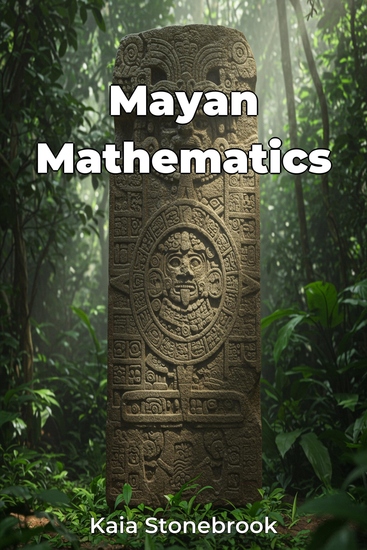
Mayan Mathematics - cover

Mayan Mathematics

Kaia Stonebrook

Traducteur A AI

Maison d'édition: Publifye

  • 0
  • 0
  • 0

Synopsis

Mayan Mathematics explores the remarkable intellectual achievements of the Maya civilization, focusing on their sophisticated number system, calendrical computations, and astronomical observations. The Maya, despite lacking advanced technology, developed the concept of zero and charted celestial movements with incredible precision. Their mathematical system was deeply intertwined with their society, influencing everything from religious beliefs and ritual practices to agricultural planning and political power. The book reveals how the Maya used a base-20 (vigesimal) system and two calendars, the Haab (365-day solar) and the Tzolkin (260-day sacred), which combined to form the Calendar Round. It examines their tracking of the Sun, Moon, and Venus, demonstrating how these observations informed their cosmology. By analyzing inscriptions, archaeological findings, and colonial-era texts, the book reconstructs Mayan mathematical thought.

 
The book begins with Mayan numerals and calendars, then moves to astronomical observations and their connection to Mayan cosmology. It concludes by exploring the legacy of Mayan mathematics and its influence on other Mesoamerican cultures. This approach makes complex concepts accessible, highlighting the Maya's unique contribution to the history of science and challenging Eurocentric views of intellectual development.
Disponible depuis: 29/03/2025.
Longueur d'impression: 62 pages.


D'autres livres qui pourraient vous intéresser

  • The Winter's Tale - cover

    The Winter's Tale

    William Shakespeare

    • 0
    • 0
    • 0
    The Winter's Tale is a play by William Shakespeare, originally published in the First Folio of 1623. Although it was grouped among the comedies, some modern editors have relabelled the play as one of Shakespeare's late romances. Some critics consider it to be one of Shakespeare's "problem plays", because the first three acts are filled with intense psychological drama, while the last two acts are comedic and supply a happy ending. The play has been intermittently popular, revived in productions in various forms and adaptations by some of the leading theatre practitioners in Shakespearean performance history, beginning after a long interval with David Garrick in his adaptation called Florizel and Perdita (first performed in 1754 and published in 1756).    The Winter's Tale was revived again in the 19th century, when the third "pastoral" act was widely popular. In the second half of the 20th century The Winter's Tale in its entirety, and drawn largely from the First Folio text, was often performed, with varying degrees of success. Short Summary of the Tale: John Fawcett as Autolycus in "The Winter's Tale" (1828) by Thomas Charles Wageman. Following a brief setup scene the play begins with the appearance of two childhood friends: Leontes, King of Sicilia, and Polixenes, the King of Bohemia. Polixenes is visiting the kingdom of Sicilia, and is enjoying catching up with his old friend. However, after nine months, Polixenes yearns to return to his own kingdom to tend to affairs and see his son. Leontes desperately attempts to get Polixenes to stay longer, but is unsuccessful. Leontes then decides to send his wife, Queen Hermione, to try to convince Polixenes. Hermione agrees and with three short speeches is successful. Leontes is puzzled as to how Hermione convinced Polixenes so easily, and Leontes suddenly goes insane and suspects that his pregnant wife has been having an affair with Polixenes and that the child is a bastard. Leontes orders Camillo, a Sicilian Lord, to poison Polixenes. Camillo instead warns Polixenes and they both flee to Bohemia.    Furious at their escape, Leontes now publicly accuses his wife of infidelity, and declares that the child she is bearing must be illegitimate. He throws her in prison, over the protests of his nobles, and sends two of his lords, Cleomenes and Dion, to the Oracle at Delphi for what he is sure will be confirmation of his suspicions. Meanwhile, the queen gives birth to a girl, and her loyal friend Paulina takes the baby to the king, in the hopes that the sight of the child will soften his heart. He grows angrier, however, and orders Paulina's husband, Lord Antigonus, to take the child and abandon it in a desolate place. Cleomenes and Dion return from Delphi with word from the Oracle and find Hermione publicly and humiliatingly put on trial before the king. She asserts her innocence, and asks for the word of the Oracle to be read before the court. The Oracle states categorically that Hermione and Polixenes are innocent, Camillo an honest man, and that Leontes will have no heir until his lost daughter is found. Leontes shuns the news, refusing to believe it as the truth. As this news is revealed, word comes that Leontes' son, Mamillius, has died of a wasting sickness brought on by the accusations against his mother. Hermione, meanwhile, falls in a swoon, and is carried away by Paulina, who subsequently reports the queen's death to her heartbroken and repentant husband. Leontes vows to spend the rest of his days atoning for the loss of his son and his queen.
    Voir livre
  • A Nation of Moochers - America's Addiction to Getting Something for Nothing - cover

    A Nation of Moochers - America's...

    Charles J. Sykes

    • 0
    • 0
    • 0
    We have experienced a shift in American character: we've become a nation of moochers. Increasingly dependent on the efforts of others over our own, Americans are free to freeload. From the corporate bailouts on Wall Street to the alarming increases in personal default and dependency, from questionable tax exemptions to enormous pension, healthcare, and other entitlement costs, the new moocher culture cuts across lines of class, race, and private and public sectors. And the millions that plan and behave sensibly, only to bail out the profligate? They're angry.Charles Sykes' argument is not against compassion or legitimate charity, but targets the new moocher culture, in which self-reliance and personal responsibility have given way to mass grasping after handouts. A Nation of Moochers is a persuasively argued and entertaining rallying cry for Americans who are tired of playing by the rules and paying for those who don't.
    Voir livre
  • IPhone 13 Pro Max User Guide For Seniors - The Intuitive Illustrated Step-By-Step Instruction Manual To Learn To Master The Apple IPhone 13 - cover

    IPhone 13 Pro Max User Guide For...

    James Nino

    • 0
    • 0
    • 0
    This book is for Seniors Who Want To learn to use the iPhone 13 Pro Max But Can`t Get Started 
    A Simple Guide for Grandma and Grandpa 
    Many times, Seniors receive the gift of an iPhone but are not shown how to use it. Although the Apple iPhone 13 from Apple is intended to be intuitive, it can still be very difficult for an average user not less a senior to understand how to use it. 
    The iPhone 13 can be a difficult device to use, especially if you are from an older generation and not into technology which can make our granddads, and grandmas have a hard time setting up their new devices without requesting help. 
    Having a book created with this in mind that covers everything seniors need to know about the iPhone 13 to get started is a great asset to have. 
    Which is why this guide is a great book for our older generation who are technically challenged. Seniors should not be denied the opportunity to also enjoy the innovative technology associated with Apple 2021 edition. They should also be able to explore all the features that come with the phone including setting it up, calling, chatting, taking pictures and Facetime calls. 
    This book does a wonderful job of explaining how to use your iPhone from the minute you get it. It can teach the older generation how to send text messages, add new contacts, make emergency calls, listen to their all-time favorite songs, make video calls, sync their data, utilize Siri, and so much more.
    Voir livre
  • Philosophy - Exploring Life's Big Questions and Timeless Wisdom - cover

    Philosophy - Exploring Life's...

    Coral Nunez

    • 0
    • 0
    • 0
    Philosophy, at its core, is the study of fundamental questions about existence, knowledge, values, reason, and the human condition. It is not merely an academic subject but a way of thinking, questioning, and understanding the world. The term "philosophy" comes from the Greek words "philo" (love) and "sophia" (wisdom), meaning "the love of wisdom." This pursuit of wisdom has been a defining aspect of human civilization for thousands of years, shaping our perspectives on reality, morality, and truth. 
    One of the key aspects of philosophy is its role in fostering critical thinking. Philosophers do not accept ideas at face value but engage in rational inquiry, examining beliefs and assumptions. This is why philosophy often begins with questions rather than answers. What is real? How do we know what we know? What is the purpose of life? These questions are not easily answered, yet they push us to think deeply about our existence. 
    Philosophy is divided into several branches, each focusing on different aspects of human thought. Metaphysics explores the nature of reality, asking questions about existence, time, and the universe. Epistemology deals with the nature and limits of knowledge—how we acquire it and whether absolute truth exists. Ethics examines the principles of right and wrong, guiding moral behavior. Logic studies the structure of reasoning, ensuring that arguments are sound and rational. Political philosophy and aesthetics, while sometimes considered separate disciplines, also fall under the broader philosophical umbrella, dealing with justice, governance, and beauty.
    Voir livre
  • The Völva’s Apprentice - A Norse Fiction Story of Magic Mythology & Romance - cover

    The Völva’s Apprentice - A Norse...

    Living History

    • 0
    • 0
    • 0
    I had heard tales of women with secret knowledge and powers, but I never imagined that there would be one standing right in front of me. 
    “You’re a Völva?” the word rolled off my tongue strangely... 
    I only knew faintly what a Völva was. They were said to be strange women with strange powers. Not only could they protect and ward against ill omens, but they could also travel the realms and reach into places untapped by most humans. As such, they were often spoken of in whispers of both reverence and mystery. 
    “Yes, I am. And an old one at that,” she said, getting up from her chair. 
    It seemed so casual as if she was just talking about a mindless chore that she was doing. Like it was nothing special that she had just performed some form of magic right in front of me. 
    For two years, I learned everything I could on runes, protections, herbs, medicines, and anything else that Dagmar deemed necessary. In the few moments I had that were not dedicated to lessons from Dagmar, I would seek out Ivar for his quiet presence. There was just something about being near him that set my mind at ease. 
    All that consumed my thoughts was avengement and how close Ulrik was. Soon he would taste the bitter sting of defeat. 
    In the realms of Norse Mythology, a girl sets out to avenge her village only to meet a powerful teacher on her journey into the abyss of forbidden knowledge.
    Voir livre
  • The Night House - Folklore Fairy Tales Rites and Magick for the Wise and Wild - cover

    The Night House - Folklore Fairy...

    Danielle Dulsky

    • 0
    • 0
    • 0
    Fairy tales are more than mere bedtime stories; they are living, breathing repositories of ancient wisdom and magick.In The Night House, bestselling author and word-witch Danielle Dulsky peels back the layers of these timeless narratives to reveal their potent role as guides for navigating today's world. Historically kept and passed on by women, fairy tales are distinguishable from other types of folk tales by their supernatural elements, and because of this, they were often dismissed as trivial fantasies for women and children. Danielle illuminates how this marginalization kept these stories safe from the witch-hunter's noose and allowed women to safely store and transmit their sacred age-old wisdom for new generations to uncover and explore. Her fresh and relevant commentary will support your kinship with the Earth, ancestors, and your own living myth. The Night House shows how a single fairy tale is actually a treasure box of coded knowledge and magickal practice that has remained largely intact, preserved under the floorboards of the Yaga's hut for us to find.
    Voir livre